Jumat, 31 Mei 2019

Trump re-opens trade war with Mexico, stocks crumble - CP24 Toronto's Breaking News


Damian J. Troise And Alex Veiga, The Associated Press
Published Friday, May 31, 2019 3:43PM EDT

Stocks tumbled on Wall Street Friday after the U.S. announced plans to expand its trade war to Mexico, its third-biggest trading partner.

The slump all but guarantees the market will end May with its first monthly loss of 2019. The S&P 500 index was on track for its fourth straight weekly decline. The benchmark index has lost about 6.5% this month.

Bond prices rose again, sending yields lower. Oil and gas prices fell sharply.

The new front in the trade war is hitting automakers particularly hard. Many of them import vehicles into the U.S. from Mexico. General Motors and Fiat Chrysler were each down at least 4%.

Technology stocks suffered some of the heaviest losses. They have been hurt the most by escalating rhetoric and tariffs in the U.S. trade war with China. Cisco fell 2.4% and Microsoft slid 1.4%.

Banks also declined as higher bond prices pushed yields lower. Investors have been shifting money into bonds over concerns that economic growth will be crimped by the ongoing trade war. Lower bond yields drag down interest rates, making lending less profitable for banks. Citigroup fell 1.9% and Bank of America lost 1.6%.

Energy companies sank following another broad slide in oil prices. Occidental Petroleum fell 3.8% and Valero Energy dropped 3.4%.

Real estate and utilities fared better than most sectors. They are considered less risky by investors when economic growth is threatened.

Investors have been fleeing to safer holdings all month. The shift to utilities and bonds quickened earlier in May after the U.S. and China broke off negotiations. The U.S. then pushed more tariffs on Chinese goods along with a ban on technology sales. That prompted retaliatory tariffs from China and threats over other key resources.

A smattering of late season earnings reports are also helping to move certain stocks. Williams-Sonoma rose on a solid first quarter financial report while retailer Gap plunged on weak results.

KEEPING SCORE: The S&P 500 index was down 1.2% as of 3:05 p.m. Eastern Time. The Dow Jones Industrial Average fell 308 points, or 1.2%, to 24,861. The Nasdaq slid 1.4% and the Russell 2000 index of smaller companies was 1.3% lower.

Major stock indexes in Europe also fell.

The U.S. stock market's slump in May reversed a four-month run for the S&P 500 that culminated in an all-time high on April 30. The benchmark index is still up about 10% for the year.

ANALYST'S TAKE: The new tariffs on Mexican goods shocked investors who were already nervous about a global trade war crimping economic growth.

“Clearly the markets were blindsided and completely caught off guard,” said Cliff Hodge, director of investments for Cornerstone Wealth.

The major risk, he said, is that continued trade spats could bring on a global recession. Auto companies and agricultural companies will have a harder time passing costs off to consumers. Also, investors are worried about further escalation of global trade spats.

“The fact that the president is willing to use tariffs as a weapon can really cause damage to business confidence,” Hodge said. “You've got to be wondering, who's next?”

TRADE WAR WOES: The new front in the U.S. trade war will have a wide impact on companies making everything from cars to beer and tacos.

General Motors skidded 3.7%, Ford dropped 2.6% and Fiat Chrysler gave up 4.8%. Those companies import vehicles from Mexico to the U.S.

Railroad operators were also getting squeezed. Kansas City Southern fell 4.6%. The company gets almost half its revenue from Mexico each year. Union Pacific shed 1.6%.

Chipotle fell 2.4%. Rising avocado prices could hurt the Mexican restaurant chain. Constellation Brands, which makes Corona and Modelo, dropped 6.1%.

MAYDAY, MAYDAY: May marks the first monthly loss for the market in 2019. That's a sharp shift from stocks' record setting run so far this year. The S&P 500 hit an all-time high on April 30, back when investors had factored in a resolution to Trump's trade wars.

“You had a market that was feeling as though President Trump would want to do a deal so that the economy would not be hurt,” said Tom Martin, senior portfolio manager with Globalt Investments. “And now the behaviour is indicating that he will use (tariffs) to accomplish his goals and seems less concerned about the actual economic impact.”

Since the end of April, investors have fled to safe play holdings like utilities and bonds. Technology stocks, which led gains all year, were among the biggest losers in May. The technology heavy Nasdaq has shed 7.7%, while technology companies within the S&P 500 have lost 8.6%.

Utilities, which have lagged the market, fell only 1.2% in May, making them among the month's best performers. Meanwhile, real estate stocks posted a 1.5% gain, the only winners this month.

STUCK IN A GAP: Clothing and apparel retailer Gap plunged 10.3% after the company gave investors a weak earnings report and slashed its full-year profit forecast.

The disappointing results and estimates come three months after the retailer said it was creating two independent publicly traded companies: low-priced juggernaut Old Navy and a yet-to-be named company that will encompass the iconic Gap brand and Banana Republic, as well as the lesser known names Athleta, Intermix and Hill City.

Overall sales and sales at established stores fell during the quarter. Sales at its namesake Gap stores plunged 10%.

“This quarter was extremely challenging, and we are not at all satisfied with our results,” said Art Peck, president and CEO of Gap in a statement.

CUSHY RESULTS: Williams-Sonoma jumped 12% after the seller of cookware and home furnishings reported surprisingly strong first quarter financial results and raised its profit forecast for the year.

The company also attracted a surge of customers to its stores during the quarter. Sales at established stores rose 3.5%, blowing away Wall Street forecasts of a 1.6% increase.


from Business - Latest - Google News http://bit.ly/2QCFTrN
via IFTTT
June 01, 2019 at 02:43AM

TSX ends worst month of 2019 lower on concerns of economic slowdown, new tariffs - CTV News


Ross Marowits, The Canadian Press
Published Friday, May 31, 2019 12:03AM EDT
Last Updated Friday, May 31, 2019 5:42PM EDT

TORONTO -- Canada's main stock index ended its worst month of the year by falling on growing concerns about an economic slowdown amid U.S. plans to impose tariffs on Mexican imports.

The S&P/TSX composite index closed down 51.75 points on Friday to 16,037.49. That's 1.2 per cent down from a week ago and 3.4 per cent lower in the month of May.

Still, the Toronto market is 12 per cent higher so far in 2019 after a very strong start to the year.

The majority of market watchers would be happy with the year-to-date gain after withstanding December's collapse, says Kevin Headland, senior investment Strategist at Manulife Investments

"Things aren't necessarily bad but they're not as good as perhaps had been hoped and I think that's what the market has reacted to," he said in an interview.

Headland said investors, especially in the United States, reacted very negatively to overnight news from U.S. President Donald Trump that he plans to expand his global trade war by imposing tariffs on all Mexican imports to pressure the country to do more to stop migrants from entering the U.S.

The move also runs the risk of hampering ratification of the revised USMCA trade deal among the U.S., Canada and Mexico, observers have noted.

However, Headland said investor angst goes beyond trade skirmishes with Mexico or China.

"It's not just reacting to another set of tariffs, it's just more indication that there's more pressure on the global economy," he said. "I think it's a read through that things are definitely slowing down."

Data has backed that up. China's manufacturing activity contracted in May while the Canadian economy remained sluggish in the first three months of the year, rising just 0.4 per cent, and giving the weakest back-to-back quarters since 2015.

Investor concerns can be seen in bond yields falling and the yield curve inverting, which heightens concerns about a potential recession.

"Now we're probably seeing the risk of a recession pick up and the recession would likely be in the next 12 to 18 months," he said.

Ongoing weak data could also prompt the Federal Reserve and the Bank of Canada to cut interest rates.

"It's very rare to see rate cuts before recession and perhaps this is a new environment or a less normal environment where perhaps we see rate cuts and we avoid the actual proverbial recession."

Eight of the 11 major sectors of the TSX decreased on Friday, led by health care, energy and financials.

Energy fell 1.14 per cent as the price of crude dropped to its lowest level since February on worries about reduced global demand and higher supplies.

The July crude contract was down US$3.09 at US$53.50 per barrel and the July natural gas contract was down 9.3 cents at US$2.45 per mmBTU.

That's bad for Alberta's oil patch, where Encana Corp. shares lost 4.4 per cent.

The heavyweight financials sector lost more than one per cent with Manulife Financial losing two per cent and Great-West Lifeco Inc. off 1.8 per cent.

Materials led the three sectors that rose, helped by higher metals prices. Barrick Gold shares gained 5.6 per cent.

The August gold contract was up US$18.70 at US$1,311.10 an ounce and the July copper contract was down 1.4 cents at US$2.64 a pound.

The Canadian dollar traded at an average of 73.93 cents US compared with an average of 74.07 cents US on Thursday.

In New York, the Dow Jones industrial average was down 354.84 points at 24,815.04. The S&P 500 index was down 36.80 points at 2,752.06, while the Nasdaq composite was down 114.57 points at 7,453.15.


from Business - Latest - Google News http://bit.ly/2JQTBGW
via IFTTT
June 01, 2019 at 04:42AM

Canada's economy grew at 0.4% pace to start 2019, barely ahead of late 2018 pace - CBC.ca

Canada's economy expanded at an annualized pace of just 0.4 per cent in the first three months of the year, giving the country its weakest back-to-back quarters of growth since 2015.

The real gross domestic product reading for the first quarter followed a revised growth number of just 0.3 per cent in the previous quarter, Statistics Canada said Friday in a new report.

It was the slowest two-quarter stretch of growth since an oil-price plunge caused the economy to shrink over the first half of 2015.

Economists had expected growth at an annualized rate of 0.7 per cent for the first quarter, according to Thomson Reuters Eikon.

The Statistics Canada report said downward pressure on first-quarter growth was driven by weakness in net trade as imports increased 1.9 per cent and export volumes dropped one per cent for their first quarterly decrease since 2017.

Canada also saw a substantial contraction of 9.5 per cent in its exports of farm and fishing products as well as a 2.8 per cent drop in crude-oil shipments.

On the positive side, the agency said overall economic growth was boosted by the highest quarterly level of household spending in two years, following broad-based increases that included strength in auto purchases and audio-visual equipment.

The economy also saw an 8.7 per cent increase in business investments on equipment and machinery — the biggest jolt in 23 years. The surge was fuelled in part by significant investments in aircraft and other transportation equipment, the report said.

Q2 starting off well

Looking ahead, the report's month-to-month reading for March — the final month of the first quarter — suggested the second quarter could be off to a stronger start. March posted a 0.5 per cent increase compared to a 0.2 per cent contraction in February.

The first-quarter reading Friday was slightly higher than the Bank of Canada's prediction of 0.3 per cent.

On Thursday, Carolyn Wilkins, the central bank's senior deputy governor, said the recent economic slowdown was temporary. She said growth has already been accelerating in the second quarter — which the Bank of Canada has predicted will post 1.3 per cent growth.

From there, Wilkins said Canada's economic expansion should pick up its pace throughout the rest of 2019.

Even with the expected domestic improvement, she underlined risks to the outlook. She warned the highly uncertain international trade environment — including the ongoing U.S.-China trade war — poses a threat for Canada.

Wilkins also listed trade disruptions such as Beijing's new restrictions on some Canadian agricultural products. A diplomatic conflict has intensified in recent months, leading China to reject shipments of some key Canadian goods, including canola.

The central bank is also monitoring the possibility of a trade feud between the U.S. and the European Union. U.S. President Donald Trump has threatened to apply tariffs on autos from the EU.


from Business - Latest - Google News http://bit.ly/2QKZMgp
via IFTTT
May 31, 2019 at 08:12PM

BREAKING: DOJ Preparing Anti-Trust Probe Of Google Examining 'Search And Other Businesses,' Reports Say - The Daily Wire

The U.S. Justice Department is preparing an anti-trust investigation of Google and is expected to examine the tech giant's "search and other businesses."

The Federal Trade Commission, which investigated Google several years ago, is deferring the investigation to the DOJ this time, The Wall Street Journal reported.

"With turf now settled, the department is preparing to closely examine Google’s business practices related to its search and other businesses, the people said," according to The Journal. "It couldn’t immediately be learned whether Google has been contacted by the department. Third-party critics of the search giant, however, already have been in talks with Justice Department officials, some of the people familiar with the matter said."

"The report comes amid discussion from politicians and the public about whether large technology companies should be broken up," CNBC reported. "The Justice Department launched a major antitrust case against Microsoft in 1998 that led to several rules the company had to follow for years."

"Alphabet, which racked up $136.8 billion in revenue in 2018, has faced antitrust pressure in the past," CNBC added. "In 2010, the company faced antitrust complaints from the European Commission regarding ranking of shopping search results and ads, which resulted in Google paying $2.7 billion in 2017. In 2016, the EC complained of certain Android practices to which the company recognized a charge of $5.1 billion in the second quarter of 2018."

The Verge noted that Google has dominated "positions in the markets for search engines, web browsers, mobile operating systems, email, and numerous other product categories, all of which aid in its ability to collect data and serve targeted ads."

President Donald Trump has repeatedly railed against Google, which has been accused by many of having a strong anti-conservative bias.

"Google search results for 'Trump News' shows only the viewing/reporting of Fake News Media. In other words, they have it RIGGED, for me & others, so that almost all stories & news is BAD," Trump tweeted. "Fake CNN is prominent. Republican/Conservative & Fair Media is shut out. Illegal? 96% of results on “Trump News” are from National Left-Wing Media, very dangerous. Google & others are suppressing voices of Conservatives and hiding information and news that is good. They are controlling what we can & cannot see. This is a very serious situation-will be addressed!"

"The only 'Collusion' is that of the Democrats with Russia and many others," Trump said in a tweet last November. "Why didn’t the FBI take the Server from the DNC? They still don’t have it. Check out how biased Facebook, Google and Twitter are in favor of the Democrats. That’s the real Collusion!"

In December, Trump tweeted: "Facebook, Twitter and Google are so biased toward the Dems it is ridiculous! Twitter, in fact, has made it much more difficult for people to join @realDonaldTrump. They have removed many names & greatly slowed the level and speed of increase. They have acknowledged-done NOTHING!"

This March, Trump tweeted: "Facebook, Google and Twitter, not to mention the Corrupt Media, are sooo on the side of the Radical Left Democrats. But fear not, we will win anyway, just like we did before! #MAGA"

Let's block ads! (Why?)


https://www.dailywire.com/news/47914/breaking-doj-preparing-anti-trust-probe-google-ryan-saavedra

2019-06-01 00:55:00Z
52780307146464

Canada posts weakest back-to-back quarters of growth since 2015 — but that’s not the whole story - Financial Post

OTTAWA — Canada’s economy expanded at an annualized pace of just 0.4 per cent in the first three months of the year, giving the country its weakest back-to-back quarters of growth since 2015.

The real gross domestic product reading for the first quarter followed a revised growth number of just 0.3 per cent in the previous quarter, Statistics Canada said Friday in a new report.

It was the slowest two-quarter stretch of growth since Canada's oil price crisis in 2015

It was the slowest two-quarter stretch of growth since an oil-price plunge caused the economy to shrink over the first half of 2015.

Economists had expected growth at an annualized rate of 0.7 per cent for the first quarter, according to Thomson Reuters Eikon.

The Statistics Canada report said downward pressure on first-quarter growth was driven by weakness in net trade as imports increased 1.9 per cent and export volumes dropped one per cent for their first quarterly decrease since 2017.

Canada also saw a substantial contraction of 9.5 per cent in its exports of farm and fishing products as well as a 2.8 per cent drop in crude-oil shipments.

On the positive side, the agency said overall economic growth was boosted by the highest quarterly level of household spending in two years, following broad-based increases that included strength in auto purchases and audio-visual equipment.

The economy also saw an 8.7 per cent increase in business investments on equipment and machinery — the biggest jolt in 23 years. The surge was fuelled in part by significant investments in aircraft and other transportation equipment, the report said.

Looking ahead, the report’s month-to-month reading for March — the final month of the first quarter — suggested the second quarter could be off to a stronger start. March posted a 0.5 per cent increase compared to a 0.2 per cent contraction in February.

The first-quarter reading Friday was slightly higher than the Bank of Canada’s prediction of 0.3 per cent.

On Thursday, Carolyn Wilkins, the central bank’s senior deputy governor, said the recent economic slowdown was temporary. She said growth has already been accelerating in the second quarter — which the Bank of Canada has predicted will post 1.3 per cent growth.

From there, Wilkins said Canada’s economic expansion should pick up its pace throughout the rest of 2019.

Even with the expected domestic improvement, she underlined risks to the outlook. She warned the highly uncertain international trade environment — including the ongoing U.S.-China trade war — poses a threat for Canada.

Wilkins also listed trade disruptions such as Beijing’s new restrictions on some Canadian agricultural products. A diplomatic conflict has intensified in recent months, leading China to reject shipments of some key Canadian goods, including canola.

The central bank is also monitoring the possibility of a trade feud between the U.S. and the European Union. U.S. President Donald Trump has threatened to apply tariffs on autos from the EU.


from Business - Latest - Google News http://bit.ly/2wsNvDM
via IFTTT
May 31, 2019 at 11:05PM

Uber beats sales estimates, while losing US$1B in a quarter - BNNBloomberg.ca

Uber Technologies Inc. (UBER.N), in its first financial report as a public company, posted first-quarter sales near the high end of its previously disclosed preliminary results. The company also reported a US$1.01 billion quarterly loss, among the largest of any public company.

Nelson Chai, the chief financial officer, laid out a path for costs to eventually come down. On a conference call after the report, Chai said Uber will cut back on customer promotions and that marketing expenses as a percentage of revenue should decline in the second quarter. Shares jumped as much as 4.3 per cent in after-hours trading, following Chai's comments.

The world’s biggest ride-hailing operator generated US$2.76 billion in adjusted revenue in the first three months of the year, an increase of 14 per cent and just exceeding analyst estimates of US$2.75 billion. The company, which has under-performed in its first weeks of trading, didn’t issue a forecast in the report Thursday.

Uber’s loss in a single quarter was larger than that of North American rival Lyft Inc. in all of last year, though it fell within the preliminary range Uber had issued on May 13. In the same period last year, Uber had a profit of $3.75 billion, thanks to the sale of international assets. On an operating basis, Uber's losses more than doubled in the first quarter from the year before.

The stock first started trading on May 10, when it opened below the IPO price of $45 a share. It has remained beneath that point ever since. The price at the close on Thursday was US$39.80, giving the business a market value of US$67 billion.

Wall Street researchers are still trying to get a handle on how to evaluate the money-losing ride-hailing business. Analysts from at least two dozen banks have been unable to cover Uber because their employers worked on the company’s initial public offering, which was the biggest on a U.S. stock exchange in five years.

Although Lyft beat analysts’ expectations by just about every measure this month in its first financial report, the stock fell. Lyft and Uber have both seen heavy interest from short sellers skeptical of their ability to build sustainable businesses. Both stocks got a boost in extended trading from the Uber CFO's comments about reduced spending.

But Chai didn't rule out further heavy spending and reiterated on the conference call that 2019 would be an “investment year.” He said in a statement in the report: “Our investments remain focused on global platform expansion and long-term product and technology differentiation, but we will not hesitate to invest to defend our market position globally.”

One number analysts have their eyes on: Growth of gross bookings, a key measure of what customers spend with Uber, is slowing. They totaled US$14.7 billion in the quarter, an increase of 34 per cent, compared with 37 per cent in the fourth quarter. Uber said bookings grew 41% from a year before, after adjusting for currency fluctuations and excluding regions where the company no longer operates.

Another key question for investors is how cutting losses, should that even happen, would impact long-term demand for Uber's services, Tom White, an analyst for D.A. Davidson, wrote in a note to clients. That could open a door for analysts to spend time digging into more fine-grain metrics.

In the report Thursday, Uber offered new quarterly data. The company revealed that revenue in Latin America fell 13 per cent from a year before amid increased competition. Meanwhile, revenue grew by 26 per cent in the U.S. and Canada.

Uber doesn’t disclose performance data for its individual business units by region. Globally, growth in adjusted net revenue for ride-hailing, which excludes subsidies paid to drivers, stood at 10%, while food delivery sales grew by 31 per cent.

Even by nontraditional metrics, there are signs of weakness. Uber said its core platform contribution margin -- a measure of financial health for the ride-hailing and food-delivery businesses -- was -4.5 per cent. This wasn't as bad as Uber's most pessimistic expectation, but it’s a troubling sign for investors who want to see the economics of the business improve. The contribution margin was 17.9 per cent in the same period last year. Global competition has taken a toll.

Uber said it expects to improve the contribution margin in the second quarter and continue to do so through the rest of the year.


from Business - Latest - Google News http://bit.ly/2JQjwyu
via IFTTT
May 31, 2019 at 03:21AM

YouTube to shutter its Toronto creator space - CBC.ca

Ottawa posts $14.9-billion deficit in March - The Globe and Mail

Are You Ready for Amazon or Comcast to Be the Next Big Wireless Carrier? - Gizmodo

Photo: Getty

While the T-Mobile–Sprint merger still hasn’t gotten the green light from the Justice Department, the FCC has already approved the deal and as part of the FCC’s stipulations, T-Mobile/Sprint would be forced to sell off Boost Mobile. However, the more important question is trying to figure out which company would be interested in buying Boost and making a bigger push into the wireless market.

According to a recent report from Reuters, it seems one potential candidate is online retailer megacorp Amazon, which, according to sources familiar with the matter, is not only interested in buying Boost Mobile, but possibly acquiring wireless spectrum that the new T-Mobile/Sprint would need to also divest as part of the merger.

Advertisement

Currently, it’s not entirely clear why Amazon is suddenly interested in operating its own MVNO (mobile virtual network operator). However, it seems one of the big lures of the deal would be the ability to use T-Mobile’s wireless network to enhance its service for at least six years. And with Google already operating its own MVNO in Fi, it probably shouldn’t be a surprise that Amazon is entertaining the idea of doing the same.

That said, Amazon may not be the only company eye the potential future sale of Boost Mobile; based on a report from Bloomberg, it seems Comcast is also interested in acquiring Boost Mobile if and when a T-Mobile/Sprint merger gets approved.

For Comcast, the deal makes a lot more sense, as it’s already a player in the wireless space thanks to Xfinity Mobile. Currently, Xfinity Mobile’s service relies on a network of wifi hotspots and cell coverage that runs off Verizon’s 4G network, so the addition of Boost Mobile, its estimated 7 million subscribers, and added wireless spectrum would give Comcast and Xfinity Mobile a lot more resources to work with.

Advertisement

But where things get really interesting is, according to another Bloomberg report, in order for the Justice Department to approve the merger, T-Mobile/Sprint may have to help create a whole new national wireless carrier to ensure that even after the companies merge, there will be four major wireless providers instead of just three.

This would mean simply renting bandwidth from one of the other carriers wouldn’t be enough, as the new entity would need to operate its own network, including all the equipment, wireless spectrum, and cell towers necessary to make that happen. That would be a huge endeavor, even for companies with deep pockets like Amazon or Comcast.

If that did happen, it would mean living in a world where the U.S.’s four big wireless carriers are AT&T, Verizon, new T-Mobile, and either Comcast or Amazon. For a lot of people, that’s a chilling thought. Sure, right now it’s just speculation. But what if? Which company do you think would make a better—or worse—nationwide wireless carrier: Comcast or Amazon?

Advertisement

Let's block ads! (Why?)


https://gizmodo.com/are-you-ready-for-amazon-or-comcast-to-be-the-next-big-1835147723

2019-05-31 14:49:00Z
52780305304076

Uber Lost $1 Billion In 1st Quarter, Hopes Profit-Slashing Price Cuts Ease Up Soon - NPR

Uber CEO Dara Khosrowshahi says he expects Uber and Lyft will be easing off their price-slashing battle soon. Richard Drew/AP hide caption

toggle caption
Richard Drew/AP

For most companies, losing $1 billion in a quarter would be a big disappointment. But Uber's first report as a publicly traded company was actually better than it had warned investors to expect.

The ride-hailing and food-delivery giant brought in more than $3 billion in revenue in the first three months of 2019 — a 20% jump from the same quarter a year earlier.

Before going public earlier this month, Uber had told investors to be prepared for an even larger loss in the first quarter. Now, it's telling them it expects the price-cutting competition that has hurt its profits to ease up soon.

Uber has burned through money for years by spending heavily on growth — offering financial incentives to attract new riders and drivers, and taking on the costs of expanding into new markets around the world. So far, that growth has never translated into profits.

Uber's IPO did not go well. Despite pricing its shares relatively conservatively, at least compared with early expectations, the company saw its stock drop immediately, and it finished day one lower than it started. Since then, Uber shares have never sold at the value set for the initial offering.

Wall Street liked what it saw in Uber's first earnings report. Its stock was up more than 1% in early trading Friday.

Uber's earnings report shows the company continues to expand rapidly, especially in Uber Eats, its food delivery branch. In South America, however, the company saw revenue shrink as it faces intense competition from rival Didi.

In the U.S., meanwhile, Uber is facing off with its smaller competitor Lyft.

Around the world, competition in ride-hailing is driving down prices and contributing to Uber's losses. In the earnings call on Thursday, Uber CEO Dara Khosrowshahi said he expects Uber and Lyft, at least, will be easing off their price-slashing battle soon.

"The competition is going to be more healthy," he said. "It's going to be based on brand and product and technology, which we think is the right way to compete, versus throwing money at the problem."

He also acknowledged that Uber has faced headwinds in the U.S. due in part to the tremendous damage to the brand over the past few years — marked by sexual harassment allegations, reports of illegal business practices, data breaches and other scandals.

Let's block ads! (Why?)


https://www.npr.org/2019/05/31/728576269/uber-lost-1-billion-in-1st-quarter-hopes-profit-slashing-price-cuts-ease-up-soon

2019-05-31 13:54:00Z
52780306414688

Uber's earnings print inspires new bull - Seeking Alpha

[unable to retrieve full-text content]

  1. Uber's earnings print inspires new bull  Seeking Alpha
  2. Uber loses $1 billion in quarter as costs grow for drivers, food delivery  Yahoo Finance
  3. Uber lost more than $1 billion in the first quarter  CNN
  4. How Uber Hopes to Profit From Public Transit  The New York Times
  5. Uber: Competition with Lyft Will Get 'More Healthy' From Here  TheStreet.com
  6. View full coverage on Google News

https://seekingalpha.com/news/3468261-ubers-earnings-print-inspires-new-bull

2019-05-31 13:10:00Z
52780306414688

Qualcomm has strong argument to win reversal of US antitrust ruling: legal experts - Yahoo Finance

FILE PHOTO: A sign on the Qualcomm campus is seen, as chip maker Broadcom Ltd announced an unsolicited bid to buy peer Qualcomm Inc for $103 billion, in San Diego, California, U.S. November 6, 2017. REUTERS/Mike Blake/File Photo

By Jan Wolfe

(Reuters) - A rare public call by a U.S. Federal Trade Commission (FTC) official for one of the agency's courtroom victories to be reversed, in a case of anticompetitive business practices by chipmaker Qualcomm Inc, charts a strong course for a judge's ruling to be overturned on appeal, some legal experts said.

FTC Commissioner Christine Wilson, an appointee of Republican President Donald Trump, wrote in the Wall Street Journal on Tuesday that the May 22 ruling against Qualcomm "radically expanded a company’s legal obligation to help its competitors" and was based on a strained interpretation of a 1985 decision by the U.S. Supreme Court.

U.S. District Judge Lucy Koh in San Jose, California said that Qualcomm's licensing practices had strangled competition in parts of the computer chip market, harming rivals, smartphone makers, and consumers. She ordered the San Diego-based company to renegotiate licensing agreements at reasonable prices, without threatening to cut off supplies, and ordered that it be monitored for seven years to ensure its compliance.

The Qualcomm case has been controversial since it began in the final days of Democratic President Barack Obama's administration, with the lone Republican FTC commissioner at the time saying it should not be brought.

The op-ed by Wilson, one of five FTC commissioners, will not have any legal weight as Qualcomm appeals Koh's decision but foreshadows strong arguments the company has to win on appeal, Geoffrey Manne, director of the International Center for Law and Economics, and several other antitrust lawyers said.

Other experts, however, said the decision was well reasoned and relied on detailed factual findings and determinations of witness credibility that appeals courts would be reluctant to second-guess.

FTC spokesman Peter Kaplan said the agency declined to comment.

The judge has not yet ruled on Qualcomm's request to put her decision on hold as it plans an appeal. The ruling sent Qualcomm shares tumbling and shaved $10 billion off the company's value.

Under U.S. antitrust law, companies generally can decide who they want to do business with. Even monopolists do not have a so-called "duty to deal" with competitors.


'ASPEN SKIING' U.S. SUPREME COURT CASE

    But the Supreme Court created an exception to this rule in the 1985 case, known as "Aspen Skiing," holding that exiting a profitable, time-tested business arrangement could be an violation of competition law.

    As Koh's ruling points out, Qualcomm once licensed its patents on industry-standard technology to rival chip makers, though the ruling does not make clear how extensive the practice was. Qualcomm abandoned the practice entirely in the early 2000s and began only licensing those patents to companies that make consumer devices such as smartphones, which contain chips.

    Koh said Qualcomm's about-face was "motivated by anticompetitive malice" and was the sort of conduct prohibited by Aspen Skiing.

In Aspen Skiing, a ski resort operator backed out of a profitable, long-standing agreement with a rival to jointly sell a combination lift ticket package.

The Supreme Court said the company appeared to be sacrificing immediate profits in hopes of stomping out a competitor in the long run.

Qualcomm argued at trial that it never granted so-called "exhaustive" full licenses to other chip suppliers. Requiring it to grant them now, as Koh has ordered, would force it into a new business arrangement, rather than require a return to a previous one, the company argued.

The FTC's Wilson wrote that Koh had misapplied the Supreme Court case. Under the judge's logic, "Aspen Skiing now means that if a company ever sells any product to any competitor, it then could have a perpetual antitrust obligation to sell every product to every competitor," Wilson said.

Jonathan Barnett, a law professor at the University of Southern California, agreed that Koh's decision was in danger of being overturned by an appeals court.

    The exception created by Aspen Skiing was supposed to be "very narrow," Barnett said. In a 2004 case involving Verizon Communications Inc, the high court cast doubt on Aspen Skiing, saying it was "at or near the outer boundary" of antitrust liability.

Manne said Koh erred in comparing Qualcomm's change in licensing practices to the conduct in Aspen Skiing.

    The shift to device-level licensing "hardly originated with Qualcomm" and made a great deal of business sense because it was much more lucrative, Manne said.

But some legal experts said that Koh's heavy reliance on factual determinations, particularly findings that Qualcomm executives lacked credibility on the witness stand, made her ruling harder to challenge.

Appeals courts will not set aside a trial judge's factual findings unless there is "clear error" - a high standard that is difficult to meet.

Koh, for example, said in her decision that "many Qualcomm executives’ trial testimony was contradicted by these witnesses’ own contemporaneous emails, handwritten notes, and recorded statements to the Internal Revenue Service."

One Qualcomm in-house lawyer "pretended not to recall" details of a 2012 meeting until the FTC's lawyers played a recording from it, Koh said. And Qualcomm executives often responded with "fast and practiced narratives" when questioned by their own lawyers, Koh said.

"It was embarrassing and probably really damaging on appeal that Koh carefully documented the Qualcomm executives pretty clear lies in testimony," said Christopher Sagers, a professor of antitrust law at Cleveland State University.

Qualcomm said in a statement that it believes "a thorough examination of the evidence and the proper interpretation of the law will result in a reversal by the 9th Circuit Court of Appeals."

Manne said that even under the deferential approach taken by appeals courts, Koh's decision was on thin ice.

"I definitely think she is incorrect on the law with respect to the duty to deal and Aspen Skiing, and she’s vulnerable to reversal on appeal," Manne said.


(Reporting by Jan Wolfe and Diane Bartz in Washington; additional reporting by Stephen Nellis in San Francisco Editing by Noeleen Walder and Grant McCool)

Let's block ads! (Why?)


https://finance.yahoo.com/news/qualcomm-strong-argument-win-reversal-110403435.html

2019-05-31 11:08:00Z
52780306763830

Global stocks decline, bonds surge on Trump's Mexico threat - Investing.com

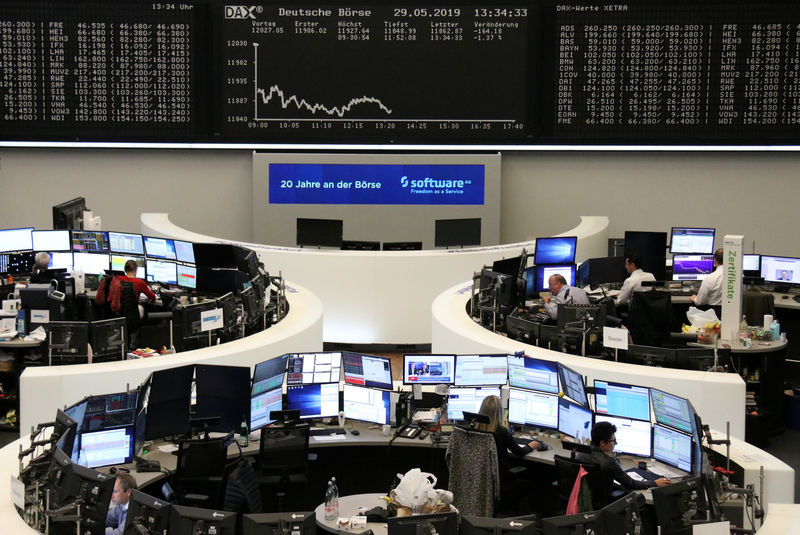
© Reuters. The German share price index DAX graph at the stock exchange in Frankfurt © Reuters. The German share price index DAX graph at the stock exchange in Frankfurt

By Karin Strohecker

LONDON (Reuters) - Safe-haven sovereign bonds surged and European stocks tumbled on Friday as investors feared President Donald Trump's shock threat of tariffs on Mexico risked tipping the United States into recession while disappointing China data added to the woes.

The yield on Germany's 10-year government bond - regarded as one of the safest assets in the world - fell to a record low while U.S. yields slipped to near multi-year troughs.

Markets also moved aggressively to price in deeper rate cuts by the Federal Reserve in 2019, parts of the curve inverted further, seen as a warning signal for recession in the world's largest economy.

Washington will impose a 5% tariff from June 10, which would then rise steadily to 25% until illegal immigration across the southern border was stopped. Trump tweeted the decision late Thursday, catching markets completely by surprise.

"Very clearly when we all thought that the main trade tensions in the world were between the U.S. and China or perhaps between the U.S. and Europe, we hadn't realised there will be another trade tension with Mexico...and it raises concerns about who the next country may be," said Andrew Milligan, head of global strategy at Aberdeen Standard Investments.

The investor mood darkened further when a key measure of Chinese manufacturing activity for May disappointed, raising questions about the effectiveness of Beijing's stimulus steps. This also sparked concerns over the health of the global economy more widely.

"It is a nasty slowdown, it looks likely to be taking longer than we thought. Many thought that the slow down would be in Q1 and the recovery in Q2, but clearly everything that we see in May is telling us this will be pushed back into Q3 or Q4," Milligan added.

Yields on the 10-year Treasury note quickly fell to a fresh 20-month low of 2.17%, while the dollar jumped more than 3% on the Mexican peso.

On stock markets, the pan-European dropped 1.6%, slumping to a more than three-month low with Germany's trade sensitive down 1.8%. All sectors were in the red, but falls were led by carmakers dropping nearly 3% while Volkswagen (DE:) and Fiat Chrysler - both significantly exposed to Mexico - tumbled 3.6% and 5%.

Spanish banks with exposure to Mexico - Santander (MC:), Sabadell and Bilbao - also suffered.

Wall Street - on track for the first monthly decline of 2019 - also looked in line for sizeable falls, with e-Mini futures for the pointing to a 1.3% drop on open.

MSCI's broadest index of Asia-Pacific shares outside Japan edged up 0.2%, but is still down a whopping 7.4% for the month. China's blue chip index closed a touch lower with hopes Beijing would now have to ramp up its stimulus containing losses. Japan's dropped 1.6% on the day and 7.1% on the month.

Looking at MSCI's All Country World Index , the toxic cocktail of trade war fears and economic worries has wiped nearly $3 trillion of global stocks in May.

Investors clearly reckoned that opening a new front in the trade wars would pressure central banks everywhere to consider new stimulus.

On Thursday, Federal Reserve Board of Governors Vice Chair Richard Clarida had said the central bank would act if inflation stays too low or global and financial risks endanger the economic outlook.

"What the Clarida comments have done is clarify in many people's minds the answer to the questions of whether low inflation proving more than transitory would itself be enough to get the Fed to ease – the answer appears to be 'yes'," said Ray Attrill, head of FX strategy at National Australia Bank.

"That served to reinforce prevailing market expectations that the Fed will be easing in the second half of this year."

Indeed, the case that the inflation slowdown was temporary took a blow when the core personal consumption expenditures index, the Fed's favoured measure of inflation, was revised down to 1% for the first quarter, from 1.3%.

Trump's tariff threat only added to the dangers and the market further narrowed the odds on Fed easing this year and next. Futures imply no less than 44 basis points of cuts by year end in the current effective funds rate of 2.38%.

BOND BID, YEN SURGE

Bonds extended their bull run with 10-year Treasury yields now down around a steep 35 basis points for the month and decisively below the overnight funds rate. U.S. 3-month yields were some 20 basis points above those on 10-year Treasury bonds, the biggest inversion since 2007.

Such an inversion of the yield curve has presaged enough recessions in the past that investors are wagering the Fed will be forced to ease policy just as "insurance".

Yet Treasuries are hardly alone in rallying. Germany's benchmark 10-year bond yield hit fresh record lows.

In currency markets, the dollar suffered the biggest one day fall against the safe haven Japanese yen since March at 0.8%. Against a basket of currencies, the dollar pulled 0.1% lower to trade at 98.013.

The euro also fell sharply against the Japanese yen and was down nearly 0.6% at 121.23 after touching the lowest since a Jan. 3 flash crash.

China's yuan is set for its worst month since July last year and was heading towards the crucial 7 per dollar figure. Sterling was plumbing its lowest level in nearly five month and poised for the biggest monthly drop in a year as the imminent departure of Theresa May as prime minister deepened fears about a chaotic divorce from the European Union.

In commodity markets, firmed 0.7% to $1,297.3 per ounce. Oil prices fell to a near-three month low on fears a global economic slowdown would crimp demand. was last down just over $1 at $55.57 a barrel, while futures lost nearly $2 to $65.09.

Let's block ads! (Why?)


https://www.investing.com/news/stock-market-news/global-stocks-decline-bonds-surge-on-trumps-mexico-threat-1883789

2019-05-31 09:07:00Z
CBMicmh0dHBzOi8vd3d3LmludmVzdGluZy5jb20vbmV3cy9zdG9jay1tYXJrZXQtbmV3cy9nbG9iYWwtc3RvY2tzLWRlY2xpbmUtYm9uZHMtc3VyZ2Utb24tdHJ1bXBzLW1leGljby10aHJlYXQtMTg4Mzc4OdIBAA

Hoping to make money in real estate? Here are 5 tips for a successful house flip - USA TODAY

TV shows can make flipping — when an investor buys houses and sells them quickly for a profit — look easy. 

Not so fast, say experts and flippers alike.

“There’s a lot of moving parts in house flipping with serious financial implications if you overlook something," says Audra Walters, a real estate agent at Front Porch Properties in Charleston, South Carolina. “Failing to get a good estimate for renovations or not securing proper permits could cause delays and lead to massive losses.”

For Jerryll Noorden, a former NASA robotics research scientist who now flips three to four houses at a time through his Connecticut real estate firm, the hardest part was finding the funding to buy properties.

“Asking other people, including lenders, for money was a horrifying thought,” says Noorden, who started flipping houses in 2016. “I found an investor forum online and asked, ‘If I find a deal below market value, would anyone be interested in paying for the house and repair costs and we split the profits?’”

Staying home: More baby boomers stay in their houses as they reach retirement, skipping downsizing

Where the affordable homes are: Homes for sale: Here are the most affordable ZIP codes in the US

While most laughed at the notion, one investor agreed. In the end, they made an $80,000 profit despite repair costs doubling and the project taking 11 months to complete.


House flipping can be lucrative when done correctly. Here are some steps to boost your chances for a successful flip.

Study the market

The best opportunities are found off-market and outside of sites known as Multiple Listing Services (MLSs), where brokers can list and see properties for sale, advises Nathaniel Butler, a marketing manager at Washington Capital Partners in Falls Church, Virginia.

“These properties can be found using off-market dealer platforms, wholesalers (people who find a property, get it under contract, and assign it to another buyer who closes on it), contractors who work on flips, and by 'driving for dollars' through neighbors with distressed properties.”

Don’t be afraid to enlist an agent, too.

“Find an agent who understands the local real estate market, takes the time to educate you, and can recognize a good opportunity,” says Robin Kencel, a real estate broker for Compass in Greenwich, Connecticut. “Understanding what the market will bear for the property in that location is the key to a successful flip.”

Ask fellow investors if they know of any agents who have experience working with house flippers. The upside for agents, Kencel says, is those who provide astute and savvy business advice are well positioned for a long-term relationship with the investor as they buy and sell properties. 

Find the right flip

Avery Carl, a real estate broker in Nashville, Tenn., flips houses and scours neighborhoods to find properties below market value.

“Look for houses that are not well maintained with cracked windows, peeling paint, and overgrown grass,” says Carl.

She eventually bought and flipped six properties over a few years, buying “lipstick flips” that only needed carpet and paint. Her strategy? Buy a $100,000 house, add $40,000-$50,000 in value, flip it, and net $15,000-$20,000 in profit. 

Timing is key says Kencel, the broker from Connecticut: “Look during the holidays, at the end of the year, and in the summer," periods when fewer people are hunting for houses. "Keep your eye on the ball when others are looking elsewhere.”

Set a budget and timeline

Noorden says first-time flippers must understand the costs associated with the entire transaction, plus the value of the house once the repairs are done.

“People lose money on closing costs, money-lending costs, seller’s agent commissions, holding costs, contingency costs, utilities, construction and rehab costs, and more,” he explains. “In order to account for these costs, you have to buy the house at the right price.”  

That means figuring out the after-repair value (ARV), which “is the projected value of the house after it is completely renovated,” Noorden says.

A lot of buyers use what’s called the 70% rule. 

Stefano Grottoli of Orange Sun Investments in New Jersey offers this example: “If the house you’re looking to buy will be worth $200,000 after it’s remodeled and you would have to spend $50,000 to rehab it, then you should pay no more than $90,000 to purchase the home.”

Let’s do the math:

$200,000 (ARV) X 70% = $140,000

$140,000 (70% of ARV) - $50,000 (Repairs) = $90,000 (Maximum purchase price).

“Of course, your first offer would be much less than $90,000, but even at that price, you’re on track to make a good profit if no other issues arise,” says Grottoli. “A good contractor can help you to determine repair costs, but make sure to hire an inspector before buying to see if there is any black mold, termite damage, an underground oil tank, or foundation damage.”

Either way, investors should always allow wiggle room in their repair budgets for unexpected or unforeseen expenses.

You also need to set a timeline.

Manage your team

Rehabbing a property is a complex undertaking. Hire a team of experts on each project including an architect, contractor, inspector, lender, CPA, real estate agent, and real estate attorney. Despite having these experts on your side, remember, you are in charge.

“Give contractors a detailed scope of work, with a budget per item, and deadlines for each phase for completion,” says Grottoli. “Never ever give more than 10% down before the actual work begins and don’t abandon the house to the contractors. Always supervise their work.”

Steer clear of over-improvements

It’s the No. 1 mistake many first-time flippers make, says Carl, the Nashville broker, who also buys and holds properties. “Does a 'B' neighborhood warrant the most expensive marble countertops? No, a nice-looking solid surface counter is fine,” she says. In addition, Carl says don’t become emotionally tied to a property.

“Do what needs to be done to get the value out of the property," she says. "But don’t make it a vanity project.” 

Let's block ads! (Why?)


https://www.usatoday.com/story/money/2019/05/31/real-estate-sale-house-flipping-tips/1268913001/

2019-05-31 09:01:00Z
CAIiEJp1J00Lpds7OaQQMKUh3JQqGQgEKhAIACoHCAowjsP7CjCSpPQCMM_b5QU

B.C. minimum wage to climb by $1.20 an hour Saturday, will hit $15.20 by 2021 - Global News

Minimum wage in British Columbia will increase by $1.20 to $13.85 for most low-wage workers in the province on Saturday.The 9.5 per cent jump follows a $1.30 increase in the minimum wage on June 1, 2018.The minimum wage for liquor servers is also climbing by $1.30 to $12.70 per hour, while the monthly minimum for resident caretakers will climb to $831.45, and the daily minimum for live-in camp leaders will climb to $110.87.Story continues belowREAD MORE: Report argues minimum wage increases won’t actually help B.C.’s working poor“Regular increases to minimum wages are one way government is helping to make life more affordable for people, while providing the predictability and certainty that businesses need,” said the Ministry of Labour in a media release.The province is hiking the minimum wage each June until it reaches $15.20 per hour in 2021. The separate liquor server minimum will also be eliminated.WATCH: McDonald’s employees protest for higher wages

from Business - Latest - Google News http://bit.ly/2HPjCnT
via IFTTT
May 31, 2019 at 02:44AM

This Top Dividend Stock Is Selling Cheap: Time to Stash it in Your TFSA? - The Motley Fool Canada

When is the best time to buy Canada’s top bank stocks? In my view, you should buy when their dividend yield moves above 5% due to sharp selling pressure. The logic behind this strategy is simple: Canada’s biggest banking stocks always recover from dips, and any weakness usually presents a great opportunity for long-term investors investing through their Tax-Free Savings Accounts (TFSAs). I find Canadian Imperial Bank of Commerce (TSX:CM)(NYSE:CM) offering a similar opportunity these days. Its shares have fallen more than 8% in the past one month and are down about…

When is the best time to buy Canada’s top bank stocks? In my view, you should buy when their dividend yield moves above 5% due to sharp selling pressure.

The logic behind this strategy is simple: Canada’s biggest banking stocks always recover from dips, and any weakness usually presents a great opportunity for long-term investors investing through their Tax-Free Savings Accounts (TFSAs).

I find Canadian Imperial Bank of Commerce (TSX:CM)(NYSE:CM) offering a similar opportunity these days. Its shares have fallen more than 8% in the past one month and are down about 18% from the 52-week high. That weakness has taken the lender’s forward dividend yield close to 5%. But before making a buy call for your TFSA, let’s see what’s causing this dip.

A weak Q2 earnings report

The biggest negative factor that is pressuring CIBC stock these days is the lender’s weak earnings report for the second quarter. Last week, CIBC reported that its profit for the period fell 2.4%, led by a slowdown in its flagship Canadian consumer-banking division. The bank also faced pressure on its domestic mortgages and on its net interest income at a time when provisions for loan losses were rising.

Investors got panicked to see CIBC’s Canadian mortgage book shrink for two straight quarters amid concerns that the housing slowdown and the Bank of Canada’s earlier rate increases have started to hit the lender’s portfolio.

Among the top Canadian lenders, CIBC is the smallest, but it has the largest exposure to Canada’s mortgage market. Due to this vulnerability, the lender has often been the target of speculators, keeping its share price depressed and at a considerable discount when compared to its peers.

CIBC’s CEO Victor Dodig told analysts and investors on a conference call that he expects earnings per share (EPS) this year to be relatively flat given market conditions and increased spending to modernize the bank: “Longer term, the execution of our strategy will allow us to deliver on all of our financial targets over time, including our medium-term EPS growth target of 5-10%.”

Should investors believe Dodig and snap up CIBC stock? In my view, that wouldn’t be a bad idea. The fear that CIBC’s earnings will collapse due to softening housing market is purely speculative. Canada’s housing market, after going through a correction, is stabilizing, and there is a no sign of a hard landing for the market, which has been growing for the past decade.

Trading at $102.77 and with an annual dividend yield of 5% at the time of writing, CIBC stock looks cheap for TFSA investors. Its current dividend yield is one of the highest among the major banks. The bank pays a $1.4-a-share quarterly dividend, which has been growing consistently.

Bottom line

When compared to analysts’ consensus price target of $124.43 for the next 12 months, CIBC has the potential of a 23% upside move. History tells us that top banking stocks rebound quickly once they have taken a hit. I expect more weakness in CIBC stock in 2019, but a plunge more than 20% from the 52-week high will be a good buy signal. 

Our #1 Stock to Buy in 2019 (and Beyond!)

When you buy heavily cyclical stocks at low prices… and then hold the shares until the cycle reaches its peak… you can make a very healthy profit.

Every investor knows that. But many struggle to identify the best opportunities.

Except The Motley Fool may have a plan to solve that problem! Our in-house analyst team has poured thousands of hours into their proprietary research – and this is the result.

Our top advisor Iain Butler has just identified his #1 stock to buy in 2019 (and beyond).

Click here to claim Iain’s new report, absolutely FREE!

Fool contributor Haris Anwar has no position in the stocks mentioned in this article.


from Business - Latest - Google News http://bit.ly/2QCOXNm
via IFTTT
May 31, 2019 at 01:30AM

Kamis, 30 Mei 2019

'Unruly' passenger causes security breach, damages Comox-bound WestJet plane - Comox Valley Record

A Comox-bound WestJet flight departing the Edmonton International Airport Wednesday afternoon was cancelled due to an incident involving an unruly passenger.

WestJet flight 339 set to depart Edmonton at 4:15 p.m. on May 29 was due to arrive in Comox at 4:51 p.m. For the safety of the guests and crew, the flight was cancelled prior to departure, and subsequently, WestJet flight 338 departing Comox at 5:40 p.m. to Edmonton was also cancelled, confirmed Morgan Bell, a media and public relations advisor for the airline.

“All guests were provided re-accommodation options through either Calgary, Vancouver or on today’s direct flights from Comox and Edmonton,” she explained in an emailed statement.

According to the Edmonton International Airport RCMP, the incident involved a security breach where a male passenger did not wait for authorization to board his flight, and instead ran down the boarding ramp and onto the plane.

In a release, they noted the plane was not occupied by passengers at the time, and the flight crew was onboard in the process of completing their pre-flight briefings.

The man uttered threats to the crew and, fearing for their safety, the flight crew safely removed themselves from the plane.

The man then caused damage to a door on the aircraft before police arrived and took the man into custody without further incident.

The 41-year-old man is in police custody and charges are pending.


erin.haluschak@comoxvalleyrecord.com

Like us on Facebook and follow us on Twitter


from Business - Latest - Google News http://bit.ly/2JNySne
via IFTTT
May 31, 2019 at 04:11AM

Uber loses $1-billion in quarter but hits forecasts - The Globe and Mail

Uber Technologies Inc. reported a US$1-billion loss and a 20-per-cent rise in revenue on Thursday in its first quarterly report as a public company, in line with the ride-hailing service’s forecasts.

Revenue of US$3.1-billion matched the high end of the range Uber forecast for the quarter and the loss of US$1-billion compared with the company’s forecast of US$1-billion to US$1.11-billion. Uber chief financial officer Nelson Chai said the company had begun to see “less aggressive pricing” by rivals.

Shares fluctuated in after-hours trade, rising 1.6 per cent at one point.

Story continues below advertisement

With its share price trading more than 10 per cent below its IPO price of US$45, chief executive Dara Khosrowshahi will have to convince investors Uber can turn a profit, given its reliance on rider incentives and competition in all parts of its business, from ride-hailing to food delivery to freight.

The results indicate the newly public company was able to hit its own financial targets, likely to offer some assurance to investors.

Costs went up 35 per cent in the quarter, as the company spent heavily in the run-up to its IPO earlier this month. Gross bookings, a measure of total value of rides before driver costs and other expenses, rose 34 per cent from a year ago to US$14.6-billion. Bookings were up 3.4 per cent from the previous quarter, showing the difficulty of recruiting new riders in saturated markets.

“Seems largely uneventful,” Atlantic Equities analyst James Cordwell said. “The lack of Q2 or [fiscal year] guidance is a little disappointing – will be interesting to see if there is any forward commentary on the call.”

Uber was the biggest of a group of Silicon Valley startups that have gone public this year against the backdrop of a global stock market selloff sparked by renewed trade tensions between the United States and China. Uber also faces increased regulation in several countries and fights with its drivers over wages.

Revenue rose from the previous quarter, and the net loss deepened from US$887-million in the fourth quarter. Mr. Chai said the company was prepared to keep spending: “We will not hesitate to invest to defend our market position globally.”

Uber said its monthly active users rose to 93 million globally, from 91 million at the end of the fourth quarter.

Story continues below advertisement

A net loss was US$1.01-billion, or US$2.26 a share, in the first quarter ended March 31 compared with net income of US$3.75-billion, or US$1.84 a share, a year earlier, when results were helped by its sale of operations to Grab and Yandex.

Uber previously said it expected first-quarter revenue in the range of US$3.04-billion to US$3.1-billion while seven analysts polled by Refinitiv IBES on average expected revenue of US$3.04-billion.


from Business - Latest - Google News https://tgam.ca/2Qy2HJ2
via IFTTT
May 31, 2019 at 03:15AM

'Pay attention': Bank of Canada's Wilkins warns rare yield-curve inversion could signal recession - The Globe and Mail

The Bank of Canada has joined the chorus of experts worrying that a rare reversal of short and long-term interest rates may point to darker days ahead for the global economy, and even a recession.

These unusual financial-market conditions “reflect concern about the prospects for growth,” Carolyn Wilkins, the bank’s senior deputy governor, told a business audience in Calgary Thursday.

Rates on longer-term bonds are typically higher than on short-term ones because of the greater risk for lenders of not getting paid over a longer time period.

Story continues below advertisement

In recent weeks, however, there has been an inversion of the yield curve in Canada and elsewhere, with some longer-term rates falling below shorter ones. Some economists say the pattern has been a harbinger of recessions in the past.

“When yield curves flatten and they invert, we need to pay attention,” Ms. Wilkins, the No. 2 official at the bank behind Governor Stephen Poloz, told reporters after her speech. “Historically, that has been one signal among others that, if nothing else, growth will be slower. And if it inverts quite a bit and is there for a long time, maybe it could signal a recession.”

But she cautioned that with interest rates lower around the world, these kinds of yield inversions may become more frequent.

Ms. Wilkins said she and the five other members of the bank’s governing council spent “some time talking about prices in financial markets” as they prepared for this week’s interest-rate decision. On Wednesday, the Bank of Canada held its key rate steady at 1.75 per cent.

Ms. Wilkins said there are other relatively innocent reasons for the inversion of the yield curve, including a move by many of the world’s central banks to abruptly halt recent rate hikes. As well, she said, there may be more demand in financial markets for “long-term, fixed assets.”

A recession is not in the Bank of Canada’s most recent official forecast, released in April. The bank says the Canadian economy will grow 1.2 per cent this year, which would be the slowest pace since 2016, and 2.1 per cent next year.

Ms. Wilkins said the central bank is grappling with “conflicting” economic signals. The labour market has been strong in recent months, with solid job and wage growth. And yet companies are reluctant to invest.

Story continues below advertisement

The divergence is due mainly to the behaviour of companies in the construction and oil and gas industries, according to Ms. Wilkins. She said these companies have been keeping their employment levels steady, while cutting the hours their people work.

The bank interprets this behaviour as a sign that companies believe the economy is going though “a temporary soft patch,” rather than something more lasting, she said.

Ms. Wilkins also blamed the “brutal winter,” as well as floods and wildfires, for “choppiness” in recent economic data.

The central bank is also preoccupied about the “long-term implications” of rising global trade tensions, she said.

The removal of U.S. duties on Canadian steel and aluminum is good news for Canada, and it “should improve the chances” that the renegotiated North American free-trade agreement will get ratified, she said.

But Ms. Wilkins said the bank is concerned by the escalation in the U.S.-China trade dispute, the “potential for more friction” between the United States and Europe, and Chinese restrictions on some farm exports, including canola.

Story continues below advertisement

Resolution of these disputes would give a lift to the Canadian and global economies, she said.

But the opposite is also true.

“If the disputes were to worsen and become long lasting, the outlook would be quite different,” Ms. Wilkins explained. “Not only would we see weaker economic demand, but the supply side of the economy would also take a hit as companies deal with disruptions to their supply chains.”


from Business - Latest - Google News https://tgam.ca/2JPYe3J
via IFTTT
May 31, 2019 at 01:39AM