Rabu, 10 April 2019

Top 5 Things to Know in The Market on Wednesday - Investing.com

© Reuters.  © Reuters.

Investing.com - Here are the top five things you need to know in financial markets on Wednesday, April 10:

1. Fed Minutes, U.S. Inflation Data

Investors will focus on the release of the from the Federal Reserve's last meeting, due at 2:00PM ET (18:00 GMT), for further insight into the outlook for monetary policy in the months ahead.

The U.S. central bank all but swore off raising interest rates again this year at the conclusion of its policy meeting on March 20 and indicated it intends to end the reduction of its massive $4.2 trillion balance sheet by September.

In addition to the Fed, the Commerce Department will publish March at 8:30AM ET (12:30 GMT).

Consumer prices are expected to have risen 0.3% last month, according to estimates. On an annual basis, the CPI is projected to have risen 1.8%.

Excluding the cost of food and fuel, core inflation prices are forecast to have risen 0.2% last month and 2.1% from a year earlier.

The , which measures the greenback’s strength against a basket of six major currencies, was at 96.54 by 5:45AM ET (10:45 GMT), not far from Tuesday's two-week low of 96.46.

In the bond market, U.S. Treasury yields were little changed, with the benchmark yield slipping to 2.49%.

2. ECB Meeting

The is all but certain to keep policy on hold at the conclusion of today's policy meeting, which was brought forward by a day to allow policymakers to get to Washington DC in time for the International Monetary Fund’s spring meeting.

The ECB's decision is due at 7:45AM ET (11:45 GMT), while President 's press conference is scheduled for 8:30AM ET (12:30 GMT).

Market participants will be anxious to hear more detail about the possibility of a tiered deposit rate, a step that would allow the ECB to cut its official interest rates again without hurting the already weak profitability of Eurozone banks.

They’ll also want to hear more about the new long-term loans that are due to start in September.

The held firm at $1.1275, extending its slow recovery from a four-week low of $1.1183 touched on April 2.

3. Emergency Brexit Summit

European leaders will decide whether to grant the U.K. another extension to its departure from the European Union at an emergency summit in Brussels.

The summit begins at 12:00PM ET (16:00 GMT).

British Prime Minister Theresa May will formally present her case for requesting a short delay to Brexit until June 30.

However, it’s widely expected that the U.K. will be granted a longer, flexible extension with conditions attached.

An extension until the end of the year or until March 2020, was shaping up to be most likely, EU diplomats said. Such an option would allow Britain to leave earlier if parliament can agree on an alternative to the Withdrawal Agreement negotiated by May's government and the EU.

The was a shade higher at $1.3073.

4. EIA Oil Supply Report

In commodities, the U.S. Energy Information Administration will release its official weekly oil supplies report for the week ended April 5 at 10:30AM ET (14:30 GMT).

Analysts expect the EIA to report a gain of around 2.2 million barrels in crude inventories. The American Petroleum Institute, a trade organization, said late on Tuesday that U.S. crude inventories rose 4.1 million barrels in the latest week.

The API and EIA figures often diverge.

U.S. futures were up 52 cents, or around 0.8%, at $64.50 a barrel, after going as high as $64.79 in the prior session, the most since Nov. 1.

International futures were at $71.06 per barrel, up 45 cents, or about 0.7%, within sight of Tuesday's five-month peak of $71.34.

Prices remained supported amid geopolitical concerns in Libya. Any disruption in Libyan oil exports will further squeeze a global crude market already struggling to adjust to U.S. sanctions against Iran and Venezuela.

5. U.S. Futures Point to Slightly Higher Open

On Wall Street, U.S. stock futures pointed to a slightly higher open, as market participants await inflation data and minutes from the Federal Reserve’s latest meeting.

The blue-chip were up 40 points, or about 0.2%, the rose 5 points, or around 0.2%, while the tech-heavy indicated a gain of 11 points, or roughly 0.2%.

U.S. stocks lost ground on Tuesday as the IMF lowered its global growth outlook and as President Donald Trump threatened to impose tariffs on $11 billion of European goods.

Elsewhere, European stocks rose in mid-morning trade, led by advances in Madrid and Frankfurt.

Earlier, shares in Asia closed mixed amid fresh concerns over the outlook for the global economy.

Read more: : Jesse Cohen

-- Reuters contributed to this report

Let's block ads! (Why?)


https://www.investing.com/news/economy-news/top-5-things-to-know-in-the-market-on-wednesday-1832188

2019-04-10 09:47:00Z
52780265310949

Exclusive: VW eyes buying big stake in China partner JAC, taps Goldman - sources - Reuters

HONG KONG/FRANKFURT (Reuters) - Volkswagen AG is exploring purchasing a big stake in its Chinese electric vehicle joint venture partner JAC Motors and has tapped Goldman Sachs as an adviser on the plan, people with direct knowledge of the matter said.

FILE PHOTO: FILE PHOTO: A Volkswagen badge on a production line at the Volkswagen plant in Wolfsburg, Germany, March 1, 2019. REUTERS/Fabian Bimmer/File Photo

The move by VW, the largest foreign automaker in China, to buy into Anhui Jianghuai Automobile Group (JAC Motors) is the latest by foreign automakers to boost ownership in the world’s biggest car market since Beijing relaxed rules last year.

Rival German automaker BMW agreed in October to buy control of its main joint venture in the country for 3.6 billion euros ($4.05 billion). And Daimler AG also plans to increase its stake in local partner BAIC Motor.

The stake purchase move shows that JAC would be a key player in VW’s big global bet on EVs and on strong Chinese demand for such vehicles. VW plans to shift a large part of its planned EV production in China to JAC if it ends up getting control of JAC, said one of the people.

Foreigners were previously prevented from controlling any Chinese automaker or joint venture. Beijing last year removed such caps for firms making fully electric and plug-in hybrid vehicles. Limits on commercial vehicles makers ease in 2020 and by 2022 for the wider car market.

Chinese Premier Li Keqiang promised the European Union on Tuesday that Beijing would no longer force foreign companies to share sensitive know-how when operating in China and was ready to discuss new global trading rules on industrial subsidies.

VW, which has a market capitalization of nearly $85 billion, does not currently own shares in Shanghai-listed JAC, which has a market value of more than $1.7 billion, according to Refinitiv data.

The German car giant’s plans are at an early stage but it is keen to take a big stake, said three of the people. Two of them said it will seek to buy shares from JAC’s major shareholders, which, Refinitiv data showed, are mainly state-backed firms owning over 40 percent.

JAC’s parent, Anhui Jianghuai Automobile Group Holding, holds a 24 percent stake and is fully controlled by the local government.

When contacted by Reuters, VW said: “We are carefully watching what the implications are for our business and for our joint venture partners. In this regard we will explore all possible options together with all stakeholders to secure long-term success in China.”

JAC and its parent didn’t respond to requests for comment. Goldman declined to comment. The people declined to be identified as the matter was confidential.

JAC is trading at a price-to-book ratio of 0.93, which means VW would have to pay a premium for shares since JAC’s state shareholders cannot sell shares for less than their book value.

The Chinese automaker’s shares jumped and hit the daily 10 percent maximum increase limit on Wednesday afternoon. VW shares were slightly lower in early trading.

“The news shows the bargaining power of companies like JAC and BAIC is stronger, and Volkswagen’s and Daimler’s determination to cooperate with Chinese partners in the long-term is also firm,” said Patrick Yuan, a Hong Kong-based analyst at Jefferies.

VW IN CHINA

Wolfsburg-based VW, which delivered 4.21 million cars in mainland China and Hong Kong last year, has operated in China for decades. Besides JAC, it has joint ventures with state-owned FAW Group and SAIC Motor.

FILE PHOTO: Employees work on a production line manufacturing light trucks at a JAC Motors plant in Weifang, Shandong province, China November 30, 2018. REUTERS/Stringer/File Photo

It formed its 50:50 JV with JAC in 2017 to research and develop zero-emission passenger cars as the German automaker has committed almost one-third of the industry’s EV spending, about $91 billion. Separately, South Korea’s SK Innovation Co said it is in talks to set up separate battery-making JVs with VW and Chinese partners, Reuters reported on Wednesday.

JAC, China’s 11th largest local automaker by group sales, makes a range of commercial vehicles including pickup trucks and heavy duty trucks. It also produces vehicles for electric car maker NIO Inc.

JAC warned in January of a 770 million yuan net loss for 2018 mainly due to a drop in car sales, compared to a 432 million yuan profit in 2017. Excluding exceptional items such as government subsidies, losses would reach 1.9 billion yuan, the company said. It will release annual results on April 30.

Reporting by Julie Zhu, Arno Schuetze and Yilei Sun; Additional reporting by Edward Taylor in Frankfurt and Kane Wu in Hong Kong; Editing by Jennifer Hughes and Muralikumar Anantharaman

Let's block ads! (Why?)


https://www.reuters.com/article/us-volkswagen-m-a-jac-exclusive/exclusive-volkswagen-eyes-buying-big-stake-in-china-partner-jac-motor-taps-goldman-sources-idUSKCN1RM0F1

2019-04-10 05:11:00Z
CAIiEGrfmIJLfRJOVl2m1-gx3PQqFAgEKg0IACoGCAowt6AMMLAmMOpn

Selasa, 09 April 2019

WARMINGTON: $12M Loblaw climate-change grant offensive - Toronto Sun

BC government introduces legislation to ban ticket scalping bots - Daily Hive

In a move it says will make the live-event industry in BC “even better” for people, the BC government announced on Tuesday that new ticket-buying laws being introduced in the province will eliminate ticket scalping bots and mass-buying software.

“For too long, artists and concert goers were being unfairly hurt by ticket buying software and bots,” said Lisa Beare, BC’s Minister of Tourism, Arts and Culture. “This new ticket buying legislation will ensure that people are protected with better price transparency.”

The ticket sales act would prohibit ticket buying software/bots that unfairly buy large quantities of live event tickets for resale at inflated prices, before people can purchase them at face value and focuses on those who sell tickets as a business, rather than consumer-to-consumer transactions.

The proposed changes will also regulate how tickets to live cultural, recreational and sporting events are bought and sold in BC – something that was previously regulated only by general consumer-protection laws.

“The new laws will make the ticket-buying process more transparent and equitable for consumers, so that everyone in our province will have a fair chance of getting tickets for their favourite acts and events,” said Mike Farnworth, BC’s Public Safety Minister.

If passed, the ticket sales act will require:

  • Clear and prominent disclosure of prices
  • Refund guarantees by secondary sellers and secondary ticketing platform operators
  • Disclosure of key terms and conditions by primary and secondary sellers
  • Ticket resellers to disclose they are secondary sellers
  • Prohibition of the sale of speculative tickets that the seller does not possess or control
  • The ability for civil action to be taken by consumers or ticket selling businesses if they feel they have suffered losses as the result of a contravention of the legislation

Spencer Chandra Herbert, MLA for Vancouver-West End, said British Columbians have been waiting a long time for action against those who game the system to raise ticket prices through the roof.”

This legislation, he furthered, “is going to help fans get a fair shot to buy tickets to their favourite shows, and make sure they don’t have to compete against bots that buy them all when they first go on sale.”


from Business - Latest - Google News http://bit.ly/2GcCBb3
via IFTTT
April 10, 2019 at 01:59AM

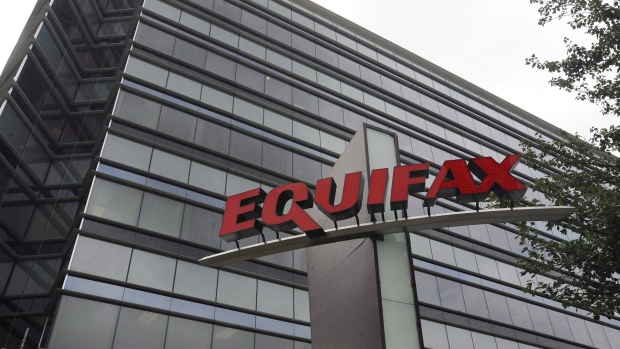
Equifax fell short of privacy obligations to Canadians, says privacy commissioner - CP24 Toronto's Breaking News

OTTAWA - Canada's privacy commissioner says Equifax fell short of its privacy obligations to Canadians during and after a global data breach in 2017.

Privacy concerns included poor security safeguards, retaining information too long, inadequate consent procedures, a lack of accountability for Canadians' information and limited protection measures offered to affected individuals after the breach.

Commissioner Daniel Therrien says these exacerbated the impact of the breach, which affected more than 143 million people around the world, including 19,000 Canadians.

Equifax Canada and its U.S.-based parent company agreed to enter into a compliance agreement and has taken steps to improve their security, accountability and data destruction.

The breach occurred after hackers gained access to Equifax Inc.'s systems through a vulnerability the company had known about for more than two months, but had not fixed.

While Equifax Canada offered free credit monitoring to breach victims for at least four years, other protections didn't match what was offered by the parent company, including credit freezes that restrict access to credit files.


from Business - Latest - Google News http://bit.ly/2GcAdRB
via IFTTT
April 10, 2019 at 12:31AM

The IMF cut Canada's growth outlook — but Deloitte says its forecast is still too optimistic - Financial Post

Canada’s growth prospects are bleaker than they were at the start of 2019, according to the International Monetary Fund’s latest outlook, which lands amid speculation over whether a global recession is coming.

The IMF cut its growth estimate for Canada to 1.5 per cent in 2019, down from its previous estimate of 1.9 per cent growth in January, according to the World Economic Outlook report published Tuesday.

Canada is not alone in the expected slowdown. In fact, the IMF cut its overall global growth forecast to 3.3 per cent for 2019, down from its prediction of 3.5 per cent in January and a dip from global growth of 3.6 per cent in 2018. Growth peaked at about 4 per cent in 2017.

The organization blamed the rockier outlook on U.S.-China trade tensions, problems in Germany’s auto sector, tighter credit policies in China, uncertainty around Brexit and financial vulnerabilities in advanced economies. In Canada, it found trade conflicts and the oil price rollercoaster have had a particular impact.

While there’s increasing hope that trade issues could be resolved, the IMF said the “risks are tilted to the downside.”

“A further escalation of trade tensions and the associated increases in policy uncertainty could further weaken growth,” the report stated. “The potential remains for sharp deterioration in market sentiment.”

However, Canada is poised to benefit from the trade dispute between the world’s two most powerful economies.

“Trade diversion leads to substitution of China’s exports to the United States: Mexico and Canada benefit most, reflecting their close proximity to, and strong trade relations with, the United States,” the IMF said.

The IMF expects global growth will return to 3.6 per cent in 2020. It predicts growth in Canada will pick up to 1.9 per cent by then.

But Deloitte Canada chief economist Craig Alexander painted a more pessimistic picture in his April economic outlook, also released Tuesday.

“They’re too optimistic,” Alexander said on the IMF report in an interview.

Alexander expects Canadian growth to top out 1.3 per cent in 2019 and improve only slightly to 1.5 per cent in 2020, lower than both IMF estimates and the 1.8 per cent five-year average growth rate estimated in the 2019 federal budget.

“The reality is that many people’s expectations of what represents good growth is actually too high,” Alexander said.

The biggest challenges facing the Canadian economy are the impact of lower commodity prices on the energy sector and the fact that debt-laden consumers are no long fuelling growth with big retail and real estate purchases, Alexander said.

“If you think over the last 10 years since the economic recovery began, really consumers have done a lot of the heavy lifting,” he said.

That changed last year with the introduction of the mortgage stress tests. But exports and foreign direct investment haven’t boomed to make up for it despite the low Canadian dollar.

Even if some Canadian industries benefit from U.S. tensions with China, Deloitte believes businesses are being very conservative in their investment plans given uncertainty over when (or whether) the USMCA will be ratified. Volatility in financial markets has also inspired cautious behaviour, Alexander said.

On top of this, it has been 10 years since the last recession. Most business cycles last about eight to 10 years. In late March, analysts noted a brief yield curve inversion – a typical harbinger of recession.

While a “dreaded R word (recession)” isn’t believed to be the most likely outcome, Deloitte isn’t ruling out a contraction. Canada needs to work on its competitiveness in the long run, including in its tax and regulatory regimes, to encourage investment, Alexander said.

Other economists are calling for a more nuanced look at indicators that seem negative. TD Economics chief economist Beata Caranci doesn’t think investors should fret as much over net outflows in foreign direct investment.

While the energy sector is often used as a poster child of “foreign investor skittishness,” areas such as manufacturing have seen inflows of foreign direct investment, Caranci wrote in a Tuesday report.

International investments by Canadian financial and insurance institutions “occurred from a position of strength and ultimately reflects the large growth opportunities outside Canadian borders.”

• Email: ejackson@nationalpost.com | Twitter:


from Business - Latest - Google News http://bit.ly/2D7ANxU
via IFTTT
April 10, 2019 at 03:25AM

Oil Markets Set For Further ''Disruption'' | OilPrice.com - OilPrice.com

Already rocked by excessive volatility, the oil market could become even more volatile in the coming months, according to the chief strategist of JTD Energy Services, with geopolitical disruptions pushing prices higher.

"It's almost like 2011, when (former Libyan dictator Muammar Gaddafi) was toppled. If ... Libya comes into play, that's only going to add more tightness to the market," John Driscoll told CNBC.

The situation in Libya escalated surprisingly quickly last week when the Libyan National Army, a formation affiliated with the eastern Libyan government, launched an attack on the UN-recognized cabinet in Tripoli. The attack followed a statement by LNA leader General Khalifa Haftar that Libya will soon have a single government, sparking hopes of a negotiation between the two rival governments.

Of course, Venezuela and Iran continue to be the usual suspects when it comes to near-term oil price projections with U.S. sanctions targeting the oil industry of both countries as a regime-changing tool.

"Things are terrible there [in Venezuela],” Driscoll said. “Oil output is plummeting, then you've got this wave of electrical outages that have halved their exports."

In fact, the latest shipping data from Reuters and TankerTrackers.com revealed that Venezuela’s March oil exports remained surprisingly stable on February despite the string of blackouts, at a daily rate of around 900,000 bpd.

As for Iran, the analyst said Washington’s aim of bringing down the country’s oil exports to zero was “unrealistic” and “possibly even delusional”, adding that the higher prices rose, the more demand there will be for Iranian oil and it will “find an outlet.”

Brent crude passed the US$70 a barrel mark for the first time in months a few days ago and now, thanks to the new from Libya, it has continued rising. According to Driscoll, this price recovery will not be as short-lived as he himself predicted a month ago thanks to the events in Libya, Iran, and Venezuela.

By Irina Slav for Oilprice.com

More Top Reads From Oilprice.com:


from Business - Latest - Google News http://bit.ly/2Vu1qV0
via IFTTT
April 09, 2019 at 09:30PM