Selasa, 02 Juli 2019

Elizabeth Warren blasts former FDA commissioner for joining Pfizer's board - STAT

WASHINGTON — Sen. Elizabeth Warren on Tuesday called for Scott Gottlieb, who resigned as commissioner of the Food and Drug Administration in April, to leave Pfizer’s board of directors.

In a letter, the Massachusetts Democrat applauded Gottlieb’s tenure at FDA but suggested his decision to join the drug giant “smacks of corruption.”

Gottlieb’s decision to join a corporation he once regulated, Warren wrote, “makes the American people rightfully cynical and distrustful about whether high-level Trump Administration officials are working for them, or for their future corporate employers.”

advertisement

Warren is among the leading candidates for her party’s presidential nomination in 2020. Many of her legislative priorities in recent years have fallen under FDA’s purview, including an aggressive bill aimed at lowering drug prices and a $100 billion proposal to counter the opioid epidemic.

Gottlieb announced last week that he would join Pfizer’s board beginning June 27, sparking immediate criticism that the company would have unmatched sway with the agency that regulates it. The move also allowed critics of the Trump administration to pounce on the perceived hypocrisy of an official who touted his work to lower drug costs accepting a leadership position with the world’s largest pharmaceutical manufacturer.

Gottlieb’s move, however, is typical.

Every FDA commissioner over the past 38 years has joined the board of a pharmaceutical company after leaving the agency, with the exception of David Kessler, who served as commissioner from 1990 to 1997. Robert Califf and Peggy Hamburg, the commissioners who immediately preceded Gottlieb, took posts at Cytokinetics and Alnylam Pharmaceuticals, respectively.

In a statement, Gottlieb said he respected Warren and would respond to her letter “promptly, directly, and privately.”

“While I was at FDA, I had a productive relationship with Sen. Warren, working together to advance shared public health goals,” he said.

Despite her criticism, Warren’s letter also touched on her broad approval for Gottlieb’s accomplishments at the agency — rare praise for a Trump administration official from a liberal Democrat and 2020 presidential candidate. 

“Unlike other administration officials who dedicated themselves to rolling back public health and consumer regulations, you often used your tenure to strengthen protections for Americans,” Warren wrote.

Warren, however, also wrote that Gottlieb is the second high-ranking federal official to leave government for industry in recent months. Warren also cited John Kelly, President Trump’s former chief of staff, who joined the board of a for-profit company operating a large detention center for migrant children in Florida.

Gottlieb also told STAT last week that he was “proud of the affiliation.”

“I’ve never been shy about my belief that America has the best biopharmaceutical sector in the world and this sector and its output of beneficial medicines is one of our great national achievements,” Gottlieb said in an email. “At the same time, I’m confident my record at FDA demonstrates I put the public health interest first and called balls and strikes based on the science and the public interest.”

In the letter, Warren also touted anti-corruption legislation that she said “would shut the revolving door and prohibit giant companies like Pfizer from wielding undue influence.”

That bill would prohibit many private companies from hiring or paying senior government officials in the four years following their departure.

Nicholas Florko contributed reporting. 

Let's block ads! (Why?)


https://www.statnews.com/2019/07/02/warren-blasts-gottlieb-pfizer-board/

2019-07-02 14:24:27Z
52780325188322

Budweiser IPO: AB InBev prepares its Asia business for biggest listing of the year - CNN

Budweiser Brewing Company APAC, the largest brewer in Asia by retail sales, plans to offer 1.63 billion shares for between 40 and 47 Hong Kong dollars ($5.13 to $6.02), according to a document setting out the terms of the IPO that was shared with CNN Business.
That would raise between $8.3 billion and $9.8 billion for the brewer of Bud Light, Beck's and Stella Artois. The biggest IPO of the year so far, by Uber (UBER) in May in New York, raised $8.1 billion.
The world's biggest brewer could use the funds to reduce its massive debt load. But AB InBev CEO Carlos Brito suggested in late June that listing in Asia could also lead to acquisitions in the region.
"The number one reason to do the listing is to have a platform in the region that is seen as closer to those markets and connected to what the region will do, since that's something that can be attractive to local groups," he told the Financial Times.
AB InBev became the world's largest brewer by borrowing money to fund a series of acquisitions. Its most recent mega purchase, of SABMiller, increased the company's debt to $102.5 billion in 2018.
The Fat Jewish's Babe Wine has been bought by the owner of Budweiser
The IPO could also help the company in China, the world's largest market for beer. AB InBev's sales in the country grew 8.3% last year, with its super premium brands performing especially well.
Institutional investors could submit orders starting on Tuesday, according to the IPO document. The IPO will be opened to retail investors on July 8, and the stock will list on the Hong Kong Stock Exchange on July 19.
Budweiser APAC plans to sell 95% of the shares to international institutional investors. Only 5% will be set aside for retail investors, unless underwriters choose to release additional shares.
JPMorgan (JPM) and Morgan Stanley (MS) are joint sponsors on the deal, while Bank of America Merrill Lynch (BAC) and Deutsche Bank (DB) are acting as joint global coordinators.
AB InBev declined to comment.

Let's block ads! (Why?)


https://www.cnn.com/2019/07/02/investing/budweiser-ipo-ab-inbev-asia/index.html

2019-07-02 13:45:00Z
52780324568971

Trader Joe's, Green Giant veggies recalled due to Listeria risk Trader Joe's, Green Giant veggies recalled due to Listeria risk - CNN

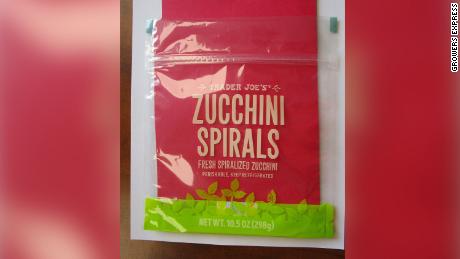
The vegetable products were voluntarily recalled by manufacturer Growers Express due to concerns about possible contamination with the bacteria Listeria monocytogenes, the FDA said in a Monday statement.
The packaged vegetables were produced at a factory in Biddeford, Maine, and were distributed to grocery stores across the United States, primarily in Massachusetts, Connecticut, Pennsylvania and Maine. The FDA issued a list of the stores and states affected.
Most of the potentially contaminated products have "Best if Used By" dates between June 26 and 29, 2019. No Green Giant frozen or canned vegetables are recalled.
"Listeria is an organism that can cause serious and sometimes fatal infections in young children, frail or elderly people, and others with weakened immune systems," said the FDA.
Other short term symptoms include high fever, severe headaches, stiffness, nausea, abdominal pain and diarrhea, according to the FDA. Listeria infections can cause pregnant women to have miscarriages and stillbirths.
If you think your veggies might be recalled, or if you can't read the date on your packaged veggies, the FDA urges you to not consume them and to throw away the packages.
Most of the potentially contaminated products have "Best if Used By" dates between June 26 and 29.
"The safety of our consumers is our first priority," said Tom Byrne, president of Growers Express in a statement.
"We self-reported the need for this recall to the US Food and Drug Administration and stopped production immediately after being notified of a single positive sample by the Massachusetts Department of Health."
Growers Express issued a full list of the products recalled. It includes:
  • Green Giant Fresh Butternut Squash Cubes
  • Green Giant Fresh Butternut Squash Noodles
  • Green Giant Fresh Butternut Squash Diced
  • Green Giant Fresh Cauliflower Crumbles Fried Rice Blend
  • Green Giant Fresh Ramen Soup Bowl
  • Green Giant Fresh Sweet Potato Cauliflower Crumbles
  • Green Giant Fresh Zucchini Noodles
  • Signature Farms Cauliflower Crumbles
  • Trader Joe's Butternut Squash Spirals
  • Trader Joe's Zucchini Spirals
Growers Express said it is sanitizing the factory and equipment involved and conducting additional safety tests. No other Growers Express products were involved in the recall.

Let's block ads! (Why?)


https://www.cnn.com/2019/07/02/health/vegetable-trader-joes-green-giant-recall-trnd/index.html

2019-07-02 13:22:00Z
52780324511040

John Oliver's Latest Show Went Very Hard At Amazon [Video] - 2oceansvibe News

Nowadays, everyone is doing their best to live that convenient life.

Meals for the week delivered to your door are a huge plus, and the same is true for online shopping.

Click, pay, and wait for the goodies to arrive – nice.

If you ask the people that work in the warehouses at, say, Amazon, it’s a bit of a different vibe on the floor. Much like the picture painted by that ‘Amazon Race’ game, the working conditions aren’t always that pleasant.

During Sunday’s Last Week Tonight, host John Oliver went in for a closer look at warehouses. As you can imagine, Amazon wasn’t impressed, but we will get to that later.

Go for it, John:

Not a great look.

Let’s get to the response from Amazon via Rolling Stone:

“As a fan of the show, I enjoy watching John make an entertaining case for the failings of companies … But he is wrong on Amazon. Industry-leading $15 minimum wage and comprehensive benefits are just one of many programs we offer,” said Amazon executive Dave Clark in a statement.

“We are proud of the safe, quality work environment in our facilities … But unlike over 100,000 other people this year, John and his producers did not take us up on our invitation to tour one of our facilities … If they had they would have met the amazing people who work in our operations. People whose passion and commitment are what makes the Amazon customer experience special. I am proud of our team and to suggest they would work in an environment like the one portrayed is insulting.”

John Oliver can say with certainty that he’s been called far worse than ‘insulting’ during his time as host of Last Week Tonight.

Amazon, your move.

[source:rollingstone]

Let's block ads! (Why?)


https://www.2oceansvibe.com/2019/07/02/john-olivers-latest-show-went-very-hard-at-amazon-video/

2019-07-02 13:00:38Z
52780325071182

OPEC weighs extension of production cuts amid slackening demand - CBC.ca

OPEC is deciding whether to extend its current deal to cut production for six to nine months as the oil cartel faces a weakening demand outlook because of waning global growth.

The decision by member representatives meeting Monday is complicated by tensions between the U.S. and Iran that have sent prices higher.

Saudi Arabia's Energy Minister Khalid Al-Falih, asked if a six- or nine-month extension was more likely, said that "we will not know for sure until tomorrow. Most countries want nine months."

OPEC member representatives were meeting Monday at the organization's headquarters in Vienna and will meet with non-member producing states on Tuesday.

The current deal to support prices reduced production by 1.2 million barrels per day starting from Jan. 1 for six months. Most of the cuts came from OPEC nations, who agreed to cut 800,000 barrels per day, with the rest of the cuts coming from Russia and other countries. The cuts were aimed to put upward pressure on the price of oil and reduce oversupply.

Tensions between the U.S. and Iran and attacks on tankers near the Strait of Hormuz have pushed up oil prices in recent days. Over the longer term however, demand could weaken according to the International Energy Agency, which cut its demand estimate earlier this month.

On Monday oil prices rose after Russia and Saudi Arabia backed an extension of the cuts. Brent crude traded 2.9 per cent higher at $66.60 US per barrel.

'A much harder market to forecast'

Since December's decision to cut production, conditions in the oil market have become increasingly complex, making a decision over an extension less clear.

"It's a much harder market to forecast," said Amy Myers Jaffe, senior fellow at the Council for Foreign Relations.

"I'm of a confused mind, and I think many participants are," Jaffe said. "I think the outlook right now is very ripe for a supply shock."

Geopolitical turmoil and production problems in various markets have led to concern that oil supply would be tight, conditions which tends to push the price of oil higher. Tensions have been rising in the Middle East as the U.S imposed new sanctions on Iran, and oil tankers have been attacked near the Strait of Hormuz, a narrow passage through which a fifth of all oil traded around the world passes. And production out of Venezuela, once one of the world's largest producers, has collapsed.

Experts say a military conflict between the U.S. and Iran would further constrain oil supply and send oil prices higher.

In addition to the supply concerns, there are worries over demand not least because of the slowdown in the global economy partly as a result of trade tensions between the U.S. and China. That raises the prospect of lower oil demand and consequently lower prices.

To some degree, those opposing forces have counter-balanced each other, but the duelling dynamics make it difficult to predict what's likely to happen with the price of oil, and that may make decisions for OPEC leaders challenging.

Jaffe expects the price of oil to continue rising for the next few months.

"I disagree with people on the thesis that the geopolitical risk and the razor-thin supply doesn't matter because the economy is slow, because it just hasn't slowed down that much," Jaffe said.


from Business - Latest - Google News https://ift.tt/2J3azQy
via IFTTT
July 01, 2019 at 09:50PM

Are you ready for 0% interest rates? - Motley Fool Australia

Those rubbing their hands in glee at the thought of the official cash rate falling to 1% tomorrow will soon have sore hands. It turns out the Reserve Bank of Australia (RBA) could be cutting interest rates deeper and longer than what most are expecting.

Interest rates in the US are set to fall to zero, predicted the head of bond, income and defensive strategies at Pendal Group Ltd (ASX: PDL), Vimal Gor, in an article in the Australian Financial Review.

ASX investors should be alive to the prospect that rates in this country could be heading in the same direction and that cheaper debt has more than overcome the threat of a trade war and weaker earnings outlook to take the S&P/ASX 200 (Index:^AXJO) (ASX:XJO) index to 11-year highs in the closing moment of FY19.

What 0% interest rates mean for the ASX

The RBA and the US Federal Reserve are by no means joined at the hip, but zero rates mean that the Fed will have to cut the Fed Fund Rate 10 times by 25 basis points (the interest rate in the US is 2.5% compared to our 1.25%).

Such a drastic move will likely force the RBA to lower rates below the 1% to 0.75% mark that most mainstream economists are forecasting.

While growth stocks will also benefit from lower for longer rates, many have already enjoyed a strong run, and income stocks are likely to dominate the spotlight in FY20.

Some of the market’s favourite income stocks include the likes of Telstra Corporation Ltd (ASX: TLS), Commonwealth Bank of Australia (ASX: CBA), Transurban Group (ASX: TCL) and Sydney Airport Holdings Pty Ltd (ASX: SYD).

How likely are we to hit 0% rates?

But how believable is the return of the zero-rate environment? Afterall, we aren’t in the midst of another global financial crisis.

Gor points to the explosion of global debt as a factor to support his thesis. Debt in advanced economies stood at only 31% of GDP at the end of 2007 but has surged to 266% at the end of last year.

Further, the popularity of the German 10-year government, which is yielding a negative 0.3% (yup, investors are happy to pay the German government interest to own its bonds), gives him another reason to believe in the zero future.

Neutral rate setting could be lower than market expectations

What’s alarming is that Gor believes if the RBA were to lift rates above 2%, it would unleash the same “mayhem of consumer credit stress as that experienced in the depth of the crisis”.

If he is right, what this means is that the “neutral” rate is closer to 1% and where local rates are at the moment can’t be considered stimulatory.

Australia has to go through a painful deleveraging cycle if we are to return to sustainable growth. While ASX investors can continue to celebrate the lower for longer rate cycle for now, we should be prepared for the day of reckoning somewhere down the track.

Until I can smell the sulphur, I intend to make the most of the rate cut euphoria!

NEW! Top 3 Dividend Bets for 2019

With interest rates likely to stay at rock bottom for months (or YEARS) to come, income-minded investors have nowhere to turn... except dividend shares. That’s why The Motley Fool’s top analysts have just prepared a brand-new report, laying out their top 3 dividend bets for 2019.

Hint: These are 3 shares you’ve probably never come across before.

They’re not the banks. Not Woolies or Wesfarmers or any of the “usual suspects.”

We think these 3 shares offer solid growth prospects over the next 12 months. The first two currently offer fat, fully franked yields. The last is a surprising REIT offering you the benefits of being a landlord with none of the hassle! You’ll discover all three names and codes in "The Motley Fool’s Top 3 Dividend Shares for 2019."

Even better, your copy is free when you click the link below. Fair warning: This report is brand new and may not be available forever. Click the link below to be among the first investors to get access to this timely, important new research!

The names of these top 3 dividend bets are all included. But you will have to hurry. Depending on demand – and how quickly the share prices of these companies move – we may be forced to remove this report.

Click here to claim your free copy right now!

Motley Fool contributor Brendon Lau owns shares of Commonwealth Bank of Australia. Connect with him on Twitter @brenlau.

The Motley Fool Australia owns shares of and has recommended Sydney Airport Holdings Limited, Telstra Limited, and Transurban Group. We Fools may not all hold the same opinions, but we all believe that considering a diverse range of insights makes us better investors. The Motley Fool has a disclosure policy. This article contains general investment advice only (under AFSL 400691). Authorised by Scott Phillips.


from Business - Latest - Google News https://ift.tt/2X90nKg
via IFTTT
July 01, 2019 at 06:42AM

Risky business: The allure of liquified natural gas - Aljazeera.com

Around the world, energy firms are investing $1.3 trillion in new terminals to transport liquified natural gas (LNG) - mostly for fuel extracted in North America and sold to buyers in East Asia, according to a new report released on Monday by Global Energy Monitor.

Companies hoping to capitalise on the global gas boom by massively increasing LNG export and import infrastructure could be gambling on the future of the industry. They risk creating "stranded assets" - what the report describes as equipment, machinery and facilities that may one day lie in waste after an initial period of profitability.

Due to a combination of low natural gas prices, the decreasing price of renewable forms of energy that are in competition with fossil fuels, and the anticipated future regulatory costs of greenhouse gas emissions, the long-term infrastructure outlays may not make financial sense, the report said.

"Everybody knows there's been a fracking boom for the last decade, so the investments in fracking are [typical of] extraction: you drill and, well, and you take your chances," said Ted Nace, co-author of the report and executive director of Global Energy Monitor. "Investing in infrastructure is a different animal, in that you're making 40-year investments. These are questionable."

"This is a lot of resources to sink into something that may be at the end of its life cycle, in terms of how the economy will transition," Nace told Al Jazeera.

His organisation, where the research goal is to highlight clean-energy alternatives, produces the Global Fossil Infrastructure Tracker to map projects currently under development.

LNG, while representing barely five percent of all natural gas in 2000, now comprises 11 percent - reflecting advances in the technology required to liquify gas for export and then re-gasify it for import. If completely implemented, the proposals on hand will mean 20 percent of all gas production will be LNG by 2030.

Historically, the vast majority of natural gas stayed in the same forms, being extracted, then transported in pipelines to nearby regions, and finally burned for electricity generation or other purposes.

But due to soaring demands for power, heating and cooling - for consumers who are thousands of miles from the source - the process of drilling, converting to LNG, and shipping to overseas purchasers is enormously lucrative at present.

However, the price tag for terminals under development might lock economies into a part of the energy sector that will become increasingly unpredictable decades down the road, given advances in green energy.

Twenty-five percent of global warming impacts are caused by methane, which is the biggest component of natural gas.

There are 116 export terminals and 86 import terminals currently in development.

LNG export terminals are under way in 20 countries, of which Canada and the United States account for 74 percent of proposed new capacity, the report said. If built, LNG terminals in pre-construction and construction would increase current global export capacity threefold.

An addendum to the report showed that the three firms planning to invest the most money in new terminal capacity are NextDecade ($44bn), ExxonMobil ($39bn) and Freeport-McMoRan Inc ($37bn).

Many of the proposed terminals would export gas coming from the Permian Basin in wesern Texas via the Gulf of Mexico coast.

At present, the biggest LNG exporters are Qatar, Australia, and Malaysia, while the biggest importers are Japan, China, and South Korea. So the planned new terminals are aimed at seizing a much greater market share for North American suppliers.

"Overcapacity doesn't serve the industry well," said Nace. "It leads to fire sales ... too many sellers, and not enough buyers."

"The supporting players need to look at this, especially investors," Nace said. Referring to the decline in coal stocks that in recent years hit pension funds and universities, he noted, "We're saying the same thing with this [LNG expansion]".

"If putting together an energy fund, this is not where I'd put my money," he added.

The report said that only eight percent of terminal capacity currently under development has moved beyond the final investment decision stage into actual construction, so there may still be a way to avoid overbuilding new terminals.


from Business - Latest - Google News https://ift.tt/2NqD9j0
via IFTTT
July 02, 2019 at 06:31AM