Kamis, 17 Oktober 2019

Cannabis industry contributed to spike in home prices, housing shortages: survey - CTV News

TORONTO -- Canada’s booming cannabis industry has led to a spike in housing prices and home shortages in some regions, according to a new report from RE/MAX.

For example, Smiths Falls, Ont. -- home to Canopy Growth, which Bloomberg dubbed the largest cannabis producer in the world -- now employs 1,300 people.

An unintended consequence of that employment growth is a shortage of available homes.

RE/MAX states the surrounding Rideau-St. Lawrence region is in the midst of a housing shortage because of high demand. Home sales rose by 27.1 per cent year-over-year with average prices going up by 10.5 per cent.

“I think the real story is that the cannabis industry is creating jobs and demand in the (housing) market,” Christopher Alexander, RE/MAX executive vice-president of the Ontario and Atlantic region told CTVNews.ca in a phone interview.

But Smiths Falls is simply part of a larger boom. The report explains that “this trend is more pronounced in Eastern Canada, where there’s a greater number of large-scale cannabis producers.”

Atlantic Canada, where these new operations have been setting up, has been experiencing an “economic renaissance,” the real estate company said.

In cities like Wentworth, N.S. -- which houses the Breathing Green Solutions facility -- new and active listings are down and months of inventory dropped from 45 in 2018 to nine in 2019, according to the Nova Scotia Association of Realtors.

The city’s September home sales have jumped exponentially year-over-year. One province over, in Atholville, N.B., which is home to Zenabis Global Inc.’s 420-person operation, the real estate market is similarly seeing a boom.


BIG PRODUCERS HAVE BIGGEST EFFECT ON REAL ESTATE

But RE/MAX is seeing similar spikes in other markets further west such as Ontario’s Windsor-Essex area, where cannabis producer Aphia has set up a 1,000-employee facility in Leamington, Ont.

In this case, September home sales spiked by nearly 8 per cent with average prices rising 9.10 per cent.

All that being said, Alexander noted the direct effects of the cannabis industry on real estate are not yet fully known.

“It’s still early because the industry is still in its infancy,” he said, explaining that when growth companies set up shop in small communities like Smiths Falls and Leamington, there’s a direct correlation to job creation and home sales.

Toronto Real Estate
Real estate for sale signs are shown in Oakville, Ont. on Dec.1, 2018. THE CANADIAN PRESS/Richard Buchan

“Whenever there’s job creation … it creates more demand in the marketplace and more often than not, (home) prices will start to rise,” Alexander said.

The report stated that while Western Canada doesn’t boast the same number of large-scale producers as Eastern Canada, the Prairies are seeing a “much heavier influx of cannabis retailers.”

Alberta -- which leans more heavily on private retailers -- has become a real estate hot spot in part because of the cannabis industry -- despite Canadians’ initial resistance to pot shops, RE/MAX said.

Calgary alone boasts 50 cannabis storefronts which dwarfs Greater Vancouver’s 23 pot shops or Toronto’s six legal shops.


HOMEBUYERS BUY NEAR POT SHOPS, DESPITE SUPPOSED OBJECTIONS

A recent RE/MAX consumer survey found that 65 per cent of Canadians said they didn’t want to live near a cannabis store. But Alexander says there’s a discrepancy between what prospective homebuyers say they want and what they end up doing.

According to a 2019 poll of RE/MAX brokers, one in five Canadians live near a cannabis store and 72 per cent of people surveyed said living near one ultimately wasn’t a factor in deciding to move.

“Consumers are funny in that regard,” Alexander said. When you take into account the shortage of available homes in Canada over the past five years, being next to a pot shop is “the last thing on people’s minds.”

On the other hand, 25 per cent of homeowners said they would actually move if a cannabis store opened up in their neighbourhood, with 44 per cent saying they’d like to live near a pot shop.

Although real estate is largely cyclical, Alexander didn’t expect demand for homes nor home prices to go down anytime soon.

He expected the “natural progression” of the current trend to be people looking outside of the cities where producers have set up shop to find cheaper homes.


from Business - Latest - Google News https://ift.tt/2MQiBwQ
via IFTTT
October 17, 2019 at 02:53AM

Truss Beverage Co. announces first of six cannabis beverage brands, Flow Glow™ - Canada NewsWire

"As a cannabis beverage specialist we're excited to partner with the team behind Flow Alkaline Spring Water, a beverage brand Canadians know and love, on a CBD-infused spring water to round-out our product portfolio for launch," says Brett Vye, CEO, Truss Beverage Co. "The newly formed Flow Glow™ Beverages Inc. will produce products that are an important part of our Truss beverage line-up. We can't wait to bring Flow Glow™ and our other Truss cannabis beverages to market."

Flow Glow™ is the first brand partnership for Truss Beverage Co., and will be one of six brands within the Truss beverage portfolio for launch. At launch, Flow Glow™ will be available in two flavours: Goji+Grapefruit and Raspberry+Lemon. Each flavour will contain 10mg of CBD.

"We know CBD products are in high demand in Canada, especially within the growing self-care space. The Truss product portfolio will include a range of products with CBD, THC or both," says Vye. "In line with our other Truss beverage offerings, Flow Glow™ offers new and existing cannabis consumers of legal age the opportunity to begin exploring the wonders of cannabis in a way that's right for them personally."

"With more than 80% of the Truss portfolio of products being low-to-mid level dose, we'll offer safe, consistent and unique beverages for every adult consumer and a full range of occasions," says Vye. "Flow Glow™ CBD spring water is just one of the wonderful new products Truss will be bringing to market for Canadians to enjoy and explore."

More about Flow Glow™:

  • Includes natural spring water, whole grape extract, organic blue agave and natural ingredients and flavours
  • Flow Glow™ will be available in a paperboard Tetra Pak. The pack is nearly 70 per cent renewable-resource-based, 100 per cent recyclable and designed to have a low carbon footprint
  • Proudly manufactured in Belleville, Ontario
  • Planned national availability for December across Canada (retail availability and pricing will vary by province)

About Truss Beverage Co.
Truss Beverage Co. is a joint venture between Molson Coors Canada and HEXO Corp, a licensed producer of cannabis products in Canada, formed to lead innovation in the development of non-alcoholic, cannabis-beverages for the Canadian market. The Truss portfolio will have a range of products for Canadian consumers of legal age, providing a variety of taste experiences for multiple beverage occasions. Truss Beverage Co. will deliver on its promise to be the cannabis beverage specialist through extraordinary products and marketing that reinforces its commitment to responsible adult use.

About Flow Glow™ Beverages Inc.
Flow Glow™ Beverages Inc. is the CBD-infused premium beverage company founded in 2019 by entrepreneur Nicholas Reichenbach, founder and CEO of Flow Alkaline Spring Water. Flow Glow™ Beverages Inc. has a unique source for its water - an artesian spring in Ontario, Canada - giving it a delicious, smooth taste. The sustainable packaging is designed to have a low carbon footprint and the company aims for the highest levels of sustainability across its operations.

SOURCE Truss Beverage Co.

For further information: For media enquiries, please contact: Kristine Moshonas, NATIONAL PR, 416 523 3207, kmoshonas@national.ca


from Business - Latest - Google News https://ift.tt/2IXvnbQ
via IFTTT
October 17, 2019 at 03:45PM

Cannabis edibles will soon be legal: Everything you need to know - CTV News

TORONTO -- New regulations for cannabis edibles and topicals came into effect Thursday, with products expected to reach store shelves in December.

Here’s what consumers and parents need to know.


WHAT ARE EDIBLES?

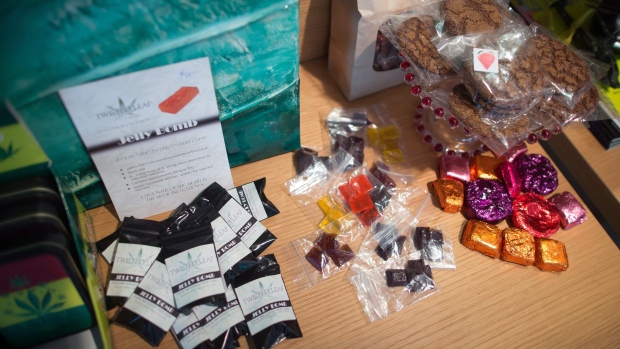
“Edibles” is the umbrella term for cannabis-infused products, which can include beverages, cotton candy, dissolvable strips, gummy candies or baked goods. And topicals are products which can include lotions, balms, and oils absorbed through the skin for relief of pain or inflammation, according to Leafly.

They’re typically made with cannabis oils or dried flowers and can be a good option for consumers looking to avoid inhaling the smoke from joints or pipes. However, the cannabis effects in edibles can be more potent and affect users for longer periods of time.

Health Canada also notes the latency period after consuming edibles can range from half an hour to four hours before the effect fully kicks in.

This was the “most profound difference” to other cannabis products, Adine Fabiani-Carter, chief marketing officer at cannabis company Tilray, told CTVNews.ca over the phone. “If you’re not feeling an immediate effect, don’t just consume more.”

Otherwise, users can accidentally consume too much and experience stronger, unpleasant and unintended effects. The general advice that she and Health Canada have for new users is to “start low and go slow.”

“The beauty of edibles and beverages is you can really manage the potency … people can really control how they feel,” Fabiani-Carter explained.


WHAT HAPPENS ON THURSDAY?

Beginning Thursday, Oct. 17, licensed producers can begin submitting their edible and topical products to Health Canada. Those products will then be subjected to a 60-to-90-day approval and procurement process.

In other words, Thursday is simply one of the first hurdles for edibles to reach the legal Canadian market. A Health Canada press release said it’s created a “strict legal framework to regulate and restrict access to cannabis keeping it out of the hands of youth, and profits out of the pockets of criminals and organized crime.”

Cannabis edibles
Edible marijuana products are displayed for sale at a Weeds Glass & Gifts medical marijuana dispensary in downtown Vancouver on Friday, May 1, 2015. THE CANADIAN PRESS/Darryl Dyck


WHEN AND WHERE CAN I BUY EDIBLES?

Well, it depends. Because of the aforementioned approval process, products couldn’t hit the legal market until mid-December -- at the earliest.

On top of that, provinces will each be allowed to further regulate the products. Depending on where you live, new products can be available in licensed cannabis retail stores, Crown companies such as the Nova Scotia Liquor Corporation (NSLC), and online.

As to whether gummies or beverages will come out first, Alanna Sokic, senior consultant for Global Public Affairs, told CTVNews.ca said that will depend on the focus of individual companies and provinces.

“I would say that B.C. and Quebec tend to take a more robust and certainly more aggressive public health approach to regulating industries such as cannabis,” she said.

And despite the wide variety of products available in the U.S. market, many licensed producers have been concentrating on certain products such as gummies which they get on the market earlier on.

Health Canada further explained that licensed vendors and producers will “need time to become familiar with and prepare to comply with the new rules.”

edibles
In this Wednesday, Aug. 22, 2018, photo, edible marijuana samples are set aside for evaluation at Cannalysis, a cannabis testing laboratory, in Santa Ana, Calif. THE CANADIAN PRESS/AP/Chris Carlson


IS THERE A RISK TO CHILDREN?

The restrictions on where people can buy or ingest edibles will be largely the same as combustibles. Fabiani-Carter explained these could include being unable to buy cannabis beverages at a bar or eating a pot brownie in a public space.

Although, monitoring this could prove difficult, particularly because of these products’ physical similarity to non-cannabis counterparts. Health Canada also warns that it is still illegal to transport cannabis or cannabis-infused products across the Canadian border.

Back in June, Health Minister Ginette Petitpas Taylor said, “I encourage adult Canadians who choose to consume cannabis to remember to store it safely out of the reach of children and youth.” Health Canada also said edibles should be designed to be unappealing to young people, but still has not stipulated which colours, flavours or shapes would be allowed.

Sokic elaborated the majority of products will have “very plain” packaging, the now-standard THC symbol, health warnings and the levels of THC or CBD. “It’ll have a very sterile look to it.”

The government of Canada also warned users to avoid eating cannabis edibles with nicotine, alcohol, other drugs or health products and to not drive while impaired.

“The amended regulations are the next step in our process to reduce the risks to public health and safety from edible cannabis,” Minister of Border Security and Organized Crime Reduction Bill Blair said in the same release.


WHAT’S THE BUSINESS IMPACT?

While the rollout of initial cannabis products has been rocky at times, the pot market has proven to be quite lucrative. But edibles are expected to quickly overtake the market now that they have been legalized.

Since the first wave of legalization, 11 per cent of Canadians say they already consume edibles with 13 per cent expected to buy legal edibles. A recent Deloitte report suggests that edibles and alternatives will be worth $2.7 billion a year in Canada -- making up 60 per cent of the legal cannabis market.

Tilray’s Fabiani-Carter explained this is because “people are moving away from combustible forms of consumption.”


WILL EDIBLES BE AVAILABLE ACROSS ALL OF CANADA?

No. Cannabis edibles such as pot brownies, candy or baked goods won’t be available in Quebec.

Quebec's junior health minister Lionel Carmant told CTV Montreal in July that “the first thing we need to take care is our public health before economical issues.”

With this in mind, Quebec will permit some products that don’t appeal to children such as edible cannabis oil and butter. Carmant argued topical creams -- used for medicinal use -- should only be prescribed by doctors.


from Business - Latest - Google News https://ift.tt/31iZIYT
via IFTTT
October 16, 2019 at 05:52AM

At midday: TSX flat despite cannabis stock rally - The Globe and Mail

Canada’s main stock index advanced on Thursday, led by cannabis stocks as legalization of marijuana derivatives including edibles and beverages took effect.

At 11:19 a.m. ET, the Toronto Stock Exchange’s S&P/TSX composite index was up 1.82 points, or 0.01 per cent, at 16,429.00

Shares of Hexo Corp. were the top performer on TSX with a 9.2-per-cent jump, while those of Aurora Cannabis Inc. Canopy Growth Corp. and Cronos Group Inc. rose between 1.2% and 4.4%.

Story continues below advertisement

So-called Cannabis 2.0 comes a year after Canada legalized use of recreational marijuana. Sales are expected to begin in mid-December.

Another bright spot was shares of First Quantum Minerals Ltd, which jumped 15.2 per cent after Pangaea Investment Management, backed by one of China’s biggest copper producers Jiangxi Copper, raised its stake in the Canadian miner to 10.8 per cent.

Only four of the index’s 11 major sectors were higher, led by a 2.1-per-cent jump in the healthcare sector.

The materials sector, which includes precious and base metals miners and fertilizer companies, added 1.4 per cent.

A deal on Britain’s departure agreed with the European Union sent sterling to a five-month high on Thursday and hoisted European stocks to a year-and-a-half peak before doubts about UK parliamentary support hauled them back.

Wall Street rose as upbeat earnings from Netflix and Morgan Stanley affirmed a strong start to the U.S. reporting season while the dollar fell against the euro as the common currency got a lift on the long-awaited Brexit deal.

While the British government and the EU may have reached a deal, the road ahead is unclear. The Irish border riddle remains a sticking point for Northern Ireland’s Democratic Unionist Party (DUP), which has withheld its backing.

Story continues below advertisement

That reduces the chances of British Prime Minister Boris Johnson winning parliamentary ratification at an extraordinary session of parliament on Saturday.

But after weeks of negotiations, an agreement being struck was welcomed by British and EU leaders.

“Where there is a will, there is a deal - we have one!” said European Commission President Jean-Claude Juncker as the news broke from Brussels.

Sterling, the key gauge of Brexit sentiment all along, jumped as much as a 1 per cent against the dollar, putting it on course for its best six-day gain in more than 30 years before the doubts and grumbles set in.

Market optimism faltered when the Northern Ireland party said it could not support the agreement, torpedoing hopes of a smooth passage through parliament.

Having ran up as far as $1.2988, sterling fell well under $1.28 before regaining momentum to trade at $1.2857, up 0.21 per cent on the day.

Story continues below advertisement

London’s benchmark FTSE index jumped 0.61 per cent as the pound slid but the broad-market pan-European STOXX 600 lost most of its gains, rising 0.17 per cent. The FTSEurofirst index of leading regional shares rose 0.17 per cent.

UK Gilts, German Bunds, gold and most other safe havens also rebounded after selling off.

Netflix Inc shares rose 2.3 per cent in heavy trade after the video streaming service provider added slightly more paying subscribers than Wall Street expected in the third quarter.

Morgan Stanley gained 3.1 per cent after the big lender beat analysts’ expectations for quarterly profit, buoyed by higher revenue from bond trading and M&A advisory fees.

Earnings season is dictating U.S. market moves, which has historically been the case, said Kristina Hooper, chief global market strategist at Invesco.

“The buck stops with earnings,” Hooper said. “The good news is most earnings reports thus far have been positive and that’s provided some nice momentum for the market.”

Story continues below advertisement

The Dow Jones Industrial Average rose 48 points, or 0.18 per cent, to 27,049.98. The S&P 500 gained 10.07 points, or 0.34 per cent, to 2,999.76 and the Nasdaq Composite added 21.56 points, or 0.27 per cent, to 8,145.74.

Emerging-market stocks also gained for a sixth day - their longest winning streak since early April - after U.S. Treasury Secretary Steven Mnuchin said U.S. and Chinese trade negotiators were nailing down a Phase 1 trade deal text for their presidents to sign next month.

But U.S. retail sales fell for the first time in seven months, suggesting manufacturing-led weakness was spreading to the broader economy. U.S. consumption has been one of few bright spots in the global economy, so the data fanned concerns the trade war would ultimately tip the world into recession.

The dollar index fell 0.37 per cent, with the euro up 0.43 per cent to $1.1118. The Japanese yen strengthened 0.20 per cent versus the greenback at 108.58 per dollar.

Oil prices fell as industry data showed a larger-than-expected increase in U.S. inventories, though the drop was limited by the Brexit deal.

Brent crude futures fell 25 cents to $59.17 a barrel. U.S. West Texas Intermediate crude lost 24 cents to trade at $53.12.

Story continues below advertisement

Reuters


from Business - Latest - Google News https://ift.tt/2BhcnRk
via IFTTT
October 17, 2019 at 06:20PM

Beef recall expanded in B.C., Alberta and Ontario over E. coli concerns - Global News

Dozens more raw beef products are being recalled from some restaurants and grocery stores in Alberta, British Columbia and Ontario, including Walmart and Pusateri’s.

The items are just the latest to be ensnared in a series of safety warnings from the Canadian Food Inspection Agency, which also found possible E. coli O157:H7 contamination among products from the Toronto-based slaughterhouse Ryding-Regency Meat Packers Ltd.

The additional products include a Steakhouse Select brand of cracked pepper beef sirloin roast sold at Walmart in Ontario and Alberta; a Fast Fresh Fabulous brand of bacon-wrapped medallions sold at Overwaitea in British Columbia; and more than a dozen products sold at various Pusateri’s Fine Foods outlets in the Toronto area.

READ MORE: Ground beef and burger products served in Alberta recalled due to E.coli risk

Other recalled beef and veal products were sold at stores in Windsor, St. Catharines, Ottawa and Markham, ON. A list of products recently added to this recall is available on the CFIA website.

Story continues below advertisement

Ryding-Regency Meat Packers Ltd. distributes raw beef and veal products to hotels, restaurants and institutions across the country. The Canadian Food Inspection Agency suspended the plant’s food safety licence on Sept. 17, saying the facility “failed to implement effective control measures.”

That was followed by several recall warnings throughout October, including items sold in Quebec and New Brunswick and nationally to restaurants.

Nearly 700 different beef and veal products have been implicated in these recalls. A full list of recalled products is available on the CFIA website.

READ MORE: These are the most common food-borne illnesses and what foods carry them

There have been no reported illnesses but the agency advises consumers to throw out recalled products or return them to the location where they were purchased. The agency notes that food contaminated with E. coli O157:H7 may not look or smell spoiled but can still cause nausea, vomiting, abdominal cramps and bloody diarrhea.

© 2019 The Canadian Press

A fresh new look for Global News is here, tell us what you think

Take a Survey


from Business - Latest - Google News https://ift.tt/33EFc6i
via IFTTT
October 17, 2019 at 08:21PM

Netflix finally admits the obvious: Competition from Apple and Disney will hurt - MarketWatch

Bloomberg News/Landov
Apple Inc. is just one of many well-funded competitors looking to challenge Netflix Inc. in streaming video.

Netflix Inc. has been dismissive of the anticipated impact of an onslaught of streaming competitors, but as a wave of well-financed streaming services from big-name companies is about to be unleashed, the tone from executives has changed.

Through the years, Netflix NFLX, +0.71%  has insisted that “there is room for multiple parties to have attractive offerings” in streaming media, and that new competitors would not “materially affect our growth because the transition from linear to on-demand entertainment is so massive.” At the beginning of the year, as plans for competing streaming services were arriving rapidly, executives attempted to change the conversation by saying, “We compete with (and lose to) Fortnite more than HBO.”

From January: Netflix thinks ‘Fortnite’ is a bigger competitor than other streaming services

Netflix finally admitted the obvious when it reported third-quarter earnings Wednesday afternoon, though: At least in the short term, the arrival of a slew of new services from companies like Apple Inc. AAPL, -0.40%  and Walt Disney Co. DIS, +0.85%  is going to hurt its new-subscriber growth. The company expects that subscriber growth will decline year-over-year in the usually strong fourth quarter and for the entire year, even with a strong slate of new shows.

“The launch of these new services will be noisy,” Netflix executives said in their quarterly letter to shareholders. “There may be some modest headwind to our near-term growth, and we have tried to factor that into our guidance.”

In the analyst interview session, Netflix executives played down those comments. When asked about the change in tone toward the competitive landscape, Chief Financial Officer Spencer Neumann said “inevitably there will be some curiosity and some trial of those new service offerings.”

“Fundamentally, it is more of the same,” Netflix Chief Executive Reed Hastings responded. “Disney is going to be a great competitor, Apple is just beginning, but they will probably have some great shows too. But again, all of us are competing with linear TV. We are all small relative to linear TV.”

For more: Here comes the Netflix competition, with lots of fresh content

That sounds more similar to Netflix‘s long-held rhetoric that it expects to win in the long term as viewers transition en masse from a linear model to the on-demand streaming option that Netflix pioneered. As it has for years in mentioning competitors like Amazon Prime and Hulu, Netflix insisted that bringing more viewers into the streaming world will eventually help it secure a larger presence in a completely changed media environment.

“In our view, the likely outcome from the launch of these new services will be to accelerate the shift from linear TV to on-demand consumption of entertainment,” Netflix executives wrote, while specifically mentioning Disney+, Apple TV+, AT&T Inc.’s T, -0.29%  HBO Max and Comcast Corp.’s CMCSA, -0.15%  Peacock streaming services. “Just like the evolution from broadcast TV to cable, these once-in-a-generation changes are very large and open up big, new opportunities for many players.”

“We did well during the first decade of streaming,” executives wrote in closing out the “Competition” section of its quarterly letter. “We’re ready to compete to earn consumers’ attention and viewing.”

Netflix shares rose nearly 8% in after-hours trading following the results, and were up that amount in premarket trade Thursday, so investors must not have been surprised that executives tacitly admitted the obvious. They were likely relieved that Netflix’s subscriber growth bounced back from a shocking disappointment in the previous quarter.

See also: ‘Stranger Things’ fans are flocking to buy this item

The company’s actions could speak louder than its words, though. In addition to retracting its guidance for an annual increase in new paying customers this year, Netflix said it would stop projecting U.S. subscriber additions in future results, which does not bode well for growth in its biggest market. Netflix — which saw domestic subscribers decline in the second quarter for the first time in eight years and come in lighter than their projections in Wednesday’s results — will now only provide global membership forecasts, a twist on Apple’s move to stop breaking out iPhone unit sales.

It is never a good sign when companies stop offering information that they have long provided, or change their tune about the competitive landscape. In this case, though, Netflix appears to just be admitting the obvious: The next few months, at the very least, look like they will be tough for the company’s business in the U.S.

Let's block ads! (Why?)


https://www.marketwatch.com/story/netflix-finally-admits-the-obvious-competition-from-apple-and-disney-will-hurt-2019-10-16

2019-10-17 10:53:00Z
52780411167461

What to expect from the tentative agreement that could end GM strike - Fox Business

The United Auto Workers announced a potentially strike-ending tentative agreement with General Motors on Wednesday, and while its exact contents aren't known, it's expected to fix some of the key issues that caused autoworkers to walk off the job more than a month ago.

Continue Reading Below

The tentative agreement is expected to appease autoworkers who were concerned by GM's plan to idle the Detroit-Hamtramck Assembly Plant in Michigan by placing production of an electric truck there. Meanwhile, the fate of the shuttered plant in Lordstown, Ohio, is unknown.

TickerSecurityLastChangeChange %
GMGENERAL MOTORS COMPANY36.65+0.39+1.08%

The agreement is also expected to make a pathway for temporary workers to become permanent employees after three years of consecutive service to the company. The number of temporary workers on GM's payroll fluctuates, but they typically make up about 7% of its hourly workforce.

In addition, it is expected that GM agreed to back down from making workers pay for a larger share of their health insurance costs. GM autoworkers are responsible for an extremely low cut of their health insurance costs — 3%. GM wanted to up that share to 15%, which is basically half the amount the average American worker pays, but GM employees were not having it.

Picketing United Auto Workers Richard Rivera, left, and Robin Pinkney react to news of a tentative contract agreement with General Motors, in Langhorne, Pa., Wednesday, Oct. 16, 2019. (AP Photo/Matt Rourke)

GM's Mexico production was another sticking point in the negotiations. The company's decision to open and invest in plants in Mexico while closing others in the U.S. is a sticking point for many UAW members on strike.

The company is the largest auto employer in Mexico, which is now home to assembly plants for brands including Ford, Toyota and Honda.

Picketing United Auto Workers Richard Rivera, left, and Will Myatt react to news of a tentative contract agreement with General Motors, in Langhorne, Pa., Wednesday, Oct. 16, 2019. (AP Photo/Matt Rourke)

CLICK HERE TO READ MORE ON FOX BUSINESS

Local UAW chapter leaders and the UAW GM National Council are expected to vote on the tentative agreement on Thursday. If they approve the deal, it will be up to rank-and-file members to ratify it. UAW members are remaining on strike as they await the results of Thursday's vote.

FOX Business' Grady Trimble contributed to this report.

GET FOX BUSINESS ON THE GO BY CLICKING HERE 

Let's block ads! (Why?)


https://www.foxbusiness.com/markets/tentative-agreement-gm-strike-details-what-we-know

2019-10-17 10:20:29Z
52780410508716