Sabtu, 02 November 2019

Berkshire Profit Hits a Record as Buffett's Cash Pile Grows - Yahoo Finance

(Bloomberg) -- Berkshire Hathaway Inc.’s operating profit jumped 14% to a record as Warren Buffett’s conglomerate saw gains from its railroad and got some long-awaited earnings from Kraft Heinz Co.

Operating earnings climbed to $7.86 billion in the third quarter as investment income rose and Berkshire’s reinsurance group had the first underwriting profit in more than a year despite losses from a Japanese typhoon. Revenue climbed 2.4% on increases from the company’s insurers and manufacturing businesses.

The results pushed Buffett’s cash pile to a record $128 billion, even as he completed a $10 billion investment in Occidental Petroleum Corp., his chunkiest purchase in more than year. Aside from that deal, Buffett was a net seller of stocks in the quarter and bought back less of Berkshire’s own shares than some analysts expected, raising more questions over how long the legendary investor will wait to use his dry powder.

The fact that Buffett’s sprawling businesses are spitting out cash faster than he can find good places to invest it is a problem many companies would envy. But there are signs that the idle funds are weighing on growth, and Berkshire’s stock is on track for its worst underperformance since 2009. The company’s Class A shares gained 5.7% this year through Friday’s close, short of the 22% climb in the S&P 500 Index during that time.

Berkshire recognized $467 million in gains related to its share of Kraft Heinz’s profit in the first nine months of 2019. The gains came all at once after the stake left a blank spot in Berkshire’s results for two quarters as the packaged food giant delayed reporting results amid regulatory probes.

Buffett has been stung by Kraft Heinz’s stumbles over the past year. After Kraft Heinz announced a $15.4 billion writedown in February, Berkshire said it would take a $2.7 billion charge on its stake. Kraft Heinz released first-half results in August and was back on track in October, when it reported third-quarter profit that beat analyst estimates. That sent shares climbing to their highest level since May, though they’re still well below Berkshire’s carrying value. Berkshire said Saturday it didn’t believe an impairment charge was necessary at this time.

Buffett’s railroad was able to open up all key routes in the third quarter that had been impacted by flooding. The 5% profit gain at Berkshire’s railroad, BNSF, also benefited from higher rates on shipments even as volumes fell.

Berkshire’s $700 million of repurchases in the quarter was a nearly 75% increase from the amount of stock the company bought back in the second quarter. Still, third-quarter buybacks fell short of Berkshire’s record repurchase of $1.7 billion stock in the first quarter and was lower than the $900 million estimated by analysts at UBS Group AG.

While Buffett received more flexibility to buy back shares last year, his repurchases have been modest compared to other giant companies, especially financial firms. Bank of America Corp. said in June that it planned to repurchase more than $30 billion of its stock over the next year.

More key figures from the results:

Pretax earnings from Berkshire’s group of manufacturers, which includes Precision Castparts Corp. and Marmon, jumped 4.9% in the third quarter. That was boosted by gains at Precision due to demand for aerospace products and increases at Clayton Homes, which manufactures mobile homes and has been expanding into site-built construction.Net earnings slipped 11% to $16.5 billion. Under new accounting rules, Berkshire has to report swings in its investment portfolio in its net income figures. The unrealized gains during the third quarter were about $8 billion compared to a gain of $10.2 billion in the same period a year earlier.

(Updates with details throughout.)

To contact the reporter on this story: Katherine Chiglinsky in New York at kchiglinsky@bloomberg.net

To contact the editor responsible for this story: Michael J. Moore at mmoore55@bloomberg.net

For more articles like this, please visit us at bloomberg.com

©2019 Bloomberg L.P.

Let's block ads! (Why?)


https://finance.yahoo.com/news/berkshire-profit-climbs-record-buffett-120912867.html

2019-11-02 12:09:00Z
CBMiVGh0dHBzOi8vZmluYW5jZS55YWhvby5jb20vbmV3cy9iZXJrc2hpcmUtcHJvZml0LWNsaW1icy1yZWNvcmQtYnVmZmV0dC0xMjA5MTI4NjcuaHRtbNIBAA

Compliments fresh-cut vegetables recalled due to possible Listeria - CP24 Toronto's Breaking News


The Canadian Press
Published Saturday, November 2, 2019 6:43AM EDT
Last Updated Saturday, November 2, 2019 6:50AM EDT

OTTAWA -- The Canadian Food Inspection Agency say Sobeys Inc. is recalling Compliments brand fresh cut vegetable products due to possible Listeria contamination.

The products, which include Sweet Kale Blend, Vegetable Platter with a Ranch Dip, Broccolini, Cauliettes -- Chopped Cauliflower, Power Green Blend and Green Beans, all have best before dates of Oct. 31, 2019.

They were sold across Canada, and anyone who has them should either throw them out or return them to the store where they were purchased.

There have been no reports of illness linked to the products, however, Listeria poisoning symptoms can include vomiting, nausea, fever, muscle aches, severe headache and neck stiffness.

This report by The Canadian Press was first published on Nov. 2, 2019.


from Business - Latest - Google News https://ift.tt/2ppWeHa
via IFTTT
November 02, 2019 at 05:43PM

Motor Mouth: Peugeot and FCA’s marriage of convenience is doomed to failure - Driving

Lookin’ for love in all the wrong places/
Lookin’ for love in too many faces/
Searchin’ their eyes and lookin’ for traces/
Of what I’m dreamin’ of”

“Looking for Love” — Johnny Lee

Peugeot (PSA) and Fiat Chrysler Automobiles (FCA), it was revealed this week, are looking to tie the knot.

It’s not, shall we say, the first trip to the altar for either brand, Peugeot, for instance, having recently bought GM’s failing Opel and Vauxhall divisions as part of a 2016 expansion mandate. It has also owned Citroen since 1976 and, like so many other companies looking for rapid expansion, created a luxury division – DS – in 2009.

But compared to Fiat Chrysler, Peugeot is the proverbial vestigial virgin. Not only is the current iteration of the multi-national conglomerate a who’s who of the previously unloved – FCA’s current brands include Abarth, Alfa Romeo, Chrysler, Dodge, Fiat, Jeep, Lancia, Maserati and Ram trucks, not to mention Ferrari which it just spun off – in recent years it has become the Elizabeth Taylor of auto companies, having wed, or been affianced to, seemingly every automaker of note.

First there was Daimler, with whom it was legally betrothed. But since that “partnership” ended in acrimonious divorce in 2007, FCA has courted General Motors, BMW, Volkswagen and, most recently, Nissan-Renault, FCA always the pursuing party. Hell, this is the second time FCA has been seen chasing the French automaker, the Financial Times reporting that Auburn Hills (by way of Italy) was trying to woo Peugeot just before its embarrassing dalliance with Nissan-Renault.

Indeed, of the “biggies,” perhaps the only automaker FCA has seemingly never eyed is Toyota. (I suspect that, having learned a lesson with the regimented Germans, even the most optimistic suitor determined the even more buttoned-down Toyota was not marriage material.) To even the casual observer, Fiat Chrysler’s entreaties smack of the kind of cloying desperation seldom seen in the business world.

And for any union to work – especially business unions, even more than personal affairs – there has to be a tangible benefit for both parties. Beyond the always-promised “economies of scale” – and that wasn’t enough to keep DaimlerChrysler together – there doesn’t seem to be much gained other than bragging rights (the union would vault Peugeot-Fiat Chrysler to fourth largest among the world’s automakers).

One of the supposedly important benefits, claim the analysts, is FCA helping Peugeot re-establish itself in the North American market, the French automaker eyeing a return for about five years now. Uhm, note to Carlos Tavares (currently CEO of Peugeot): Don’t you think that, if FCA really had any idea how to market small European hatchbacks to Americans, it would have already done so with Fiat?

Nor do there seem to be many synergies. Peugeot does make some darling little motors, but Fiat’s failure in North America has nothing to do with technology. Neither party has tremendous expertise in the Far East, and both are fairly non-existent in South America. As Bernstein analyst Max Warburton told the Financial Times, “It’s obvious that PSA does not offer any synergies in the U.S., and very little in LatAm. Putting PSA and FCA together in China doesn’t solve much either: two wrongs don’t make a right.” Other than Peugeot getting access to a few Jeep platforms, it’s tough to see what all the hoopla is about.

The one significant benefit that might be tangible is electric vehicles, both companies struggling to comply with various governments’ EV mandates. But, as Mazda has just proven with its new MX-30, being a (relatively) small automaker does not preclude bringing real innovation to the EV segment. Indeed, with so much of battery and EV propulsion technology being developed by outside consultants, electric vehicles alone would not seem reason enough to be eternally wed.

PSA Peugeot Citroen Chief Executive Carlos Tavares delivers a speech during the presentation of the company’s 2018 full year results, in Rueil Malmaison, west of Paris, Tuesday, February 26, 2019. Thibault Camus / Getty

Nor is this likely to be an easy conjoining of personalities. Officially, the management structure is to have Carlos Tavares as the CEO of the merged company, the position he now holds with Peugeot. Similarly, John Elkann will be the union’s board chairman, the title he currently enjoys at Fiat Chrysler.

But how long will all this kumbaya-ness last? Tavares, as you may remember, jumped ship from Renault to Peugeot not two weeks after being rebuffed in his demand to be made top dog there. And anyone who has followed the Agnelli dynasty – Elkann is the grandson of legendary Italian industrialist Gianni Agnelli – knows they are Italian royalty and always expect to be treated as such.

Note to Carlos Tavares: Don’t you think  if FCA knew how to market small European hatchbacks to Americans, it would have done so with Fiat?

Why this union of management should go any better than any other – DaimlerChrysler, for instance, was a hot mess right from the get-go and the intrigue that has plagued Nissan-Renault these last 12 months has been truly disturbing – is not exactly clear.

Nor is it proven that bigger is always better. DaimlerChrysler didn’t work. General Motors is much better off since it jettisoned about half its brands. Ford, meanwhile, thinks that rationalization – it’s dumped nearly all of its passenger cars in favour of focusing on trucks and SUVs – rather than expansion of its product line is the key to future success. Indeed, even FCA itself provides no proof that mergers work. Yes, Chrysler avoided a government buyout, but Fiat has been an abject failure in North America and Magic Wagons are not exactly a plague on Italian highways.

Indeed, in the end, one can’t help ask why they either party felt the need to rush into marriage. Why couldn’t they, like so many other modern automakers, just sleep around? Ford and General Motors didn’t walk down the aisle to produce new 10-speed transmissions. BMW, Mercedes-Benz and Audi didn’t propose some form of polyamorous merger when they decided to cooperate in developing autonomous driving technology.

Even the most schoolmarm-ish of automakers, Toyota, has resorted to inter-automaker promiscuity, having created an entire sports car portfolio from trysts with multiple partners. Its Supra, as seen in all the news lately, is the result of a recent affair with BMW, while its lesser sportster, the 86née-Scion-FR-S, is the out-of-wedlock progeny of a fling with Subaru. And don’t tell me there’s no loyalty without matrimonial blessing; so happy is the world’s largest automaker with its dalliance that it’s commissioned a second-generation GT to keep the blood-, er product-, line going.

So, the question is not so much why these two automakers feel the need to sleep – er, work – together, but why is FCA seemingly so eager to put a ring on Peugeot’s finger?


from Business - Latest - Google News https://ift.tt/2WAY4AO
via IFTTT
November 01, 2019 at 05:53PM

Saudi Crown Prince approves kick-off of Aramco IPO on Sunday, sources say - CNBC

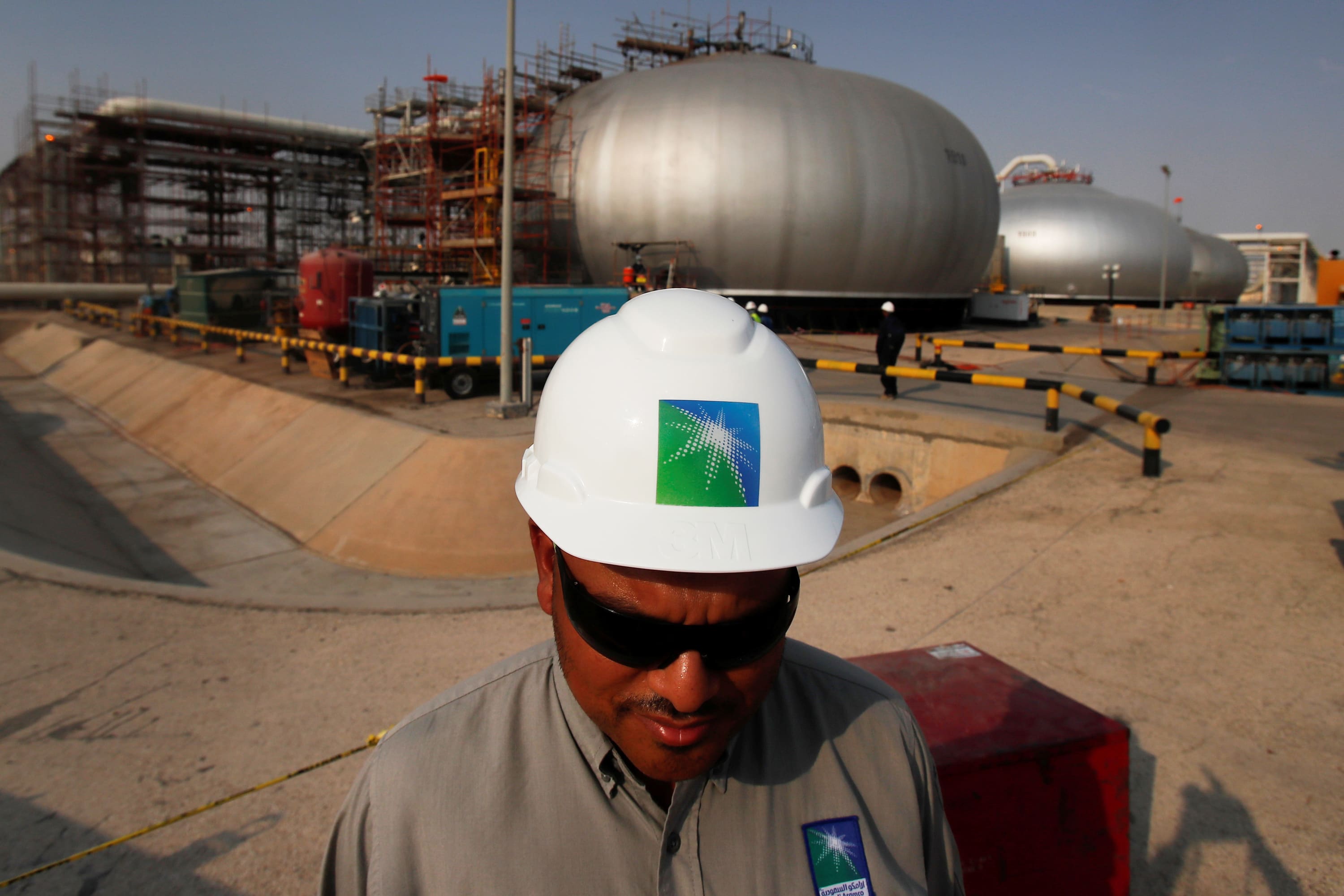
An employee in a branded helmet is pictured at Saudi Aramco oil facility in Abqaiq, Saudi Arabia October 12, 2019.

Maxim Shemetov | Reuters

Saudi Arabia's Crown Prince Mohammed bin Salman on Friday agreed that the initial public offering of state oil giant Aramco will be announced on Sunday, five sources familiar with the matter told Reuters.

The world's top oil company will announce its intention to float on Nov. 3, the sources said.

"The crown prince finally gave the green light," one source said.

Aramco declined to comment.

Saudi Aramco officials and advisers have held last-minute meetings with investors over the past few days in an attempt to achieve as close to a $2 trillion valuation as possible ahead of an expected listing launch on Sunday, according to sources.

The final meeting by the Saudi government on Friday evening was to decide whether to go ahead with the listing.

To achieve $2 trillion, in the largest IPO in history, Riyadh needs the initial listing of a 1%-2% stake on the Saudi stock market to raise at least $20 billion-$40 billion.

The listing is the centerpiece of the crown prince's plan to shake up the Saudi economy and diversify away from oil. But there have been various delays since it was first announced in 2016.

Prince Mohammed wants to eventually list a total of 5% of the company. An international sale is expected to follow the domestic IPO.

Let's block ads! (Why?)


https://www.cnbc.com/2019/11/01/saudi-crown-prince-approves-kick-off-of-aramco-ipo-on-sunday-sources-say.html

2019-11-02 07:47:52Z
52780424314141

Jumat, 01 November 2019

Here are 10 snaps of Vancouver bus drivers not in uniform today (PHOTOS) - Vancouver Is Awesome

Vancouver bus drivers
Photo: Elana Shepert / Vancouver Is Awesome

Notice anything different about your Vancouver bus driver today?

Bus Drivers across the Lower Mainland are wearing their own clothes instead of their Coast Mountain Bus Company uniforms as part of the first steps in the transit strike.

Unifor, the union representing Coast Mountain Bus Company bus operators and maintenance trades, issued strike notice earlier this week for the first time in 18 years.

The initial phase of the job action began at 8 a.m. this morning, with nearly 5,000 transit operators not wearing their CMBC uniforms and maintenance workers not doing overtime.

In addition, Unifor representatives distributed t-shirts to transit operators as part of the uniform ban that began this morning.

We asked a few drivers if they’d allow us to take a photo of them in their street clothes.

Vancouver bus drivers
Photo: Elana Shepert / Vancouver Is Awesome
Vancouver bus drivers
Photo: Elana Shepert / Vancouver Is Awesome
Vancouver bus drivers
Photo: Elana Shepert / Vancouver Is Awesome
Vancouver bus drivers
Photo: Elana Shepert / Vancouver Is Awesome
Vancouver bus drivers
Photo: Elana Shepert / Vancouver Is Awesome
Vancouver bus drivers
Photo: Elana Shepert / Vancouver Is Awesome
Vancouver bus drivers
Photo: Elana Shepert / Vancouver Is Awesome
Vancouver bus drivers
Photo: Elana Shepert / Vancouver Is Awesome
Vancouver bus drivers
Photo: Elana Shepert / Vancouver Is Awesome
Vancouver bus drivers
Photo: Elana Shepert / Vancouver Is Awesome


from Business - Latest - Google News https://ift.tt/33c5Un6
via IFTTT
November 02, 2019 at 04:04AM

'This is not the fix you are looking for': Why Encana's proposed move is being widely criticized - Financial Post

CALGARY – Encana Corp.’s name change and relocation isn’t likely to radically improve its performance on its own, even if it does attract more passive U.S. investment funds, financial analysts and fund managers say.

Encana president and CEO Doug Suttles said on an earnings call Thursday that plans to move the iconic company’s headquarters from Calgary to the U.S. were motivated in part by its underperformance to its U.S.-based peers.

“We intend to establish a U.S. domiciled company that will expose us to significantly larger and growing pools of investment,” Suttles said during the earnings call. “By looking at prior data, this will expose our company to almost three times the amount of index participation we see today as a Canadian company.”

But shares of Encana, which — subject to shareholder approval — will be renamed Ovintiv Inc. when it moves its headquarters from Calgary to a U.S. location, have also underperformed Canadian peers, compelling many analysts to warn that the company’s relocation will not necessarily improve its performance.

“This is not the fix you are looking for,” Raymond James analyst Chris Cox wrote in a research note Friday, adding, “companies that are successfully executing strategically and conveying a compelling message to the Street typically don’t go through a rebranding effort.”

Encana shares fell 6 per cent Thursday after the relocation and rebranding effort was announced, but were trading up 0.7 per cent to $5.20 per share Friday. Cox said he didn’t believe the sell-off was overdone.

“We believe the reaction reflects an investor base that is fatigued and frustrated that this (relocation) is garnering the attention of management, as opposed to more impactful solutions to reverse the disappointing share price performance since the company announced the merger with Newfield,” Cox wrote.

CIBC World Markets analyst Jon Morrison said in a note that he is “perplexed as to the path Encana is taking” because he doesn’t believe “the fact that Encana has been a Canadian-headquartered entity has led to any material share price underperformance.”

Encana senior vice-president, investor relations and communications Steve Campbell told the Financial Post that the move would allow Encana to be listed on the S&P 400 index, prompting a large number of passive funds to buy stakes in the company.

“Our number one job is to make a good return for the owner,” Campbell said, reiterating that Encana was looking to address the underperformance relative to U.S. players.

The company’s recent underperformance dates back to its announcement of a US$7.7-billion deal with Newfield Exploration in November 2018, which brought the company into a challenging play in Oklahoma.

Encana stock is down 33.38 per cent year to date, compared to  S&P/TSX Capped Energy Index’s nearly 11 per cent drop during the period.

Companies that are successfully executing strategically and conveying a compelling message to the Street typically don’t go through a rebranding effort

Chris Cox, analyst, Raymond James

Indeed, many analysts and fund managers were highly critical of the Newfield deal, as it signalled a change in focus for the company away from what used to be called its “core four” resource plays in Alberta and Texas.

“They didn’t appreciate the level of hatred for that play,” Ninepoint Partners senior portfolio manager and partner Eric Nuttall said of the deal, calling it “their worst move.”

The deal brought Encana into a resource play called the Scoop/Stack in Oklahoma, also called the Anadarko basin, which had been a challenging formation for other oil and gas operators to drill.

“No active energy investor wanted them to be in that play,” Nuttall said.

In its third quarter earnings call Thursday, the company said it was producing 162,000 barrels of oil equivalent per day from the formation, which is up 13 per cent from a year ago.

Nuttall also criticized the company for what he called a lack of alignment between shareholders and management. For example, he said CEO Doug Suttles is the second highest paid executive in Calgary but owns only 200,000 shares.

Encana CEO Doug Suttles in 2013. Gavin Young/Calgary Herald files

Financial Post Magazine’s CEO 100 Scorecard list on executive compensation among the country’s best performing companies published in October shows the average CEO on the list made $5.50 million annually on average over the past two years. In contrast, Suttles compensation for 2018 was around $12 million, according to Bloomberg.

Latest data from Bloomberg also shows Suttles owns 200,212 shares in Encana. When the company released its management information circular in March, it showed Suttles owned 188,793 shares. The circular does not list a minimum share ownership requirement of Suttles.

“We always want our management to be aligned with the shareholders,” Encana’s Campbell said.

Asked whether or not management would be buying more shares to further align with shareholders, Campbell said the company wouldn’t comment on plans to buy shares but added that Encana offered “compelling value.”

Analysts also criticized a handful of the company’s other acquisitions, including a major deal struck as oil prices were tumbling.

“What put Encana on their knees was that huge deal in 2014,” Canoe Financial senior portfolio manager and director Rafi Tahmazian said, referring to the company’s pivot towards a focus on oil by buying Athlon Energy for $7.1 billion in Sept. 2014.

The deal was struck just as global oil prices were collapsing from above US$100 per barrel to the US$30 per barrel range. Since that time, global oil prices have struggled to rise above US$65 per barrel.

Still, Tahmazian said the company also pulled off a number of better transactions, including the spin out of PrairieSky Royalty and its move to focus on the core four plays.

The company sold off numerous non-core assets following that disposition and had been reducing its debt.

“There are no catalysts on the horizon for the rest of the year, in our view, to cause the stock to outperform, as the company remains in ‘prove itself’ mode on oil growth,” Eight Capital Phil Skolnick wrote in a note.

Financial Post

• Email: gmorgan@nationalpost.com | Twitter:


from Business - Latest - Google News https://ift.tt/2r4Mp1H
via IFTTT
November 02, 2019 at 02:34AM

Here’s how experts say the Keystone oil spill could impact Canadian oil, gas prices - Global News

On Thursday, an estimated 9,120 barrels of oil spilled from TC Energy Corp.’s Keystone’s crude pipeline near Edinburgh, North Dakota.

Early estimates suggest 1.4 million litres of oil have spilled, affecting 2,090 square meters of land.

READ MORE: Keystone pipeline leaks more than 1.4M litres of oil in North Dakota

TC Energy has not yet disclosed the cause of the rupture, saying only that on Wednesday, the 93.8 million litre-per-day pipeline system to the United States would be shut off, after officials detected a drop in pressure.

Keystone XL clears another legal hurdle, what’s next?

The company said there were no injuries and that it was investigating the cause of the breach.

The pipeline has been shut down since the leak.

In addition to raising environmental concerns, the spill has prompted questions of how, and if, it will affect the Canadian oil industry. Will oil prices be impacted and will Canadians notice an increase in gas prices as the pump?

Story continues below advertisement

An estimated 9,120 barrels of oil spilled from TC Energy Corp.’s Keystone’s crude pipeline near Edinburgh, North Dakota.
An estimated 9,120 barrels of oil spilled from TC Energy Corp.’s Keystone’s crude pipeline near Edinburgh, North Dakota. Walsh County Emergency Mgmt / Handout

Here’s what experts say:

Patrick DeHaan, head of patroleum analysis at GasBuddy, says while the amount of oil lost is a “drop in the bucket” compared to how much oil the pipeline transports, from a spill perspective, the incident is “pretty significant,” and the implications are “fairly notable.”

Crude oil began flowing through the pipeline in 2010. It is part of a 4,324-kilometre system that is also to include the proposed $8 billion Keystone XL pipeline, designed to transport the oil from western Canada to terminals on the Gulf Coast.

“The fact that the pipeline has shut down now as a result of this spill, it sounds like there may be downtime of several days, if not longer, where this possibly affected portion of this pipeline where this breach occurred,” DeHaan said.

Story continues below advertisement

“And certainly since this pipeline carries Canadian crude oil down into the Unites States to refineries in the Midwest, this could start to lead to a small backup in oil supply in Canada and that could negatively affect the price of Canadian oil.”

TC Energy has not said when pipeline operations would restart, but told shippers that service to U.S. Midwest refiners would remain shut during the outage. The line could remain shut for at least a week, according market sources told Reuters on Thursday.

READ MORE: U.S. State Department review doesn’t ease worries of Keystone XL pipeline opponents

DeHaan says the longer the pipeline is shut, the larger the problem could become.

“I would say in a matter of over five days, seven days it would start to become significant, so it would happen in fairly short order,” he said.

“And a pipeline breach of this magnitude — that calls into question the line’s integrity, so it may take longer than that.

“So I think we’re right on the cusp of having a larger backup problem in Canada at this point.”

Nebraska Supreme Court approves Keystone XL Pipeline

According to Roger McKnight, chief petroleum analyst with En-Pro International Inc., there is a high demand currently for Canadian crude oil, especially by refiners on the Gulf Coast and in the Midwest, because of the low cost.

Story continues below advertisement

He said there is a high demand for what is called distillates including jet fuel, heating oil and diesel fuel as we head into the winter months.

He says refiners are “trying to crank up the refineries to get ready for winter,” increasing the demand for this type of crude oil.

“Any interruption in the flow of crude to the refineries and in the in the Gulf Coast or in the Midwest does create some concerns as far as prices are concerned,” he said. “But U.S. inventories of crude are really very, very healthy right now.

“So it depends how long it takes for them to fix this and how the stock market really reacts to this news.”

READ MORE: Keystone pipeline shut down after potential spill in North Dakota

He says if traders looking at the futures market think this will be a major supply disruption, then it may cause a small spike in the price of crude, gasoline and diesel.

However, he says the pipeline would need to remain shut for longer than two weeks for there to be a large impact.

McKnight says he doesn’t think that will happen because officials will want to clean the spill and repair the pipeline as quickly as possible “because it’s in their best interest” to do so.

Story continues below advertisement

“I can’t see this lasting. This isn’t a major, major earth-shattering spill or leak,” he said. “It’s a minor one in terms of spill levels.”

Will gas prices be affected?

According to DeHaan, as of right now, the spill will likely only have “negligible” impact on gas prices in the Great Lakes area in the U.S. He says that is because the majority of the oil flowing through the Keystone pipeline does not end up back in Canada.

“But even then, until this pipeline is down for a period of time, that would amount to over a week. I wouldn’t say there would be widespread implications as a result of its shutdown,” he said.

“But after that, there would likely be more of a pricing impact in the U.S. simply because the breach in the pipeline severed the connection from Canadian oil fields to U.S. refineries.”

DeHaan says it’s likely the spill won’t have any impact, or will have “very limited impact” on gas prices in Canada.

“I wouldn’t expect that most motorists would feel really any impact from this,” he said.

He added, however, that some portions of Western Ontario, including Sarnia, could see a “very small” impact because refiners in the Great Lakes serve those areas.

Story continues below advertisement

However, he says if the pipeline remains shut for an extended period of time, Canadians may start to see “slight impacts” at the pump.

Montana judge blocks Keystone XL pipeline construction

McKnight, too, says the spill likely won’t have any major affects on gas prices.

“Matter of fact, I’m calling for prices to actually fall west of Thunder Bay over the short term,” he said, “because the Midwest refinery, they’re up to 90 percent capacity, which is a six percent increase over last week.”

— With files from Reuters and The Associated Press

© 2019 Global News, a division of Corus Entertainment Inc.


from Business - Latest - Google News https://ift.tt/36paoc7
via IFTTT
November 02, 2019 at 02:24AM