Rabu, 06 November 2019

KFC hopes to avoid a hot mess with new bamboo buckets for poutine - Toronto Star

Poutine just might be one of the messiest snack foods known to humankind.

That also, apparently, makes it the ideal way to test new, environmentally friendly packaging.

The gravy and cheese curd-laden mass of fries will be front and centre next year as KFC launches a trial with bamboo packaging. Eventually, the bamboo buckets could hold everything from the company’s fried chicken to french fries and chicken strips. But first up? Canada’s goopy, rich snack food icon.

“If it can handle the poutine, it can handle other things,” said KFC Canada president and general manager Nivera Wallani as the company announced a trial to begin in early 2020.

KFC has 650 restaurants across Canada, including 190 in Ontario. The company has committed to sourcing all of its fibre-based packaging from certified or recycled sources by next year. It also promised to remove all plastic straws and bags from its restaurants before the end of this year.

Wallani, who said KFC Canada has been working on the project for six months, wanted to make sure the new packaging was solid enough to hold the gravy and melted cheese, but breathable enough to let some moisture escape so the fries wouldn’t go soggy. (The existing poutine bucket is made out of black polypropylene and the current chicken bucket is made out of polyethylene coated paper.)

“There’s sustainability, and there’s food integrity. We needed to find something that would work with both,” said Wallani.

While there’s sometimes a concern that new packaging doesn’t do as good a job as the existing stuff, in the case of bamboo, it’s actually better than paper for deep-fried foods, because its breathability allows steam to escape, preserving that crunch factor.

“Styrofoam was really the ideal. But most fast food places aren’t using it any more because of sustainability problems. Bamboo comes much closer than paper,” said Sylvain Charlebois, senior director of the agri-food analytics lab at Dalhousie University.

Packaging has always been a problem for poutine producers, said Charlebois, who’s writing a history of the calorie-laden snack food, called “Poutine Nation.”

“This not a new problem. Packaging has been an issue for poutine for 50 years. When it first came out, they’d put the gravy in a separate container so the fries didn’t get too soggy,” Charlebois said.

Poutine is also less risky a way for KFC to put the new packaging through its paces, because it’s less central to the company’s brand, Charlebois said.

“If it doesn’t work, there’s less damage to the brand. Their brand is about chicken. As soon as you change the material, you don’t know how it’s going to react,” Charlebois added.

Bamboo is more readily available than some other sustainable packaging options, meaning that there shouldn’t be any problems lining up suppliers for a wider rollout, Charlebois said.

“Bamboo is low-hanging fruit. It’s there, it’s available, it’s dirt cheap, and you can do a lot of different things with it,” said Charlebois.

Still, while it’s dirt cheap relative to other sustainable options, bamboo packaging is still roughly twice as expensive as traditional paper containers, Charlebois said.

KFC says there won’t be any price increase because of the new packaging, but there could be a problem if the company decides to tweak its pricing in the future, said York University marketing professor Alan Middleton.

“In survey after survey, when they’re asked about sustainable packaging or other green initiatives, people say ‘I’d rather do it, but I’m not prepared to pay a premium, or at least not much of one,’” said Middleton.

Still, there’s a marketing value in having environmentally sustainable packaging, Middleton said, particularly when a company announces its plans bit by bit, rather than a giant effort all at once.

Get more business in your inbox

Get the business news and analysis that matters most every morning in our Star Business Journal newsletter.

Sign Up Now

“There’s reputational value to be gained by doing this. Even if people get sick of hearing every little announcement, it eventually sinks in that ‘ooh, those guys are trying,’” said Middleton.

The fast food industry is struggling to deal with just how quickly the demand for environmentally sustainable packaging has grown, Charlebois said.

“This caught a lot of the big chains by surprise. They really weren’t expecting the reaction to be so visceral and so quick. Two or three years ago, nobody really spoke about it,” Charlebois said.

Josh Rubin

JOIN THE CONVERSATION

Error!We have suspended your account in accordance with our Code of Conduct. For more information please visit Code of Conduct

Q:

What do you think of KFC making a move towards bamboo buckets?

Conversations are opinions of our readers and are subject to the Code of Conduct. The Star does not endorse these opinions.


from Business - Latest - Google News https://ift.tt/32jvPrF
via IFTTT
November 06, 2019 at 04:27AM

Housing supply dwindling as more people move into Mississauga - insauga.com


The market is booming in Mississauga (and Toronto and the GTA overall), but the attractiveness of the region is offset by the persistent lack of housing inventory and the continued supply and demand imbalance that's driving up competition (and prices). 

The Toronto Real Estate Board (TREB) recently announced that GTA realtors reported 8,491 residential sales through TREB's MLS system in October 2019—a 14 per cent increase compared to the 7,448 sales reported in October 2018. 

TREB says sales were up on a year-over-year basis for all major home types.

"A strong regional economy obviously fuels population growth. All of these new households need a place to live and many have the goal of purchasing a home. The problem is that the supply of available listings is actually dropping, resulting in tighter market conditions and accelerating price growth," said Michael Collins, president, TREB, in a statement. 

"During the recent federal election, some parties committed to more flexibility on the mortgage lending front, including the reintroduction of a 30-year amortization period for insured mortgages and more flexibility in the application of the OSFI mortgage stress test. These and other housing-related policy options should be brought forth in the new minority Parliament." 

While reintroducing 30-year mortgages and easing the stress test would get more people into the market, it's not yet clear if that would help solve the housing crisis, as it appears to be driven—at least partially—by a lack of available housing for interested buyers. 

TREB says that in October, new listings were down by 9.6 per cent compared to October 2018.

The tighter market conditions resulted in price growth across all major market segments.

Penelope Graham, the managing editor of real estate brokerage and website Zoocasa, said that sellers' market conditions prevailed across the Mississauga, Brampton, and Halton regions in October. 

According to Graham, the lack of inventory and high demand means that home prices are steadily on the rise, and buyers are finding that the competition is heating up with crowded open houses and multiple-offer situations becoming increasingly more common.

"Mississauga experienced sizzling market conditions in October, as the number of sales well outpaced the supply of new listings and transactions and price growth rose by double digits," Graham said. 

Graham says a total of 833 homes changed hands in the municipality, up 20.5 per cent compared to the same time frame in 2018. Coupled with a 5 per cent dip in new listings - just 1,137 homes were brought to market over the course of the month - that's pushed the city steeply into sellers' territory. 

Graham says the average home price rose by a whopping 17.6 per cent to $816,383.

According to TREB data, the average price of a detached house in Mississauga sits at $1,172,971. The average price of a semi-detached house is $753,410, the average price of a townhouse is $599,056 and the average price of a condo is $524,316. 

TREB is calling on all levels of government to work to produce more housing. 

"All levels of government affecting the GTA plus many international organizations have recognized that we continue to face a supply issue in our region for all types of housing," said TREB CEO John Di Michele in a statement. 

"TREB looks forward to continuing its work with policymakers at all levels to bring more supply online, which will help ensure a sustainable pace of price and rent growth over the longer term." 

The MLS Home Price Index composite benchmark was up by 5.8 per cent on a year-over-year basis in October 2019 - the strongest annual rate of growth since December 2017. 

The average selling price for all home types combined was up by 5.5 per cent to $852,142, compared to $807,538 in October 2018.

"As market conditions in the GTA have steadily tightened throughout 2019, we have seen an acceleration in the annual rate of price growth. While the current pace of price growth remains moderate, we will likely see stronger price growth moving forward if sales growth continues to outpace listings growth, leading to more competition between home buyers," said Jason Mercer, TREB's chief market analyst, in a statement.


from Business - Latest - Google News https://ift.tt/2pQ2U18
via IFTTT
November 06, 2019 at 03:40AM

Would McDonald’s CEO Steve Easterbrook have lost his job if he worked in Canada? - Financial Post

Would Steve Easterbrook, McDonald Corp.’s just ex-chief executive, be fired if he had worked in Canada?

McDonald’s has a policy that “employees who have a direct or indirect reporting relationship are prohibited from dating or having a sexual relationship.” Although we do not know yet who Easterbrook’s sexual relationship was with, we do know that, by definition, that person must have had at least an indirect reporting relationship to him.

With McDonald’s possibly facing a sexual-harassment class action, it had to be seen, from a branding standpoint, to “walk the walk” when the news emerged.

In such situations not so long ago, the subordinate in the relationship was quietly paid off and the rainmaker retained. Post #MeToo, that simply is not on. Imagine the public calumny in this case if the person Easterbrook dated was fired and he had stayed.

But would it be cause for discharge in Canada so as to deprive him of severance? Probably. C-suite executives have more stringent obligations than other employees. That is as it should be since they have to be role models as well as the individuals ultimately responsible for enforcing such company policies.

There is also a practical problem. If an executive is having a relationship with anyone subordinate to him (or her), others will assume the subordinate is getting ahead for that reason and be less motivated themselves. Suspicion will inherently fall on the subordinate’s evaluations and, if promoted, how that came about.

This suspicion is not without reason. As a psychological matter, someone emotionally involved with a subordinate will unconsciously rate them more favourably.

It is for this reason that most Canadian companies have prohibitions against superior-subordinate relationships and, at a minimum, an obligation to disclose any relationship so that the company can ensure that one is in no position to provide favours or benefits to the other.

Some Canadian courts have gone so far as to view any sexual relationship between a superior and a subordinate as inherently constituting sexual harassment.

There is another unhappy reality. What is consensual today, retrospectively, may appear otherwise, particularly if the relationship ends badly for one of the parties. This is reason enough to prohibit it entirely.

Howard Levitt is senior partner of Levitt LLP, employment and labour lawyers. He practises employment law in eight provinces. The most recent of his six books is Law of Dismissal in Canada.

• Email: hlevitt@levittllp.com | Twitter:


from Business - Latest - Google News https://ift.tt/32jSRPg
via IFTTT
November 05, 2019 at 11:58PM

'I shut my eyes,' SoftBank CEO Masayoshi Son says after losing more than $4.7 billion on WeWork - Business Insider

Japan's SoftBank Group Corp Chief Executive Masayoshi Son attends a news conference in Tokyo, Japan, November 5, 2018.SoftBank CEO Masayoshi SonKim Kyung-Hoon/Reuters

  • SoftBank lost at least $4.7 billion by investing in WeWork after the shared-workspace group's IPO collapsed and its valuation plunged from $47 billion in January to below $10 billion.
  • "My own investment judgment was really bad. I regret it in many ways," CEO Masayoshi Son said at a news conference, according to the Wall Street Journal. 
  • SoftBank reduced its overall valuation of WeWork to $7.8 billion.
  • Watch SoftBank trade live.

SoftBank lost at least $4.7 billion by investing in WeWork after the shared-workspace group's IPO collapsed and its valuation plunged from $47 billion in January to below $10 billion.

In an earnings filing on Wednesday, the Japanese conglomerate slashed its estimated valuation of the embattled startup to $7.8 billion as of the end of September.

The WeWork writedown fueled an $8.9 billion operating loss at SoftBank's Vision Fund and Delta Fund in the second quarter — a sharp swing from their $3.6 billion profit in the same period last year. The upshot was an overall operating loss of $6.5 billion.

'I regret it'

SoftBank CEO Masayoshi Son shouldered the blame for the weak results, according to the Wall Street Journal. "My own investment judgment was really bad. I regret it in many ways," he said at a news conference.

Son also admitted to overlooking the controversial behavior of WeWork cofounder and former CEO Adam Neumann, who leased properties to his company, charged it nearly $6 million for the "We" trademark, and raised $700 million by selling and borrowing against company stock.

"I shut my eyes to a lot of his negative aspects," Son said, according to the Journal.

SoftBank agreed a $9.5 billion rescue package with WeWork last month in exchange for an 80% stake in the ailing business. The deal includes $1.5 billion in warrants, up to $3 billion in stock purchases, and $5 billion in debt financing. The company didn't assess the financial impact of the funding agreement in its latest earnings.

SoftBank has invested a total of $10.3 billion in WeWork, comprising $6 billion from a wholly owned subsidiary and $4.3 billion from its Vision Fund. It cut the estimated value of the subsidiary's stake by $4.7 billion to $1.3 billion, and more than halved the value of the Vision Fund's investment to $2.1 billion.

Son told colleagues "we created a monster" in WeWork by investing billions only to end up bailing it out, the Financial Times reported.

Exclusive FREE Slide Deck: 10 Up and Coming Fintechs by Business Insider Intelligence

Let's block ads! (Why?)


https://www.businessinsider.com/softbank-lost-at-least-47-billion-wework-valuation-2019-11

2019-11-06 12:18:41Z
52780428475434

CVS to close 22 drugstores next year - CNBC

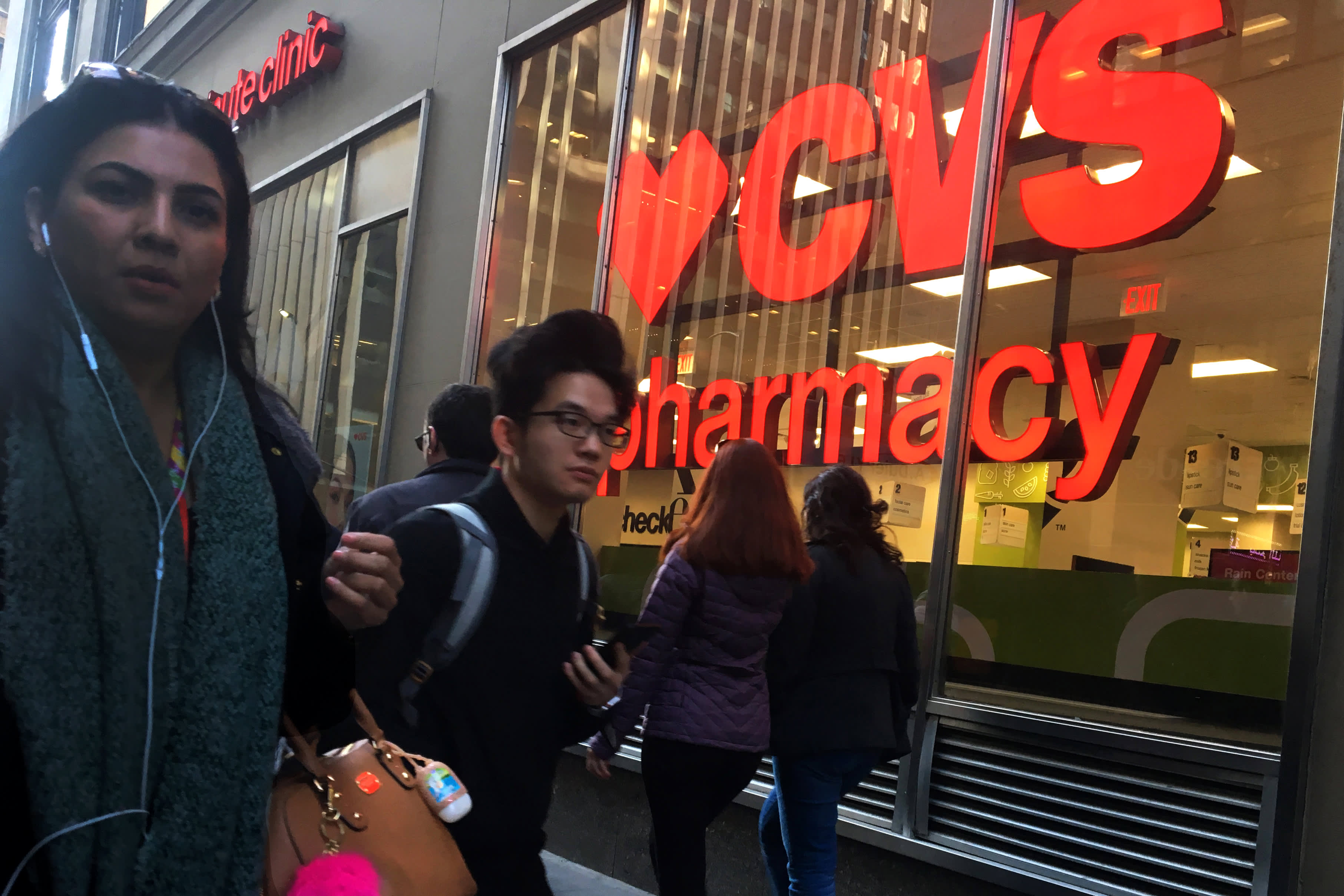
Pedestrians walk by a CVS store on November in San Francisco, California.

Justin Sullivan | Getty Images

CVS Health will close 22 "underperforming" drugstores early next year in addition to the 46 stores it shuttered earlier this year, the company said Wednesday in a regulatory filing.

Details of the locations of the stores weren't immediately disclosed. The company recorded a $96 million impairment charge on its third-quarter earnings related to the 22 stores. It recorded a $135 million charge in the first quarter related to the 46 stores it closed during the second quarter.

"We believe these decisions will generate enhanced longer term performance," CVS Chief Financial Officer Eva Boratto told analysts Wednesday on a call reviewing third-quarter results. "Our real estate footprint remained very productive, and we will look for opportunities to further improve the performance in our portfolio."

Drugstores are under threat as consumers buy more pharmacy items online and new competitors sell prescription drugs online. Rival Walgreens earlier this year said it would close 200 stores. Amid upheaval in the industry, CVS executives have said they do not expect "meaningful" store closures.

Let's block ads! (Why?)


https://www.cnbc.com/2019/11/06/cvs-health-to-close-22-drugstores-next-year.html

2019-11-06 12:55:00Z
52780427682346

CVS Health third-quarter profit rises 10% on Aetna sales - CNBC

Pedestrians pass in front of a CVS location in New York.

Scott Mlyn | CNBC

CVS Health reported third-quarter earnings that beat Wall Street's estimates as its Aetna insurance business helped juice the company's profit by 10%.

Here's what the company reported compared with what Wall Street was expecting, based on a survey of analysts by Refinitiv:

  • Earnings per share: $1.84, adjusted, vs. $1.77 expected
  • Revenue: $63.81 billion vs. $62.99 billion expected

CVS reported third-quarter net income of $1.53 billion, or $1.17 per share, up 10% from $1.39 billion, or $1.36 per share a year earlier. Excluding one-time items, such as a charge related to closing stores, CVS earned $1.84 per share, above the $1.77 per share expected by analysts surveyed by Refinitiv.

Revenue reached $64.81 billion, a sharp increase from the year earlier, before CVS acquired health insurer Aetna last November.

"As we approach the first anniversary of the Aetna acquisition, we are increasingly confident in the strength of our broad and differentiated assets as a combined company and our ability to deliver compelling value to our customers and the communities we serve," CVS CEO Larry Merlo said in a statement.

The company raised its full-year adjusted earnings forecast to between $6.97 to $7.05 per share from the previously guided range of $6.89 to $7 per share.

Shares of CVS rose by more than 2% Tuesday in premarket trading.

Read the complete earnings release here.

Let's block ads! (Why?)


https://www.cnbc.com/2019/11/06/cvs-health-earnings-q3-2019.html

2019-11-06 11:58:13Z
CAIiEAjzqnrLdzKCbggZZcSiC4wqGQgEKhAIACoHCAow2Nb3CjDivdcCMO7tngY

Tesla secures battery cell supply deal with CATL, report says - Electrek

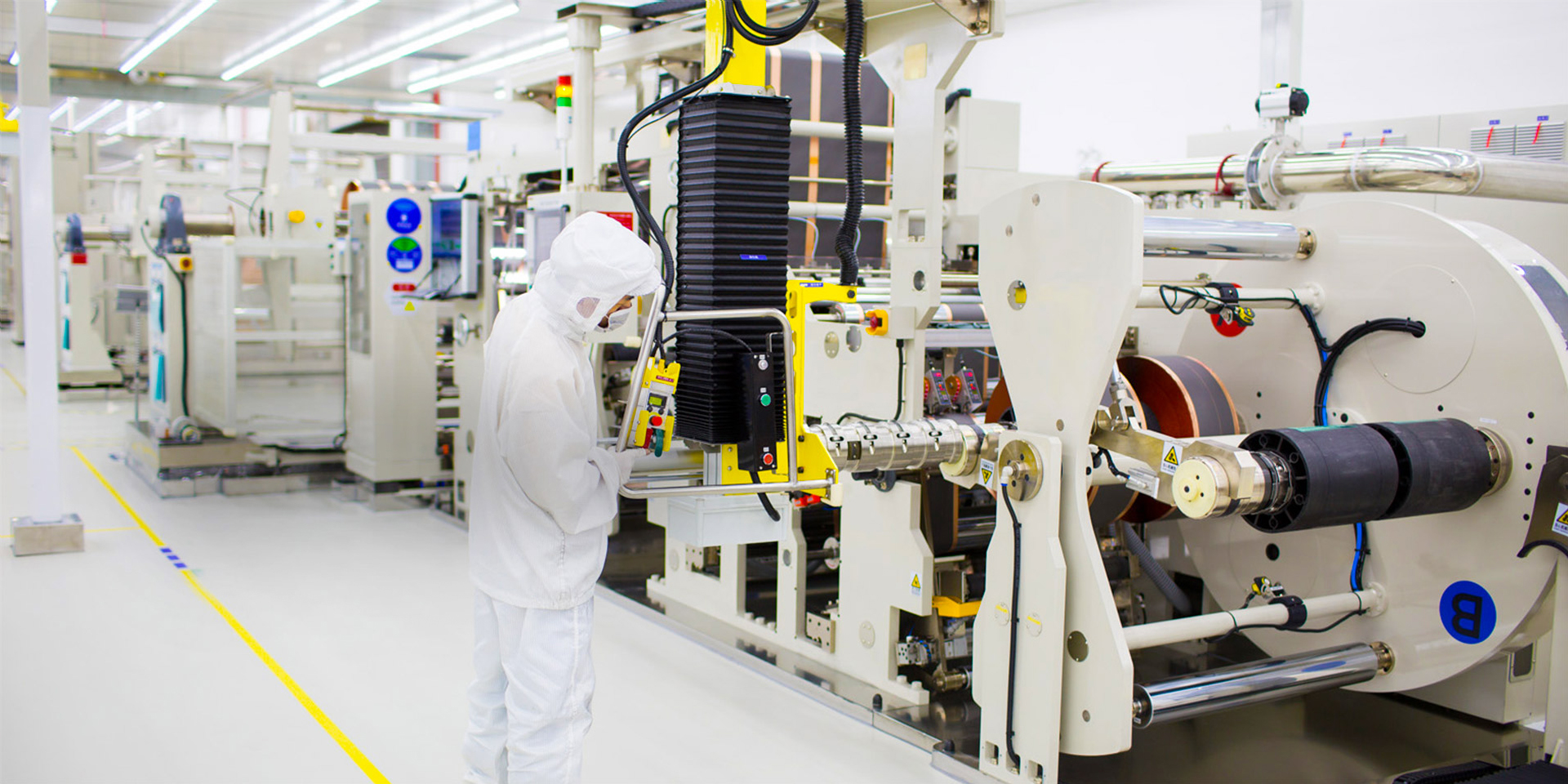
Tesla has reportedly secured a battery supply deal with CATL, China’s biggest battery manufacturer, to supply cells for Gigafactory 3 in Shanghai and potentially expand to other production facilities.

As of now, Panasonic is the only approved battery cell supplier for Tesla’s vehicles, but things are changing fast.

Since Tesla’s inception, Panasonic has always been the automaker’s sole battery suppliers for vehicles with the very small exception of a short-lived Tesla Roadster 3.0 battery replacement program.

Panasonic made cells in Japan and exported them to California for Tesla’s Model S and Model X programs, while the two companies partnered to make the cells for Model 3 at Gigfactory 1 in Nevada.

Over the last few years, Tesla started using battery cells from Samsung SDI and LG Chem for its stationary energy storage products, but Panasonic always had the exclusive contract to supply the automaker with battery cells for its electric vehicles.

Now it’s apparently about to change.

Earlier this year, we heard that Tesla made a battery supply deal with LG Chem for the Model 3 produced at Gigafactory 3 and now it looks like they will split the capacity with CATL.

We have been hearing since March that Tesla was in talks with CATL, but Bloomberg is now reporting that the two companies have “reached a preliminary agreement.”

Bloomberg reports that the official agreement is not certain yet and it is not expected to go through until “mid-2020”:

“Following months of negotiations, the companies clinched a non-binding deal after Tesla Chief Executive Officer Elon Musk traveled to Shanghai in late August and met with CATL Chairman Zeng Yuqun for about 40 minutes, according to the people, who asked not to be named discussing private deliberations. Though a final agreement is expected to be signed by mid 2020, there is no guarantee that will happen, the people said.”

The ‘preliminary agreement’ is for battery cells to be installed in Model 3 vehicles to be built at Gigafactory 3 in Shanghai, but they are reportedly also “separate discussions underway on a potential global supply contract.”

CATL has been expanding its reach lately and announced several new battery factories to support major automakers.

The Chinese company signed a supply contract with SAAB successor National Electric Vehicle Sweden (NEVS) in order to enable the production of hundreds of thousands of all-electric cars per year.

BMW also signed a $1 billion battery supply contract with them to support their future EV production.

They have also secured a battery supply agreement with Honda for about 1 million electric vehicles.

CATL reportedly has a current annual production of 17.5 GWh and they are planning a new factory with a capacity of 24 GWh to come online as soon as next year.

Electrek’s Take

It’s interesting that in the space of a few months to a year, Tesla could go from a single battery cell supplier for its cars to having 3 and even likely making its own cells.

I still think that Tesla is planning to move into the battery cell manufacturing space in a big way next year, but it makes sense for the company to still build a solid supply chain with other suppliers.

Tesla is going to need an incredible amount of battery cells over the next few years and while I think that long term most of those cells are going to be built internally, I think they will still be buying billions of dollars worth of battery cells in the next few years.

FTC: We use income earning auto affiliate links. More.


Subscribe to Electrek on YouTube for exclusive videos and subscribe to the podcast.

Let's block ads! (Why?)


https://electrek.co/2019/11/06/tesla-secures-battery-supply-deal-catl-report/

2019-11-06 10:01:00Z
CAIiECEtevUK2tpGZI-SsyYYPccqGQgEKhAIACoHCAowqoP5CjDpz-ACMJ_YtAU