Kamis, 14 November 2019

Google set to offer banking current accounts - BBC News

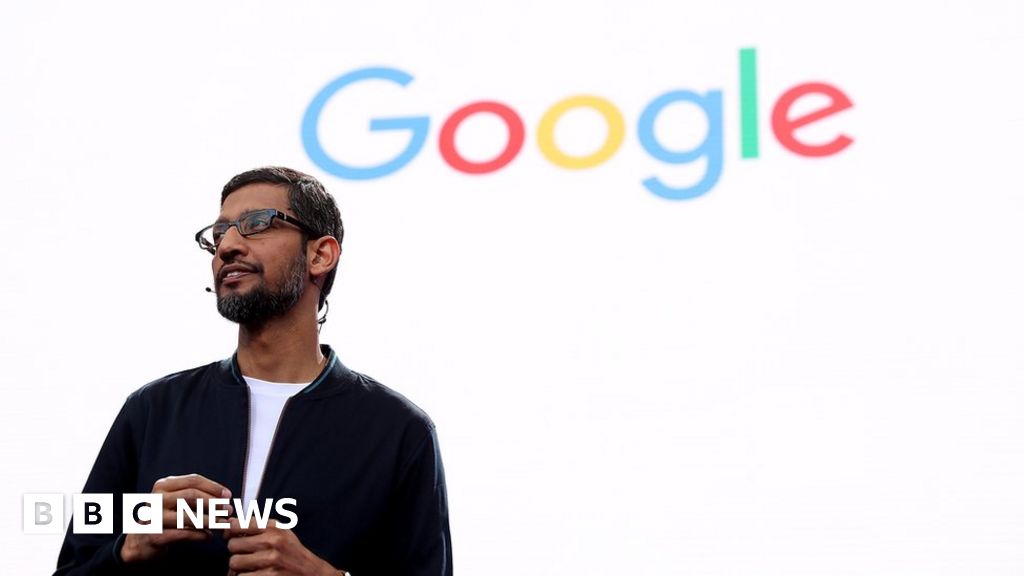
Google has become the latest big tech firm to move into banking by offering current accounts.

The firm said it plans to partner with banks and credit unions in the US to offer the "smart checking" accounts.

It said the service, to be launched via Google Pay, will allow users to add Google's analytic tools to traditional banking products.

The move follows offerings of credit cards, payment systems and loans by Facebook, Uber, Apple and Amazon.

While the products and arrangements differ, the tech giants entering the world of banking share an underlying motive: making themselves indispensable, says Gerard du Toit, a partner at the Bain & Co consulting firm.

"They're all competing for consumer attention and for their ecosystem and platform to win," he says.

Amazon's credit card and business loans are aimed at boosting its e-commerce business, while Uber Money is providing credit cards, debit accounts and money tracking tools to serve the company's taxi operations.

Facebook has said its Facebook Pay service will complement its messaging tools.

And both Google and Apple, which has teamed up with Goldman Sachs' new consumer arm, Marcus, on a credit card as part of its Apple Pay and Wallet service, want to to make iPhones and Androids essential.

Wading into financial services will also provide Google and Facebook information for their advertising business, helping to track what ads lead to purchases, Mr du Toit said.

The moves into banking are likely to add to the debates over the tech giants, which are already facing probes related to competition, data protection and privacy.

Some officials have also expressed worry about gaps in financial oversight as growing activity occurs outside of traditional banking. And in recent days, New York announced it would investigate Apple, after accusations that its credit card relied on "sexist" algorithms.

Mr du Toit said regulatory concerns represent the "fly in the soup" for tech firms.

"They will have to be very careful," he said.

Partnerships

In many cases, the tech firms are working with traditional banks - a sign they are aware of the potential issues, he said.

Google said its US partners, which reportedly include Citigroup, would start to offer the accounts by 2020.

"We believe our partners' regulatory and financial know-how is a great complement to our experience in building helpful tools and technology for our users," it said in a statement.

Lagging China

Amazon has offered small business loans since 2011 and launched its credit card with JP Morgan Chase in 2017.

But in some ways, the flurry of announcements by companies this year, is a sign that the US is late to the party.

In China and some other countries, the tech firms moved quickly into banking, motivated by the need to fill the gaps left by traditional finance industry that created hurdles for their businesses, whether they were e-commerce firms or food delivery companies.

In the US, however, the need was less pressing, thanks in part to the ubiquity of credit cards and other "good enough solutions", Mr du Toit said.

Big tech payment services provided by the likes of Alibaba's Ant Financial and Tencent's WeChat account for roughly 16% of China's GDP, compared to less than 1% in the US, according to the Bank for International Settlements, an organisation backed by 60 of the world's central banks.

Tech companies "are now increasingly getting into it because they do believe they can offer a materially better solution to customers," he said.

Last month, Facebook chief executive Mark Zuckerberg evoked the threat of Chinese competition while defending his firm's interest in developing a cryptocurrency before Congress last month.

"I view the financial infrastructure in the US as outdated," he said.

'Darwinian experiment'

As the tech companies start to make use of their massive reach, close customer relationships and giant data sets, banks "have woken up" to the threat, leading to collaborations and other uneasy "frenemy" arrangements, Mr du Toit said.

With tech firms moving beyond credit cards, regional banks will get left behind, while smaller financial technology firms are forced out or acquired, Mr du Toit said.

"I sometimes describe this as a giant Darwinian experiment of different couplings of the banks and the big techs," he says. "There will be some mutations that succeed and others that fail."

While Google's earlier efforts to build up Google Pay failed to gain much traction in the US, the firm has developed significant payment business in India, where a Bain & Co survey found that more than half of respondents had used the platform in the last 12 months.

"I would not count them out," Mr du Toit said.

Let's block ads! (Why?)


https://www.bbc.com/news/business-50412568

2019-11-14 10:15:46Z
52780435198567

Google set to offer banking current accounts - BBC News

Google has become the latest big tech firm to move into banking by offering current accounts.

The firm said it plans to partner with banks and credit unions in the US to offer the "smart checking" accounts.

It said the service, to be launched via Google Pay, will allow users to add Google's analytic tools to traditional banking products.

The move follows offerings of credit cards, payment systems and loans by Facebook, Uber, Apple and Amazon.

While the products and arrangements differ, the tech giants entering the world of banking share an underlying motive: making themselves indispensable, says Gerard du Toit, a partner at the Bain & Co consulting firm.

"They're all competing for consumer attention and for their ecosystem and platform to win," he says.

Amazon's credit card and business loans are aimed at boosting its e-commerce business, while Uber Money is providing credit cards, debit accounts and money tracking tools to serve the company's taxi operations.

Facebook has said its Facebook Pay service will complement its messaging tools.

And both Google and Apple, which has teamed up with Goldman Sachs' new consumer arm, Marcus, on a credit card as part of its Apple Pay and Wallet service, want to to make iPhones and Androids essential.

Wading into financial services will also provide Google and Facebook information for their advertising business, helping to track what ads lead to purchases, Mr du Toit said.

The moves into banking are likely to add to the debates over the tech giants, which are already facing probes related to competition, data protection and privacy.

Some officials have also expressed worry about gaps in financial oversight as growing activity occurs outside of traditional banking. And in recent days, New York announced it would investigate Apple, after accusations that its credit card relied on "sexist" algorithms.

Mr du Toit said regulatory concerns represent the "fly in the soup" for tech firms.

"They will have to be very careful," he said.

Partnerships

In many cases, the tech firms are working with traditional banks - a sign they are aware of the potential issues, he said.

Google said its US partners, which reportedly include Citigroup, would start to offer the accounts by 2020.

"We believe our partners' regulatory and financial know-how is a great complement to our experience in building helpful tools and technology for our users," it said in a statement.

Lagging China

Amazon has offered small business loans since 2011 and launched its credit card with JP Morgan Chase in 2017.

But in some ways, the flurry of announcements by companies this year, is a sign that the US is late to the party.

In China and some other countries, the tech firms moved quickly into banking, motivated by the need to fill the gaps left by traditional finance industry that created hurdles for their businesses, whether they were e-commerce firms or food delivery companies.

In the US, however, the need was less pressing, thanks in part to the ubiquity of credit cards and other "good enough solutions", Mr du Toit said.

Big tech payment services provided by the likes of Alibaba's Ant Financial and Tencent's WeChat account for roughly 16% of China's GDP, compared to less than 1% in the US, according to the Bank for International Settlements, an organisation backed by 60 of the world's central banks.

Tech companies "are now increasingly getting into it because they do believe they can offer a materially better solution to customers," he said.

Last month, Facebook chief executive Mark Zuckerberg evoked the threat of Chinese competition while defending his firm's interest in developing a cryptocurrency before Congress last month.

"I view the financial infrastructure in the US as outdated," he said.

'Darwinian experiment'

As the tech companies start to make use of their massive reach, close customer relationships and giant data sets, banks "have woken up" to the threat, leading to collaborations and other uneasy "frenemy" arrangements, Mr du Toit said.

With tech firms moving beyond credit cards, regional banks will get left behind, while smaller financial technology firms are forced out or acquired, Mr du Toit said.

"I sometimes describe this as a giant Darwinian experiment of different couplings of the banks and the big techs," he says. "There will be some mutations that succeed and others that fail."

While Google's earlier efforts to build up Google Pay failed to gain much traction in the US, the firm has developed significant payment business in India, where a Bain & Co survey found that more than half of respondents had used the platform in the last 12 months.

"I would not count them out," Mr du Toit said.

Let's block ads! (Why?)


https://www.bbc.com/news/business-50412568

2019-11-14 09:01:44Z
52780435198567

Rabu, 13 November 2019

Vancouver riders react to proposed SkyTrain union workers' strike action - Vancouver Is Awesome

transit strike
Photo: Downtown Vancouver, British Columbia, Canada – December 31, 2018: Bus driving on Granville Street. / Shutterstock

Earlier today, CUPE 7000, the union representing 900 SkyTrain workers, stated that its negotiations with the BC Rapid Transit Company (SkyTrain) reached an impasse and that it would go to union members to seek direction for its next steps.

CUPE 7000 President Tony Rebelo cited a number of issues with BCRTC, such as the company’s failure to offer fair wages or address the sick plan, inadequate staffing levels, and forced overtime.

Following that, Michel Ladrak, President of BC Rapid Transit Company, responded to the CUPE 7000 announcement, stating that BCRTC would remain committed to the bargaining process.

TransLink adds that Canada Line and West Coast Express are not affected by these negotiations. 

Currently, over 100 Seabus sailings have been cancelled as well as numerous bus runs due to the transit strike issued by Unifor, the union representing bus operators and transit maintenance workers. What’s more, Unifor has stated that it plans to escalate strike action by the end of the week if Coast Mountain Bus Company can’t bring new offers to the negotiations.

So far, Vancouverites have had mixed feelings about the strike action by Unifor. While many of them are on the side of the transit operators, others are more concerned about their daily commute.

After the CUPE 7000 announcement today, a number of Vancouver Is Awesome readers expressed concern for their upcoming commutes. Right now, the SkyTrain is still operating on schedule, and only some bus schedules have been affected. However, as strike action escalates, more and more buses may be affected and more people may have to rely on the SkyTrain.

Have a look at some of the comments from our readers:

The commuters are being hung out to dry – by all sides.” 

– Ashanti Munaweera

“This is the most bargaining leverage they will have for a long time if they go out with the bus drivers too, so fair enough and hopefully this gets the employer back to the table with a fair deal… but good luck Van City… we’re gonna need it.”

– Trish Everett-Kabut 

“Sweet! Now we’ll be screwed!”

– Eric Sylvestre

“Well that will really screw things up for people like me who depend on buses and skytrains to get to work to make some money to live on.”

– Ruth Kozak

“It becomes clearer and clearer that Translink has to go. NDP you need to step in and request tor Translink board to resign immediately. Bring back BC Transit as the authority . Appoint emergency Transit board for the transition period. Translink has failed and there is no other way to save this city.”

– Maciej Wawszczak

“Translink and sky train should be deemed essential service as without us people who use this to go to work won’t be paying as now they will rely on vehicles to take them. More people who take their cars less money in your pockets.”

– Bonnie Sutherland 

“Selfish.”

– Kingsley Ho 

“This is great. I’ll have no way to get to work if they both go out.”

– Alayna Pe 

“Try leaving the faregates open and not accept any fare on the bus. That will have TransLink listening immediately. Punishing the people to get back at TransLink will never work and will only sow more hatred towards the bus drivers rather than support them.”

– Spencer Ratzlaff 


from Business - Latest - Google News https://ift.tt/32Ly7Qs
via IFTTT
November 14, 2019 at 08:41AM

China sends warning to US over Hong Kong - Sky News

China's foreign ministry has warned the United States not to interfere with Hong Kong's affairs, saying the city is part of China.

Beijing issued their warning on another day of violence in Hong Kong.

Protests that were happening every weekend now becoming a daily clash between demonstrators and police.

Sky's Asia correspondent Tom Cheshire has the latest from Hong Kong.

SUBSCRIBE to our YouTube channel for more videos: http://www.youtube.com/skynews

Follow us on Twitter: https://twitter.com/skynews

Like us on Facebook: https://www.facebook.com/skynews

Follow us on Instagram: https://www.instagram.com/skynews

For more content go to http://news.sky.com and download our apps:

Apple: https://itunes.apple.com/gb/app/sky-n...

Android https://play.google.com/store/apps/de...


from Business - Latest - Google News https://www.youtube.com/watch?v=Bs7rLOGtUQk
via IFTTT
November 14, 2019 at 05:54AM

Musk says Tesla to build new factory near Berlin - CBC.ca

Germany on Wednesday praised Tesla's decision to build its first European factory in the country, days after the government said it would boost subsidies for buyers of electrics cars.

Tesla CEO Elon Musk said during an award ceremony in the German capital Tuesday evening that "we've decided to put the Tesla Gigafactory Europe in the Berlin area."

The company will also set up an engineering and design centre in Berlin, Musk said at the Golden Steering Wheel event. He wrote on Twitter that the new plant "will build batteries, powertrains & vehicles, starting with Model Y."

German Economy Minister Peter Altmaier called the announcement a "glorious success" for the country's attractiveness as an auto industry location, especially in the race to develop and produce electric cars and batteries.

Altmaier said there had been competition for the plant among European countries in recent months, but denied that the government had offered any financial support to Tesla.

"So far, subsidies haven't been discussed," he told reporters in Berlin. "It's clear that Tesla will be treated the same way as all other automobile companies if it invests in Germany and creates jobs here."

Incentives for electric vehicles

Still, Tesla's announcement comes just a week after German officials and auto industry leaders agreed to increase by half the existing government incentives for electric vehicles with a list price of up to 40,000 euros ($54,343) — an incentive Tesla can expect to profit from indirectly.

The subsidy will also be extended from the end of 2020 currently to the end of 2025, and the government and industry agreed to aim for 50,000 publicly accessible charging stations nationwide by 2022.

Musk said that the plan is for the factory to be built near Berlin's new airport, which is located just outside the city limits in neighbouring Brandenburg state and currently slated to open next year after years of delays.

"We definitely need to move faster than the airport, that's for sure," Musk said.

Germany, home to some of the world's biggest automakers, has been overtaken by the United States, China and some European neighbours in the adoption of electric vehicles.

Volkswagen welcomed decision

In July, Tesla announced plans to build its third Gigafactory — the first outside the U.S. — in Shanghai.

German automaker Volkswagen, which last week began mass production of its ID.3 electric car, welcomed rival Tesla's decision to build the factory on its home turf.

"I'm happy that Elon is, let's say, pulling us, but I think the German industry is really now strongly investing," said Volkswagen CEO Herbert Diess, speaking alongside Musk at Tuesday's event. "And we will keep you alert."

Auto industry expert Ferdinand Dudenhoeffer said additional competition could benefit German automakers.

"This is good news for VW, Daimler and BMW," said Dudenhoeffer, who heads the Center Automotive Research.


from Business - Latest - Google News https://ift.tt/33KPPoB
via IFTTT
November 13, 2019 at 09:22PM

Fed Chair Powell: Negative interest rates 'would certainly not be appropriate' - Yahoo Canada Finance

Federal Reserve Chairman Jerome Powell told Congress Wednesday that the central bank is not considering negative interest rates in the United States, one day after President Donald Trump bashed the central bank for not having lower interest rates.

In his first public remarks since the Fed’s last cut on Oct. 30, Powell told the Joint Economic Committee that negative interest rates “would certainly not be appropriate in the current environment.”

On Tuesday, Trump said he would like the Fed to push interest rates into negative territory, arguing that the U.S. is at a “competitive disadvantage” for having higher interest rates than other countries. Trump estimated that stocks would be 25% higher if the Fed had not raised interest rates during the beginning of his presidency.

Federal Reserve Chair Jerome Powell holds a news conference following the Oct. 29-30 Federal Open Market Committee meeting in Washington, U.S., October 30, 2019. REUTERS/Sarah Silbiger

“Give me some of that, give me some of that money, I want some of that money,” Trump told the Economic Club of New York. “Our Federal Reserve doesn’t let us do it.”

Powell, who Trump tapped to be Fed chairman in early 2018, reiterated to Congress that the Fed is not swayed by commentary from the president.

“Politics plays absolutely no role in our decisions,” Powell told the Joint Economic Committee. “We use the best data, the best analysis we can muster. We are human, we’ll make mistakes, but we won’t make mistakes of character or integrity.”

Powell added that negative interest rates in the U.S. "would certainly not be appropriate in the current environment."

Rate pause?

On the current path of monetary policy, Powell said that after cutting interest rates three times this year, he feels the central bank’s policies are “likely to remain appropriate” for the time being.

Powell said that his economic outlook “remains favorable” but continued to express concern over trade developments and “sluggish” growth abroad.

The Fed chairman said that while he is comfortable with interest rates currently in the range of between 1.50% and 1.75%, he insisted that policymakers will continue to watch incoming data for any possible changes in the economic outlook.

“Of course, if developments emerge that cause a material reassessment of our outlook, we would respond accordingly,” Powell said in prepared testimony. “Policy is not on a preset course.”

Fed policymakers have felt more comfortable easing policy because of the absence of inflationary pressures. With unemployment near 50-year lows, a tightening labor market has not led to a jump in inflation that would otherwise push the central bank to hike rates again. 

The most recent jobs report for October showed the U.S. economy adding 128,000 jobs with the unemployment rate holding at 3.6%. Inflation readings have remained below the Fed’s 2% target. On Wednesday morning, the Bureau of Labor Statistics reported a core consumer price index reading of 2.3% in October, but core CPI tends to overstate the Fed’s preferred reading of core personal consumption expenditures. And the 2.3% reading suggests cooling inflation because readings in August and September were both higher.

“The current level of unemployment is consistent with a strong labor market but it is not one in anyway that is presenting difficulties,” Powell told Congress.

Powell said he is watching a few medium- to longer-term risks as well, such as the “unsustainable path” of federal debt. Powell said lower interest rates do not mean the U.S. will pay less in interest, adding that “it does not mean that we can ignore deficits.” 

Powell also made it a point to emphasize that the Fed’s mid-October decision to resume balance sheet growth is not quantitative easing, saying that its decision to target short-term Treasury bills is not the same as buying the large-scale asset purchases it made to battle the financial crisis.

The Fed chairman will return to Capitol Hill on Thursday morning to testify to the House Budget Committee.

Brian Cheung is a reporter covering the banking industry and the intersection of finance and policy for Yahoo Finance. You can follow him on Twitter @bcheungz.

Read the latest financial and business news from Yahoo Finance

Follow Yahoo Finance on TwitterFacebookInstagramFlipboardSmartNewsLinkedInYouTube, and reddit.


from Business - Latest - Google News https://ift.tt/2rIL3Km
via IFTTT
November 14, 2019 at 12:32AM

Canada Goose stock tumbles after CEO says Hong Kong unrest is hurting business - Financial Post

Shares of Canada Goose Holdings Inc. closed down more than 10 per cent on Wednesday after the company failed to soothe investor concerns over its exposure to Hong Kong, acknowledging that the political unrest there is damaging performance.

“The situation has intensified since our last call,” chief executive Dani Reiss said during a morning conference call with analysts and investors, noting that a decline in tourism and retail traffic was affecting the performance of its two locations in the city.

“We’re watching the situation closely and evaluating actions to streamline our cost base on the ground including negotiating accommodations from landlords.”

Hong Kong has been in turmoil since June when protesters took to the streets in opposition of a proposed bill that would allow extradition to mainland China. Those protests have morphed into increasingly violent clashes with police officers.

While investors were concerned with the Hong Kong effect, the parka-maker’s second-quarter results were otherwise strong.

Earnings came in at $60.6 million for the third quarter, while adjusted earnings per share hit 58 cents, well ahead of the 43 cents analysts had projected.

Revenue for the Toronto-based company also rose 27.7 per cent from the same three months last year to $294 million.

Much of that growth, the company said, could be attributed to what it called “standout performances” in Asia, which saw revenues nearly double to $48.9 million from $26.6 million.

Despite the struggles in Hong Kong, Reiss defended the company’s expansion into China and said it’s showing dividends.

“Although we wish the situation was different today, we’re developing markets and building stores for decades, not just the next quarter,” he said.

In a note to investors, RBC analyst Kate Fitzsimons slashed her price target on the stock to $62 from $75 due to near-term headwinds such as Hong Kong. Wells Fargo analyst Ike Boruchow did the same, cutting his price target to $50 from $55, while explaining that the earnings report wasn’t as glowing as it initially may have appeared.

“Despite the strong beat, management only reiterated its full-year guidance for the second time this year, a stark contrast relative to last year which saw a top-line raise each quarter,” Boruchow said.

While the first-half of Canada Goose’s fiscal year was strong, management has already hinted that that trend may not continue into the second half. Chief financial officer Jonathan Sinclair said he expected wholesale revenues to be down in the third quarter.

“Given the expectation for slower sales, combined with inventory levels that remain visibly elevated, we believe investors are concerned on the trajectory of the business,” Boruchow said. “Until we see signs of greater stability at wholesale, we will remain sidelined.”

Castlemoore Inc. chief investment officer Jeff Parent once spoke of Canada Goose as one of his top choices for investors, but following its less-than-smooth expansion into China and Hong Kong, that’s no longer the case.

The stock was an exciting one when it first announced its expansion into China, he said. The stock was driven up in anticipation and hit a 52-week high of $95.58. But as sales numbers come in, Parent said the hopes of meeting that anticipation are fading in a situation he compared to the performance of cannabis stocks.

“I wouldn’t touch it,” Parent said. “And if owned it, I would’ve sold it this morning.”

• Email: vferreira@nationalpost.com | Twitter:


from Business - Latest - Google News https://ift.tt/2Om8Oj9
via IFTTT
November 14, 2019 at 05:21AM