Canopy Growth Corp. took a surprise $32.7 million hit from returns and pricing changes related primarily to the sales of its oil and soft gel capsule products, resulting in the company’s net revenue plummeting by 15 per cent, quarter-over-quarter, for the period ending Sept. 30, 2019.
This is the biggest revenue decline the company has seen since legalization over a year ago.
The stock was down almost 8 per cent in pre-market trade.
Canopy reported a net revenue of $76.6 million, compared to $90.5 million in the previous quarter. The company’s net loss was $374 million.
The Smiths Falls, Ont.-based licensed producer also took a $15.9 million write-down on inventory, attributing the charge to “excess recreational cannabis inventory resulting from current and forecasted sell-in rates of oil and softgel products.”
Gross margins were impacted by $40.4 million due to the write-downs and returns, with Canopy reporting a negative gross margin of 13 per cent.
“The last two quarters have been challenging for the Canadian cannabis sector as provinces have reduced purchases to lower inventory levels, retail store openings have fallen short of expectations, and cannabis 2.0 products are yet to come to market,” said Mark Zekulin, Canopy Growth’s CEO in a statement.
“However we believe these conditions are a short-term headwind in what is a brand-new industry,” he added.
While Canopy’s international medical sales increased by 72 per cent from the previous quarter, its domestic sales — both medical and recreational — declined by seven per cent, driven reduced sales to other licensed producers.
Although the company reportedly increased its share of the market in Alberta, where there are over 300 private retail stores, its adult-use revenue declined by almost 10 per cent from the previous quarter.
The company will be holding a conference call with analysts at 8:30am E.T.
Canadian entrepreneur Guy Laliberte, founder of the Cirque du Soleil circus company, was due in a courtroom in French Polynesia Wednesday over claims of cannabis cultivation.
Lune Rouge, a Montreal-based entrepreneurial organization headed by Laliberte, said in a statement that he was being held by authorities in Tahiti.
The company said Laliberte was being questioned over cannabis grown for personal use on his private island of Nukutepipi in the French collectivity of islands in the South Pacific. The organization said Laliberte, 60, is a medical cannabis user.
“We confirm that Mr. Guy Laliberte is currently held in custody at the Gendarmerie on the island of Tahiti,” a statement from Lune Rouge before the court appearance said. It said Laliberte “categorically denies and dissociates himself from” any rumours about his sale or trafficking of controlled substances.
Guy Laliberté launches new venture in Montreal’s Old Port
The statement also said Lune Rouge was collaborating with local authorities in their investigation.
An assistant to lawyer Yves Piriou, an attorney based in the capital Papeete, confirmed he was in court representing Laliberte in a hearing that could last much of Wednesday.
Under French law, which applies in French Polynesia, planting cannabis, even for personal consumption, is illegal.
Ilana Amouyal, a Montreal-based lawyer who was born in France and practised law there, said even if Laliberte had a Canadian certificate allowing him to access medical marijuana, it wouldn’t apply in the French Pacific territory.
The French National Assembly last month passed a law to legalize therapeutic cannabis for a two-year trial period beginning in early 2020. But under the law, medicinal marijuana must be prescribed by a specialist at the hospital and purchased from the hospital pharmacy for the initial purchase, Amouyal explained.
It is also reserved for people suffering from very specific illnesses or chronic or intense pain, meaning the number of people permitted to use it is very restricted.
Under the French penal code, sentences related to cannabis can vary depending on the charge — from a maximum of one year in jail for consumption to a maximum of 20 years for production or fabrication, along with hefty fines.
A travel advisory for French Polynesia on the Global Affairs Canada website warns: “Penalties for possession, use or trafficking of illegal drugs are severe. Convicted offenders can expect jail sentences and heavy fines.”
In June 2018, Laliberte announced he was investing in an Ontario pot company — purchasing 12.85 per cent of Ontario firm 48North Cannabis. At the time, Lune Rouge announced it had assessed the market and believed there was growth potential in the medical cannabis sector ahead of legalization in Canada.
Laliberte, 60, is best known for starting the internationally renowned Cirque du Soleil in Quebec in 1984. Since selling most of his ownership stake in 2015, he has held a 10 per cent share in the entertainment company.
Laliberte then founded Lune Rouge in 2015 with the aim of promoting innovation, creativity and entrepreneurship. The company develops projects and invests in funds with a focus on technology, arts, entertainment and real estate. Laliberte is also known for a 12-day sojourn on the International Space Station in 2009, a visit to raise awareness for his One Drop Foundation.
The Quebec businessman bought his remote island estate in French Polynesia, which has 21 bedrooms and 25 bathrooms and can sleep up to 52 guests, in 2007. An Airbnb listing posted this year said staying at his private Pacific atoll starts at 900,000 euros ($1.3 million) for seven nights.
Story continues below advertisement
A spokeswoman for Global Affairs Canada said it is aware of reports of a Canadian held in French Polynesia, but declined further comment, citing privacy restrictions.
The Sedco 714 oil platform, operated by Transocean, stands in the Port of Cromarty Firth in Cromarty, United Kingdom, on February 16, 2016.
Matthew Lloyd | Bloomberg | Getty Images
Oil rose on Thursday after industry data showed a surprise drop in U.S. crude inventories, while comments from OPEC about lower-than-expected U.S. shale production in 2020 also provided some support.
Prices were capped by mixed signs for oil demand in China, the world's biggest crude importer. Industrial output rose more slowly than expected in October, but oil refinery throughput hit the second-highest level on record.
Brent futures were up 69 cents, or 1.1%, to $63.06 per barrel, while West Texas Intermediate crude gained 52 cents, or 0.9%, to $57.64.
The secretary-general of the Organization of the Petroleum Exporting Countries, Mohammad Barkindo, said on Wednesday that there would likely be downward revisions of supply going into 2020, especially from U.S. shale.
Barkindo said it was too early to say whether further output cuts would be needed.
OPEC on Thursday pointed to a smaller surplus in the oil market next year although it still expects demand for its crude to drop as rivals pump more.
The drop in demand could press the case for the exporter group and partners like Russia to maintain supply curbs at a meeting on Dec. 5-6.
"The countdown to the meeting of the OPEC Countries has started, and the question of whether the group and its allies will further cut supplies is top of mind," said Norbert Rucker, head of economics at Swiss bank Julius Baer.
"Current market conditions are testing the petro-nations patience and cohesion ... Any major change in policy would come as a surprise".
The American Petroleum Institute reported on Wednesday an unexpected drop in U.S. crude stockpiles by 541,000 barrels in the week to Nov. 8, against analysts' expectations of an increase of 1.6 million barrels. Gasoline and distillate inventories increased, the API data showed.
Official weekly data from the Energy Information Administration is due at 1600 GMT on Thursday. Both reports were delayed a day for the U.S. Veterans Day holiday on Monday.
Tamas Varga of oil broker PVM said the data helped jolt prices, which had been stagnant in recent days.
"The oil market has been suffering from fatigue in the last week or so. The major symptom is lack of direction that can be caused by shortage of developments. It ... usually reacts well to adrenalin shots."
from Business - Latest - Google News https://ift.tt/2QjE7xh
via IFTTT
November 14, 2019 at 05:31PM
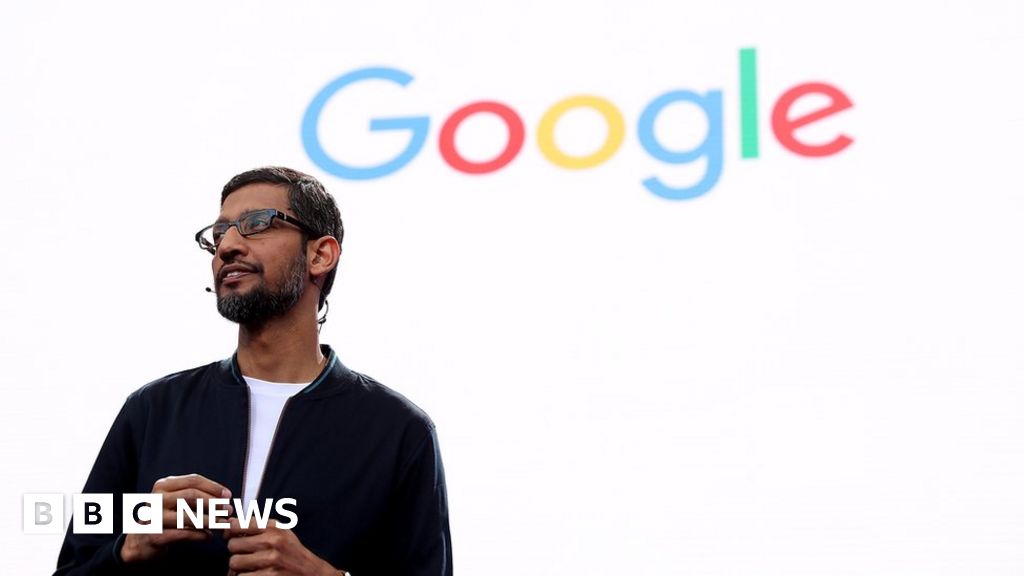
Google has become the latest big tech firm to move into banking by offering current accounts.
The firm said it plans to partner with banks and credit unions in the US to offer the "smart checking" accounts.
It said the service, to be launched via Google Pay, will allow users to add Google's analytic tools to traditional banking products.
The move follows offerings of credit cards, payment systems and loans by Facebook, Uber, Apple and Amazon.
While the products and arrangements differ, the tech giants entering the world of banking share an underlying motive: making themselves indispensable, says Gerard du Toit, a partner at the Bain & Co consulting firm.
"They're all competing for consumer attention and for their ecosystem and platform to win," he says.
Amazon's credit card and business loans are aimed at boosting its e-commerce business, while Uber Money is providing credit cards, debit accounts and money tracking tools to serve the company's taxi operations.
Facebook has said its Facebook Pay service will complement its messaging tools.
And both Google and Apple, which has teamed up with Goldman Sachs' new consumer arm, Marcus, on a credit card as part of its Apple Pay and Wallet service, want to to make iPhones and Androids essential.
Wading into financial services will also provide Google and Facebook information for their advertising business, helping to track what ads lead to purchases, Mr du Toit said.
The moves into banking are likely to add to the debates over the tech giants, which are already facing probes related to competition, data protection and privacy.
Some officials have also expressed worry about gaps in financial oversight as growing activity occurs outside of traditional banking. And in recent days, New York announced it would investigate Apple, after accusations that its credit card relied on "sexist" algorithms.
Mr du Toit said regulatory concerns represent the "fly in the soup" for tech firms.
"They will have to be very careful," he said.
Partnerships
In many cases, the tech firms are working with traditional banks - a sign they are aware of the potential issues, he said.
Google said its US partners, which reportedly include Citigroup, would start to offer the accounts by 2020.
"We believe our partners' regulatory and financial know-how is a great complement to our experience in building helpful tools and technology for our users," it said in a statement.
But in some ways, the flurry of announcements by companies this year, is a sign that the US is late to the party.
In China and some other countries, the tech firms moved quickly into banking, motivated by the need to fill the gaps left by traditional finance industry that created hurdles for their businesses, whether they were e-commerce firms or food delivery companies.
In the US, however, the need was less pressing, thanks in part to the ubiquity of credit cards and other "good enough solutions", Mr du Toit said.
Big tech payment services provided by the likes of Alibaba's Ant Financial and Tencent's WeChat account for roughly 16% of China's GDP, compared to less than 1% in the US, according to the Bank for International Settlements, an organisation backed by 60 of the world's central banks.
Tech companies "are now increasingly getting into it because they do believe they can offer a materially better solution to customers," he said.
Last month, Facebook chief executive Mark Zuckerberg evoked the threat of Chinese competition while defending his firm's interest in developing a cryptocurrency before Congress last month.
"I view the financial infrastructure in the US as outdated," he said.
'Darwinian experiment'
As the tech companies start to make use of their massive reach, close customer relationships and giant data sets, banks "have woken up" to the threat, leading to collaborations and other uneasy "frenemy" arrangements, Mr du Toit said.
With tech firms moving beyond credit cards, regional banks will get left behind, while smaller financial technology firms are forced out or acquired, Mr du Toit said.
"I sometimes describe this as a giant Darwinian experiment of different couplings of the banks and the big techs," he says. "There will be some mutations that succeed and others that fail."
While Google's earlier efforts to build up Google Pay failed to gain much traction in the US, the firm has developed significant payment business in India, where a Bain & Co survey found that more than half of respondents had used the platform in the last 12 months.
Google has become the latest big tech firm to move into banking by offering current accounts.
The firm said it plans to partner with banks and credit unions in the US to offer the "smart checking" accounts.
It said the service, to be launched via Google Pay, will allow users to add Google's analytic tools to traditional banking products.
The move follows offerings of credit cards, payment systems and loans by Facebook, Uber, Apple and Amazon.
While the products and arrangements differ, the tech giants entering the world of banking share an underlying motive: making themselves indispensable, says Gerard du Toit, a partner at the Bain & Co consulting firm.
"They're all competing for consumer attention and for their ecosystem and platform to win," he says.
Amazon's credit card and business loans are aimed at boosting its e-commerce business, while Uber Money is providing credit cards, debit accounts and money tracking tools to serve the company's taxi operations.
Facebook has said its Facebook Pay service will complement its messaging tools.
And both Google and Apple, which has teamed up with Goldman Sachs' new consumer arm, Marcus, on a credit card as part of its Apple Pay and Wallet service, want to to make iPhones and Androids essential.
Wading into financial services will also provide Google and Facebook information for their advertising business, helping to track what ads lead to purchases, Mr du Toit said.
The moves into banking are likely to add to the debates over the tech giants, which are already facing probes related to competition, data protection and privacy.
Some officials have also expressed worry about gaps in financial oversight as growing activity occurs outside of traditional banking. And in recent days, New York announced it would investigate Apple, after accusations that its credit card relied on "sexist" algorithms.
Mr du Toit said regulatory concerns represent the "fly in the soup" for tech firms.
"They will have to be very careful," he said.
Partnerships
In many cases, the tech firms are working with traditional banks - a sign they are aware of the potential issues, he said.
Google said its US partners, which reportedly include Citigroup, would start to offer the accounts by 2020.
"We believe our partners' regulatory and financial know-how is a great complement to our experience in building helpful tools and technology for our users," it said in a statement.
But in some ways, the flurry of announcements by companies this year, is a sign that the US is late to the party.
In China and some other countries, the tech firms moved quickly into banking, motivated by the need to fill the gaps left by traditional finance industry that created hurdles for their businesses, whether they were e-commerce firms or food delivery companies.
In the US, however, the need was less pressing, thanks in part to the ubiquity of credit cards and other "good enough solutions", Mr du Toit said.
Big tech payment services provided by the likes of Alibaba's Ant Financial and Tencent's WeChat account for roughly 16% of China's GDP, compared to less than 1% in the US, according to the Bank for International Settlements, an organisation backed by 60 of the world's central banks.
Tech companies "are now increasingly getting into it because they do believe they can offer a materially better solution to customers," he said.
Last month, Facebook chief executive Mark Zuckerberg evoked the threat of Chinese competition while defending his firm's interest in developing a cryptocurrency before Congress last month.
"I view the financial infrastructure in the US as outdated," he said.
'Darwinian experiment'
As the tech companies start to make use of their massive reach, close customer relationships and giant data sets, banks "have woken up" to the threat, leading to collaborations and other uneasy "frenemy" arrangements, Mr du Toit said.
With tech firms moving beyond credit cards, regional banks will get left behind, while smaller financial technology firms are forced out or acquired, Mr du Toit said.
"I sometimes describe this as a giant Darwinian experiment of different couplings of the banks and the big techs," he says. "There will be some mutations that succeed and others that fail."
While Google's earlier efforts to build up Google Pay failed to gain much traction in the US, the firm has developed significant payment business in India, where a Bain & Co survey found that more than half of respondents had used the platform in the last 12 months.
European stocks slipped on Thursday on concern over the state of U.S.-China trade talks, as data showed a stagnating economy in Germany.
The Stoxx Europe 600
SXXP, -0.12%
dropped 0.08% to 405.52, which still is near to its record close of 414.06.
“European equities appear modestly cheap on an absolute basis and extremely cheap relative to government and corporate bonds,” said strategists at Citi, who forecast the Stoxx 600 will reach 420 by the end of 2020.
The German DAX
DAX, -0.32%
declined 0.34% to 13184.51, the French CAC 40
PX1, +0.01%
weakened 0.04% to 5904.98 and the U.K. FTSE 100
UKX, -0.46%
fell 0.18% to 7338.01,
“In some sense, this is the ‘worst’ of both worlds for markets. Today’s data confirm that the German economy has now stalled, but the headlines are probably not dire enough to prompt an immediate and aggressive fiscal response from Berlin,” said Claus Vistesen, chief eurozone economist at research consulting firm Pantheon Macroeconomics.
Also on the economics front, U.K. retail sales grew 0.2% in the three months ending October, which is the worst showing in 16 months.
Daimler
DAI, -2.90%
as the Mercedes-Benz automaker said profits in 2020 and 2021 will be negatively affected by efforts to meet carbon targets. Daimler said it will cut an unspecified number of jobs.
3i Group
III, -5.78%
declined 4.4% after the private-equity firm reported a 10% return in the six months to September 30. The stock is nonetheless up 39% this year.
Google has become the latest big tech firm to move into banking by offering current accounts.
The firm said it plans to partner with banks and credit unions in the US to offer the "smart checking" accounts.
It said the service, to be launched via Google Pay, will allow users to add Google's analytic tools to traditional banking products.
The move follows offerings of credit cards, payment systems and loans by Facebook, Uber, Apple and Amazon.
While the products and arrangements differ, the tech giants entering the world of banking share an underlying motive: making themselves indispensable, says Gerard du Toit, a partner at the Bain & Co consulting firm.
"They're all competing for consumer attention and for their ecosystem and platform to win," he says.
Amazon's credit card and business loans are aimed at boosting its e-commerce business, while Uber Money is providing credit cards, debit accounts and money tracking tools to serve the company's taxi operations.
Facebook has said its Facebook Pay service will complement its messaging tools.
And both Google and Apple, which has teamed up with Goldman Sachs' new consumer arm, Marcus, on a credit card as part of its Apple Pay and Wallet service, want to to make iPhones and Androids essential.
Wading into financial services will also provide Google and Facebook information for their advertising business, helping to track what ads lead to purchases, Mr du Toit said.
The moves into banking are likely to add to the debates over the tech giants, which are already facing probes related to competition, data protection and privacy.
Some officials have also expressed worry about gaps in financial oversight as growing activity occurs outside of traditional banking. And in recent days, New York announced it would investigate Apple, after accusations that its credit card relied on "sexist" algorithms.
Mr du Toit said regulatory concerns represent the "fly in the soup" for tech firms.
"They will have to be very careful," he said.
Partnerships
In many cases, the tech firms are working with traditional banks - a sign they are aware of the potential issues, he said.
Google said its US partners, which reportedly include Citigroup, would start to offer the accounts by 2020.
"We believe our partners' regulatory and financial know-how is a great complement to our experience in building helpful tools and technology for our users," it said in a statement.
But in some ways, the flurry of announcements by companies this year, is a sign that the US is late to the party.
In China and some other countries, the tech firms moved quickly into banking, motivated by the need to fill the gaps left by traditional finance industry that created hurdles for their businesses, whether they were e-commerce firms or food delivery companies.
In the US, however, the need was less pressing, thanks in part to the ubiquity of credit cards and other "good enough solutions", Mr du Toit said.
Big tech payment services provided by the likes of Alibaba's Ant Financial and Tencent's WeChat account for roughly 16% of China's GDP, compared to less than 1% in the US, according to the Bank for International Settlements, an organisation backed by 60 of the world's central banks.
Tech companies "are now increasingly getting into it because they do believe they can offer a materially better solution to customers," he said.
Last month, Facebook chief executive Mark Zuckerberg evoked the threat of Chinese competition while defending his firm's interest in developing a cryptocurrency before Congress last month.
"I view the financial infrastructure in the US as outdated," he said.
'Darwinian experiment'
As the tech companies start to make use of their massive reach, close customer relationships and giant data sets, banks "have woken up" to the threat, leading to collaborations and other uneasy "frenemy" arrangements, Mr du Toit said.
With tech firms moving beyond credit cards, regional banks will get left behind, while smaller financial technology firms are forced out or acquired, Mr du Toit said.
"I sometimes describe this as a giant Darwinian experiment of different couplings of the banks and the big techs," he says. "There will be some mutations that succeed and others that fail."
While Google's earlier efforts to build up Google Pay failed to gain much traction in the US, the firm has developed significant payment business in India, where a Bain & Co survey found that more than half of respondents had used the platform in the last 12 months.