Selasa, 07 Januari 2020

Will Iran weaponize oil to retaliate against US? - DW (English)

The killing of a top Iranian general by the US followed by a threat of retaliation from Iran has rattled oil markets. What options does Tehran have up its sleeve, if it chooses to retaliate by disrupting oil supplies?

Oil prices breached $70 a barrel on Monday — the highest they have been since September when alleged Iran-backed drone attacks on Saudi Arabia oil facilities knocked out half of the kingdom's oil supply. The United States has warned that Tehran may retaliate with another attack on Saudi energy facilities to avenge the killing of an Iranian general last week.

Oil markets have been jittery since US air strikes killed Qassem Soleimani, who led the Revolutionary Guards' Quds force, on Friday. Brent crude has climbed more than 5% since the assassination. 

"Iran is likely to conduct attacks, sometimes attributed to the Houthi, against energy, desalination, maritime and aviation assets in the United Arab Emirates (UAE) and Saudi Arabia, using cruise missiles and weaponized UAVs [unmanned aerial vehicles]," said IHS Markit Middle East analyst Ege Seckin and Director Firas Modad.

The two pundits, however, warn that such attacks could lead to a full-scale confrontation in the region. 

"Unlike attacks between May and September 2019, given the willingness of the US to strike such a high-level Iranian target, the UAE and Saudi Arabia are more likely to be emboldened to respond against Iran if they are attacked," they said.
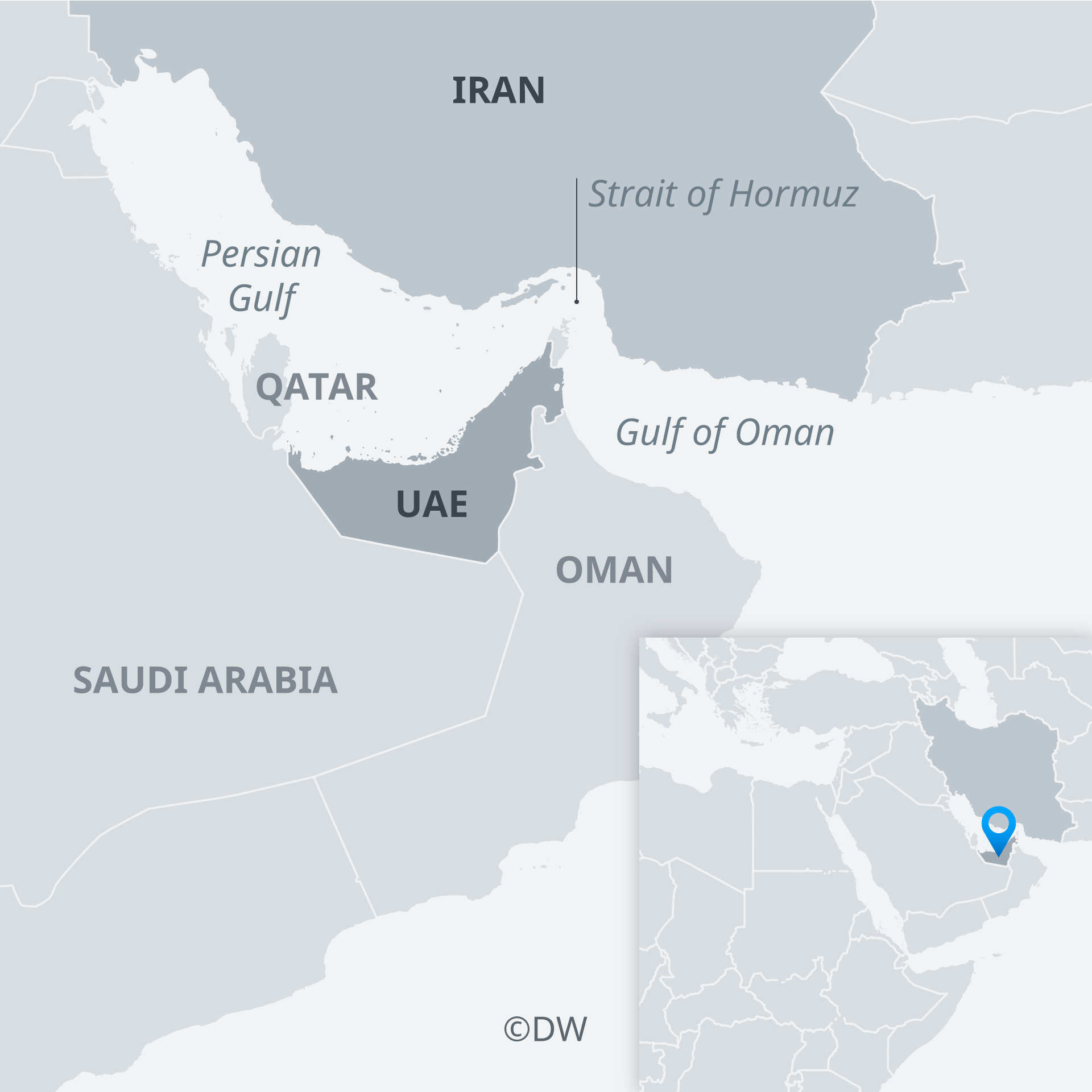
A map showing the Strait of Hormuz

Choking the chokepoint

There are fears that Tehran may target the Strait of Hormuz — the world's most important chokepoint for global oil supplies.

Iran has threatened in the past to block the waterway — located between Oman and Iran — through which more than a fifth of the world's oil is transported.

"The most effective oil weapon — shutting the Strait of Hormuz — would damage a broad set of countries — not just the US — and may make it harder for Iran to find allies in its skirmishes with the US," CFRA Research energy analyst Stewart Glickman said. "Keep in mind though that Iran wouldn’t be selling crude oil either, and it would become a pariah in the international arena since all oil-importing nations would suffer."  

While analysts doubt Iran's ability to close the strait, they agree that Tehran could target oil tankers passing through the strait as it has done in the past.

In June, the US blamed Iran for carrying out an attack on two oil tankers near the Strait of Hormuz. Iran denied any role in the assault. A month later, Iran seized a British-flagged tanker, Stena Impero, to retaliate against the UK capturing an Iranian ship.

"The shipping industry is extremely concerned. There is unending discussion by CSOs [company security officers] expressing their fears of what is to come," said Dimitris Maniatis, chief commercial officer of Diaplous, one of the largest private maritime security firms. "Everyone is trying to find the golden solution to protect their vessels in the region but to be honest, there is very little that a merchant vessel can do to avoid state aggression."

However, Maniatis says its "highly unlikely" that the Iranians will blatantly attack a merchant vessel in the region. "The worst they can do is an act similar to the Stena Impero incident," he told DW.

Bypassing the strait?

Any attempt by Iran to block the Strait of Hormuz or disrupt oil transportation through the waterway is likely to seriously hurt the global oil supply as there are few options to bypass the critical chokepoint.

Only Saudi Arabia and the UAE have pipelines that can ship crude oil outside the Persian Gulf, according to the US Energy Information Administration (EIA), but those pipelines have a capacity of shipping only 6.8 million barrels of crude oil per day (b/d). By comparison, the daily crude oil flow in the Hormuz strait averaged 17.3 million b/d in 2018.

Nearly 80% of the crude oil and condensate that moved through the strait in 2018 went to Asian countries including China, India and Japan, leaving the US, which imported just 1.4 million b/d of crude oil through the waterway, less vulnerable to any Iranian disruption.

But Iran could target US-flagged container ships that serve the US Navy's Military Sealift Command (MSC) and regularly cross into the Persian Gulf.

"Vessels with US flag or of clear US interests are the ones we identify running the highest risk of any retaliatory action," Maniatis said. "Many have expressed concern for Marshal Islands-flagged vessels as this flag state is seen as closely affiliated to the US."

'Ephemeral' bump

Several analysts expect oil prices to fall from current levels, citing weak global demand and rising production in non-OPEC countries.

"We forecast that any bump in oil prices arising from this escalation is likely ephemeral," Glickman said. "This escalation — which, certainly, has potential to expand — does not affect supply growth in other non-OPEC areas such as Brazil, Guyana or the North Sea, nor does it improve a muted 2020 oil demand outlook in our view."

Stewart points to the September attack on Saudi facilities to stress his point.

"While the attack did register a massive one-day positive impact on WTI, the boost eroded just weeks later," he said.

Goldman Sachs suggested that the risk premium had already been factored into oil prices, saying that an actual disruption to oil supplies was needed to maintain prices at current elevated levels.

Yana Popkostova, director at the European Centre for Energy and Geopolitical Analysis, says the oil markets would remain volatile over the next few months given the unpredictability surrounding Iran's response.

"Soleimani had built a highly capable network of shadow operators across the world over the past two decades and now it seems impossible to predict their retaliation," she told DW. "The uncertainty as to the unfolding of the events — as to when, how and where Iran and these proxies will embark on their vendetta poses an entirely different paradigm nevertheless. And uncertainty does not bode well for oil markets."

Every day, DW's editors send out a selection of the day's hard news and quality feature journalism. Sign up for the newsletter here.

Let's block ads! (Why?)


https://news.google.com/__i/rss/rd/articles/CBMiTWh0dHBzOi8vd3d3LmR3LmNvbS9lbi93aWxsLWlyYW4tdGFyZ2V0LW9pbC10by1yZXRhbGlhdGUtYWdhaW5zdC11cy9hLTUxOTAyMzA00gFNaHR0cHM6Ly9hbXAuZHcuY29tL2VuL3dpbGwtaXJhbi10YXJnZXQtb2lsLXRvLXJldGFsaWF0ZS1hZ2FpbnN0LXVzL2EtNTE5MDIzMDQ?oc=5

2020-01-07 05:04:56Z
52780543645975

Elon Musk says will design a future Tesla car in China for global market - CNBC

Elon Musk, chief executive officer of Tesla Inc., speaks during a ceremony at the company's Gigafactory in Shanghai, China, on Tuesday, Jan. 7, 2020.

Qilai Shen | Bloomberg | Getty Images

Tesla CEO Elon Musk said the company will design a future car in China for the global market.

The electric car company founder said Tesla would open a design and engineering center in the world's second-largest economy. He did not specify any timelines.

Tesla also confirmed that it would start work on a production program for its Model Y crossover vehicle in its Shanghai Gigafactory, the only production factory outside of the U.S. Production for its Model 3 — a sedan that was announced before the Model Y back in 2016 — only started in October in the Shanghai factory.

Musk made the announcements as he delivered the first Model 3 cars out of the Shanghai factory to the public.

"We intend to continue making a significant investment and increasing the investment in China, making the Model 3 and the Model Y and future models also in China," Musk told an audience in Shanghai.

"Something that would be super cool … So we're going to do it … is to try to create a China design and engineering center to actually design an original car in China for worldwide consumption. I think this will be very exciting," he added.

China is seen by analysts as a critical market for Tesla but it faces a number of challenges from cooling electric vehicle sales to increasing competition.

Still, the company has produced positive news with a profitable third quarter of 2019 and fourth-quarter vehicle delivery numbers that topped Wall Street estimates. Shares of the firm hit a record high of $454 last week.

Let's block ads! (Why?)


https://news.google.com/__i/rss/rd/articles/CBMia2h0dHBzOi8vd3d3LmNuYmMuY29tLzIwMjAvMDEvMDcvZWxvbi1tdXNrLXNheXMtdGVzbGEtd2lsbC1kZXNpZ24tZnV0dXJlLWNhci1pbi1jaGluYS1mb3ItZ2xvYmFsLW1hcmtldC5odG1s0gFvaHR0cHM6Ly93d3cuY25iYy5jb20vYW1wLzIwMjAvMDEvMDcvZWxvbi1tdXNrLXNheXMtdGVzbGEtd2lsbC1kZXNpZ24tZnV0dXJlLWNhci1pbi1jaGluYS1mb3ItZ2xvYmFsLW1hcmtldC5odG1s?oc=5

2020-01-07 09:13:00Z
52780537659458

Senin, 06 Januari 2020

Bed Bath & Beyond shares jump on real estate deal that gives the retailer $250 million - CNBC

Shoppers exit a Bed Bath & Beyond store in New York.

Michael Nagle | Bloomberg | Getty Images

Bed Bath & Beyond shares jumped nearly 3% Monday morning after the retailer said it had completed a sale-leaseback transaction with an affiliate of Oak Street Real Estate Capital, netting it $250 million in proceeds.

The embattled company's new CEO Mark Tritton, who just took the reins in November, said the deal, which entailed selling real estate and leasing it back, "marks the first step toward unlocking valuable capital ... that can be put to work to amplify our plans to build a stronger, more efficient foundation to support revenue growth, financial stability and enhance shareholder value."

Bed Bath & Beyond said in a press release that the properties it has sold represent about 2.1 million square feet of commercial real estate, which includes stores, office space and a distribution center. Bed Bath & Beyond, which also owns Buy Buy Baby and Harmon drugstores, has roughly 1,500 locations in total.

The company said it is continuing to work with outside financial advisors to review its real estate and determine the best uses "to optimize its asset base and enhance shareholder value."

Bed Bath & Beyond said it plans to use the proceeds from the deal announced Monday to reinvest in its core business and transformation efforts, to fund share repurchases and to reduce outstanding debt, or a combination of these tactics.

Tritton has only been in the CEO role, after leaving Target, for a few weeks. But he has shown he is wasting no time to embark on his own turnaround strategy.

Last month, he ousted six senior executives — in the midst of the holiday shopping season, including the retailer's chief merchandising officer, marketing officer, digital officer, its general counsel and chief administrative officer.

Bed Bath & Beyond has come under heightened pressure and sales have slumped as businesses such as Amazon, Walmart and Target have appealed more to consumers with speedier shipping and stronger websites, as they sell many of the same items that Bed Bath & Beyond has traditionally offered in its stores.

Meantime, selling real estate and leasing it back is a strategy that numerous retailers have deployed in the past, especially when they're in a pinch for liquidity. Sears did this prior to going bankrupt. So has Macy's. But this also means these companies then are stuck with paying rent.

Bed Bath & Beyond shares are up roughly 40% over the past 12 months, as of Friday's market close.

The retailer is set to report quarterly earnings after the bell on Wednesday.

Let's block ads! (Why?)


https://news.google.com/__i/rss/rd/articles/CBMiZGh0dHBzOi8vd3d3LmNuYmMuY29tLzIwMjAvMDEvMDYvYmVkLWJhdGgtYmV5b25kLXNoYXJlcy1qdW1wLW9uLXJlYWwtZXN0YXRlLWRlYWwtZm9yLTI1MC1taWxsaW9uLmh0bWzSAWhodHRwczovL3d3dy5jbmJjLmNvbS9hbXAvMjAyMC8wMS8wNi9iZWQtYmF0aC1iZXlvbmQtc2hhcmVzLWp1bXAtb24tcmVhbC1lc3RhdGUtZGVhbC1mb3ItMjUwLW1pbGxpb24uaHRtbA?oc=5

2020-01-06 14:30:00Z
52780541944378

Ghosn snuck onto bullet train in daring escape from Japan - Fox Business

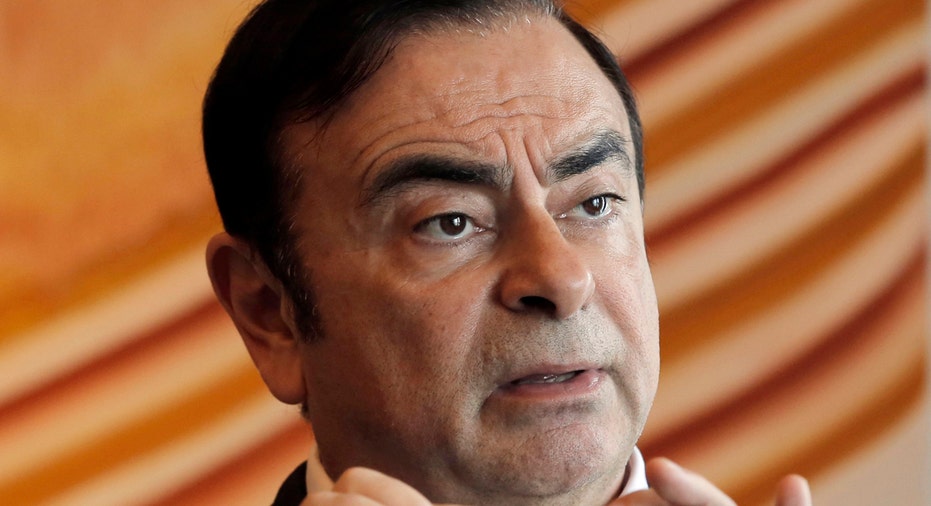
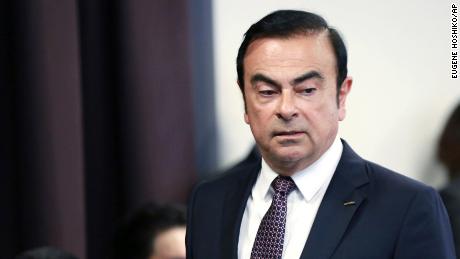
Nissan Chairman Carlos Ghosn speaks during an interview in Hong Kong. A Japanese news report says former Nissan chairman Ghosn will be detained at least through Jan. 11, 2019. (AP Photo/Kin Cheung, File) (AP)

TOKYO (Reuters) - Former Nissan (7201.T) and Renault (RENA.PA) boss Carlos Ghosn began his astonishing escape from Japan with a bullet train ride from Tokyo to Osaka, possibly accompanied by several people, Japanese news agency Kyodo reported Monday.

Continue Reading Below

Japanese authorities also said on Monday they may still press for Ghosn’s extradition from Lebanon to face multiple charges of financial wrongdoing, even though the country does not normally extradite its nationals.

Security cameras captured Ghosn leaving his home on Dec. 29 at about 2:30 p.m. (0530 GMT) and arriving some hours later at Tokyo’s Shinagawa Station, where he took the train to Shin Osaka Station, Kyodo said, citing a person familiar with the matter.

FORMER NISSAN CEO GHOSN'S ESCAPE INEXCUSABLE, JAPAN SAYS

The international fugitive then went by car to a hotel near Osaka’s Kansai International Airport, where he boarded a private jet at 11:10 p.m., according to the media report.

Ghosn was forbidden from leaving Japan while awaiting trial on charges of financial misconduct, which he has denied, but he fled at the end of last year to escape what he called a “rigged” justice system.

Prosecutors are now working with police to piece together Ghosn’s route and find out who helped him, Kyodo said.

In the government’s first briefing since Ghosn skipped bail, Justice Minister Masako Mori said on Monday that as a general principle, Tokyo could request the extradition of a suspect from a country with which it has no formal extradition agreement.

Such a request would need to be carefully examined based on the possibility of “guaranteeing reciprocity and the domestic law of the partner country”, Mori told reporters in Tokyo.

ARREST WARRANT

Mori did not say what would guarantee reciprocity - the idea that benefits or penalties extended by one country to citizens of another should be reciprocated. She also did not say if there were any Lebanese nationals in Japan wanted in Lebanon.

Mori offered little insight into the events of Ghosn’s escape to his ancestral home, repeatedly saying she could not comment on specifics because of an ongoing investigation.

Japanese officials broke days of silence about the Ghosn case on Sunday, saying they would tighten immigration measures and investigate his escape thoroughly. The authorities have also issued an international notice for his arrest.

Government offices and most businesses in Japan have been shut for the New Year holidays, which formally ended on Monday.

Lebanon has said it received an Interpol arrest warrant for Ghosn and that he entered the country legally. A senior Lebanese security official, meanwhile, has said Lebanon does not extradite its citizens.

GET FOX BUSINESS ON THE GO BY CLICKING HERE

Mori also defended Japan’s justice system against Ghosn’s charges that it was “rigged” and discriminatory.

In Japan, suspects who deny charges against them are often detained for long periods and subject to lengthy questioning without a lawyer present, a system critics call “hostage justice”.

“Various comments about Japan’s justice system and this unjust departure are two different things,” Mori told reporters, saying criticism of the justice system could not be used to justify Ghosn’s escape.

Let's block ads! (Why?)


https://news.google.com/__i/rss/rd/articles/CBMiXWh0dHBzOi8vd3d3LmZveGJ1c2luZXNzLmNvbS9tYXJrZXRzL2dob3NuLXNudWNrLW9udG8tYnVsbGV0LXRyYWluLWluLWRhcmluZy1lc2NhcGUtZnJvbS1qYXBhbtIBYWh0dHBzOi8vd3d3LmZveGJ1c2luZXNzLmNvbS9tYXJrZXRzL2dob3NuLXNudWNrLW9udG8tYnVsbGV0LXRyYWluLWluLWRhcmluZy1lc2NhcGUtZnJvbS1qYXBhbi5hbXA?oc=5

2020-01-06 11:52:34Z
52780541824700

Global Markets: Shares erase new year gains, gold, oil soar on U.S. and Iran trade threats - Yahoo Finance

An investor uses his mobile phone in front of a stock quotation board at a brokerage office in Beijing

By Ritvik Carvalho

LONDON (Reuters) - Tensions in the Middle East after the killing of a top Iranian general by the United States erased new year gains for a gauge of world shares on Monday as investors pushed safe-haven gold to a seven-year high, and oil jumped to its highest since September.

The United States detected a heightened state of alert by Iran's missile forces, as President Donald Trump warned the U.S. would strike back, "perhaps in a disproportionate manner", if Iran attacked any American person or target.

Iraq's parliament on Sunday recommended all foreign troops be ordered out of the country after the U.S. killing of the Iranian military commander and an Iraqi militia leader in a drone strike on a convoy at Baghdad airport.

Spot gold gained 1.6% to $1,579.72 per ounce in jittery trade to reach its highest since April 2013.

Oil prices extended gains on fears any Middle East conflict could disrupt global supplies.

Brent crude futures rose 2.04% to $70 a barrel, while U.S. crude climbed 1.7% to $64.12.

European shares extended losses and were set for their worst day in a week, with the pan-European STOXX 600 index down 1.12% by 0838 GMT. The European oil and gas stock index rose about 0.74% and was the sole gainer among its peers, hitting its highest since July.

"Geopolitical events by their nature are unpredictable, but previous periods of increased tensions suggest that the impact on wider markets tends to be short-lived, with more lasting effects confined to local markets," said Mark Haefele, chief investment officer at UBS Global Wealth Management.

"In general, this supports holding a diversified portfolio."


BIGGEST FALL

MSCI's All-Country World Index, which tracks shares in 47 countries, was down 0.43%, erasing all its new year gains in its biggest two-day fall since early December.

In Asia, Japan's Nikkei slid almost 2% in a sour return from holiday, while E-Mini futures for the S&P 500 fell 0.7%.

Chinese shares, which had opened in the red, reversed their losses, as did Australian shares which ended the day flat. Hong Kong's Hang Seng index lost 0.8%.

Sovereign bonds benefited from the safety bid with yields on 10-year Treasuries down at 1.7725% having fallen 10 basis points on Friday.

The yen remained the favoured safe haven among currencies thanks to Japan's massive holdings of foreign assets. Investors assume Japanese funds would repatriate their money during a true global crisis, pushing the yen higher.

"Iran is almost certainly to respond in some scale, scope and magnitude," said Lee Hardman, currency analyst at MUFG.

Therefore "market participants are likely to remain nervous until there is more clarity over how geopolitical tensions between the U.S. and Iran will proceed", Hardman said, noting that geopolitical tensions could hurt global economic growth, especially if the price of oil increases.

On Monday, the dollar was last at 107.965 yen, after falling to a three-month trough of 107.77 earlier in the session. The euro likewise eased to 120.61 yen having hit a three-week low.

The dollar was steadier against other majors, with the euro a tad firmer at $1.1172. Against a basket of currencies, the dollar was holding at 96.839.

The risk sensitive currencies of Australia and New Zealand were on track for their fourth straight session of losses.


(Reporting by Ritvik Carvalho; additional reporting by Olga Cotaga in London and Wayne Cole and Swati Pandey in Sydney, editing by Ed Osmond)

Let's block ads! (Why?)


https://news.google.com/__i/rss/rd/articles/CBMiSmh0dHBzOi8vZmluYW5jZS55YWhvby5jb20vbmV3cy9nbG9iYWwtbWFya2V0cy1nb2xkLW9pbC1zb2FyLTAzMDQwNDMzMi5odG1s0gFSaHR0cHM6Ly9maW5hbmNlLnlhaG9vLmNvbS9hbXBodG1sL25ld3MvZ2xvYmFsLW1hcmtldHMtZ29sZC1vaWwtc29hci0wMzA0MDQzMzIuaHRtbA?oc=5

2020-01-06 09:00:00Z
52780542175132

Minggu, 05 Januari 2020

Carlos Ghosn: Disgraced Nissan executive's despair over Japanese justice may have prompted escape - The - The Washington Post

Issei Kato Reuters Former Nissan Motor Chairman Carlos Ghosn sits inside a car as he leaves his lawyer's office after being released on bail from Tokyo Detention House, in Tokyo, Japan, March 6, 2019.

TOKYO — As the months went by, former Nissan boss Carlos Ghosn became increasingly convinced that he had no chance of a fair trial in Japan, with anger at his arrest giving way to despair and then a decision to flee the country, his lawyer said.

It all came to a head with an emotional video call with his wife on Christmas Eve, lawyer Takashi Takano said, during which Ghosn lost hope of ever being able to lead a normal family life.

The lawyer’s impassioned defense of Ghosn and scathing attack on Japan’s legal system has divided opinion here, even as the country’s justice minister broke a week of silence to defend the treatment of the flamboyant business executive.

Justice Minister Masako Mori called Ghosn’s departure “presumably illegal,” unjustifiable and “extremely regrettable,” adding there was no record of him leaving the country.

In her first statement after a week-long New Year’s holiday here, she promised a thorough investigation, and directed the Immigration Services Agency to tighten immigration procedures at departure.

[Carlos Ghosn walked out of his home alone, security camera footage shows]

Ghosn has said he was fleeing political persecution and a rigged justice system.

Takano described how Ghosn would ask his lawyers the same question again and again as the months went by: could he expect a fair trial in Japan. Their answer was always no — no criminal defendant in Japan can expect a fair trial. Still, they argued, the evidence against him was weak, and there was still a good chance they would establish his innocence.

Prosecutors enjoy considerable powers in Japan, and once they decide to accept a case, conviction rates are around 99 percent. But more than any other lawyers in this country, Ghosn’s defense team had a track record of getting people off the hook.

“Please trust us,” Takano would tell Ghosn.

“Apparently, his doubts and concerns began to grow,” Takano said, alleging prosecutors were slow to respond to requests for the disclosure of evidence, imposed minute restrictions on how evidence would be disclosed, and even eliminated some of the evidence, all the while leaking “as much as they liked” to the Japanese media.

In his regular meetings with his lawyers, Ghosn’s frustration showed in his face as he asked questions, Takano said. But over time the questions became fewer, as anger gave way to despair.

AP

AP

Junichiro Hironaka, center, lawyer for Nissan's former chairman Carlos Ghosn, speaks to the media in Tokyo Jan. 4, 2020.

Ghosn was accused of four charges of financial misconduct while running Nissan, including underreporting his income and using company money for his own benefit. But he says he was the victim of a conspiracy between prosecutors, officials and Nissan to block his plans to deepen the company’s merger with its French partner Renault.

Even Renault, initially supportive, said its internal investigations had found evidence of unethical practices. Nevertheless, Japanese business executives accused of far more serious crimes have been let off or given little more than a slap on the wrist, and many foreign executives here see Ghosn’s treatment as an example of double standards.

But stresses on his family life may also have played a role in his decision to flee.

Under the terms of his bail, Ghosn was forbidden by the court from meeting his wife Carole, or even speaking to her for seven months, on the grounds they might conspire to tamper with evidence.

“This is a criminal punishment,” Ghosn complained to his lawyers. “When am I ever going to be able to lead a normal family life?”

[Opinion: My husband, Carlos Ghosn, is a victim of Japan’s ‘hostage justice’ system]

On Christmas Eve, Ghosn was allowed a one-hour video call with Carole, in a lawyer’s office, the first in a month. They talked about their children, relatives and friends, their lives and their memories, Takano said.

“There was no shortage of things to talk about,” Takano said. “Just when the time had come for them to stop after an hour, he spoke to the display: ‘My relationship with you cannot be replaced by children and friends. You are my indispensable presence. I love you.’”

The lawyer said he was deeply moved.

“I have never felt such strong despair over Japan’s legal system as I did at that time. I felt something nearly close to a sense of wanting to kill. I said to him ‘Carlos, I am very sorry. Truly, the Japanese system is shameful. I will do our utmost to improve this situation as soon as possible,’” he said.

Ghosn didn’t respond.

On Dec. 25, just a day after his video call. Ghosn learned that his trial, initially expected to begin April, could be delayed further, possibly into 2021, lawyers and friends say. That news played a part in his decision to flee, his friend Ricardo Karam said, a suggestion supported by another of Ghosn’s defense lawyers, Junichiro Hironaka,

“I wonder if he was strongly shocked in those two days,” he told the Asahi newspaper.

Four days later, at noon on Sunday, Dec. 29, Ghosn strolled out of his home, alone, never to return, Japan’s NHK reported.

Although surveillance cameras had been installed outside the property, the system was only designed to prevent him holding unauthorized meetings and not to keep him under house arrest, and footage was only handed over to the court once a month, Takano says.

Concerned that Ghosn could tamper with evidence, Nissan had hired a private security firm to track him when he left his home, Reuters and Japan’s Sankei newspaper reported.

But on Dec. 27, Ghosn’s lawyers filed a criminal complaint to Tokyo police about the surveillance, and it was withdrawn, lawyer Hironaka told the Asahi newspaper.

Ghosn bypassed immigration at Osaka’s Kansai airport by hiding in a large black case typically used to carry audio gear, according to the Wall Street Journal, while his name was not included on the plane’s passenger manifest.

Maya Alleruzzo

AP

A private security guard watches journalists through a closing garage door after a vehicle arrived at the house of ex-Nissan chief Carlos Ghosn in Beirut, Lebanon, Jan. 4, 2020.

On Sunday, Tokyo prosecutor’s office said Ghosn’s escape constituted a crime. It also defended the country’s legal system, arguing that although conviction rates are high, defendants are given a proper chance to present their case and courts reach judgments strictly on the basis of the evidence.

Ghosn was initially detained for more than 100 days, released on bail and then rearrested in April shortly after he announced plans to speak to the press. He was finally released on bail again for a further amount of nearly $5 million, after convincing the court he was not a flight risk.

[Former Nissan, Renault boss Carlos Ghosn rearrested on fresh charges in Japan]

Takano said he learned of Ghosn’s escape only through news reports.

“Initially, I felt a strong anger, a sense of having been betrayed. Yet, looking back how he has been treated by this country’s legal system, my anger went in a different direction,” he said. “Indeed I was betrayed. But it is not Carlos Ghosn who betrayed me.”

But Takahiro Saito, deputy chief of the Tokyo District Public Prosecutor’s Office, defended the decision to detain Ghosn for so long, and oppose bail, arguing he had “significant influence” inside Japan and around the world, and there had been a realistic danger he would destroy evidence.

“The defendant Ghosn had abundant financial power and multiple foreign bases. It was easy for him to flee,” Saito said in a statement.

Many Japanese people see Ghosn’s escape as something of a national embarrassment. Takano’s defense of Ghosn had received hundreds of thousands of views by Sunday, 11,000 likes but many angry comments directed at Ghosn and the lawyer.

Read more:

Accused of serious crimes, he smuggled himself out of Japan. But Carlos Ghosn may escape extradition from Lebanon, too.

Carlos Ghosn might not be as safe in Lebanon as he thought

Ex-Nissan boss Carlos Ghosn flees to Lebanon, slams Japan’s justice system

Today’s coverage from Post correspondents around the world

Like Washington Post World on Facebook and stay updated on foreign news

Let's block ads! (Why?)


https://news.google.com/__i/rss/rd/articles/CBMitwFodHRwczovL3d3dy53YXNoaW5ndG9ucG9zdC5jb20vd29ybGQvYXNpYV9wYWNpZmljL2dob3Nucy1tb3VudGluZy1kZXNwYWlyLWF0LWphcGFuZXNlLWp1c3RpY2UtbWF5LWhhdmUtY29udmluY2VkLWhpbS10by1mbGVlLzIwMjAvMDEvMDUvN2RmZTkyZmUtMmZhOS0xMWVhLTkzMTMtNmNiYTg5YjFiOWZiX3N0b3J5Lmh0bWzSAQA?oc=5

2020-01-05 12:44:00Z
52780536767721

Japanese authorities vow to tighten immigration rules after Carlos Ghosn's escape - CNN

Ghosn left Japan "illegally by unjust methods," said Justice Minister Masako Mori, the country's top judicial official. She said that authorities have no official record of Ghosn's departure from Japan, and that prosecutors are investigating the case.
Mori also said she has ordered the country's immigration department to "further tighten" rules for leaving the country "so that the same situation won't be repeated."
Mori's statement — along with a similar one published Sunday by a Tokyo prosecutor — marked the first time Japanese authorities addressed Ghosn's stunning escape last week. Government offices in the country had been closed all week for the New Year holiday.
Ghosn's escape: How the wealthy and powerful evade justice
Ghosn — the former chairman of Nissan and Mitsubishi Motors, and former chairman and CEO of their alliance partner, Renault — had been awaiting trial in Japan on charges of financial wrongdoing. As a condition of his release on bail, Ghosn was required to stay in Japan. But the case was upended after Ghosn revealed that he had fled Japan for Lebanon to escape what he called a "rigged" justice system.
Mori defended the country's justice system on Sunday, adding that it assured "fundamental human rights" and set out to "find out the truth of the case."
She also said that Ghosn's bail has been "canceled," and confirmed that the Japanese government asked Interpol, the international police agency, to issue a "red notice" for Ghosn. Lebanon said last week that it had received that notice, confirming that Ghosn is wanted by police.
Takahiro Saito, Tokyo's deputy chief prosecutor, said in his own statement Sunday that Ghosn "deliberately ignored" Japan's justice proceedings by fleeing the country, even though his bail barred him from overseas travel. Saito added that Ghosn's escape "could be a criminal act."
"Ghosn broke his own promise to attend the court and run away from Japan," Saito said. Both he and Mori called the event "regrettable."
Ghosn was arrested in November 2018 and has since faced a litany of charges, including allegations that he understated his income for years and funneled $5 million of Nissan's money to a car dealership he controlled. He was ousted from his posts at Nissan and Mitsubishi Motors following his arrest in November 2018, and later resigned from Renault. He has denied the charges against him.
Ghosn's Japanese lawyer, Junichiro Hironaka, said Saturday that the defense team would resign after contacting Ghosn this week. Hironaka had earlier told reporters that Ghosn's escape was a "complete surprise."
Authorities, meanwhile, have been scrambling to figure out how Ghosn pulled off the escape. Prosecutors in Tokyo raided the home where he had been staying last Thursday. Ghosn has denied reports that his family were involved in helping him flee.
Last week, a Turkish company that charters private jets confirmed that two of its planes were used "illegally" to transport Ghosn without the knowledge of company management. That company, MNG, said it has filed a criminal complaint.
-- Yoko Wakatsuki reported from Tokyo, Akanksha Sharma reported from Hong Kong and Amy Woodyatt wrote from London.

Let's block ads! (Why?)


https://news.google.com/__i/rss/rd/articles/CBMiV2h0dHBzOi8vd3d3LmNubi5jb20vMjAyMC8wMS8wNS9idXNpbmVzcy9naG9zbi1sZWJhbm9uLWVzY2FwZS1qYXBhbi1pbnRsLXNjbGkvaW5kZXguaHRtbNIBW2h0dHBzOi8vYW1wLmNubi5jb20vY25uLzIwMjAvMDEvMDUvYnVzaW5lc3MvZ2hvc24tbGViYW5vbi1lc2NhcGUtamFwYW4taW50bC1zY2xpL2luZGV4Lmh0bWw?oc=5

2020-01-05 12:11:00Z
52780536767721