Jumat, 17 Januari 2020

China's economic growth hits 30-year low - BBC News

China's economy grew last year at the slowest pace in almost three decades.

Official figures show that the world's second largest economy expanded by 6.1% in 2019 from the year before - the worst figure in 29 years.

The country has faced weak domestic demand and the impact of the bitter trade war with the US.

The government has been rolling out measures over the past two years in an attempt to boost growth.

It comes after almost two years of trade tensions with the US - although hopes of a better relationship with America have seen improvements in manufacturing and business confidence data.

This week Washington and Beijing signed a "phase one" trade deal. However, analysts remain unsure whether those recent gains will continue.

In response to the lower growth rate, Beijing is now widely expected to roll out yet more stimulus measures.

The government has used a combination of measures aimed at easing the slowdown, including tax cuts and allowing local governments to sell large amounts of bonds to fund their infrastructure programmes.

The country's banks have also been encouraged to lend more, especially to small firms. New loans in the local currency hit a record high of $2.44 trillion (£1.86tn) last year.
Media playback is unsupported on your device

So far the economy has been slow to pick up, with investment growth falling to record low levels.

Historically, China has seen much stronger economic expansion, with the first decade of the 21st Century seeing double-digit percentage growth.

But - although that 6.1% growth rate is China's weakest expansion in almost three decades - it is much higher than other leading economies.

The US central bank, for example, has forecast that the American economy will grow by around 2.2% this year.

'The trade war may have actually helped the Chinese economy'

Analysis by Stephen McDonell, BBC China correspondent

For many countries, having the slowest GDP growth in three decades might cause panic - but not in China.

Softening domestic demand and US tariffs have eaten into growth - but some analysts argue that the trade war may have actually helped the Chinese economy.

This 6.1% GDP figure for 2019 is not only within the government's target range, but Chinese policy makers have for years been trying to gradually step down expectations.

They're trying to break away from the years of unsustainable breakneck growth which has trashed the natural environment and led to an explosion in unserviceable debt.

The government has instigated some stimulus measures to make sure the steam doesn't come out of the economy too quickly. But on bank loans, the crucial question will be - who gets access to the loans?

Will it be those building the "bridge to nowhere" vanity projects which have popped up in many regional cities?

Or will it be the promising new start-up enterprises which are seen as the future of modern Chinese development?

As part of the phase one deal, China pledged to boost US imports by $200bn above 2017 levels and strengthen intellectual property rules.

In exchange, the US agreed to halve some of the new tariffs it has imposed on Chinese products.

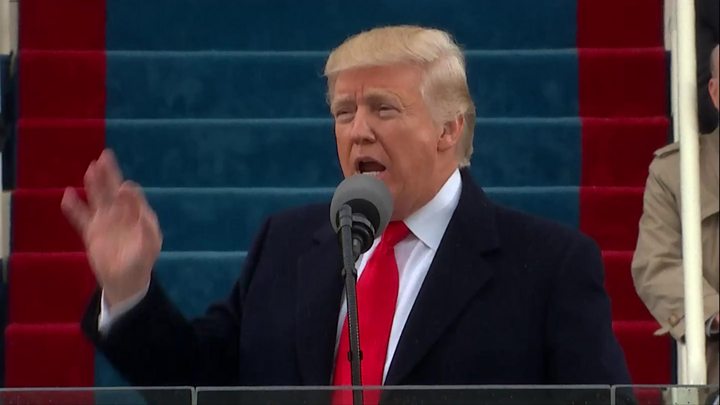
Speaking in Washington, US President Donald Trump said the pact would be "transformative" for the American economy.

Let's block ads! (Why?)


https://news.google.com/__i/rss/rd/articles/CBMiKmh0dHBzOi8vd3d3LmJiYy5jb20vbmV3cy9idXNpbmVzcy01MTE0NDg5MtIBLmh0dHBzOi8vd3d3LmJiYy5jb20vbmV3cy9hbXAvYnVzaW5lc3MtNTExNDQ4OTI?oc=5

2020-01-17 05:18:49Z
52780556963101

China's economic growth hits 30-year low - BBC News

China's economy grew last year at the slowest pace in almost three decades.

Official figures show that the world's second largest economy expanded by 6.1% in 2019 from the year before - the worst figure in 29 years.

The country has faced weak domestic demand and the impact of the bitter trade war with the US.

The government has been rolling out measures over the past two years in an attempt to boost growth.

It comes after almost two years of trade tensions with the US - although hopes of a better relationship with America have seen improvements in manufacturing and business confidence data.

This week Washington and Beijing signed a "phase one" trade deal. However, analysts remain unsure whether those recent gains will continue.

In response to the lower growth rate, Beijing is now widely expected to roll out yet more stimulus measures.

The government has used a combination of measures aimed at easing the slowdown, including tax cuts and allowing local governments to sell large amounts of bonds to fund their infrastructure programmes.

The country's banks have also been encouraged to lend more, especially to small firms. New loans in the local currency hit a record high of $2.44 trillion (£1.86tn) last year.

Media playback is unsupported on your device

So far the economy has been slow to pick up, with investment growth falling to record low levels.

Historically, China has seen much stronger economic expansion, with the first decade of the 21st Century seeing double-digit percentage growth.

But - although that 6.1% growth rate is China's weakest expansion in almost three decades - it is much higher than other leading economies.

The US central bank, for example, has forecast that the American economy will grow by around 2.2% this year.

'The trade war may have actually helped the Chinese economy'

Analysis by Stephen McDonell, BBC China correspondent

For many countries, having the slowest GDP growth in three decades might cause panic - but not in China.

Softening domestic demand and US tariffs have eaten into growth - but some analysts argue that the trade war may have actually helped the Chinese economy.

This 6.1% GDP figure for 2019 is not only within the government's target range, but Chinese policy makers have for years been trying to gradually step down expectations.

They're trying to break away from the years of unsustainable breakneck growth which has trashed the natural environment and led to an explosion in unserviceable debt.

The government has instigated some stimulus measures to make sure the steam doesn't come out of the economy too quickly. But on bank loans, the crucial question will be - who gets access to the loans?

Will it be those building the "bridge to nowhere" vanity projects which have popped up in many regional cities?

Or will it be the promising new start-up enterprises which are seen as the future of modern Chinese development?

As part of the phase one deal, China pledged to boost US imports by $200bn above 2017 levels and strengthen intellectual property rules.

In exchange, the US agreed to halve some of the new tariffs it has imposed on Chinese products.

Speaking in Washington, US President Donald Trump said the pact would be "transformative" for the American economy.

Let's block ads! (Why?)


https://news.google.com/__i/rss/rd/articles/CBMiKmh0dHBzOi8vd3d3LmJiYy5jb20vbmV3cy9idXNpbmVzcy01MTE0NDg5MtIBLmh0dHBzOi8vd3d3LmJiYy5jb20vbmV3cy9hbXAvYnVzaW5lc3MtNTExNDQ4OTI?oc=5

2020-01-17 05:06:38Z
52780556963101

China's economic growth hits 30-year low - BBC News

China's economy grew last year at the slowest pace in almost three decades.

Official figures show that the world's second largest economy expanded by 6.1% in 2019 from the year before - the worst figure in 29 years.

The country has faced weak domestic demand and the impact of the bitter trade war with the US.

The government has been rolling out measures over the past two years in an attempt to boost growth.

It comes after almost two years of trade tensions with the US - although hopes of a better relationship with America have seen improvements in manufacturing and business confidence data.

This week Washington and Beijing signed a "phase one" trade deal. However, analysts remain unsure whether those recent gains will continue.

In response to the lower growth rate, Beijing is now widely expected to roll out yet more stimulus measures.

The government has used a combination of measures aimed at easing the slowdown, including tax cuts and allowing local governments to sell large amounts of bonds to fund their infrastructure programmes.

The country's banks have also been encouraged to lend more, especially to small firms. New loans in the local currency hit a record high of $2.44 trillion (£1.86tn) last year.

Media playback is unsupported on your device

So far the economy has been slow to pick up, with investment growth falling to record low levels.

Historically, China has seen much stronger economic expansion, with the first decade of the 21st Century seeing double-digit percentage growth.

But - although that 6.1% growth rate is China's weakest expansion in almost three decades - it is much higher than other leading economies.

The US central bank, for example, has forecast that the American economy will grow by around 2.2% this year.

'The trade war may have actually helped the Chinese economy'

Analysis by Stephen McDonell, BBC China correspondent

For many countries, having the slowest GDP growth in three decades might cause panic - but not in China.

Softening domestic demand and US tariffs have eaten into growth - but some analysts argue that the trade war may have actually helped the Chinese economy.

This 6.1% GDP figure for 2019 is not only within the government's target range, but Chinese policy makers have for years been trying to gradually step down expectations.

They're trying to break away from the years of unsustainable breakneck growth which has trashed the natural environment and led to an explosion in unserviceable debt.

The government has instigated some stimulus measures to make sure the steam doesn't come out of the economy too quickly. But on bank loans, the crucial question will be - who gets access to the loans?

Will it be those building the "bridge to nowhere" vanity projects which have popped up in many regional cities?

Or will it be the promising new start-up enterprises which are seen as the future of modern Chinese development?

As part of the phase one deal, China pledged to boost US imports by $200bn above 2017 levels and strengthen intellectual property rules.

In exchange, the US agreed to halve some of the new tariffs it has imposed on Chinese products.

Speaking in Washington, US President Donald Trump said the pact would be "transformative" for the American economy.

Let's block ads! (Why?)


https://news.google.com/__i/rss/rd/articles/CBMiKmh0dHBzOi8vd3d3LmJiYy5jb20vbmV3cy9idXNpbmVzcy01MTE0NDg5MtIBLmh0dHBzOi8vd3d3LmJiYy5jb20vbmV3cy9hbXAvYnVzaW5lc3MtNTExNDQ4OTI?oc=5

2020-01-17 04:35:10Z
52780556963101

Kamis, 16 Januari 2020

Stocks making the biggest moves premarket: Morgan Stanley, Southwest, Tesla, Netflix & more - CNBC

Check out the companies making headlines before the bell:

Morgan Stanley (MS) – The investment bank reported quarterly earnings of $1.30 per share, beating the consensus estimate of 99 cents a share. The $1.30 including a 10 cent discrete tax benefit. Revenue was well above Wall Street forecasts, with firmwide revenue exceeding $10 billion for the fourth consecutive quarter.

Southwest Airlines (LUV) – Southwest took Boeing's (BA) grounded 737 Max jet off its flight schedule through June 6.

XPO Logistics (XPO) – XPO is considering a sale of the company or a spin-off of one or more business units. Such a move would reverse recent strategy for the provider of warehousing and delivery services, which made 17 acquisitions from 2011 to 2015.

Tesla (TSLA) – Tesla saw vehicle registrations in California cut nearly in half during the fourth quarter of 2019 compared to a year earlier. That decline comes amid a significant drop in federal tax credits for electric vehicle buyers during 2019. Separately, Tesla was downgraded to "underweight" from "equal-weight" at Morgan Stanley, which pointed to the recent stock run-up as well as long term risks to the automaker's China business.

Taiwan Semiconductor (TSM) – Taiwan Semi said its current-quarter revenue should show a 45% jump compared to a year ago. The world's largest contract chipmaker also raised its capital spending plan for the year on expectations of strong demand for 5G smartphones.

American Outdoor Brands (AOBC) – The company said CEO James Debney left the Smith & Wesson parent after he was found to have engaged in behavior "inconsistent with a non-financial company policy." The company did not provide more details.

Alcoa (AA) – Alcoa lost 31 cents per share for the fourth quarter, wider than the 22 cents a share loss that analysts had been expecting. The aluminum producer's revenue also came in below estimates, due in large part to lower prices. Alcoa said it expected aluminum demand to pick up this year.

Netflix (NFLX) – Netflix is collaborating with Ben & Jerry's on a new ice cream flavor called "Netflix & Chilll'd." The new flavor mixes pretzel swirls and fudge brownies in peanut butter ice cream.

Nike (NKE) – Nike's Vaporfly shoe reportedly is set to be banned by World Athletics, amid allegations that it gives an unfair advantage to runners. The Daily Mail reports that the shoe's design is under review, with findings to be revealed later this month. The Vaporfly has been worn by both men and women in recent record-breaking marathon races.

GlaxoSmithKline (GSK) – A Glaxo executive told Bloomberg that the drugmaker has not given much thought to an initial public offering of its consumer health care joint venture with Pfizer (PFE). The comments come after Pfizer CEO Albert Bourla said such a move could happen within three to four years.

Spirit Airlines (SAVE) – The airline updated its fourth-quarter guidance, saying a decline in total operating revenue per available seat mile would decline less than previously expected.

PPG Industries (PPG) – The paint maker missed estimates by 3 cents a share, with quarterly profit of $1.31 per share. Revenue also came in slightly below Street forecasts. with PPG noting weak conditions in the industrial markets that it serves.

Let's block ads! (Why?)


https://news.google.com/__i/rss/rd/articles/CBMiemh0dHBzOi8vd3d3LmNuYmMuY29tLzIwMjAvMDEvMTYvc3RvY2tzLW1ha2luZy10aGUtYmlnZ2VzdC1tb3Zlcy1wcmVtYXJrZXQtbW9yZ2FuLXN0YW5sZXktc291dGh3ZXN0LXRlc2xhLW5ldGZsaXgtbW9yZS5odG1s0gF-aHR0cHM6Ly93d3cuY25iYy5jb20vYW1wLzIwMjAvMDEvMTYvc3RvY2tzLW1ha2luZy10aGUtYmlnZ2VzdC1tb3Zlcy1wcmVtYXJrZXQtbW9yZ2FuLXN0YW5sZXktc291dGh3ZXN0LXRlc2xhLW5ldGZsaXgtbW9yZS5odG1s?oc=5

2020-01-16 12:44:00Z
52780554842418

America's favorite Valentine's Day candy is back, but not without a few hiccups - CNBC

Sweetheart candy hearts are seen on the shelf at the To The Moon Marketplace on January 29, 2019 in Wilton Manors, Florida.

Joe Raedle | Getty Images

Sweethearts, the conversation heart candy, is back on shelves for Valentine's Day after missing a year because of a change in its ownership.

But consumers might notice a few changes — fewer pithy sayings and a slightly different taste — and they won't be quite as ubiquitous.

Sweethearts' original producer, New England Confectionary Company, went out of business in 2018. Round Hill Investments, which bought Twinkie-maker Hostess while it was in bankruptcy proceedings, purchased the bankrupt candy maker at auction but sold its Necco wafer brand and Sweethearts to Spangler Candy several months later. Spangler's best-known candy is its Dum Dum lollipops.

Because the candy company acquired the brands in the fall of 2018, it was unable to produce Sweethearts in time for Valentine's Day just a few months later even though it was the most popular candy for the holiday in 2018.

"It became really apparent to us how much people were going to miss them," Spangler spokeswoman Diana Moore Eschhofen said.

The long-moving process for transferring the Sweethearts' equipment from Necco's shuttered factory in Revere, Massachusetts, into another plant resulted in the delay, she said. Sixty truckloads of equipment had to be carefully dismantled, packed up and moved. Some larger pieces needed to be lifted out through the roof with a crane.

The entire moving process took about a year, according to Eschhofen. And those challenges are still putting pressure on Spangler's ability to deliver the candy hearts this year.

"Based on consumer response and the technical challenges, we are not going to be able to meet all of the consumer demand for 2020," she said.

The best place to find Sweethearts for Valentine's Day will be nationwide drugstores like CVS and Walgreens, according to Eschhofen. Some regional stores may also carry them, but they will be in limited supply. The goal for 2021 is to return to Sweethearts' normal production capacity.

The equipment also caused another headache for Spangler. The printer that Sweethearts used to press sayings like "you rock" and "love me" on the hearts was unreliable. The company decided to invest in a new printer, but the replacement printing equipment was damaged during production, and Spangler could not get it fixed completely.

For consumers, that means more conversation hearts than usual will be silent.

"We know that's disappointing, but it's a disappointment for us, too," Eschhofen said.

Although fewer Sweethearts will come with the sayings that they are known for, Spangler is bringing the candy back to its roots by reviving the original recipe. The company located the formula buried in paperwork. Necco had tweaked the recipe over the years in an attempt to modernize the 118-year-old candy. The change brings back flavors such as banana and wintergreen.

Let's block ads! (Why?)


https://news.google.com/__i/rss/rd/articles/CBMiaWh0dHBzOi8vd3d3LmNuYmMuY29tLzIwMjAvMDEvMTYvc3dlZXRoZWFydHMtY2FuZHktaXMtYmFjay1mb3ItdmFsZW50aW5lcy1kYXktYnV0LW5vdC13aXRob3V0LWhpY2N1cHMuaHRtbNIBbWh0dHBzOi8vd3d3LmNuYmMuY29tL2FtcC8yMDIwLzAxLzE2L3N3ZWV0aGVhcnRzLWNhbmR5LWlzLWJhY2stZm9yLXZhbGVudGluZXMtZGF5LWJ1dC1ub3Qtd2l0aG91dC1oaWNjdXBzLmh0bWw?oc=5

2020-01-16 12:41:00Z
CAIiEN2iwp9AOjnaFoHuvMhUi9YqGQgEKhAIACoHCAow2Nb3CjDivdcCMJ_5ngY

Morgan Stanley shares jump after massive beat on fourth-quarter profit - CNBC

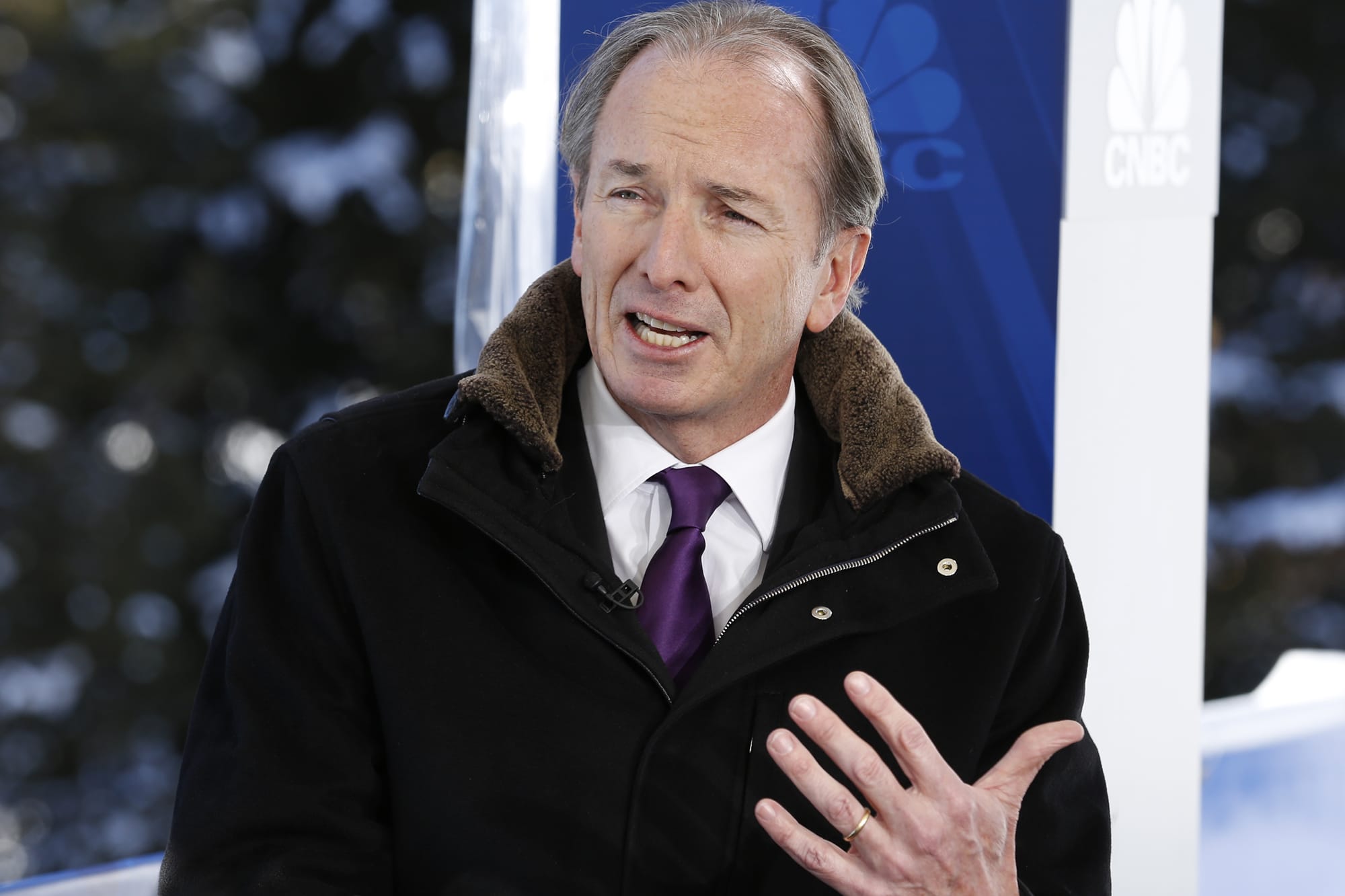
Morgan Stanley shares popped after the firm exceeded analysts' profit estimates and each of its three main businesses produced more revenue than expected. 

The bank said Thursday that fourth-quarter profit surged 46% to $2.24 billion, or $1.30 a share, compared with the 99 cent estimate of analysts surveyed by Refinitiv. Revenue climbed 27% to $10.86 billion, exceeding the $9.72 billion estimate by more than $1 billion.

Shares of the firm rose 2.7% in premarket trading. 

"We delivered strong quarterly earnings across all of our businesses," CEO James Gorman said in the release. "Firmwide revenues were over $10 billion for the fourth consecutive quarter, resulting in record full year revenues and net income. This consistent performance met all of our stated performance targets."

In a quarter in which competitors from J.P. Morgan Chase to Goldman Sachs posted huge rebounds to fixed income trading revenue, analysts wanted to see if Morgan Stanley would follow suit. 

It did: Bond trading helped power the firm's institutional securities division to a 32% jump in revenue to $5.05 billion, compared to the $4.46 billion estimate. Fixed income trading produced $1.27 billion in revenue, compared with the $933.5 million estimate. 

At the firm's massive wealth management division, revenue rose 11% to $4.58 billion, edging out the $4.39 billion estimate. 

But it was the firm's smallest division, investment management, that exceeded expectations by the most, driving the company's overall revenue beat. The business produced $1.36 billion in revenue, almost 100% more than a year earlier and exceeding the $783.2 million estimate by more than a half billion dollars. 

Gorman has tilted Morgan Stanley towards wealth management and overhauled its once-struggling bond trading division. But the trading and advisory operations are still a crucial part of the company's business mix.

Last month, Morgan Stanley cut roughly 2% of its workforce due to an uncertain global economic outlook, a cull that hit technology and operations roles the hardest, people with knowledge of the matter said.

Morgan Stanley is the last of the six largest U.S. banks to report results.

Earlier this week, J.P. Morgan, Citigroup, and Bank of America posted profits that beat analysts' expectations on surging bond-trading results. Results at Wells Fargo and Goldman Sachs were both marred by legal expenses tied to scandals: At Wells, legal charges were tied to its fake accounts issue, while Goldman neared a resolution to its 1MDB investigation.


Here's what Wall Street expected:

Earnings: 99 cents a share, 24% higher than a year earlier, according to Refinitiv

Revenue: $9.72 billion, 14% higher than a year earlier

Wealth management: $4.39 billion, according to FactSet

Trading: Equities $1.93 billion, Fixed Income $933.5 million

Let's block ads! (Why?)


https://news.google.com/__i/rss/rd/articles/CBMiRGh0dHBzOi8vd3d3LmNuYmMuY29tLzIwMjAvMDEvMTYvbW9yZ2FuLXN0YW5sZXktZWFybmluZ3MtcTQtMjAxOS5odG1s0gFIaHR0cHM6Ly93d3cuY25iYy5jb20vYW1wLzIwMjAvMDEvMTYvbW9yZ2FuLXN0YW5sZXktZWFybmluZ3MtcTQtMjAxOS5odG1s?oc=5

2020-01-16 11:55:00Z
52780554842418

Stock futures rise, putting Wall Street on track to open at record highs - CNBC

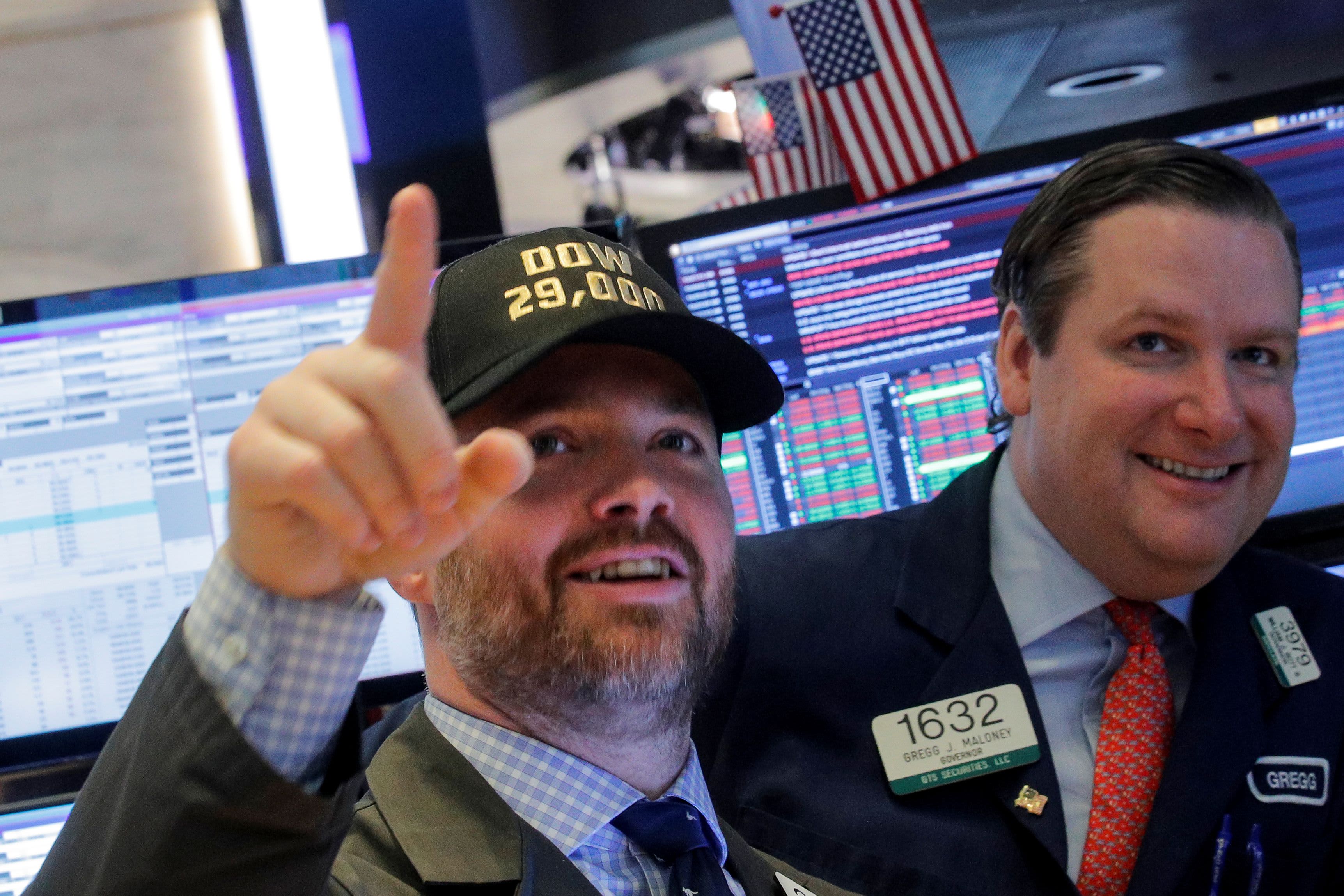
U.S. stock index futures rose on Thursday after Morgan Stanley reported quarterly figures that easily topped analyst expectations while investors digested a key trade agreement between China and the U.S.

Around 7:50 a.m. ET, Dow Jones Industrial Average futures were up 78 points, indicating a gain of 113 points at the open. S&P 500 and Nasdaq 100 futures also pointed to strong gains at the open. The gains in futures put the major averages on track to hit fresh record highs.

Morgan Stanley's three main businesses — investment management, wealth management and trading — all produced more revenue than expected in the previous quarter. The company's stock rose 1.6% in the premarket.

Around 7% of S&P 500 companies have reported earnings thus far, according to FactSet data. Of those companies, 76.5% have posted better-than-expected expectations. 

Stocks closed well off their session highs on Wednesday after President Donald Trump and Chinese Vice Premier Liu He signed a "phase one" trade deal in Washington, D.C. Under the agreement, China is set to buy an additional $200 billion in U.S. goods over the next two years.

As a result of the deal, U.S. exports to China should in theory rise to $263 billion in 2020 and $309 billion in 2021, CNBC reported. Both figures would represent a record-breaking acceleration of U.S. exports to China.

That said, China's other suppliers of agricultural commodities will not be impacted by the Sino-U.S. trade deal since buying will be based on market principles, Vice Premier Liu He said, according to a report from state-owned CCTV on Thursday.

The data calendar is quite crowded with weekly jobless claims, monthly retail sales and import prices, and the Philadelphia Fed manufacturing numbers due at 8:30 a.m. ET. Business inventories data and a National Association of Home Builders survey are also expected at 10 a.m. ET.

Let's block ads! (Why?)


https://news.google.com/__i/rss/rd/articles/CBMiYGh0dHBzOi8vd3d3LmNuYmMuY29tLzIwMjAvMDEvMTYvdXMtZnV0dXJlcy1hZnRlci11cy1jaGluYS10cmFkZS1kZWFsLWFoZWFkLW9mLWJhbmstZWFybmluZ3MuaHRtbNIBZGh0dHBzOi8vd3d3LmNuYmMuY29tL2FtcC8yMDIwLzAxLzE2L3VzLWZ1dHVyZXMtYWZ0ZXItdXMtY2hpbmEtdHJhZGUtZGVhbC1haGVhZC1vZi1iYW5rLWVhcm5pbmdzLmh0bWw?oc=5

2020-01-16 07:27:00Z
52780556365505