Rabu, 29 Januari 2020

Top 5 Things to Know in the Market on Wednesday, 29th January - Investing.com

© Reuters.  © Reuters.

By Geoffrey Smith

Investing.com -- It's peak earnings season time, with updates due from a cast of thousands including Tesla, Facebook, McDonald's, Boeing and General Electric. They will all struggle to take attention away from Apple, which is set to open at a new record high after posting blowout earnings for its fiscal first quarter late on Tuesday. The coronavirus death toll has now hit 132, but markets are refusing to panic more than they already have done. Federal Reserve chairman Jerome Powell will say later whether he expects any impact on the U.S. economy from the outbreak, but the Fed's policy meeting, which winds up today, isn't expected to result in any change to interest rates. Here's what you need to know in financial markets on Wednesday, 29th January.

1. Coronavirus death toll hits 132, as disruption to business spreads

The number of deaths from the novel coronavirus reached 132, while the number of confirmed cases hit 6,000. While the virus continues to spread, the relatively low apparent mortality rate (SARS killed nearly 10% of those it infected) has allowed a degree of relief to seep through to financial markets.

However, the dip in economic activity in China and further afield continues to take shape. Toyota suspended production in the country, while Starbucks (NASDAQ:) said it would close 2,000 branches temporarily, joining McDonald’s (NYSE:) and KFC owner Yum! Brands (NYSE:). The U.S. and Japan both started evacuating citizens from the country, while British Airways suspended all flights to China.

China’s transport ministry said overall trips during the current new year holiday season were down 7.2% on the year – a less dramatic decline than earlier figures had suggested.

2. Apple's blowout earnings

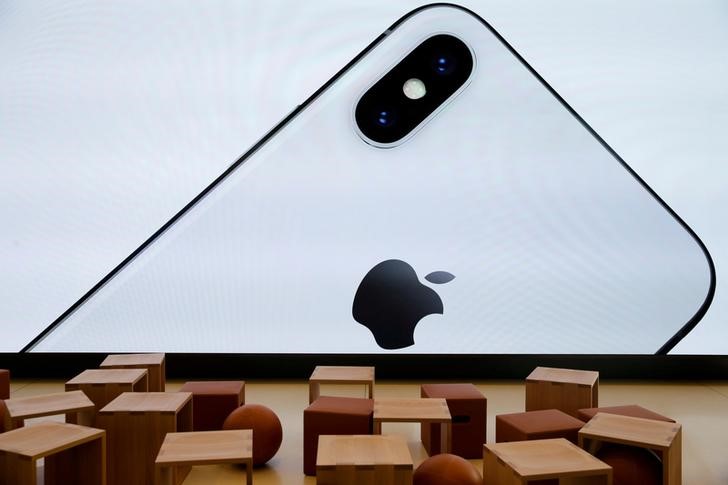
Apple (NASDAQ:) stock is expected to open at a new record high after results for the company’s first quarter of the current fiscal year came in well ahead of expectations. Strong sales of iPhones and its wireless AirPod earbuds, as well as higher revenue from its app store, all contributed.

Revenue rose 9% to $91.82 billion, also assisted by sales of wearables and streaming subscriptions. The company predicted revenue of $63-$67 billion in the current quarter – a wider range than usual due to the uncertainty created by the coronavirus outbreak. Apple has suppliers in Wuhan, where factories have pushed back their scheduled reopening date to Feb. 10, according to reports. In addition, the company faces a hit to retail sales in China, where it has cut store opening hours.

The support to the market from Apple’s earnings after the bell on Tuesday was slightly undermined by weaker-than-expected updates from chipmakers Xilinx (NASDAQ:) and Advanced Micro Devices (NASDAQ:).

3. Earnings season hits its peak; with stocks set to open higher.

Earnings season is set to reach its peak, with reports due from – among others - , , , , , , , , , , , , , , , and .

For now at least, U.S. stock markets are indicated to open higher, supported by the Apple update and by an easing of fears about the coronavirus impact.

By 6:25 AM ET (1125 GMT), were up 62 points or 0.2%, while were up 0.3% and were up 0.4%.

European stock markets were all solidly higher, with strong updates from Banco Santander (MC:) and pharma giant leading the way.

4. Fed seen on hold; comments on repo, virus likely to grab headlines

The Federal Reserve will announce the results of its monetary policy meeting at 2 PM ET, to be followed at 2:30 by Chairman Jerome Powell’s .

The meeting is not a “live” one, in the sense that there are no expectations for any change interest rates. Instead, the focus is likely to be on what Powell says about the Fed’s balance sheet policy, and whether or when it expects to withdraw repo funding that was initially supposed just to ease the market over the year-end period, but which has since seemingly morphed into an unofficial relaunch of quantitative easing.

Powell’s comments on the impact of the coronavirus on the economic outlook will also be of interest.

5. GOP senators feel the heat

The impeachment trial of President Donald Trump may turn out not to be the foregone conclusion that everyone expected.

The Wall Street Journal reported late on Tuesday that Senate Majority Leader Mitch McConnell had told his colleagues he didn’t yet have enough votes to be sure of blocking Democrat demands for witnesses such as former National Security Advisor John Bolton to testify.

Bolton’s memoir reportedly contains first-hand accounts of Trump candidly explaining that he was withholding military aid to Ukraine - which had been authorized by Congress – pending the announcement of a criminal investigation into his political rivals.

Let's block ads! (Why?)


https://news.google.com/__i/rss/rd/articles/CBMia2h0dHBzOi8vd3d3LmludmVzdGluZy5jb20vbmV3cy9lY29ub215L3RvcC01LXRoaW5ncy10by1rbm93LWluLXRoZS1tYXJrZXQtb24td2VkbmVzZGF5LTI5dGgtamFudWFyeS0yMDcwMjg10gEA?oc=5

2020-01-29 11:27:00Z
52780579502892

Boeing posts first annual loss in more than two decades as 737 Max crisis continues - CNBC

Boeing on Wednesday reported its first annual loss in more than two decades as costs from the 737 Max crisis rise sharply.

Boeing said it lost $636 million in 2019, marking the first annual loss since 1997. As a comparison, Boeing had posted a profit of $10.46 billion in 2018.

Boeing reported a loss of $2.33 per share for the fourth quarter of last year. Revenue in the last three months of the year dropped 37% to $17.91 billion compared with $28.34 billion in the year-earlier period.

Boeing's new CEO Dave Calhoun will speak to CNBC at 8 a.m. ET to discuss the company's results.

Boeing is struggling through a crisis stemming from two crashes of its 737 Max that killed all 346 people aboard the flights. The manufacturer this month suspended production of the planes, which regulators grounded in March after the second of the two fatal flights.

The debacle's costs to Boeing are rising to more than $18 billion, the company said, roughly double what it outlined in the previous quarter. That amount includes an additional $2.6 billion pretax charge to compensate airlines and other 737 Max customers because of the grounding. Boeing had taken a $5.6 billion pretax charge in the second quarter to compensate its customers.

The company recently reported its worst annual sales figures in decades and it handed the crown to the world's biggest aircraft manufacturer to its rival Airbus.

Calhoun, who took the reins this month, is set to face investors on his first earnings call at the helm of the company and is expected to detail the company's recovery plan and what it will cost. Boeing last week said it expects regulators to sign off on the planes mid-year, but the FAA has said it could come before that. 

This is breaking news. Check back for updates.

Let's block ads! (Why?)


https://news.google.com/__i/rss/rd/articles/CBMiP2h0dHBzOi8vd3d3LmNuYmMuY29tLzIwMjAvMDEvMjkvYm9laW5nLWJhLWVhcm5pbmdzLXE0LTIwMTkuaHRtbNIBQ2h0dHBzOi8vd3d3LmNuYmMuY29tL2FtcC8yMDIwLzAxLzI5L2JvZWluZy1iYS1lYXJuaW5ncy1xNC0yMDE5Lmh0bWw?oc=5

2020-01-29 12:07:00Z
52780578882393

Coronavirus Outbreak Tests World’s Dependence on China - The New York Times

HONG KONG — The world is quickly learning how much it depends on China.

Ford and Toyota will idle some of their vast Chinese assembly plants for an extra week. Apple is rerouting supply chains. Starbucks has closed thousands of stores and is warning of a financial blow.

On Wednesday, British Airways suspended all flights to mainland China, while United Airlines and Air Canada are joining the growing number of carriers reducing service. Japan’s leaders are bracing for a possible hit. Hotels and tour operators across Asia are watching fearfully as the world’s largest source of tourism dollars tightens its borders.

The mysterious, pneumonialike coronavirus that has killed more than a hundred people and sickened thousands has virtually shut down one of the world’s most important growth engines. Desperate to slow the fast-moving virus, the Chinese authorities have extended the country’s national holiday to Feb. 3, and crippled land, rail and air transport. Entire cities have shut down.

An impoverished nation just four decades ago, China has become an essential part of the modern global industrial machine. China alone accounts for roughly one-sixth of global economic output. It is the world’s largest manufacturer and trader.

It has become so crucial to the operations of American companies that some members of the Trump Administration cite that dependence as a justification for the trade war President Trump initiated two years ago against Beijing, an economic conflict that is forcing businesses to consider shifting their factories in China to countries with better relations with Washington.

Now the coronavirus is testing that dependence.

Automakers like General Motors and Nissan plan to close their factories until the week of Feb. 3 to comply with the longer mandated holiday, while Toyota and Ford said this week that they would close some of their factories a week longer than that because of virus-related disruptions. Companies like G.M., Honeywell, Facebook and Bloomberg restricted travel for employees in China and established their own self-quarantine measures.

On Tuesday, the Seattle-based coffee company Starbucks said it had closed more than half of its 4,292 stores in its second biggest market and said it would take a quarterly and full year financial hit.

The full extent of the hit to the broader business world is not yet clear. Most of China had already been shut down since at least Friday for the annual Lunar New Year holiday, a weeklong nationwide hiatus. But with the outbreak showing no signs of slowing, many companies are already preparing for a longer slowdown.

“Our members are dealing with varying degrees of disruption in their businesses, including supply chain issues, temporary closings of some retail outlets and factories, and other challenges,” said Jake Parker, the senior vice president of the US-China Business Council, which represents major companies. “If travel restrictions and quarantines are expanded or the holiday extended beyond Feb. 8, that will amplify these problems.”

China’s importance goes beyond what it makes. Its consumers buy more cars and smartphones than anybody else. When they go abroad, Chinese tourists spend $258 billion a year, according to the World Tourism Organization, nearly twice what Americans spend.

Global companies were reconsidering their China strategies even before the trade war began. Its growth is slowing, its labor costs are rising, local companies are increasingly competitive and the government has become less accommodating. Still, its skilled worker base, extensive highway and rail systems and vast consumer market make China tough to quit.

Many companies are now looking for temporary stopgaps.

Tim Cook, the chief executive of Apple, said on Tuesday that the iPhone maker was looking for alternative suppliers to “make up for any expected production loss.” Foxconn, a Taiwanese company with an extensive network of factories in China that make gadgets on behalf of Apple and others, said its factories would continue to follow the new holiday schedule.

Apple is not the only company that has had to pivot quickly. Just last week, executives of Honeywell, the American engineering company, traveled to Wuhan for a ceremony related to its plans to open an innovation headquarters. Two days later, Wuhan was put under lockdown by the authorities. Honeywell has since restricted travel to certain parts of China.

Wuhan in particular appeals to major companies because it is a major national transport hub. The auto industry, including General Motors, Honda, Nissan and many others have set up shop there, and many of their suppliers have followed. It is the home to more than one third of all French investment in China.

On Monday, PSA Group, the French automaker, said it had set up crisis communications between Wuhan and its Paris headquarters to determine the potential impact on production. The company employs about 2,000 people in Wuhan through its joint venture and was evacuating 38 expatriates.

It is not clear how quickly businesses will bounce back. During the deadly SARS outbreak 17 years ago, which began in China and killed hundreds globally, some factories paid higher wages to bring workers back and get factories humming again.

Right now, businesses do not know enough to make those kinds of plans. Cummins, the Indiana company, does not know whether it will be able to open its seven sites in Wuhan after the Feb. 3 holiday extension because the city remains under lockdown. The facilities make fuel and power systems for rail and marine industries.

“Literally, we are evaluating on an ongoing basis in real time,” said Jon Mills, a spokesman for Cummins, “and I imagine other places are in the same position as we are.”

Ford, which does not have any operations in Wuhan, said several of its major plants would nevertheless be idled until Feb. 10. A spokesman declined to disclose further details. The factories in four cities churn out nearly half a million vehicles a year, or an average of 9,400 cars a week.

Businesses in other countries are also trying to determine the impact.

In Japan on Tuesday, Yasutoshi Nishimura, the minister of state for economic and fiscal policy, told a group of reporters that, “If the situation takes longer to subside, we’re concerned it could hurt Japanese exports, output and corporate profits.” Chinese visitors account for about 30 percent of all foreign tourists, and Chinese companies are major buyers of Japanese-made components, like semiconductors and lenses.

In Thailand, Chinese sightseers spend nearly $18 billion annually, totaling about a quarter of tourist spending.

“Chinese tourists are the number one tourists to Thailand,” said Yuthasak Supasorn, the governor of the Tourism Authority of Thailand. Mr. Yuthasak said in an interview that the government was exploring ways to compensate business owners who have lost money from the drop in tourists over the past few weeks. The government was even considering reducing parking fees for airlines and excise tax on jet fuel to lure more tourists, he said.

Anan Buates, 45, runs a business driving tourists. Chinese tourists are crucial to his business. So he grew alarmed when tour operators started making last-minute cancellations as the coronavirus emerged. Then, last week, China canceled overseas group tours.

“It’s their right and it’s their policy to prevent the spreading of the coronavirus,” Mr. Anan said. Still, he knows he faces a daunting challenge.

“We survive the whole year because they come the whole year.”

Eimi Yamamitsu contributed reporting from Tokyo, Ryn Jirenuwat from Bangkok and Cao Li from Hong Kong.

Let's block ads! (Why?)


https://news.google.com/__i/rss/rd/articles/CBMiSmh0dHBzOi8vd3d3Lm55dGltZXMuY29tLzIwMjAvMDEvMjkvYnVzaW5lc3MvY2hpbmEtY29yb25hdmlydXMtZWNvbm9teS5odG1s0gFOaHR0cHM6Ly93d3cubnl0aW1lcy5jb20vMjAyMC8wMS8yOS9idXNpbmVzcy9jaGluYS1jb3JvbmF2aXJ1cy1lY29ub215LmFtcC5odG1s?oc=5

2020-01-29 11:05:00Z
52780578953416

British Airways cancels all flights to and from mainland China on coronavirus fears - CNBC

Customers queue to buy facial masks to prevent an outbreak of a new coronavirus, in Hong Kong, China January 28, 2020.

Tyrone Siu | Reuters

British Airways has stopped all direct flights to and from mainland China because of the coronavirus outbreak.

The airline said the suspension would be implemented "with immediate effect" following the viral outbreak which has caused 132 deaths and infected almost 6,000 people.

Beijing authorities have continued efforts to contain the spread, while other countries have begun to evacuate their citizens from the region.

Almost all deaths from the flu-like virus have occurred in the city of Wuhan and the surrounding province of Hubei, which remains on virtual lockdown.

Coronavirus live updates: Chinese health officials say death toll has risen to 132

British Airways normally operates daily flights to Shanghai and Beijing from Heathrow, but on Wednesday morning these were canceled without any indication of when they would resume.

"We have suspended all flights to and from mainland China with immediate effect following advice from the Foreign Office against all but essential travel," British Airways said in a statement.

The airline apologized to travelers for the inconvenience but said "the safety of our customers and crew is always our priority."

US. carrier United Airlines has already said it was suspending 24 U.S. flights to Beijing, Hong Kong and Shanghai between February 1 and February 8, because of low demand.

Air Canada and Cathay Pacific have also said they will reduce the number of flights in and out of China while Korean carrier Air Seoul has said it will halt all flights to China.

Indonesia's Lion Air said in a statement Wednesday that it would suspend all flights to China from February. Indigo, the Indian budget carrier, is to cancel all flights between Delhi and Chengdu from February 1. Its regular flight to Guangzhou will continue.

Travel and airline stocks have fallen sharply over the last two weeks as fears over the potential of the coronavirus to become a global pandemic have grown. On Wednesday, shares of British Airways parent International Consolidated Airlines Group fell before rising  0.2% by 10.00 a.m. London time.

The decision by BA follows an advisory by the U.K. Foreign Office that says only essential travel should be taken to anywhere in China.

In the United States, the White House has told airline executives it had been considering suspending flights from China, people familiar with the matter have told CNBC.

As yet, the Donald Trump administration has backed away from that move, but the U.S. Centers for Disease Control and Prevention said Tuesday that screening for the virus at 20 U.S. airports would be expanded.

Let's block ads! (Why?)


https://news.google.com/__i/rss/rd/articles/CBMiZmh0dHBzOi8vd3d3LmNuYmMuY29tLzIwMjAvMDEvMjkvY29yb25hdmlydXMtYnJpdGlzaC1haXJ3YXlzLWNhbmNlbHMtYWxsLWZsaWdodHMtdG8tYW5kLWZyb20tY2hpbmEuaHRtbNIBamh0dHBzOi8vd3d3LmNuYmMuY29tL2FtcC8yMDIwLzAxLzI5L2Nvcm9uYXZpcnVzLWJyaXRpc2gtYWlyd2F5cy1jYW5jZWxzLWFsbC1mbGlnaHRzLXRvLWFuZC1mcm9tLWNoaW5hLmh0bWw?oc=5

2020-01-29 10:18:00Z
52780579454003

British Airways suspends all flights to China as coronavirus spreads - CNN

"We have suspended all flights to and from mainland China with immediate effect following advice from the Foreign Office against all but essential travel," the company said in a statement Wednesday.
The UK's Foreign Office warned people against traveling to mainland China in all but essential cases on Tuesday.
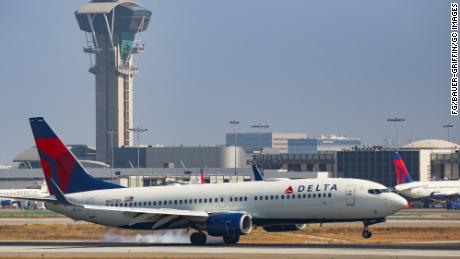
It's the most drastic action yet by a major airline as the deadly coronavirus continues to spread. The virus has killed 132 people and infected nearly 6,000 people in China so far, with dozens more cases confirmed in places such as the United States, Japan, Germany and France.
US airlines offer to change China flights for free for another month as coronavirus spreads
British Airways operates direct flights from London Heathrow to Beijing (PKX) and Shanghai (PVG), according to the company's website. Those flights were unavailable to book online through February 29.
The carrier's move comes a day after United Airlines (UAL) temporarily reduced its schedule between the United States and three cities in China.
The US airline said in a statement Tuesday that "significant decline in demand" had forced it to suspend flights from February 1 though February 8 between its US hubs and Beijing, Hong Kong and Shanghai.
In total, 24 round trips are affected. They are between Hong Kong to San Francisco and Newark; Beijing (PEK) to Washington Dulles, Chicago O'Hare and Newark; and Shanghai (PVG) to San Francisco, Newark and Chicago O'Hare.
American Airlines (AAL), Delta Air Lines (DAL) and United all extended change fee waivers through the end of February.
Cathay Pacific (CPCAY), Hong Kong's flagship airline, has said it will reduce the capacity of flights to and from mainland China by half or more until the end of March.
This is a developing story.
— Jordan Valinsky contributed to this report.

Let's block ads! (Why?)


https://news.google.com/__i/rss/rd/articles/CBMiTmh0dHBzOi8vd3d3LmNubi5jb20vMjAyMC8wMS8yOS9idXNpbmVzcy9icml0aXNoLWFpcndheXMtY29yb25hdmlydXMvaW5kZXguaHRtbNIBUmh0dHBzOi8vYW1wLmNubi5jb20vY25uLzIwMjAvMDEvMjkvYnVzaW5lc3MvYnJpdGlzaC1haXJ3YXlzLWNvcm9uYXZpcnVzL2luZGV4Lmh0bWw?oc=5

2020-01-29 08:16:00Z
52780579454003

Analysts divided on how much further Apple shares can climb after ‘blowout results’ - MarketWatch

The Ratings Game

By Barbara Kollmeyer

Published: Jan 29, 2020 2:12 am ET

Fully valued at current levels, says KeyBanc analyst

No doubt investors are ready to push Apple shares higher Wednesday after record results, but some analysts appeared divided as to how much further this will juice the stock.

Apple shares AAPL+2.83%  rallied late Tuesday after the consumer technology giant reported the second-best quarter ever for iPhone sales, pushing well past expectations and the holiday quarter also saw strong performances from wearables, home and accessories. Shares rose 1.4% in late trade after a forecast-beating revenue outlook for the March quarter.

Read: Apple’s iPhone didn’t need 5G for a mind-boggling rebound

Praise came rolling in from some analysts. “We would characterize these results and guidance as a ‘blow out’ print that will put more high octane fuel in the bull thesis looking ahead,” Dan Ives, analyst at Wedbush, told clients in a note, as he referred to “Picasso-like quarter/guidance.”

Ives said the biggest positive of the results was that strong March guidance “on the heels of pent-up demand within the installed base which is now over 1.5 billion devices worldwide.” Also encouraging, China growth beat Wall Street expectations, climbing 3% year over year, as the region represents roughly 20% of all iPhone upgrades in the next 12 to 18 months, he said.

Ives rates Apple outperform with a 12-month price target that he recently took to $400 on the view that investors are underestimating the magnitude of the 5G upgrade cycle.

Elsewhere, though, KeyBanc Capital Markets analysts Andy Hargreaves and Maddie Schrage cautioned that there are limits to Apple’s growth prospects and the shares “fully valued,” meaning the stock market has pushed the upside as far as it can go and further gains from here will push it into overvalued territory.

The analysts see 12-month fair value to $305, which is below Tuesday’s close of $317.69, and he rates Apple sector weight.

While the latest results came in better than expected, Hargreaves and Schrage said the company has seen secular stagnation in iPhones, the iPad and the Macbook, overwhelming a tripling of gross profit in the services section.

“While strong customer loyalty should keep sales stable, we see little that could drive a return to secular growth in iPhone, iPad or Mac. At the same time, Services and Wearables appear to be slowing, which seems likely to limit profit growth in the coming years to something comparable to the last five,” they said.

See original version of this story

Let's block ads! (Why?)


https://news.google.com/__i/rss/rd/articles/CBMiT2h0dHBzOi8vd3d3Lm1hcmtldHdhdGNoLmNvbS9hbXAvc3RvcnkvZ3VpZC84MzNBNUU0NC00MjVELTExRUEtOTVGMi0xOTVCM0Q0OUYzQjDSAU9odHRwczovL3d3dy5tYXJrZXR3YXRjaC5jb20vYW1wL3N0b3J5L2d1aWQvODMzQTVFNDQtNDI1RC0xMUVBLTk1RjItMTk1QjNENDlGM0Iw?oc=5

2020-01-29 07:12:00Z
52780578805830

Analysts divided on how much further Apple shares can climb after ‘blowout results’ - MarketWatch

The Ratings Game

By Barbara Kollmeyer

Published: Jan 29, 2020 2:12 am ET

Fully valued at current levels, says KeyBanc analyst

No doubt investors are ready to push Apple shares higher Wednesday after record results, but some analysts appeared divided as to how much further this will juice the stock.

Apple shares AAPL+2.83%  rallied late Tuesday after the consumer technology giant reported the second-best quarter ever for iPhone sales, pushing well past expectations and the holiday quarter also saw strong performances from wearables, home and accessories. Shares rose 1.4% in late trade after a forecast-beating revenue outlook for the March quarter.

Read: Apple’s iPhone didn’t need 5G for a mind-boggling rebound

Praise came rolling in from some analysts. “We would characterize these results and guidance as a ‘blow out’ print that will put more high octane fuel in the bull thesis looking ahead,” Dan Ives, analyst at Wedbush, told clients in a note, as he referred to “Picasso-like quarter/guidance.”

Ives said the biggest positive of the results was that strong March guidance “on the heels of pent-up demand within the installed base which is now over 1.5 billion devices worldwide.” Also encouraging, China growth beat Wall Street expectations, climbing 3% year over year, as the region represents roughly 20% of all iPhone upgrades in the next 12 to 18 months, he said.

Ives rates Apple outperform with a 12-month price target that he recently took to $400 on the view that investors are underestimating the magnitude of the 5G upgrade cycle.

Elsewhere, though, KeyBanc Capital Markets analysts Andy Hargreaves and Maddie Schrage cautioned that there are limits to Apple’s growth prospects and the shares “fully valued,” meaning the stock market has pushed the upside as far as it can go and further gains from here will push it into overvalued territory.

The analysts see 12-month fair value to $305, which is below Tuesday’s close of $317.69, and he rates Apple sector weight.

While the latest results came in better than expected, Hargreaves and Schrage said the company has seen secular stagnation in iPhones, the iPad and the Macbook, overwhelming a tripling of gross profit in the services section.

“While strong customer loyalty should keep sales stable, we see little that could drive a return to secular growth in iPhone, iPad or Mac. At the same time, Services and Wearables appear to be slowing, which seems likely to limit profit growth in the coming years to something comparable to the last five,” they said.

See original version of this story

Let's block ads! (Why?)


https://news.google.com/__i/rss/rd/articles/CBMiT2h0dHBzOi8vd3d3Lm1hcmtldHdhdGNoLmNvbS9hbXAvc3RvcnkvZ3VpZC84MzNBNUU0NC00MjVELTExRUEtOTVGMi0xOTVCM0Q0OUYzQjDSAU9odHRwczovL3d3dy5tYXJrZXR3YXRjaC5jb20vYW1wL3N0b3J5L2d1aWQvODMzQTVFNDQtNDI1RC0xMUVBLTk1RjItMTk1QjNENDlGM0Iw?oc=5

2020-01-29 06:58:00Z
52780578805830