Selasa, 11 Februari 2020

Powell stresses that Fed is 'closely monitoring' coronavirus for hit to China and the world - CNBC

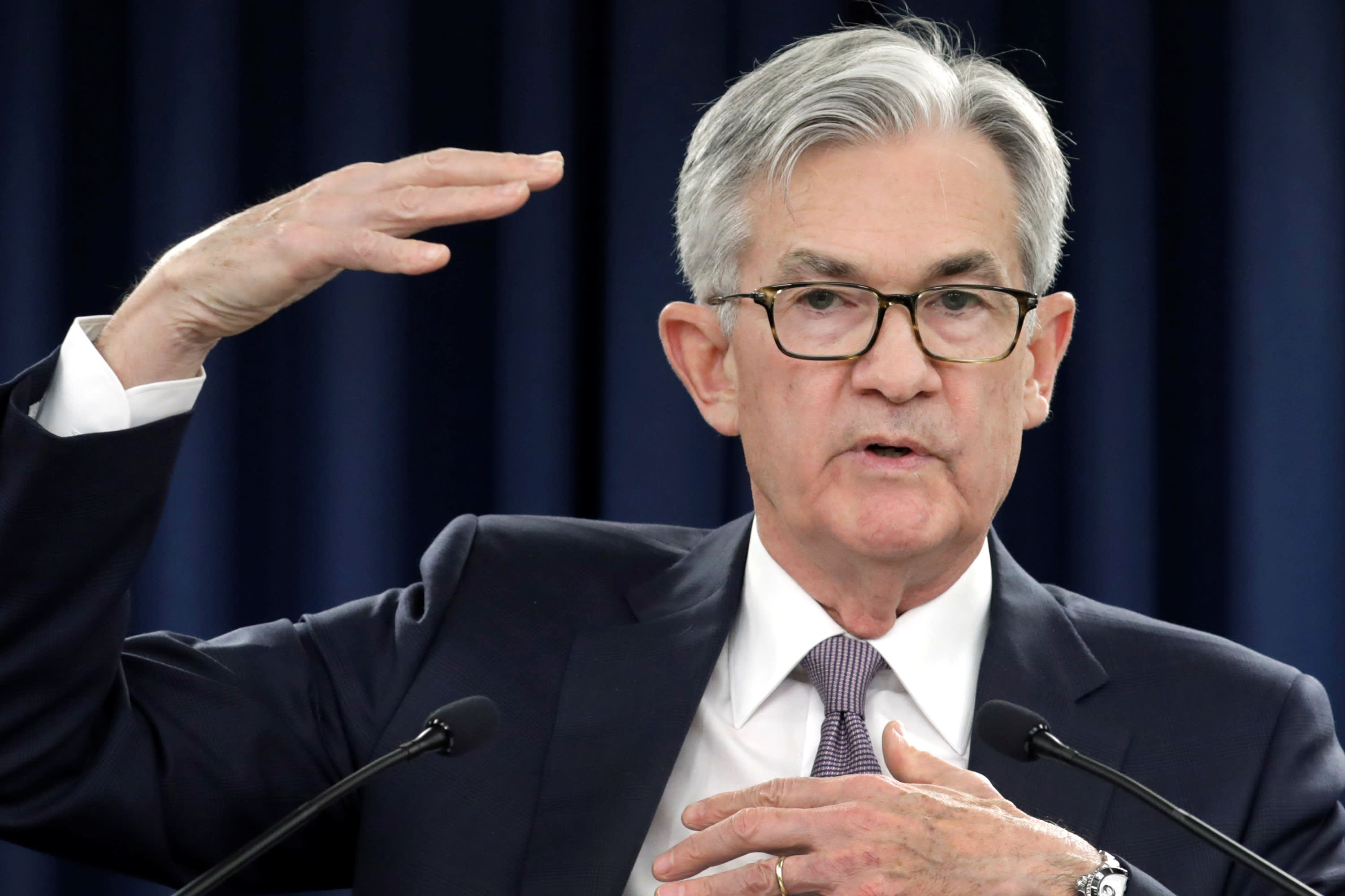
The Federal Reserve is "closely monitoring" the coronavirus, its impact on China and the effect that it could have on global economic growth, Chairman Jerome Powell said Tuesday.

In his semiannual testimony before Congress, Powell said the new threat comes just as trade uncertainties have diminished, though the U.S. economy appears "resilient" to global headwinds.

Despite the threat from the virus, he said Fed policy is well positioned after a series of rate cuts in 2019.

"As long as incoming information about the economy remains broadly consistent with this outlook, the current stance of monetary policy will likely remain appropriate," he said.

He did, though, express some misgivings about rates being so low, not only with his own Fed but in other central banks around the world. The Fed last year held a series of public hearings to discuss policy options in the future, in particular how to handle economic downturns.

"This low interest rate environment may limit the ability of central banks to reduce policy interest rates enough to support the economy during a downturn," he said.

Powell's remarks recapped the Fed's 61-page semiannual report that lawmakers received on Friday. He said the economy is growing at a "moderate" pace, and he noted that the fundamentals supporting household spending are still "solid."

Markets reacted little to the remarks, which strongly resembled the messages coming from Powell and his fellow officials over the past several months. Wall Street was indicating a 100-point Dow industrials gain at the open.

"Interest rates aren't going up under his watch without more inflation and that is music to the stock market's ears," said Chris Rupkey, chief financial economist at MUFG Union Bank.

Talks jobs market, budget

Powell also highlighted the strong gains in the labor market. He pointed to the large number of job openings and said employers are more willing to hire and train workers with fewer skills.

"As a result, the benefits of a strong labor market have become more widely shared," Powell said. "People who live and work in low- and middle-income communities are finding new opportunities."

Powell cited two long-run challenges to the economy in his testimony: the low labor force participation rate and productivity gains. He also weighed in on the federal budget, arguing that lawmakers should tackle ballooning deficits and the national debt while the economy is strong to provide more room to react during the next downturn.

"A more sustainable federal budget could also support the economy's growth over the long term," he said.

Powell's appearance before the House Financial Services Committee begins at 10 a.m. ET and follows a year in which the Fed made a sharp pivot, going from a series of steady rate hikes with more on tap ahead to cuts and a general easing in monetary policy.

The policymaking Federal Open Market Committee most recently has held the line on further moves.

In addition to the wait-and-see approach on rates, the Fed has continued its daily liquidity injections into the overnight lending, or repo, market where banks get their short-term funding. Officials have said the operations will last through the second quarter as the Fed continues to calibrate the amount of reserves the banking system needs to operate comfortably.

In his speech, Powell called the use of repo a technical measure and not a change in monetary policy, despite the rally in risk assets that has come along with the balance sheet expansion.

Powell and his fellow policymakers have been under intense pressure from President Donald Trump to continue to cut rates, but they have indicated with little dissent that it would take something substantial to make them move in either direction.

However, markets are expecting more easing, with a rate cut by September priced in already and futures traders also indicating about a 46% chance of another move in December.

This is breaking news. Check back here for updates.

Let's block ads! (Why?)


https://news.google.com/__i/rss/rd/articles/CBMiZmh0dHBzOi8vd3d3LmNuYmMuY29tLzIwMjAvMDIvMTEvcG93ZWxsLXRlc3RpbW9ueS1mZWQtaXMtY2xvc2VseS1tb25pdG9yaW5nLWNvcm9uYXZpcnVzLWZvci1pbXBhY3QuaHRtbNIBamh0dHBzOi8vd3d3LmNuYmMuY29tL2FtcC8yMDIwLzAyLzExL3Bvd2VsbC10ZXN0aW1vbnktZmVkLWlzLWNsb3NlbHktbW9uaXRvcmluZy1jb3JvbmF2aXJ1cy1mb3ItaW1wYWN0Lmh0bWw?oc=5

2020-02-11 13:30:00Z
52780603554697

Under Armour shares tank on sales miss, sees $50 million to $60 million hit from coronavirus - CNBC

An Under Armour store front is seen on November 04, 2019 in Sunrise, Florida.

Joe Raedle | Getty Images

Under Armour shares plummeted Monday morning after the company reported sales that missed analysts' estimates during the holiday quarter and issued a bleak outlook.

It said it is facing "ongoing demand challenges" for its athletic apparel and sneakers, and is calling for sales to be down a low-single digit percentage in fiscal 2020. That includes a high-single-digit drop in sales in North America, Under Armour said. Analysts had been calling for overall sales to be up 4.2% for the year.

Providing its 2020 outlook, Under Armour said it expects the coronavirus outbreak in China to lower sales by roughly $50 million to $60 million during the fiscal first quarter.

The company is also embarking on a restructuring plan, which among other things could entail not opening its New York City flagship location. It could take between $325 million and $425 million in estimated pretax charges this fiscal year tied to these efforts, it said, including about $225 million to $250 million related to not opening the store.

Under Armour shares sank as much as 17% in premarket trading on the news.

Here's how Under Armour did for the quarter ended Dec. 31, compared with what analysts were expecting, based on a poll by Refinitiv:

  • Earnings per share: 10 cents, adjusted, vs. 10 cents expected
  • Revenue: $1.44 billion vs. $1.47 billion expected

Under Armour reported a net loss of $15.3 million, or 3 cents per share, compared with net income of $4.2 million, or a penny a share, a year ago. Excluding one-time items, Under Armour earned 10 cents a share during the fourth quarter, in line with analysts estimates, based on Refinitiv data.

Revenue grew slightly to $1.44 billion from $1.39 billion a year ago. But it was short of expectations for $1.47 billion.

Sales in North America were up 1.9% during the quarter and rose 9.8% in Asia-Pacific. Apparel sales were up 0.2% overall, while footwear revenue was up 10.3% and accessories sales grew 1.6%.

Under Armour has been struggling to grow sales for the past few years. The company reported its first quarterly loss in 2017, as momentum for the brand started to slow. It faces intense competition from the likes of Nike, Lululemon and Adidas in the U.S. It also is more reliant on wholesale partners, such as Kohl's, which analysts say has hurt Under Armour's business as those retailers have suffered.

Patrik Frisk notably took over as CEO from Under Armour founder Kevin Plank on Jan. 1. Plank remains executive chairman and brand chief.

As of Monday's market close, Under Armour's stock has fallen about 1.5% this year. The company has a market cap of about $9.2 billion.

Read the full earnings press release here.

Let's block ads! (Why?)


https://news.google.com/__i/rss/rd/articles/CBMiYWh0dHBzOi8vd3d3LmNuYmMuY29tLzIwMjAvMDIvMTEvdW5kZXItYXJtb3VyLXVhYS1yZXBvcnRzLWZpc2NhbC1mb3VydGgtcXVhcnRlci0yMDE5LWVhcm5pbmdzLmh0bWzSAWVodHRwczovL3d3dy5jbmJjLmNvbS9hbXAvMjAyMC8wMi8xMS91bmRlci1hcm1vdXItdWFhLXJlcG9ydHMtZmlzY2FsLWZvdXJ0aC1xdWFydGVyLTIwMTktZWFybmluZ3MuaHRtbA?oc=5

2020-02-11 12:10:00Z
52780603425419

Viral chicken sandwiches aren't enough for Wall Street: Morning Brief - Yahoo Finance

Tuesday, February 11, 2020

Get the Morning Brief sent directly to your inbox every Monday to Friday by 6:30 a.m. ET. Subscribe

The general public isn’t the investing public

Make no mistake: Popeyes chicken sandwich is a runaway hit.

In the fourth quarter, same-store sales at Popeyes rose 34.4% and system-wide sales at Popeyes stores grew 42.3%.

As Jose Cil, CEO of Restaurant Brands (QSR) — Popeyes parent company — said on Monday, Popeyes chicken sandwich “has proven to be a game changer for the brand in every way.”

In a note to clients last week, analysts at Bank of America Global Research explored the 2019 phenomenon that became known as the chicken sandwich wars. Looking at trends on social media, BofA found that, “brand penetrations of ‘chicken sandwich’ Instagram posts and Tweets show that Popeyes has been able to take a meaningful share of conversations.”

This work led to BofA suggesting that fourth quarter comp sales growth at Popeyes would likely come in around 20%. Actual results, of course, were more than 50% better than this estimate.

Popeyes viral chicken sandwich is a marketing dream. And the results have backed up the hype.

But one viral sandwich still hasn’t been enough to get investors excited about the stock. And this episode serves as a great illustration of how the general public and the investing public look differently at brands, sales, and what makes a good investment.

The sustained buzz and hype surrounding the Popeyes chicken sandwich has very obviously led to strong sales. Following a Peter Lynch-style “invest in what you know” maxim might lead to you taking a position in the stock.

But during the fourth quarter, shares of Restaurant Brands fell over 9% during a quarter when the S&P 500 rose some 12%. For the full-year 2019, shares of Restaurant Brands rose about 19% against a gain of nearly 30% for the S&P 500.

And the story for Restaurant Brands is fairly simple: the success at Popeyes isn’t enough to paper over the struggles at its Tim Hortons brand.

Same-store sales at Tim Hortons fell 4.3% during the fourth quarter.

This Aug. 21, 2019, photo, shows Popeye's new chicken sandwich, the spicy version, in New Rochelle, N.Y. (AP Photo/Julia Rubin)

As Cil said: “At Tim Hortons, our performance did not reflect the incredible power of our brand and it is clear that we have a large opportunity to refocus on our founding values and what has made us famous with our guests over the years, which will be the basis for our plan in 2020.”

In the fourth quarter of 2018, system-wide sales at Tim Hortons totaled $1.73 billion against Popeyes sales of $934 million. In the fourth quarter of 2019, Tim Hortons sales fell to $1.68 billion with Popeyes totaling $1.33 billion during the same quarter. And so just a year after Tim Hortons had nearly double the quarterly sales of Popeyes, the brand saw quarterly revenues top those at its smaller family brand by just 30%.

These struggles are also more acute for the stock because Tim Hortons is a much larger part of the Restaurant Brands profit picture.

In the fourth quarter, adjusted EBITDA at Tim Hortons totaled $297 million, accounting for just under 48% of the company’s quarterly adjusted EBITDA. The fourth quarter of 2018, Tim Hortons recorded adjusted EBITDA of $297 million with that income accounting for more than half of the entire company’s quarterly adjusted profit.

Popeyes, in contrast, saw adjusted EBITDA rise more than 50% from the prior year, but still accounts for less than 10% of the company’s quarterly total.

Chicken sandwich virality hasn’t fundamentally changed the profit outlook for Restaurant Brands. At least not quite yet.

And while some readers might roll their eyes at being alerted to the fact that profits matter to investors, sentiment around the stock of Popeyes parent company seems divorced from consumer enthusiasm for their chicken sandwich.

To the general public, the Popeyes chicken sandwich is one of the most interesting business stories of the year. To the investing public, the chicken sandwich is just part of a profit picture that is under pressure.

By Myles Udland, reporter and co-anchor of The Final Round. Follow him at @MylesUdland

What to watch today

Economy

  • 6 a.m. ET: NFIB Small Business Optimism, January (103.5 expected, 102.7 in December)

  • 10 a.m. ET: JOLTS Job Openings, December (7000 expected, 6800 in November)

Earnings

Pre-market

  • 6:30 a.m. ET: Hasbro (HAS) is expected to report adjusted earnings of 88 cents per share on $1.44 billion in revenue

  • 6:55 a.m. ET: Under Armour (UAA) is expected to report adjusted earnings of 10 cents per share on $1.47 billion in revenue

Post-market

  • 4:05 p.m. ET: Lyft (LYFT) is expected to report an adjusted loss of 54 cents per share on $985.77 million in revenue

READ MORE

Top News

FILE - In this April 27, 2010 file photo, a woman using a cell phone walks past T-Mobile and Sprint stores in New York. Sprint and T-Mobile called off a potential merger, saying the companies couldn't come to an agreement that would benefit customers and shareholders. The two companies have been dancing around a possible merger for years, and were again in the news in recent weeks with talks of the two companies coming together after all. But in a joint statement Saturday, Nov. 4, 2017, Sprint and T-Mobile said they are calling off merger negotiations for the foreseeable future. (AP Photo/Mark Lennihan, File)

US district judge expected to rule in favor of Sprint-T-Mobile merger [Reuters]

UK economy flatlined ahead of the election [Yahoo Finance UK]

FAA says approaching 737 MAX test flight, awaits Boeing proposals [Reuters]

YAHOO FINANCE HIGHLIGHTS

Coronavirus not material enough of a risk to move rates, Fed officials say

How Bernie Sanders is helping Mike Bloomberg

Chinese manufacturer finds success in the U.S. by embracing local labor standards

Follow Yahoo Finance on Twitter, Facebook, Instagram, Flipboard, SmartNews, LinkedIn, YouTube, and reddit.

Let's block ads! (Why?)


https://news.google.com/__i/rss/rd/articles/CBMib2h0dHBzOi8vZmluYW5jZS55YWhvby5jb20vbmV3cy9wb3BleWVzLWNoaWNrZW4tc2FuZHdpY2gtbm90LWVub3VnaC1mb3Itd2FsbC1zdHJlZXQtbW9ybmluZy1icmllZi0xMTE2MTg1NjEuaHRtbNIBd2h0dHBzOi8vZmluYW5jZS55YWhvby5jb20vYW1waHRtbC9uZXdzL3BvcGV5ZXMtY2hpY2tlbi1zYW5kd2ljaC1ub3QtZW5vdWdoLWZvci13YWxsLXN0cmVldC1tb3JuaW5nLWJyaWVmLTExMTYxODU2MS5odG1s?oc=5

2020-02-11 11:16:00Z
52780601609203

Senators Slam Amazon Over 'Intolerable' Warehouse Conditions - HuffPost

HuffPost is now part of the Verizon Media family. We (Verizon Media) and our partners need your consent to access your device, set cookies, and use your data, including your location, to understand your interests, provide relevant ads and measure their effectiveness. Verizon Media will also provide relevant ads to you on our partners' products. Learn More

How Verizon Media and our partners bring you better ad experiences

To give you a better overall experience, we want to provide relevant ads that are more useful to you. For example, when you search for a film, we use your search information and location to show the most relevant cinemas near you. We also use this information to show you ads for similar films you may like in the future. Like Verizon Media, our partners may also show you ads that they think match your interests.

Learn more about how Verizon Media collects and uses data and how our partners collect and use data.

Select 'OK' to allow Verizon Media and our partners to use your data, or 'Manage options' to review our partners and your choices. Tip: Sign In to save these choices and avoid repeating this across devices. You can always update your preferences in the Privacy Centre.

Let's block ads! (Why?)


https://news.google.com/__i/rss/rd/articles/CBMiW2h0dHBzOi8vd3d3Lmh1ZmZwb3N0LmNvbS9lbnRyeS9zZW5hdG9ycy1sZXR0ZXItYW1hem9uLWplZmYtYmV6b3Nfbl81ZTQyMzVkZWM1YjZiNzA4ODcwNjVlNTXSAT9odHRwczovL20uaHVmZnBvc3QuY29tL3VzL2VudHJ5L3VzXzVlNDIzNWRlYzViNmI3MDg4NzA2NWU1NS9hbXA?oc=5

2020-02-11 10:42:00Z
52780602908462

Reports: Judge to Rule in Favor of Dreaded T-Mobile and Sprint Merger - Gizmodo

Sprint’s Marcelo Claure, left, and T-Mobile’s John Legere, right, at a House Commerce subcommittee hearing in February 2019.
Photo: Jose Luis Magana (AP)

U.S. District Judge Victor Marrero is set to allow the $26.5 billion T-Mobile and Sprint merger to go forward, clearing the path to merge the nation’s third and fourth-largest wireless carriers into a single behemoth that would rival Verizon and A&T, reports indicated on Monday night.

The New York Times and Wall Street Journal both wrote that Marrero is expected to rule against the attorneys general of 13 states and D.C. who are suing to block the merger on antitrust grounds, citing sources who have been briefed on the decision. That suit is the final legal obstacle between T-Mobile and the smaller, ailing Sprint finally being able to consummate their planned union, as antitrust officials at the Federal Communications Commission and Department of Justice have already signed off. Both papers reported that the verdict is expected to drop on Tuesday morning.

Advertisement

Allowing the merger to go through would drop the number of major carriers competing in the U.S. from four to three, for years at the very least. Under the terms of a deal with the DOJ, T-Mobile owner Deutsche Telekom would be forced to sell off wireless spectrum to Dish, while Sprint would have to do the same with Boost Mobile. This supposedly would create a replacement contender to fill the fourth spot, though the viability of Dish’s plans to create a competitive national 5G network have drawn extensive scrutiny. It will launch with around nine million customers, mostly from Boost Mobile, according to the Journal. Meanwhile, the merged titan, doing business as T-Mobile, will have over 100 million customers.

Companies routinely claim that mergers will allow them to offer more competitive pricing with vague assurances of increased efficiency. But research has shown the exact opposite is much more likely to happen: price increases from increased market power. These kind of outcomes can be plainly observed in industries from medical care to pay TV. (A ProPublica investigation found that many academic proponents of mega-mergers often receive huge sums of money from companies that stand to benefit from friendly testimony in anticompetition lawsuits.) Sprint and T-Mobile have both promised not to raise prices and to build a 5G network, and T-Mobile has launched low-cost plans in an effort to assuage critics. However, fewer mobile network operators in a country is associated with much higher prices and the two firms were already planning on building 5G networks.

State attorneys general involved in the lawsuit argued that the Sprint/T-Mobile merger will cost subscribers of both companies up to $4.5 billion annually. The FCC and DOJ both argued in favor of it in the suit, according to Ars Technica, saying a victory for the plaintiffs could block “substantial, long-term, and procompetitive benefits for American consumers.”

What isn’t clear at this point is whether the ruling is a total win for Sprint and T-Mobile or Marrero has implemented further conditions on the deal. Those could ultimately have some impact on the ultimate outcome for consumers.

Advertisement

As the Times noted, Sprint executive chairman Marcelo Claure and T-Mobile CEO John Legere built DC connections while lobbying for the deal. Claure hosted a fundraiser for Republican senator and net neutrality opponent Marsha Blackburn’s successful 2018 campaign, while Legere spent a suspicious amount of time and money ($195,000) at a D.C. hotel owned by Donald Trump.

Let's block ads! (Why?)


https://news.google.com/__i/rss/rd/articles/CBMiVWh0dHBzOi8vZ2l6bW9kby5jb20vcmVwb3J0cy1qdWRnZS10by1ydWxlLWluLWZhdm9yLW9mLWRyZWFkZWQtdC1tb2JpbGUtYW5kLTE4NDE1OTA0MDnSAVlodHRwczovL2dpem1vZG8uY29tL3JlcG9ydHMtanVkZ2UtdG8tcnVsZS1pbi1mYXZvci1vZi1kcmVhZGVkLXQtbW9iaWxlLWFuZC0xODQxNTkwNDA5L2FtcA?oc=5

2020-02-11 04:45:00Z
52780602018683

Senin, 10 Februari 2020

Judge Is Said to Rule for T-Mobile Merger With Sprint - The New York Times

The judge in a contentious lawsuit that tried to stop the long-in-the-works merger between T-Mobile and Sprint is planning to rule in favor of the deal, according to three people briefed on the matter.

The verdict, expected Tuesday, will come at the end of an unusual suit filed in June by attorneys general from 13 states and the District of Columbia. The challenge came after federal regulators gave their blessing to the deal, which would combine the nation’s third- and fourth-largest wireless carriers and create a new telecommunications giant to take on the two largest, AT&T and Verizon. The states argued that the combination of T-Mobile and Sprint would reduce competition in the telecommunications industry, lead to higher cellphone bills and place a financial burden on lower-income customers.

Judge Victor Marrero of United States District Court in Manhattan presided over the case. Final arguments took place last month.

None of the parties have read the ruling yet, the three people said, leaving open the possibility that the decision includes conditions or restrictions. Both companies are planning to make announcements on Tuesday, the people said. Shares in Sprint shot up more than 60 percent and T-Mobile stock rose about 10 percent in aftermarket trading.

The lawsuit was the final roadblock to the merger, which made steady progress through the approval process since it was announced in April 2018. If the judge’s ruling goes in favor of the two companies, the deal will create a new telecommunications giant, called T-Mobile, that will have more than 100 million customers.

T-Mobile and Sprint have long said the merger was crucial to their futures in an industry challenged by pricing wars that have undercut profits and stalled growth. By combining with Sprint, T-Mobile has said it would be able to accelerate its development of 5G, the next generation of cellular networks.

The deal is also important to Sprint, which has bled cash and subscribers in recent years. SoftBank, the Japanese conglomerate the controls Sprint, has been looking to raise cash for its newest tech investing fund.

The new company will be led by Mike Sievert, a T-Mobile executive who will take over for John Legere, the face of the company whose contract is up in April.

Mr. Legere, the flamboyant, social-media-savvy chief executive of T-Mobile since 2012, helped drive the merger, which won the approval of the Justice Department and the Federal Communications Commission last year. To get the nod from the government, T-Mobile and Sprint agreed to sell off significant portions of their businesses to the pay-television operator Dish Network as part of a plan to create a potential new major wireless company.

Marcelo Claure, the executive chairman of Sprint, became a close ally of Mr. Legere’s throughout the campaign to secure approval for the deal. Mr. Legere made numerous visits to both the Federal Communications Commission and the Justice Department. Mr. Claure hosted a fund-raiser for Representative Marsha Blackburn, a Tennessee Republican who was eventually elected to the Senate in November 2018.

Several lawmakers expressed misgivings over Mr. Legere’s Washington visits, noting the dozens of times that he and other T-Mobile executives stayed at the Trump International Hotel there. The companies have denied doing anything inappropriate to curry favor with federal officials.

The deal also represents a victory for Masayoshi Son, the billionaire entrepreneur and outspoken leader of SoftBank, which has recently come under pressure from the activist investor Elliott Management. SoftBank’s outsize investments in tech start-ups, including WeWork, have failed to deliver for investors, and Mr. Son has struggled to raise more cash for a new investment fund. He has been trying to unload Sprint for years.

Let's block ads! (Why?)


https://news.google.com/__i/rss/rd/articles/CBMiTGh0dHBzOi8vd3d3Lm55dGltZXMuY29tLzIwMjAvMDIvMTAvYnVzaW5lc3MvbWVkaWEvc3ByaW50LXRtb2JpbGUtbWVyZ2VyLmh0bWzSAVBodHRwczovL3d3dy5ueXRpbWVzLmNvbS8yMDIwLzAyLzEwL2J1c2luZXNzL21lZGlhL3NwcmludC10bW9iaWxlLW1lcmdlci5hbXAuaHRtbA?oc=5

2020-02-10 23:28:00Z
52780602018683

Trump budget would cut loan program for vehicle production used by Tesla, Ford - CNBC

President Trump speaks during an event at the White House in Washington, D.C., on Thursday, Feb. 6, 2020.

Al Drago | Bloomberg | Getty Images

President Donald Trump's proposed budget would reportedly kill a loan program that assisted automakers such as Ford Motor and Tesla in producing more environmental-friendly vehicles, including Tesla's all-electric Model S.

The proposed cut, according to the 2021 budget proposal, is to the U.S. Energy Department's Advanced Technology Vehicles Manufacturing Loan Program, which has distributed more than $8 billion in loans to companies to produce such vehicles, according to the program's website.

Most recently, electric vehicle startup Lordstown Motors, which purchased GM's shuttered Lordstown Assembly plant in Ohio, was in discussion with government leaders about a loan from the Advanced Technology Vehicles Manufacturing Loan Program.

Lordstown Motors, in an emailed statement on Monday to CNBC, said it had not yet applied for the loan. It said the company continues to evaluate its options for financing: "We are continuing conversations with government leaders as we explore our options, but we see it as one of our many options to consider. We will factor this new information into our decision making process, but our business model stands on its own without it."

A spokesperson for the federal program, which awarded its first loan in 2009, did not immediately respond for comment. The budget refers to the program and others as "costly, wasteful, or duplicative programs."

Previous loans, according to the program's website, have included $465 million to Tesla for production of the Model S in 2010; $5.9 billion to Ford to upgrade 13 facilities in six states for a variety of vehicles in 2009; and $1.45 billon for Nissan Motor for a new advanced battery manufacturing plant and facility upgrades for a plant in Tennessee for to produce the all-electric Nissan Leaf in 2010.

As of September 2017, both Tesla and Nissan had fully repaid their loans, according to the website. Ford, according to a company spokeswoman, is scheduled to repay its loan in September 2022.

As of 2016, the Advanced Technology Vehicles Manufacturing Loan Program was authorized to loan more than $16 billion to continue "helping the auto industry grow local economies across the United States while increasing American economic competitiveness around the world," according to the website.

This isn't the first time Trump has wanted to cut funding for the auto industry. The White House last year proposed eliminating a tax credit worth up to $7,500 on the purchase of new electric vehicles, a move it said would save the U.S. government $2.5 billion over a decade. The credits were eventually saved.

Let's block ads! (Why?)


https://news.google.com/__i/rss/rd/articles/CBMiW2h0dHBzOi8vd3d3LmNuYmMuY29tLzIwMjAvMDIvMTAvdHJ1bXAtYnVkZ2V0LXdvdWxkLWN1dC1sb2FuLXByb2dyYW0tdXNlZC1ieS10ZXNsYS1mb3JkLmh0bWzSAV9odHRwczovL3d3dy5jbmJjLmNvbS9hbXAvMjAyMC8wMi8xMC90cnVtcC1idWRnZXQtd291bGQtY3V0LWxvYW4tcHJvZ3JhbS11c2VkLWJ5LXRlc2xhLWZvcmQuaHRtbA?oc=5

2020-02-10 22:14:00Z
52780602207888