Kamis, 08 Agustus 2019

Leslie Wexner: Jeffrey Epstein cheated at least $46 million from me - Business Insider

Epstein/WexnerAstrid Stawiarz/Stringer and Patrick McMullan/Getty Images

  • Victoria's Secret billionaire Leslie Wexner said convicted sex offender Jeffrey Epstein "misappropriated vast sums of money" from his fortune while Epstein was his financial advisor.
  • Wexner was one of Epstein's only known clients, and observers say that Epstein's decades-long relationship to the high-powered billionaire contributed to his success
  • While the two had previously been described as "close personal friends," Wexner last month said he "regretted" ever crossing paths with Epstein and said he "completely severed" all ties with Epstein 12 years ago.
  • Epstein was arrested last month and charged with sex trafficking and conspiracy to commit sex trafficking. He has pleaded not guilty. If convicted, he faces up to 45 years in prison.

Victoria's Secret billionaire Leslie Wexner said convicted sex offender Jeffrey Epstein "misappropriated vast sums of money" from his fortune while Epstein was his financial advisor.

In a letter to members of his namesake Wexner Foundation, seen by the Wall Street Journal, the CEO and founder of L Brands, the parent company to Victoria's Secret, claimed that Epstein "had misappropriated vast sums of money from me and my family."

"This was, frankly, a tremendous shock, even though it clearly pales in comparison to the unthinkable allegations against him now," Wexner continued in the letter.

According to CNBC, Wexner's letter did not specify how much money was recovered from Epstein's financial mismanagement. Though according to The Journal, tax records indicate that Epstein made a $46 million contribution to a Wexner charitable fund in January 2008. In his letter, Wexner alleged in his letter that this amount represented only a "portion" of the total sum mishandled by Epstein.

He added that "every dollar" of that money originally belonged to the Wexner family. A representative for Wexner did not comment to The Journal on whether the "misappropriation" was reported to authorities.

Business Insider could not immediately reach an attorney for Epstein for comment.

According to the New York Times, Wexner gave Epstein power of attorney in 1991, handing the disgraced financier almost complete control of his financial affairs for more than a decade. The power allowed Epstein to hire people, sign checks, buy and sell properties, and even borrow money on Wexner's behalf. 

Wexner was also one of Epstein's only known clients, and observers say that Epstein's decades-long relationship to the high-powered billionaire contributed to his success. Epstein is said to have received millions of dollars from Wexner, and reportedly owned mansions and private planes previously owned by Wexner or his companies. 

Read more: Victoria's Secret billionaire Leslie Wexner gave near-total control of his finances to Jeffrey Epstein, according to a stunning new account of their controversial friendship 

While the two were described as "close personal friends" in a 2002 lawsuit, the relationship between them soured after charges of sexual misconduct against Epstein surfaced. Wexner last month wrote in a company memo that he "regretted" ever crossing paths with Epstein and said he "completely severed" all ties with Epstein 12 years ago.

Epstein pleaded guilty to state charges of soliciting prostitution in June 2008 and registered as a sex offender as part of a deal cut with the US Attorney's Office in Miami. He was sentenced to 18 months in prison but only served 13 months in a private wing of the Palm Beach County Jail where he was allowed to work in an office six days per week.

Epstein was arrested last month and charged with sex trafficking and conspiracy to commit sex trafficking. He has pleaded not guilty. If convicted, he faces up to 45 years in prison.

Let's block ads! (Why?)


https://www.businessinsider.com/victorias-secret-leslie-wexner-says-jeffrey-epstein-cheated-46-million-2019-8

2019-08-08 07:50:37Z
52780347373651

At midday: Wall Street drops as bond market stokes recession fears - The Globe and Mail

Investors rushed into the safety of U.S. government bonds on Wednesday, muting a broad stocks rally as fears of a global recession grew.

Yields on the benchmark 10-year Treasury note fell to their lowest levels since October 2016, and gold soared to a six-year high, while riskier assets like stocks and oil dived.

On Wall Street, the Dow Jones Industrial Average opened more than 500 points lower, helping erase gains in European shares, before paring some losses.

Story continues below advertisement

MSCI’s gauge of stocks across the globe gained 0.09 per cent.

“Bonds are being bought in a panic mode,” said Andrew Brenner, managing director at National Alliance Capital Markets.

Based on the latest available data, the Dow Jones Industrial Average fell 22.45 points, or 0.09 per cent, to 26,007.07, the S&P 500 gained 2.25 points, or 0.08 per cent, to 2,884.02, and the Nasdaq Composite added 29.56 points, or 0.38 per cent, to 7,862.83.

Canada’s main stock index on Wednesday reversed early losses and jumped higher, despite crude prices slumping to their lowest in seven months.

The S&P/TSX composite index was unofficially up 115.73 points, or 0.72 per cent at 16,265.22.

The materials sector led gains, finishing 1.6 per cent, as gold’s role as a safe-haven asset propelled the metal to a six-year peak.

The energy sector dropped 0.5 per cent.

Story continues below advertisement

The Canadian dollar extended its losses, falling to a near seven-week low against its U.S. counterpart on Wednesday, as oil prices dropped and rising trade tensions worried investors.

The escalating U.S.-China trade war is adding to economic headwinds and hurting business sentiment.

The price of oil, one of Canada’s major exports, tumbled more than 4 per cent, extending recent heavy losses following a surprise build in U.S. crude stockpiles and fears that demand will shrink due to Washington’s trade war with Beijing.

“A perfect storm is definitely what we are seeing in the Canadian dollar right now where we are receiving shocks from falling oil prices, rising global trade tensions and financial turmoil, all at the same time.” said Karl Schamotta, director of global markets strategy at Cambridge Global Payments.

The Canadian dollar was trading 0.3 per cent lower at 1.3312 to the greenback, or 75.12 U.S. cents. The currency hit its lowest intraday level since June 19 at 1.3344.

The pan-European STOXX 600 index rose 0.24 per cent.

Story continues below advertisement

U.S. shares had gained overnight after President Donald Trump downplayed worries of a lengthy trade war and senior adviser Larry Kudlow said Trump’s administration was planning to host a Chinese delegation for talks in September. Wall Street futures gauges also rose.

The U.S. administration’s remarks marked a shift in tone from recent days, when Beijing warned that Washington’s labeling China as a currency manipulator would have severe consequences for the global financial order. The U.S. move rattled financial markets and dimmed hopes the trade war was ending.

Since then, China’s state banks have been active in the onshore yuan forwards market, tightening dollar supply and supporting the Chinese currency, sources told Reuters.

Despite that support, the yuan still dropped 0.2 per cent to 7.0708 in offshore markets, with currency markets still on edge after the People’s Bank of China (PBOC) set its official reference rate at an 11-year low..

“We had a little bit of recovery yesterday, but this morning we are seeing that stalling due to the PBOC fixing the dollar-yen higher again,” said Thu Lan Nguyen, FX strategist at Commerzbank.

The skittish mood was underlined by continuing demand for currencies and commodities considered safe havens.

Story continues below advertisement

Gold touched a six-year high of $1,489.76 per ounce. The Japanese yen rose 0.2 per cent to 106.26, although that was still some way from levels on Monday, when the trade war’s escalation panicked investors.

The rush to the yen was also fueled by a 2 per cent slump in the New Zealand dollar after its central bank made an aggressive interest rate cut and said negative rates were possible, promoting bets on further policy easing around the world.

Central banks, looking to rev up growth and fight low inflation rates, have turned increasingly dovish in recent months.

Benchmark 10-year notes last rose 14/32 in price to yield 1.692 per cent, from 1.739 per cent late on Tuesday, after touching earlier lows. Wednesday’s trough marked their lowest yield since 2016, as investors bet on another Federal Reserve rate cut in September.

Germany’s 10-year bond yield fell to record lows deep in negative territory as the bigger-than-expected Kiwi interest rate cut and weak German economic data fueled the rally in bond markets.

German industrial output fell more than expected in June, adding to signs that Europe’s biggest economy contracted in the second quarter as its exporters were caught up in trade disputes.

Story continues below advertisement

Oil prices tumbled more than 4.5 per cent on Wednesday to a seven-month low, extending recent heavy losses following a surprise build in U.S. crude stockpiles and fears that demand will shrink due to Washington’s escalating trade war with Beijing.

Brent crude futures settled down $2.71, or 4.6 per cent, at $56.23 a barrel, the lowest close since early January. Prices have lost 24.5 per cent since their 2019 peak in April.

U.S. West Texas Intermediate (WTI) crude futures finished $2.54, or 4.7 per cent, lower at $51.09.

Oil prices fell early in the session on worries about the trade war, then extended losses after government data showed a build of 2.4 million barrels in U.S. crude stockpiles last week, instead of the 2.8 million-barrel draw analysts had expected.

U.S. crude oil inventories had declined for seven consecutive weeks prior to last week’s build but were still about 2 per cent above the five-year average for this time of year, the U.S. Energy Information Administration (EIA) said.

Reuters


from Business - Latest - Google News https://ift.tt/2YyYJqZ
via IFTTT
August 07, 2019 at 04:27PM

Vancouver Affordable Housing Just Got A $184 Million Cash Injection - Narcity

We think it’s safe to say that Vancouver isn’t exactly an affordable place to live. So, we’re thanking the housing gods (and the Federal Government) for this recent news. The Federal Government is investing $184 million into affordable housing in Vancouver. Please, join us in a communal “hallelujah!”

After Vancouver was named the most expensive place to live in Canada earlier this summer, it appears Vancouverites’ empty wallets have caught the attention of the Federal Government. So much so, that they have officially announced the funding of $184 million for the construction of affordable housing in Vancouver.

According to the news release, the Canadian Government believes that every person dwelling in the Great North deserves to have a safe and affordable place to live. As such, the Government launched the first-ever National Housing Strategy in 2017.

The strategy consisted of a $55 billion action plan to build more affordable housing, invest in communities, and hopefully cut homelessness in half. Well, it looks like old Vancouver will be getting a slice of that $55 billion pie.

Today the City of Vancouver announced that the Federal Government will be investing the aforementioned $184 million into the construction of 1,100 affordable housing units through the Canada Mortgage and Housing Corporation (CMHC).

“CMHC is working directly with housing providers, from small non-profit societies to large real-estate developers,” explained the news release. CMHC will be embarking upon the projects with the help of the Vancouver Affordable Housing Agency (VAHA), the Community Land Trust, a non-profit real estate developer and asset steward, and the Government of British Columbia.

The city is looking at nine projects which range from modular housing to mixed-market rental, to housing co-ops. The first of the projects that has received funding is Pierview Homes in the River District of S.E. Vancouver. Pierview Homes is set to open 140 co-operative units in 2020. You’re probably wondering what the other eight projects are. Don’t worry, we’ve got you.

  • 1001 Kingsway
  • 1210 Seymour Street & 560 Davie Street
  • 177 West Pender Street
  • 3310 Marine Way
  • 3279-3297 Vanness Avenue
  • 1190 Burrard Street & 937 Davie Street
  • 3183 & 3245 Pierview Crescent
  • 288 E Hastings (The Anjok)
  • 2305-2355 Vanness Avenue (proposed temporary modular housing)

You deserve this, Vancouver. Especially those of you paying up to $3000 per month for these tiny Vancouver apartments. Our heart goes out to you brave souls.


from Business - Latest - Google News https://ift.tt/2KvXsaa
via IFTTT
August 08, 2019 at 05:42AM

The Worst Is Still To Come In Energy Markets | OilPrice.com - OilPrice.com

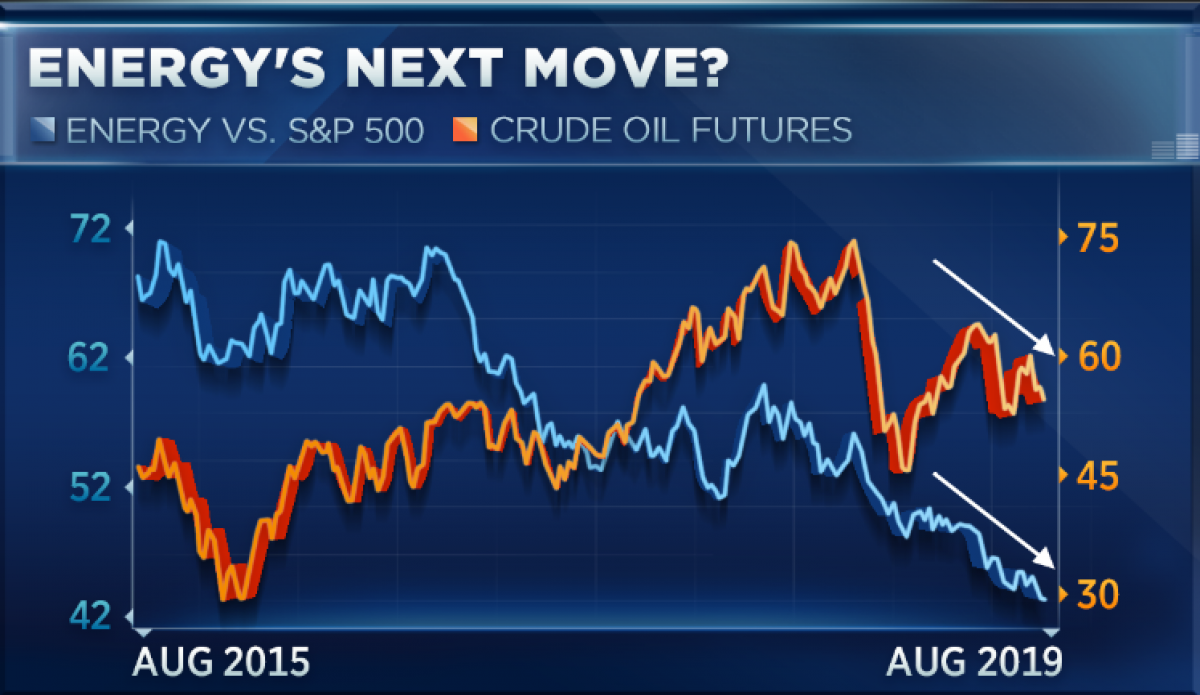
It’s been a rough week for the stock market across the board, but there is one sector that’s hurting more than all the rest. The only sector currently in a bear market is the energy sector, which fell more than 6 percent at the beginning of the month, making it the number-one worst performer on the S&P 500 Index.

While this already seems like a worst-case scenario for investors, some analysts say that things are actually going to continue to get worse for global energy markets. One major factor at least partially causing the downturn is a recent escalation of the now more-than yearlong trade war between the United States and China, which heated up to new levels last week when United States President Donald Trump tweeted that he would be imposing a further 10 percent tariff on a further $300 billion of Chinese goods starting on September first. 

China quickly retaliated, predictably following the tit-for-that model that the both sides of trade war have followed since its beginning last year, by allowing its tightly controlled currency to drop to its lowest value in over a decade, exacerbating trade tensions between the two countries by making Chinese goods less expensive for U.S. markets and, conversely, making U.S. goods more prohibitively expensive for Chinese consumers. In an article about this week’s worsening tensions between the United States and China, Forbes pointed out that “the U.S. Treasury has since officially labeled China a ‘Currency Manipulator’ – an action it has not taken since the 1990s when China was also named.” Related: Energy Storage Boom Goes Into Overdrive

“The U.S.-China trade war has always been serious. Now it's starting to get scary,” CNN Business reported, mincing no words about the precariousness of the U.S. market going forward.

One of the numerous immediate effects of the worsening relations between the United States and China was the deflated price of crude oil, which made waves throughout the whole energy trade sector. Just after Trump’s Thursday tweets announcing September 1st’s newly escalated tariffs against China, oil prices immediately dropped by 8 percent “with the stocks of oil producers also plummeting, some by more than 10 percent” in what was “the largest single-day drop in oil prices in the past three years” according to a report from Forbes.

And the surf is only going to get rougher going forward. Speaking to CNBC on Mondays edition of “Trading Nation,” head of technical analysis at worldwide brokerage and investment bank Oppenheimer Ari Wald said, “it’s a bearish trend and a poor risk-reward. [...] The sector has just not been rewarded when oil rises to the same degree it’s been slammed when oil falls.” CNBC uses West Texas crude to exemplify this trend, pointing out that the region’s crude oil “has surged more than 110 percent since bottoming in 2016. Over that period, the XLE energy ETF has added just 19 percent.” Related: Big Oil Profits Lag Despite Rising Production

Oppenheimer’s Wald went on to say that the sector’s largest stock Exxon Mobile is also projected to continue a downward trend, in a turn of events that is sure to have a negative impact on the energy sector as a whole. “Exxon Mobil [is] turning lower from the bearish slope of its 200-day moving average. We define that as a resumption of the downtrend,” said Wald. “When you’ve got the biggest stock in the sector acting as that headwind in what is a broad list of bearish trends in this sector, we recommend underweight, avoiding, stay away from energy,” he went on to tell CNBC.

As of Tuesday, crude was at a six-week low with Bank of America agreeing with forecasts that the oil and energy markets are only going to get worse before they get better, “warning that $30 per barrel could be over the horizon following China’s tough stance on sanctions,” according to CNBC. The report went on to underscore, soberingly, that “these are recessionary prices, if they occur.”

By Haley Zaremba for Oilprice.com

More Top Reads from Oilprice.com:


from Business - Latest - Google News https://ift.tt/2KmLe52
via IFTTT
August 08, 2019 at 06:00AM

Rabu, 07 Agustus 2019

Expert: US should 'stop worrying about China,' move on to other partners - Yahoo News Canada

Loonie regains ground as TSX outperforms US markets - BNNBloomberg.ca

TORONTO -- A late surge helped the loonie regain ground after it briefly dipped below 75 U.S. cents on Wednesday.

The Canadian dollar traded at an average of 75.06 cents U.S. on Wednesday, down from an average of 75.45, despite dipping to an intraday low of 74.95 U.S. cents shortly after noon ET.

Canada's main stock index outperformed its U.S. counterparts Wednesday as the price of gold surpassed US$1,500 an ounce for the first time in more than six years amid growing concerns about an economic slowdown.

The S&P/TSX composite index closed up 115.73 points to 16,265.22 after reaching an intraday low of 16,064.34.

"It's a surprisingly good day but it rested quite heavily on the materials sector and to some extent the fear trade insofar as gold and silver, precious metals are what's driving the TSX," said Giles Marshall, portfolio manager at Fiduciary Trust Canada.

The December gold contract was at US$1,519.60 an ounce, up US$35.40 from Tuesday and the September copper contract was up 1.35 cents at US$2.57 a pound.

Nine of the 11 major sectors of the TSX rose, led by consumer discretionary, materials and real estate.

Materials was helped by a 6.1 per cent gain by First Majestic Silver Corp along with gains by Kinross Gold Corp. and Barrick Gold Corp.

SNC-Lavalin Inc. closed more than six per cent higher after an Ontario judge cleared the embattled engineering firm to proceed with the $3.25-billion sale of a stake in Ontario's 407 toll highway to the Canada Pension Plan Investment Board (CPPIB), paving the way for the beleaguered company to pay off hundreds of millions in debt.

Health care lost 0.7 per cent while energy was down 0.45 per cent as NuVista Energy Ltd. lost 13.5 per cent and Crescent Point Energy Corp. was off 3.6 per cent.

The sector took a hit as the price of crude oil fell on higher U.S. stockpiles and concerns about a weakening global economy.

The September crude contract was US$51.09, down US$2.54 per barrel from Tuesday and the September natural gas contract was down 2.8 cents at US$2.08 per mmBTU.

In New York, markets recovered from large morning declines. The S&P 500 closed up 2.21 points to 2,883.98. The Dow Jones industrial average dropped 22.45 points to 26,007.07 after initially losing 374 points or 1.4 per cent, while the Nasdaq rose 29.56 points to 7,862.83.

Gold is outpacing stock markets as investors seek safety and a trade war between the U.S. and China puts pressure on the Federal Reserve to further cut interest rates.

"Every central bank in the world has already cut interest rates or is in the process of cutting interest rates, so there's a very high probability that the Bank of Canada will cut rates before the end of this year," Marshall said in an interview.

Bond yields fell with the Canadian and U.S. 10-year treasuries hitting their deepest inversion curves since 2000 and 2007 respectively.

"Historically it's been a pretty good predictor of recession so this is clearly weighing on sentiment and people are recalibrating their expectations for growth over the second half of the year."

With files from BNN Bloomberg


from Business - Latest - Google News https://ift.tt/2YK0S2l
via IFTTT
August 08, 2019 at 05:59AM

Caterpillar dealer Finning optimistic as strong oil-sands and construction markets drive growth - The Globe and Mail