Markets
Markets
This week's holiday-shortened economic calendar is jam-packed with crucial economic releases that will shape monetary policy expectations for the Sept. 18 meeting. Culminating with the granddaddy of them all the U.S. on Friday
However, rest assure the week will be dotted with trade war jitters after an unyielding President Trump hit China with 15% duties on $110bln of China goods over the weekend. So, despite both sides set to get back to the negotiating table later this month, investors will be left juggling trade war risk on a slippery balancing beam once again.
In case you somehow didn’t see the shocking videos from the weekend clashes in Hong Kong, which came in the wake of Beijing rejecting an application from Hong Kong authorities to withdraw the extradition bill. The protest escalations and intensity continue to point to a fractured future for the city famously dubbed the gateway to mainland China. Indeed, as each weekends escalation goes by, it feels like we are nearing a day of reckoning for the city’s future as a financial hub.
short-term rates curve turned incredibly bid at the start of the New York session as a summer of unrest now looks to extend to where there’s no end in sight. The shift in the curve suggests traders are positioning for a possible HKMA HK $ defence as capital outflows accelerate and could lead to a spike in borrowing cost. One month went from -15/-12 at Asia close to -9 at New York open to +2 bid now.
Three months from -7/-5 to +10, 1y from +120/130 to +170. More definitive updates on this move after China fix the HSI opens, but the last thing the struggling Hong Kong economy and the real estate market needs is a spike, even a short term one, in HIBOR lending rates.
As for the rest of Asia, we have no less than eight regional PMI’s reporting today with most of the attention falling on China Caixin PMI manufacturing report which is expected to decline in August. Chinese manufacturing companies can’t escape the negative consequences of the tariff escalation. However, with over 70% of the worlds PMI’s below the 50% contraction level, investors are hoping for an upswing in what’s expected to be a dreary week for Asia economic data.
Watch
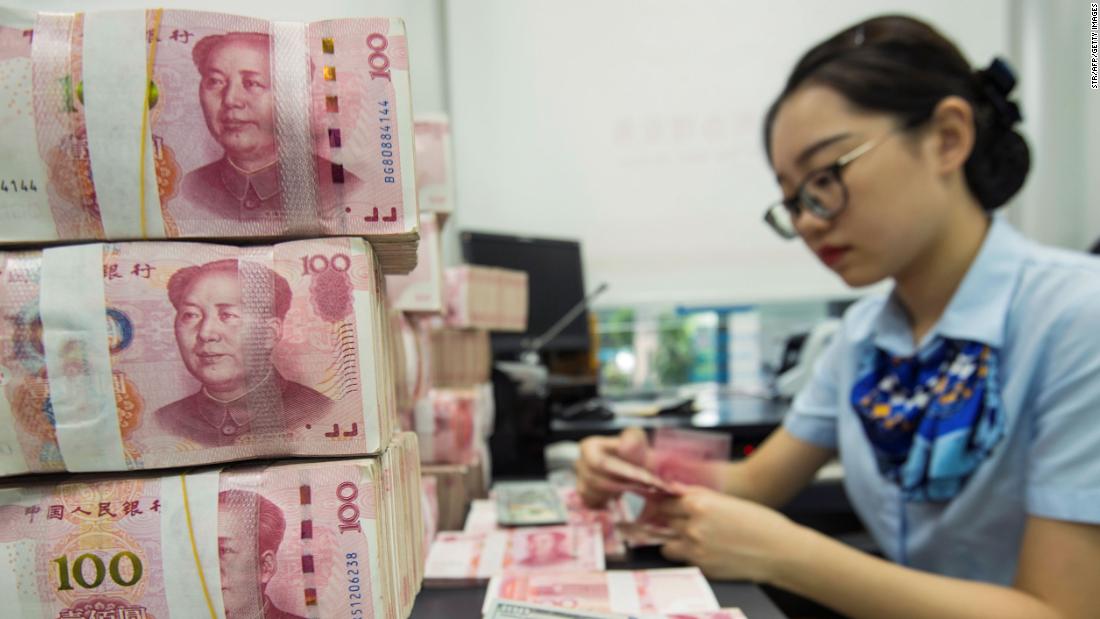
Despite some consolidation on the back of a slight de-escalation in the trade war rhetoric and the Pboc countercyclical mechanism effect, for the most part, the mood is unchanged, as traders buy in dips position for a move into 7.25-7.40 area in the months ahead or sooner.
However, without question, the Pboc will have their hands full trying to stem capital outflows as trade war continues to escalate, and Hong Kong is on fire.
The weaker will continue to have a domino effect on other ASEAN currencies, but once Yuan weakness becomes more sensitive to slower growth in China, this is where the cascading force pulls down commodity currencies and the Euro since it has high FX beta to global growth.
Why the markets get mesmerised every time that China makes soothing trade overtones is still a mystery, as time and time again, the markets overshoot expectations entirely. The chance that Trump capitulates to any requests by China is slim to none. China, on the other hand, will continue to negotiate despite the new tariffs, but will also be unwilling to meet U.S. demands.
Oil Markets
The trade and tariff overhang is inescapable for so while trade uncertainties persist; it will be difficult for oil to shrug off concerns about the threat to global demand. However, exacerbating Friday’s sell-off was news of 80,000 barrel per day Opec production increase, Russia non-compliance and hurricane Dorian’s demand destruction.
A fissure is forming in OPEC + compliance, which saw Oil prices crater when reports surfaced that Russia Oil output cut in August will be smaller than those agreed to under the compliance deal. On the surface, while is not likely a significant divergence, but it’s the messaging that Russia is sending that spooks markets, that is by not supporting the terms of current agreement what to prevent them for adhering to the agreement at all? While it could be little more than a tempest in oil can at this stage, it's worth monitoring none the less.
Hurricane Dorian has morphed into a Category 5 beast and depending on where it makes landfall could be the difference in millions or billions worth of damage to densely populated areas along the U.S. Atlantic coastline
As hurricane Dorian intensified to a Category 4 and now 5 while zeroing in on populated areas along the U.S. eastern seaboard, traders are factoring in a higher probability of demand destruction which could continue to weigh heavily on oil prices over the short term.
Every hurricane is unique in its impact on the oil industry however for oil prices it comes down a net of supply disruption and demand destruction But in the post shale boom era, demand destruction takes on a more considerable significance especially for intense hurricanes making landfall in more densely populated areas on the Atlantic coast.
However, framing these views, is the fact no one, and I mean no one wanted to go home long Oil contract as it would be impossible to enjoy the Labor Day family gathering while left constantly monitoring President Trump's Twitter account.
Gold Markets
markets have bounced from Friday’s lows after President Trump slapped more tariffs on approximately $110 billion in Chinese imports on Sunday triggering the latest escalation in a trade war that appears to have no end in sight.
Gold struggled for traction on Friday as the boisterous U.S. dollar exacerbated the pre long weekend position purge ahead of this week's holiday-shortened economic calendar packed with Fed policy-relevant information.
Gold correlates to various assets and is moving reactively within the current range to the ebb and flow of U.S.-Sino trade headlines, but over time, Gold is most closely tied to the underlying movement of the US dollar and real interest rates, and these will continue to be the critical factors in gold's reaction function over the medium term.
Even after month-end flows had dissipated the U.S. dollar held on to the bulk of its gains, after an interval of risk on/off due to the trade war, it seems the broad dollar is now trading back with global growth differentials which supports US dollar demand due to the resilient U.S. economy.
The markets have fully priced in a in September. The CME FedWatch Tool is showing 95% + probability for a 25bp reduction on September 18, but gold traders will be paying attention to Fed speak this week especially dissenter Rosengren who speaks on Wednesday at 5 PM EST and has been an advocate of holding rates steady. Market participants will be particularly curious to see just how committed his hawkish views are considering the further escalation of trade tensions with China.
With little signs of a looming U.S. recession, there has been some concern amongst gold traders; this could trigger more dissenting votes in the Federal Open Market Committee.
While freshly minted long positions were getting nervous as the U.S. dollar reasserted itself on Friday, strategic modelled buyers are in at an excellent weighted average price, so the long view should have stamina.
The de-escalation of trade tensions seems insufficient to trigger a considerable correction in gold, suggesting that long term investors have relatively high convictions to remain in gold given the potential for escalating trade risks and the likely negative impact of higher tariffs on growth and inflation.
Overall, it’s shaping up to be a crucial week for Gold markets.
Currency Markets
The Euro
has been trading soft over the past couple of days despite some more hawkish comments from ECB members, and improving news flows from Italy
However, the 1.1000 trap door gave way after the pair dropped half a "big figure" which coincided with month-end rebalancing time window. With little bounce back after the month-end flows completed, it suggests that the markets still have some downside unfinished business to perform.
After a period of risk on risk-off due to trade war., it appears the US dollar is now trading back in line with global growth differentials. Even with the more-hawkish ECB members and better Italy news flow, EUR.USD has been unable to retrace due to the waning domestic growth overhang.
has technically broken out as well, now through the 2018 highs and the 61.8% retracement of the 2017-dollar selloff suggesting the markets will be looking to sell on bounces above 1.1000
What at stake?
The September is shaping up to one of the most delicate ECB meetings of all time. The ECB needs to use everything in the monetary policy arsenal rot right the ship, but if their aggressively weakened the Euro, they may feel themselves on the receiving end of U.S. dollar intervention.
This week's holiday-shortened economic calendar is jam-packed with crucial economic releases that will shape monetary policy expectations for the Sept. 18 meeting. Culminating with the granddaddy of them all the U.S. on Friday
However, rest assure the week will be dotted with trade war jitters after an unyielding President Trump hit China with 15% duties on $110bln of China goods over the weekend. So, despite both sides set to get back to the negotiating table later this month, investors will be left juggling trade war risk on a slippery balancing beam once again.
In case you somehow didn’t see the shocking videos from the weekend clashes in Hong Kong, which came in the wake of Beijing rejecting an application from Hong Kong authorities to withdraw the extradition bill. The protest escalations and intensity continue to point to a fractured future for the city famously dubbed the gateway to mainland China. Indeed, as each weekends escalation goes by, it feels like we are nearing a day of reckoning for the city’s future as a financial hub.
short-term rates curve turned incredibly bid at the start of the New York session as a summer of unrest now looks to extend to where there’s no end in sight. The shift in the curve suggests traders are positioning for a possible HKMA HK $ defence as capital outflows accelerate and could lead to a spike in borrowing cost. One month went from -15/-12 at Asia close to -9 at New York open to +2 bid now.
Three months from -7/-5 to +10, 1y from +120/130 to +170. More definitive updates on this move after China fix the HSI opens, but the last thing the struggling Hong Kong economy and the real estate market needs is a spike, even a short term one, in HIBOR lending rates.
As for the rest of Asia, we have no less than eight regional PMI’s reporting today with most of the attention falling on China Caixin PMI manufacturing report which is expected to decline in August. Chinese manufacturing companies can’t escape the negative consequences of the tariff escalation. However, with over 70% of the worlds PMI’s below the 50% contraction level, investors are hoping for an upswing in what’s expected to be a dreary week for Asia economic data.
Watch
Despite some consolidation on the back of a slight de-escalation in the trade war rhetoric and the Pboc countercyclical mechanism effect, for the most part, the mood is unchanged, as traders buy in dips position for a move into 7.25-7.40 area in the months ahead or sooner.
However, without question, the Pboc will have their hands full trying to stem capital outflows as trade war continues to escalate, and Hong Kong is on fire.
The weaker will continue to have a domino effect on other ASEAN currencies, but once Yuan weakness becomes more sensitive to slower growth in China, this is where the cascading force pulls down commodity currencies and the Euro since it has high FX beta to global growth.
Why the markets get mesmerised every time that China makes soothing trade overtones is still a mystery, as time and time again, the markets overshoot expectations entirely. The chance that Trump capitulates to any requests by China is slim to none. China, on the other hand, will continue to negotiate despite the new tariffs, but will also be unwilling to meet U.S. demands.
Oil Markets
The trade and tariff overhang is inescapable for so while trade uncertainties persist; it will be difficult for oil to shrug off concerns about the threat to global demand. However, exacerbating Friday’s sell-off was news of 80,000 barrel per day Opec production increase, Russia non-compliance and hurricane Dorian’s demand destruction.
A fissure is forming in OPEC + compliance, which saw Oil prices crater when reports surfaced that Russia Oil output cut in August will be smaller than those agreed to under the compliance deal. On the surface, while is not likely a significant divergence, but it’s the messaging that Russia is sending that spooks markets, that is by not supporting the terms of current agreement what to prevent them for adhering to the agreement at all? While it could be little more than a tempest in oil can at this stage, it's worth monitoring none the less.
Hurricane Dorian has morphed into a Category 5 beast and depending on where it makes landfall could be the difference in millions or billions worth of damage to densely populated areas along the U.S. Atlantic coastline
As hurricane Dorian intensified to a Category 4 and now 5 while zeroing in on populated areas along the U.S. eastern seaboard, traders are factoring in a higher probability of demand destruction which could continue to weigh heavily on oil prices over the short term.
Every hurricane is unique in its impact on the oil industry however for oil prices it comes down a net of supply disruption and demand destruction But in the post shale boom era, demand destruction takes on a more considerable significance especially for intense hurricanes making landfall in more densely populated areas on the Atlantic coast.
However, framing these views, is the fact no one, and I mean no one wanted to go home long Oil contract as it would be impossible to enjoy the Labor Day family gathering while left constantly monitoring President Trump's Twitter account.
Gold Markets
markets have bounced from Friday’s lows after President Trump slapped more tariffs on approximately $110 billion in Chinese imports on Sunday triggering the latest escalation in a trade war that appears to have no end in sight.
Gold struggled for traction on Friday as the boisterous U.S. dollar exacerbated the pre long weekend position purge ahead of this week's holiday-shortened economic calendar packed with Fed policy-relevant information.
Gold correlates to various assets and is moving reactively within the current range to the ebb and flow of U.S.-Sino trade headlines, but over time, Gold is most closely tied to the underlying movement of the US dollar and real interest rates, and these will continue to be the critical factors in gold's reaction function over the medium term.
Even after month-end flows had dissipated the U.S. dollar held on to the bulk of its gains, after an interval of risk on/off due to the trade war, it seems the broad dollar is now trading back with global growth differentials which supports US dollar demand due to the resilient U.S. economy.
The markets have fully priced in a in September. The CME FedWatch Tool is showing 95% + probability for a 25bp reduction on September 18, but gold traders will be paying attention to Fed speak this week especially dissenter Rosengren who speaks on Wednesday at 5 PM EST and has been an advocate of holding rates steady. Market participants will be particularly curious to see just how committed his hawkish views are considering the further escalation of trade tensions with China.
With little signs of a looming U.S. recession, there has been some concern amongst gold traders; this could trigger more dissenting votes in the Federal Open Market Committee.
While freshly minted long positions were getting nervous as the U.S. dollar reasserted itself on Friday, strategic modelled buyers are in at an excellent weighted average price, so the long view should have stamina.
The de-escalation of trade tensions seems insufficient to trigger a considerable correction in gold, suggesting that long term investors have relatively high convictions to remain in gold given the potential for escalating trade risks and the likely negative impact of higher tariffs on growth and inflation.
Overall, it’s shaping up to be a crucial week for Gold markets.
Currency Markets
The Euro
has been trading soft over the past couple of days despite some more hawkish comments from ECB members, and improving news flows from Italy
However, the 1.1000 trap door gave way after the pair dropped half a "big figure" which coincided with month-end rebalancing time window. With little bounce back after the month-end flows completed, it suggests that the markets still have some downside unfinished business to perform.
After a period of risk on risk-off due to trade war., it appears the US dollar is now trading back in line with global growth differentials. Even with the more-hawkish ECB members and better Italy news flow, EUR.USD has been unable to retrace due to the waning domestic growth overhang.
has technically broken out as well, now through the 2018 highs and the 61.8% retracement of the 2017-dollar selloff suggesting the markets will be looking to sell on bounces above 1.1000
What at stake?
The September is shaping up to one of the most delicate ECB meetings of all time. The ECB needs to use everything in the monetary policy arsenal rot right the ship, but if their aggressively weakened the Euro, they may feel themselves on the receiving end of U.S. dollar intervention.
from Business - Latest - Google News https://ift.tt/2lKwUsW
via
IFTTT
September 02, 2019 at 04:53PM