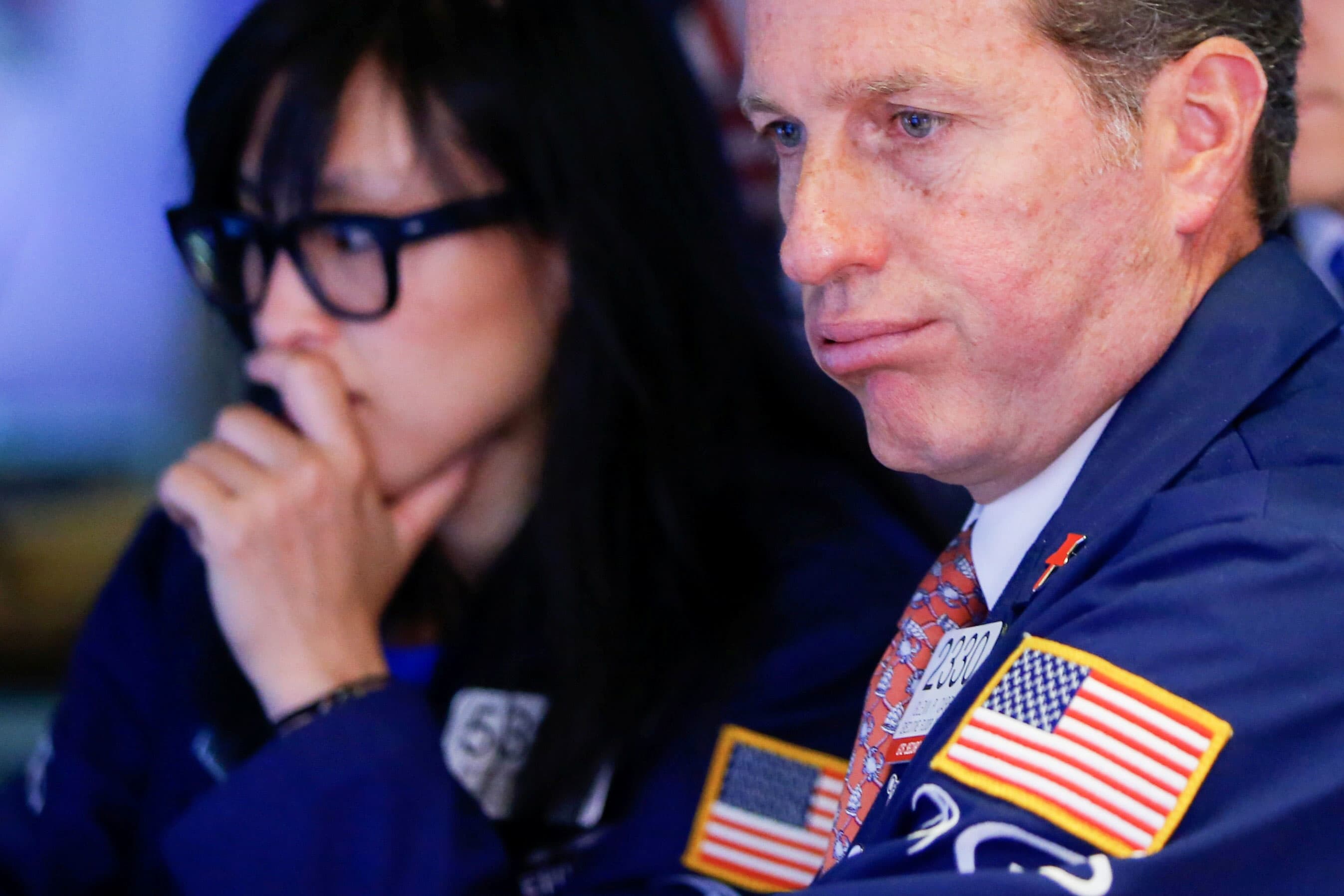
Lending companies and Big Banks have been struggling this year. Higher interest rates and stiffer rules to obtain mortgages have made it more difficult for individuals looking to buy homes. The good news is that there could be relief on the way. As of September 2, first-time home buyers could be eligible for some help.
For those with household incomes of up to $120,000, the home-buyer incentive program announced in the most recent federal budget will see the Canada Mortgage Housing Corporation pay 10% of the down payment for a newly built home and 5% for a resale.
While there are price limitations that would prevent most buyers in Toronto and Vancouver from benefiting from these incentives, it could still help in other Canadian markets, where prices have not soared to the same levels.
That’s good news for bank stocks, as it could help lead to more mortgages being taken out. Although the Big Banks have performed well this year, their share prices have been kept down as a result of a lot of negativity in the economy and concerns that we’re headed for a slowdown and that home sales will struggle. Even the expectation that will be more homes being sold could be a significant factor in bank stocks gaining some momentum.
For instance, Royal Bank of Canada(TSX:RY)(NYSE:RY) has seen its share price fall 4% over the past six months, and year to date it’s up around 7%. Despite an improved year for the TSX in 2019, RBC and other bank stocks haven’t seen the same results, as they have underperformed the market thus far, surprisingly.
That’s why it could be the perfect time for investors to scoop up a stock like RBC. With the Big Bank stock being a pretty good buy at less than twice its book value, it’s a safe bet to rise in value.
After all, whether it’s population growth or rising fees, banks will always find ways to generate more sales and profits. Throw in the possibility of some stronger home sales and you’ve got a great opportunity for the stock to see a positive finish to the year.
While the temptation may be to look at the recently struggling Vancouver market as a reason to be concerned, Canadian home sales in July were up 12.6% from the prior year. Although prices may be falling, sales have been rising in B.C.’s Lower Mainland as well as other key markets across the country.
With rumblings that we could again see interest rates being cut, there could be even more reason to be bullish on home sales in the coming months, as it could become cheaper to take out a mortgage.
Bottom line
RBC and other bank stocks haven’t fared well lately, but they’re often the safest investments to hold in a portfolio. Even if you’re looking for more than just a solid dividend to own, RBC could prove to be a valuable addition to your portfolio given how cheap the stock is today.
If it does indeed get a boost in the next quarter, we could see the stock make up for what’s been a very mediocre year thus far.
BRAND NEW! For a limited time, The Motley Fool Canada is giving away an urgent new investment report outlining our 5 favourite stocks for investors over 50.
So if you’re looking to get your finances on track and you’re in or near retirement – we’ve got you covered!
You’re invited. Simply click the link below to discover all 5 shares we’re expressly recommending for INVESTORS 50 and OVER. To scoop up your FREE copy, simply click the link below right now. But you will want to hurry – this free report is available for a brief time only.
Oil prices tanked to multi-week lows early on Tuesday, the first full trading day after the new U.S. and Chinese tariffs and counter-tariffs entered into force and as signs emerged that both OPEC and its key partner in the production cut deal, Russia, boosted oil production in August.
As of 11:06 a.m. EDT on Tuesday, WTI Crude was down 3.23 percent at $53.23 and Brent Crude had fallen below $58 a barrel—to $57.59, down by 1.82 percent on the day.
Market participants were again concerned about the repercussions of the U.S.-China trade war on global economies and oil demand growth. On Sunday, September 1, the U.S. imposed tariffs on Chinese goods, and China imposed tariffs on some U.S. goods, although Beijing left most of the tariffs for the December round of new tariffs.
On the demand side, the market is worried about slowing economies and, by extension, slowing oil demand growth. On the supply side, too, bearish factors abound.
According to a Reuters survey, OPEC’s crude oil production increased in August, thanks to Iraq and Nigeria. OPEC’s August production has been estimated at 29.61 million barrels per day, which is 80,000 barrels per day over July’s production level. Even though Saudi Arabia is still over-complying with its share of the cuts, it lifted production in August to produce 9.63 million barrels per day.
In Russia, OPEC’s key partner in the OPEC+ coalition curbing output to support oil prices, oil production increased to 11.29 million bpd in August, up from 11.15 million bpd in July, and exceeding Russia’s cap under the deal. Rosneft boosted its oil production by 5 percent last month compared to the previous month, according to Russia’s energy ministry data cited by Reuters.
Yet, Russian Energy Minister Alexander Novak affirmed that Russia was still looking to comply in full with its share of the cuts.
By Tsvetana Paraskova for Oilprice.com
More Top Reads from Oilprice.com:
from Business - Latest - Google News https://ift.tt/2MUdCxI
via IFTTT
September 03, 2019 at 10:30PM
In this Jan. 22, 2016 photo, a worker stands at a natural gas plant owned by China's state-owned enterprise PetroChina in Suining in southwestern China's Sichuan province.
While some European and U.S. companies cut their exposure to the Canadian oilsands, China's Big Three oil giants — CNOOC, PetroChina and Sinopec — seem content to let their bets ride even if the results haven't been spectacular.
In 2018, PetroChina produced an average of just 7,300 barrels per day of bitumen from its MacKay River thermal oilsands project, although it was designed to produce 35,000 bpd. In June, its output was about 8,700 bpd.
The Beijing-based company paid $1.9 billion in 2009 for 60 per cent interests in the proposed MacKay River and Dover oilsands projects being developed by Athabasca Oil Sands Corp. (now just Athabasca Oil Corp.), then bought out the rest of MacKay for $680 million in 2012 and Dover for $1.2 billion in 2014.
"MacKay River is located in an area with complex geology, which creates challenges to heat up the reservoir to get the bitumen flowing," said spokesman Davis Sheremata in an emailed statement.
The company is drilling new wells and experimenting with various technologies to boost output, he said, adding a go-ahead for Dover has been put on hold until MacKay proves itself.
Still, "PetroChina Canada is committed to Canada for the long-term, having maintained its investments through economically challenging times."
CNOOC produced about 71,000 bpd from the oilsands in 2018, little changed from 66,800 bpd in 2014, shortly after it spent $15.1 billion to buy Calgary's Nexen Energy and its diverse portfolio of domestic and international assets.
"Our oilsands assets are an important part of our North American portfolio and we remain committed to our Canadian operations," CNOOC spokesman Kyle Glennie wrote in a brief email.
Meanwhile, Sinopec paid $4.65 billion to buy a nine per cent stake in the Syncrude oilsands mining consortium from ConocoPhillips in 2010 and its resulting production has been steady since, registering just over 27,000 bpd in 2018.
The Chinese energy majors employ "patient capital" and it seems unlikely they will leave the oilsands anytime soon, said Jia Wang, deputy director of the China Institute at the University of Alberta.
"The assets they bought may not be the most profitable or may require more capital intensive development. ... (but) these are large Chinese companies, they're not likely to become bankrupt," she said.
"They have been through thick and thin, and different cycles of boom and bust. These (oilsands) operations in the grand scheme of these massive companies are not the largest chunk of their business so they can afford to have a presence here without incurring too much loss."
from Business - Latest - Google News https://ift.tt/2ZKHt1A
via IFTTT
September 03, 2019 at 07:26PM
Pipeline pipes are seen at a facility near Hope, B.C., Thursday, Aug. 22, 2019.
The Federal Court of Appeal says it will reveal Wednesday whether a new set of legal challenges to the Trans Mountain pipeline project can proceed.
The federal government has twice approved a plan to twin an existing pipeline from Alberta's oilpatch to the B.C. coast.
Last year the Federal Court of Appeal tore up the original approval citing both an insufficient environment review and inadequate consultations with Indigenous communities.
The Liberals say they fixed both problems and approved the expansion a second time in June.
Environment groups still say there are not adequate protections for endangered marine species that will be affected by tanker traffic picking up oil from a terminal in suburban Vancouver.
Several First Nations say the federal government came into the most recent discussions having predetermined the outcome.
The court will decide Wednesday on 12 requests to appeal the June approval.
The federal government bought the existing pipeline and the unfinished expansion work for $4.5 billion last year, promising to get it over the political opposition that had scared off Kinder Morgan Canada from proceeding.
The move disappointed environmentalists, who say the global climate can't handle more emissions from Alberta's oilsands and the eventual burning of the petroleum they produce. The Liberals say they'll use any profits from the project to fund Canada's transition to a cleaner-energy economy.
from Business - Latest - Google News https://ift.tt/30Yfhpw
via IFTTT
September 04, 2019 at 04:11AM
It has just been announced that Cathay Pacific Chairman John Slosar will be “retiring” as of November 6, 2019.
For those of you not familiar, 62 year-old Slosar has been at Swire Group (Cathay Pacific’s parent company) for nearly 40 years. He was Cathay Pacific’s CEO from 2011 to 2014, before being appointed Chairman.
The Board of Directors has appointed Patrick Healy to the role of Cathay Pacific Chairman. He has been at Swire Group since 1988. He’s currently the Managing Director of Swire Coca-Cola Limited, and will maintain that role, responsible for the Group’s worldwide beverages business.
What Executives Are Saying
Slosar had the following to say regarding his retirement:
“Being the Chairman of Cathay Pacific has been the greatest of privileges for me. I would like to thank the entire Cathay team for their support, commitment and friendship during my years as part of that team. They are always at their best in challenging times, when their dedication really shines through. Pat is a strong and experienced executive, having successfully led a number of different Swire businesses. He is creative and customer-focused, and I am sure he will lead Cathay Pacific to new heights.”
Healy had the following to say about his new role:
“I look forward to working closely with CEO Augustus Tang, my long-term Swire colleague, his talented team and the entire Board of Directors. Together, and with the support of the Cathay team, we will ensure that our airlines focus relentlessly on safety, on enhancing the travel experiences of our customers, on being efficient in everything that we do, and on competing effectively to create positive business performance.”
Merlin Swire, the Chairman of Swire Pacific, said the following:
“I would like to thank John for his tremendous contributions to the company over the past 39 years. Under his leadership as the Chief Executive Officer and then as Chairman, Cathay has built on its already enviable reputation for quality service and the extensive global network which underpins the success of Hong Kong as Asia’s largest international passenger hub. The three-year transformation programme now nearing completion leaves Cathay well-positioned for continued growth in the future.”
What Does This Mean For Cathay Pacific?
Cathay Pacific has had an incredibly tough few weeks, reflecting the challenges that have gone on in Hong Kong for months now.
So while perhaps not direct, it does seem that a lot of changes at the top are being made to appease China, and to create a sacrificial lamb.
With that in mind, I have a few general takeaways here.
First of all, I find the public message from Slosar to be interesting. When Hogg resigned, he said the following, in part:
“These have been challenging weeks for the airline and it is right that Paul and I take responsibility as leaders of the company.”
While likely just political, the tone here is different, as if he just happens to be retiring right now. There’s nothing about taking responsibility for what has happened.
Second of all, I find it interesting that Swire Group is clearly succumbing to pressure from China, though they’re just replacing current executives with other people within the company.
Swire retains their talent well, and all of these executives have been at Swire Group for decades.
It sure seems like the “retiring” and “resigning” executives are just being used as sacrificial lamb. The company is replacing the current executives with other executives from within the company, who likely have similar philosophies.
What do you make of the resignation of Cathay Pacific’s Chairman?
Check out the companies making headlines before the bell:
Tapestry – The Coach and Kate Spade parent named Chairman Jide Zeitlin as its new chief executive officer. He succeeds Victor Luis, who had been in the CEO job for 13 years. Zeitlin will remain as chairman in addition to assuming CEO duties.
Michaels Cos. – The arts and crafts retailer beat estimates by 5 cents a share, with adjusted quarterly profit of 19 cents per share. Revenue also beat forecasts. Michaels also reported a 0.3% increase in comparable-store sales, compared to predictions of a 1% drop from analysts surveyed by Refinitiv.
Navistar – The truck maker reported quarterly profit of $1.56 per share, beating the consensus estimate of $1.22 a share. Revenue topped forecasts, as well, and Navistar raised its guidance for full-year truck deliveries.
Tyson Foods – Tyson cut its full-year earnings forecast to $5.30 to $5.70 per share, compared to a consensus estimate of $5.94 a share. The beef and poultry producer cited the impact of a recent fire at a key factory, as well as commodity market volatility.
Box — Hedge fund Starboard Value disclosed a 7.5% stake in the cloud service provider and called its shares "undervalued." Starboard is now Box's second-largest shareholder behind Vanguard Group, and said it may talk to Box about exploring a potential sale.
Kroger – Kroger is asking customers to stop openly carrying guns in its stores, following a similar move by Walmart. The supermarket chain had previously followed applicable local and state laws on firearms.
Amazon.com – Amazon is testing a biometric payment system that charge users by scanning their hands, according to a report in the New York Post. The paper said Amazon would introduce the technology at some of its Whole Foods stores by the beginning of 2020.
Realty Income – Realty Income announced the acquisition of 454 single-tenant properties from CIM Real Estate for about $1.25 billion in cash. The real estate investment trust updated its full-year guidance, raising its outlook for adjusted funds from operations.
Zillow – The real estate website operator will sell $500 million in convertible securities due in 2024, and $500 million due in 2026.
Apple – Apple will introduce a cheap new iPhone next spring to address declining market share, according to a report from Japan's Nikkei news service. The phone will reportedly be a successor to the iPhone SE.
Amazon.com(NASDAQ: AMZN) stock has been a fantastic investment. Along with crushing the market over the long term, shares of the e-commerce titan have also outperformed in recent years. Over the three-year period through Sept. 3, this growth stock has gained 132% -- more than three times the S&P 500's 41.6% return.
Despite its mammoth size -- its $890 billion market cap makes its stock the third largest on the S&P 500 index behind Microsoft and Apple -- there are countless ways the company can continue to grow.
Here are 10 reasons to buy Amazon stock and consider holding on forever -- or at least for a very long time.
An Amazon box coming down a conveyor.
Image source: Amazon.
1. It's led by a founder
Amazon is led by CEO Jeff Bezos, who founded the company in 1994. He's 55 years old, so investors can hopefully count on him remaining at the helm for at least a few more years.
A number of studies show that shares of founder-led companies tend to outperform in the stock market, often significantly so. A Bain & Company analysis, for instance, determined that the stocks of U.S.-based founder-led companies returned an average of 3.1 times more than than non-founder-led companies from 1990 to 2014.
2. The CEO has a lot of skin in the game
As of Aug. 1, Bezos owned 57.78 million shares of Amazon. Those shares are worth $102.6 billion as of the stock's closing price on Aug. 30 and gives him an 11.7% stake in the company. With more than $100 billion of his money wrapped up in Amazon, he's extremely incentivized to make decisions to increase the stock's value over the long haul. Investors can feel confident that the Amazon CEO's interest is aligned with their interests.
3. Its intensive focus on the customer
Amazon's mission "is to be Earth's most customer-centric company," and by most counts, it seems to walk its talk. Its intense focus on keeping customers happy should continue to result in customers spending more money on its site.
4. Its fulfillment center network acts as a nearly impenetrable moat
Amazon has a few key competitive advantages, though its deepest and widest moat to keep competitors at bay is its fulfillment center network, which it has spent many years and tons of money building. The combined extensiveness and efficiency of this network is the core reason that Amazon is able to so speedily and cost-effectively deliver packages throughout the U.S. and in many parts of the world. In short, it's the key to the company's ability to fulfill its main Prime benefit: one-day free delivery. (In recent months, Amazon has been upgrading its standard free delivery benefit from two days to one day.)
View from above of an Amazon fulfillment center, showing solar panels on roof.
Image source: Amazon.
The company currently has 159 fulfillment centers in the U.S., with plans for 41 more, according to logistics consultant MWPVL International. These are humongous facilities, averaging about 741,000 square feet -- nearly 13 times the approximately 57,600-square-foot size of a professional football field. Beyond the U.S., the company has 189 additional fulfillment centers and plans for 13 more, with India (51), the U.K. (30), and Germany (25) leading the way.
It would likely be cost-prohibitive for any competitor to try to replicate Amazon's distribution network's geographic footprint. Moreover, even if a company was willing to spend billions doing so, it would still likely lag in efficiency, as Amazon was an early mover in using advanced technology, such as robotics, in its fulfillment centers.
5. It has a winning formula for funding expansion
Amazon Web Services (AWS), the company's cloud computing services business, has historically been extremely profitable. The company has used the cash generated from AWS to grow its empire. Having such a profitable business segment that is growing so briskly is a huge advantage that other e-commerce players -- such as Walmart -- don't have.
Putting some numbers next to this item, in the second quarter, AWS grew revenue 37% year over year and accounted for just over 13% of Amazon's overall sales, yet it comprised 68% of its total operating income. It's the dominant player in the cloud computing service space. In 2018, it had a 32% market share of this $80 billion global market, which grew 46% year over year, according to market research firm Canalys.
6. Its Prime-centric business model is "sticky"
Now let's pivot to another key component of Amazon's business model: its ultra-successful Prime loyalty program. Prime makes Amazon's business model "sticky," which means that it helps the company build tight relationships with its customers. For $119 per year (or $12.99 per month), customers can subscribe to Prime, which gets them standard free two-day shipping (which is in the process of being upgraded to one day); streaming of movies, TV shows, and music; and other goodies.
Amazon had an estimated 101 million Prime members in the U.S. as of December, according to a Consumer Intelligence Research Partners (CIPR) report. (The company doesn't disclose its Prime member data by country, though it did say in 2018 that it had more than 100 million Prime members globally.) Prime members are particularly valuable to Amazon because they spend more money on the company's site. They spend an average of $1,400 annually on Amazon, whereas customers who are not Prime members spend about $600, per CIPR.
7. Online shopping has plenty of room for growth in the U.S.
E-commerce sales as a percentage of total U.S. retail sales have been growing at a steady pace. Nonetheless, that figure is still "only" 10.7% as of the second quarter of 2019. In dollar figures, the U.S. e-retail market was worth about $554 billion in the same quarter.
US E-Commerce Sales as Percent of Retail Sales Chart
Data by YCharts.
As the largest e-commerce player in the U.S., Amazon is poised to continue to capture an outsize chunk of future growth. In 2018, it captured nearly half of online sales growth in the country.
8. E-commerce also has much room for growth internationally
In 2018, online sales accounted for 12.2% of global retail sales, with this number expected to be 14.1% this year and reach about 22% by 2023. Considering that global e-commerce sales are projected to be about $3.5 trillion in 2019, a nearly 8-percentage-point rise in four years equates to a huge increase in market size (more than $276 billion) -- and that's if total retail sales only remain static.
To put all those new dollars that should be up for grabs within four years into perspective, $276 billion is more than Amazon's current annual e-commerce sales. In the second quarter, the company's global e-commerce sales were $55.1 billion ($38.7 billion in the U.S. and $16.4 billion internationally), which equates to an annual run rate of about $220 billion. And, again, this is assuming the total global retail market doesn't expand in size, which is extremely unlikely.
The fastest-growing online retail market is India, followed by Spain and China, according to Statista. Notably, Amazon is engaged in a particularly big push in India, where it has 51 fulfillment centers, the most in any country except for the U.S.
9. It continues to expand into a wide array of new arenas
A silver Ring doorbell.
Image source: Getty Images.
Amazon continues to enter new turf. In 2007, it entered the grocery delivery business via its Amazon Fresh service, which it has gradually expanded. And in 2017, it spent more than $13 billion to acquire Whole Foods, which gave it a major presence in the brick-and-mortar organic grocery space and increased its grocery delivery muscle.
Last year, Amazon made two major acquisitions that underscore its ambitions in the huge healthcare and smart-home markets. It threw its hat into the $400-billion-per-year U.S. pharmacy market when it spent $753 million in cash to buy online pharmacy PillPack, giving it the ability to speedily deliver prescription drugs across the country. It also dropped $839 million in cash to acquire Ring, best known for its video doorbells. This purchase bolstered Amazon's smart-home technology business, centered on its market-leading Echo line of smart speakers that are embedded with its artificial intelligence (AI)-powered assistant Alexa.
10. Its efficiency should continue to increase thanks to driverless vehicles
Within about the next five years or so, fully autonomous vehicle are widely projected to be legal across the U.S. Investors can expect that Amazon will be an early adopter of this tech for at least some portions of its delivery operations, which should drive (pardon the pun) further increases in efficiency.
Moreover, the company might eventually be using drones for some lighter so-called last-mile deliveries -- or from its fulfillment centers to many customers' homes.
John Mackey, CEO of Whole Foods Market, an Amazon subsidiary, is a member of The Motley Fool's board of directors. Teresa Kersten, an employee of LinkedIn, a Microsoft subsidiary, is a member of The Motley Fool's board of directors. Beth McKenna has no position in any of the stocks mentioned. The Motley Fool owns shares of and recommends Amazon, Apple, and Microsoft. The Motley Fool has the following options: short January 2020 $155 calls on Apple, long January 2020 $150 calls on Apple, short January 2020 $155 calls on Apple, long January 2020 $150 calls on Apple, and long January 2021 $85 calls on Microsoft. The Motley Fool has a disclosure policy.