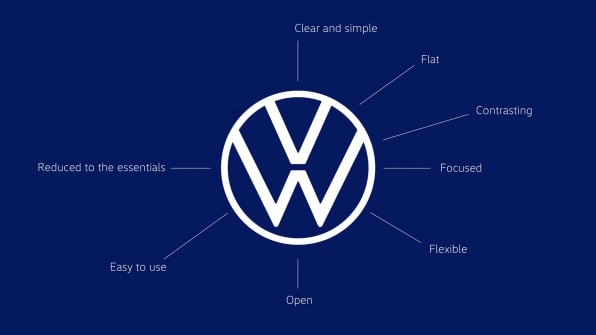
The new one looks a lot like the old one, but the V and W are thinner, as is the trim around the circle that encompasses the two letters.
The design reveal came at the Frankfurt International Motor Show yesterday.
[Image: courtesy of Volkswagen]“The new Volkswagen logo with its flat two-dimensional design is clearer and has been reduced to its essential elements,” the German automaker explained on its website. “The brand design and the logo aim for high flexibility and are intended for digital applications.”
The company said the switch is expected to be completed by the middle of next year.
Observers have suggested this is part of Volkswagen’s attempt to wipe the slate clean after the diesel emissions cheating scandal, in which the carmaker tried to beat U.S. emissions standards. The rigging scam cost the company about $30 billion and sullied its reputation.
While the change to the VW logo is not dramatic, that’s typical. Major visual facelifts, like Wendy’s (from frilly to streamlined) and Apple (from Newton to the rainbow apple), go down in history, but sometimes they’re actually missteps. In 2010, for example, Gap completely overhauled its brand design—only to quickly change it back.
Jack Ma, China's richest man, is stepping down as the chairman of the $460 billion Alibaba Group he founded 20 years ago.
The company is now the world's largest e-commerce group. It was founded by Ma and 17 others in a small apartment in 1999.
Ma is worth almost $40 billion and is known for his love of extravagant celebrations, including mass employee weddings and music performances.
His farewell party is taking place in a 80,000-seat stadium.
Ma has picked Alibaba CEO Daniel Zhang to take over from him, who will face challenges from the US-China trade war and a slowing e-commerce industry in China.
Jack Ma — the flamboyant tech personality, and currently the richest man in China— is stepping down from his $460 billion Alibaba empire 20 years after he founded the company.
Ma is stepping down as the chairman of Alibaba Group on Tuesday, his 55th birthday, as part of a long-planned succession scheme. It is the world's largest e-commerce group, with more than triple the total reported sales of Amazon for 2018.
A former English teacher, Ma founded the company with 17 others in 1999. It began as a company that sold Chinese goods around the world, but shifted its focus to the domestic Chinese market as the country's economy boomed.
It later expanded into online banking, artificial intelligence, and entertainment.
While he is stepping down from a major leadership role, Ma said he will take a position in Alibaba's "partnership", a 38-person body that has an indirect role in the governance of the group.
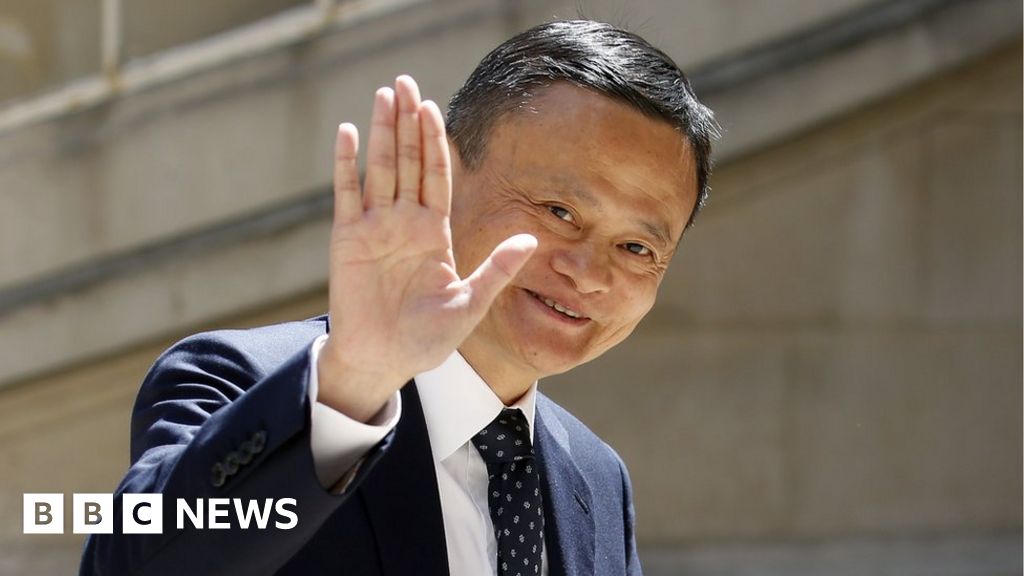
Jack Ma. Sean Gallup/Getty Images
Daniel Zhang, who has been CEO of Alibaba since 2015, has been handpicked by Ma to take over, though he is unlikely to match Ma's famous flamboyance.
Ma is also known for the extravagant events he holds for employees during Alibaba's annual "Singles Day" shopping event, which outstrips Amazon's Prime Day for sales. The event has featured performers including Mariah Carey and a the Cirque du Soleil.
His style has also made its way into his resignation plans, which involve a farewell party at an 80,000-seat stadium in Hangzhou, the city where he founded the company decades ago, Reuters reported.
Jack Ma presided over an employee mass wedding of 102 couples. REUTERS/Stringer
Alibaba shared on Monday a video of Ma returning to that apartment, where he recalled telling early employees: "This is the place we're going to work for a year probably. We're going to eat here. We're going to sleep here. We're going to work day and night here.
"And we will probably achieve something. Or probably, we'll have to go out looking for jobs together."
He said their goal then was to be in the top 10 of the world's most popular websites, and to empower small businesses.
Zhang, Ma's successor, will also face challenges as the industry faces the ongoing trade war between the US and China and a slowdown in the Chinese e-commerce industry.
Liu Yiming, an analyst at Chinese tech publishing group 36kr, told Reuters: "If Alibaba wants to find new innovations or trends this is going to be more difficult than before."
Investing.com -- The specter of deflation in China rears its ugly head, and the manufacturing slowdown shows no sign of ending in Japan and Europe. Plus there's trouble in IPO world, as WeWork's deal comes under pressure. Here are the top 5 things you need to know in financial markets on Tuesday, 10th September.
Gloomy data, China noises
The risk of China exporting deflation to the rest of the world is on the rise. Figures released overnight showed fell at their fastest rate in three years in August, underlining the problems faced by a manufacturing sector largely dependent on access to the U.S. market.
Also, Japan said that fell by 37% on the year, the lowest since 2009, in another reflection of how the prevailing uncertainty around trade and Brexit is hammering business investment. and data for July, released earlier, also fell short of forecasts.
At 10 AM ET, the Bureau of Labor Statistics will release its job opening survey for July, which will add some incremental insight into a labor market that appeared to be running out of workers in the government’s official report for August last week.
Stocks set to open lower
Wall Street is set for a lower opening after the largely gloomy data from Asia and Europe reminded markets that the global slowdown is still very much a thing.
By 6 AM ET (1000 GMT), were down 39 points or 0.1%, while were down 0.2%. were also down 0.2%, against a backdrop of increasing U.S. regulatory scrutiny of Google (NASDAQ:) and Facebook (NASDAQ:).
However, haven assets aren’t faring any better. Both bonds and gold are selling off slightly, after explosive rallies in recent weeks. The was at 2.11%, while lost ground for a fourth straight day to $1,502.65 an ounce.
Citigroup (NYSE:) and other financials will be in focus later after the company said on Monday it expected a drop in trading income in the third quarter.
WeWork IPO under threat; Aramco’s moves forward
One of the year’s biggest IPOs may be about to be pulled. The We Company, parent of loss-making office space provider WeWork, is under pressure from Softbank, its biggest external backer, to postpone an initial public offering that was supposed to take place this month.
Reports have indicated that marketing for the IPO was supposed to start this week, but have been snagged by valuation and governance concerns.
However, another much-hyped offering looks a big step closer after Saudi Aramco’s chief executive Amin Nasser told a conference that banks to lead the offering will be chosen “soon.” The bad news for U.S. investors is that Aramco, the world’s most profitable company, is due to be listed only in Riyadh to start with, followed by a foreign listing – most likely in Tokyo – at an unspecified later date.
The British consolidated recent gains after the U.K. House of Commons thwarted Prime Minister Boris Johnson’s plans to hold a general election before the country’s scheduled departure from the EU on Oct. 31.
The defeat – Johnson’s sixth in parliament in little more than a week – further reduces the chance of a disorderly Brexit in the fall, although popular discontent at the arcane maneuvering in parliament still means that Johnson could emerge the winner from an election when it is finally held.
Analysts at JPMorgan (NYSE:) told clients in a note that: "The only options we regard as ultimately viable are for the Prime Minister to present a deal to the Commons and secure approval for it, resign and let someone else make the extension request as PM, or back away from his stated position. At this point, our view is that resignation is the most likely of these three."
The opposition-led bill requiring Johnson to ask the EU for an extension to the Brexit deadline if he can't secure a transitional deal entered into law on Monday. Data released earlier showed the U.K. holding up surprisingly well, suggesting that the U.K. will avoid entering recession in the third quarter.
PG&E proposes reorganization plan
California-based utility Pacific Gas & Electric (NYSE:) presented a plan to settle billions of dollars in wildfire-related claims and exit bankruptcy next year and escape its creditors.
The preliminary proposal envisages raising billions in debt and equity to cover fire damages and emerge from bankruptcy court by June 2020, according to The Wall Street Journal. But PG&E’s liabilities from years of fires are still uncertain and the company hasn’t decided on exactly how it will raise the money, the WSJ, citing papers filed with the relevant court.
Activist investor Elliott Management says AT&T’s wireless business isn’t just losing market share, it is also becoming less profitable.
Photo:
brendan mcdermid/Reuters
Elliott Management Corp.’s detailed criticism Monday of decisions made by AT&T’s leaders effectively praises rival
Verizon Communications Inc.
’s focus on upgrading its wireless network over becoming a media giant.
While AT&T has spent heavily on entertainment and advertising assets, Verizon has put building a faster 5G network at the center of its strategy. Investors have rewarded Verizon with a similar market valuation, even though AT&T has nearly 30% more annual revenue.
Displacing Verizon is a “potential reset of incredible importance,” Elliott wrote to AT&T’s board, arguing that the Dallas-based company’s wireless business isn’t just losing market share but is also becoming less profitable.
AT&T and Verizon have long been the two largest wireless providers in the U.S. by subscribers, but each has taken a different approach to generating new revenue in a wireless market. Technology giants and startups made billions on the back of the wireless connections that the carriers provided, leading each to seek ways to capture more of that spending.
Baby Bells Revisited
AT&T and Verizon have pursued two different strategies as they moved beyond the traditional phone business. Verizon doubled down on wireless, while AT&T pushed into media.
Market cap
$269B
AT&T
244
Verizon
Wireless revenue as a
percentage of total revenue*
42%
70
Total shareholder returns
over past five years
36%
49
Net debt to EBITDA ratio†
3.4 times
2.7
Employees
258,000
135,900
*As of end of 2018 †Last 12 months June 30, 2019
Sources: FactSet (market cap shareholder returns); the companies (revenue, employees);
“AT&T to a certain extent diversified away from the wireless business, despite the fact that the wireless business has been very good over the last few years, whereas the pay-TV and the traditional media business has been under more pressure than expected,” said
John Hodulik,
an analyst at UBS Group AG.
Many of the suggestions the activist made are already being implemented or are under discussion at AT&T, he said. Entering this week, AT&T has posted a total shareholder return—or stock-price changes plus dividends—of roughly 20% over the past year, compared with 14% for Verizon.
AT&T spent $49 billion to buy satellite-TV provider DirecTV and another $81 billion on Time Warner Inc., aiming to control content as well as connectivity. But cord-cutting has sapped customers from the pay-TV industry, prompting AT&T and others to launch streaming services.
On Monday, AT&T defended its current strategy and “the unique portfolio of valuable assets” it has assembled. “We look forward to engaging with Elliott,” AT&T said. “Indeed, many of the actions outlined are ones we are already executing today.”
Verizon spent $130 billion in 2014 to take full control of its wireless business but avoided a blockbuster media deal. It paid about $9 billion to buy AOL in 2015 and
Yahoo
two years later, but struggled to generate revenue and took a hefty charge to write down its internet business. Now, it focuses on partnering with content providers like YouTube TV.
Hans Vestberg,
who became Verizon’s chief executive last year, restructured the company’s business lines and has made wireless connectivity and finding new applications for 5G technology top priorities.
Verizon is also in the process of cutting $10 billion in costs, a plan that has included a large voluntary severance program as well as outsourcing efforts. A Verizon spokesman declined to comment.
Elliott called on AT&T to follow suit and cut more costs from its operations. “While revenue per employee was nearly identical at both companies just over a decade ago (~$400k), today Verizon’s revenue per employee (~$900k) is nearly 30% higher than AT&T’s (~$700k),” Elliot wrote.
Elliott told AT&T’s leaders that the next generation of wireless service presented an opportunity for the carrier to reclaim wireless market leadership. AT&T should gain, Elliott said, from its spectrum holdings as well as benefits associated with being the provider of the federally backed FirstNet communications system for emergency responders.
Investing.com -- The specter of deflation in China rears its ugly head, and the manufacturing slowdown shows no sign of ending in Japan and Europe. Plus there's trouble in IPO world, as WeWork's deal comes under pressure. Here are the top 5 things you need to know in financial markets on Tuesday, 10th September.
Gloomy data, China noises
The risk of China exporting deflation to the rest of the world is on the rise. Figures released overnight showed fell at their fastest rate in three years in August, underlining the problems faced by a manufacturing sector largely dependent on access to the U.S. market.
Also, Japan said that fell by 37% on the year, the lowest since 2009, in another reflection of how the prevailing uncertainty around trade and Brexit is hammering business investment. and data for July, released earlier, also fell short of forecasts.
At 10 AM ET, the Bureau of Labor Statistics will release its job opening survey for July, which will add some incremental insight into a labor market that appeared to be running out of workers in the government’s official report for August last week.
Stocks set to open lower
Wall Street is set for a lower opening after the largely gloomy data from Asia and Europe reminded markets that the global slowdown is still very much a thing.
By 6 AM ET (1000 GMT), were down 39 points or 0.1%, while were down 0.2%. were also down 0.2%, against a backdrop of increasing U.S. regulatory scrutiny of Google (NASDAQ:) and Facebook (NASDAQ:).
However, haven assets aren’t faring any better. Both bonds and gold are selling off slightly, after explosive rallies in recent weeks. The was at 2.11%, while lost ground for a fourth straight day to $1,502.65 an ounce.
Citigroup (NYSE:) and other financials will be in focus later after the company said on Monday it expected a drop in trading income in the third quarter.
WeWork IPO under threat; Aramco’s moves forward
One of the year’s biggest IPOs may be about to be pulled. The We Company, parent of loss-making office space provider WeWork, is under pressure from Softbank, its biggest external backer, to postpone an initial public offering that was supposed to take place this month.
Reports have indicated that marketing for the IPO was supposed to start this week, but have been snagged by valuation and governance concerns.
However, another much-hyped offering looks a big step closer after Saudi Aramco’s chief executive Amin Nasser told a conference that banks to lead the offering will be chosen “soon.” The bad news for U.S. investors is that Aramco, the world’s most profitable company, is due to be listed only in Riyadh to start with, followed by a foreign listing – most likely in Tokyo – at an unspecified later date.
The British consolidated recent gains after the U.K. House of Commons thwarted Prime Minister Boris Johnson’s plans to hold a general election before the country’s scheduled departure from the EU on Oct. 31.
The defeat – Johnson’s sixth in parliament in little more than a week – further reduces the chance of a disorderly Brexit in the fall, although popular discontent at the arcane maneuvering in parliament still means that Johnson could emerge the winner from an election when it is finally held.
Analysts at JPMorgan (NYSE:) told clients in a note that: "The only options we regard as ultimately viable are for the Prime Minister to present a deal to the Commons and secure approval for it, resign and let someone else make the extension request as PM, or back away from his stated position. At this point, our view is that resignation is the most likely of these three."
The opposition-led bill requiring Johnson to ask the EU for an extension to the Brexit deadline if he can't secure a transitional deal entered into law on Monday. Data released earlier showed the U.K. holding up surprisingly well, suggesting that the U.K. will avoid entering recession in the third quarter.
PG&E proposes reorganization plan
California-based utility Pacific Gas & Electric (NYSE:) presented a plan to settle billions of dollars in wildfire-related claims and exit bankruptcy next year and escape its creditors.
The preliminary proposal envisages raising billions in debt and equity to cover fire damages and emerge from bankruptcy court by June 2020, according to The Wall Street Journal. But PG&E’s liabilities from years of fires are still uncertain and the company hasn’t decided on exactly how it will raise the money, the WSJ, citing papers filed with the relevant court.
The company is now valued at $480bn (£389bn) and Mr Ma is China's richest man, with a net worth of $38.6bn according to Forbes.
He is also the first founder among a generation of prominent Chinese internet entrepreneurs to step down from his company.
"I think it will be very hard to replace somebody like Jack Ma," said Rebecca Fannin, author of a book on China's technology titans.
"He is one of a kind. He is the Steve Jobs of China."
Who is Jack Ma?
Born to a poor family in the eastern Chinese city of Hangzhou, Mr Ma began his career as an teacher.
He bought his first computer at the age of 33 and was surprised when no Chinese beers turned up in his first online search for "beer".
With no background in computing, Mr Ma co-founded Alibaba in his apartment, having convinced a group of friends to invest in his online marketplace.
It was not the first time he had tried to get a start-up off the ground.
"Alibaba was his third attempt at a company, he had two trials before," said Duncan Clark who has written a book about Mr Ma and is also chairman of investment consultancy BDA China.
"He saw the promise of the internet quite early on, but it took a while for him to have a vehicle."
Over the years, Alibaba has grown from an online marketplace into an e-commerce giant with interests ranging from financial services to artificial intelligence.
It was originally set up as a trading platform for businesses, before expanding into consumer e-commerce in 2003 and later launching digital payment platform Alipay.
Lacking a background in technology and with no particular strength in finance, Mr Clark said charisma and strategic vision have been Mr Ma's biggest assets.
"His charm is a big part of his leadership, his ability to convince people whether it's customers, employees or critically shareholders."
The author first met Mr Ma two decades ago and the entrepreneur spoke of making Alibaba one of the top 10 internet companies in the world within a decade.
"[It was] a sort of impossible ambition in a way but somehow he made people believe it," Mr Clark said.
Earlier this year, he argued in favour of the "996 system" where workers are expected to work 12 hour days, and a six-day week - a hotly debated topic in Chinese media.
The flamboyant businessman is also known for enjoying the limelight and featured at an Alibaba event in 2017 wearing a Michael Jackson-themed outfit.
What's next for Mr Ma?
The 55-year-old is expected to focus on philanthropy and education after he steps down.
Mr Clark said he has gradually brought technology and finance experts into Alibaba and more recently, Mr Ma has been "consciously edging himself out".
Those moves are expected to ensure a more seamless transition for Alibaba to a future without its co-founder.
Quiet, unassuming and known to shy away from the spotlight, Mr Zhang is nothing like his predecessor.
Inside Alibaba Mr Zhang is reportedly known as Xiaoyaozi, the name of a character in a Chinese martial arts novel. It means the "unfettered one"- someone who stays out of battles but is great at training others.
That reputation will come in handy as he steers Alibaba through arguably some of its most challenging times. The Chinese market, where it makes two thirds of its revenue, is slowing down.
At the same time, attempts to expand internationally have struggled.
US scrutiny of Chinese firms is blocking its growth in the West. In parts of South East Asia and India, analysts say understanding how to work in local markets and with local people is proving to be a challenge for the Chinese company.
Then there's the delayed multi-billion dollar public offering in Hong Kong, reportedly due to pro-democracy protests there.
Yet Mr Zhang's greatest challenge may be living up to the image of Mr Ma himself, a man who enjoyed the respect and affection of his staff as well as the international community.