Rabu, 11 September 2019

Donald Trump is tweeting that the Fed should cut interest rates to 'zero or less' to refinance debt - Financial Post

WASHINGTON — U.S. President Donald Trump called on the Federal Reserve to push down interest rates into negative territory, a move reluctantly used by other world central banks to battle weak economic growth as it punishes savers and banks’ earnings in the process.

Trump, in a pair of Twitter posts, said negative rates would save the government money on its debt. He did not address the risks or financial market tensions that central banks in Europe and Japan have confronted as a result of their negative rate policy, or the larger issue that negative rates have not done much to boost growth or raise inflation as intended.

The Republican president has long called for lower interest rates and blasted Powell and the Fed for not quickly and drastically cutting them, which he sees as necessary to boost U.S. economic growth as he eyes re-election next year.

Last month, however, Trump told reporters at the White House that he did not want to see negative rates in the United States.

On Friday, Powell said the Fed would act appropriately to help maintain the U.S. economic expansion and that political factors played no role in the central bank’s decision-making process.

Federal Reserve policymakers cut interest rates in July for the first time in more than a decade. Financial markets expect the Fed to again lower its benchmark rate, currently at 2.00-2.25 per cent, when it meets next week.

Trump also kept up his attack on Powell and the Fed in his tweets on Wednesday: “A once in a lifetime opportunity that we are missing because of ‘Boneheads.’”

Despite Trump’s name-calling, U.S. Treasury Secretary Steve Mnuchin told reporters at the White House on Monday he expected Powell’s job was safe, despite months of speculation that the president could seek to oust him.

Risky Move

Fed officials have downplayed the idea of setting their target policy rate below zero as politically untenable and not worth the risks. The policy is meant to account for extremely weak economic conditions by, in effect, charging banks to hold reserve deposits at the Fed.

In theory those banks would put the money to more productive uses. But it raises risks.

Banks might pay less to savers as a result, and it can make it more difficult to operate at a profit. In addition, while the Fed’s policy rate influences other borrowing costs, the interest rate on long-term government bonds Trump alluded to in his Tweet are set by larger market forces and depend mightily on perceptions about economic growth.

The yield on 10-year Treasury notes has collapsed by half in recent months to a near record low — a reflection of doubts about the global economy and the impact of Trump’s trade war as much as of Fed policy. Trump has cited the negative yield on Germany’s 10-year bond approvingly, but it is a product of an economy nearing or perhaps in recession.

Representatives for the White House did not respond to a request for comment on Trump’s tweets.
The Washington Post, citing public filings and financial experts, reported last month that Trump, a real estate developer, could also personally save millions of dollars a year in interest if the Fed lowers rates, given the outstanding loans on his hotels and resorts.

© Thomson Reuters 2019


from Business - Latest - Google News https://ift.tt/304S1Vy
via IFTTT
September 11, 2019 at 06:55PM

Election 2019: Trans Mountain – Justin time for election - Dawson Creek Mirror

In the coming weeks leading up to the October 21 federal election, there may be an opportunity for Prime Minister Justin Trudeau to don a hard hat, pick up a shovel and turn sod on the Trans Mountain pipeline expansion project.

Trans Mountain Corp. plans to resume work on the twinning project this fall. (It’s not clear whether last week’s decision by the Federal Court of Appeal to hear yet another challenge will further delay that resumption.)

article continues below

Despite its potential political windfall for Trudeau, Marvin Shaffer, an adjunct professor of public policy at Simon Fraser University, doesn’t think it will earn the prime minister many points in Alberta.

“I don’t think he will get much credit, even if credit is deserved to some degree, just because of the hostility to the government there,” Shaffer said.

The Trans Mountain pipeline expansion and the $40 billion LNG Canada venture are two major energy projects in Western Canada that Trudeau can point to as accomplishments under the energy file.

Otherwise, from the energy industry’s perspective, that file is a boneyard.

In two years, under the Trudeau government’s watch, $100 billion worth of energy projects were killed, cancelled or stalled, according to a C.D. Howe Institute report released last year.

During Trudeau’s tenure, global energy majors like Royal Dutch Shell, ConocoPhillips(NYSE:COP) and Statoil – now called Equinor(NYSE:EQNR) – divested roughly US$30 billion worth of Alberta oilsands assets, according to Bloomberg News.

At a time when capital spending in oil and gas increased 38% in the U.S. (2017), spending in Canada’s oil and gas sector fell 56% over three years, according to the Canadian Association of Petroleum Producers.

The Trudeau government’s approach to energy was an attempted balancing act – developing Canada’s resources while addressing environmental concerns and climate change.

In a bargain with Rachel Notley’s Alberta NDPgovernment in Alberta, the Trudeau government promised new pipelines in exchange for ambitious climate change policies.

Trudeau killed the Northern Gateway pipeline project but approved the Trans Mountain and Line 3 pipeline expansions. Line 3’s expansion is still held up, but that is due mostly to regulatory delays in the U.S.

Trudeau can at least point to the Trans Mountain expansion as a fulfilled election promise, although it came at substantial financial and political costs.

The Trudeau government lost a key ally when Jason Kenney’sUnited Conservative Partyunseated the Notley government in the 2018 Alberta provincial election, undoing some of her government’s key climate change measures.

The Trudeau government’s unwillingness or inability to exert federal authority over a recalcitrant BC NDPgovernment, which threatened to use every tool available to block the pipeline’s expansion, prompted Kinder Morgan Canada(TSX:KML) to announce that, like TC Energy(TSX:TRP), which cancelled the $12 billion Energy East pipeline project, it was pulling the plug.

The Trudeau government stepped in and bought the Trans Mountain pipeline for $4.5 billion and committed to financing its expansion.

But the energy industry viewed the purchase as a tacit admission that the regulatory, legal and political climate in Canada is sclerotic and risky.

As for other energy projects, Trudeau was on hand to take some credit in October 2018 when the partners behind the $40 billion LNG Canada project were in Vancouver to sign the project into reality.

The Trudeau government agreed to waive 45% tariffs on fabricated steel imported from China and South Korea – something that could have added hundreds of millions of dollars to the project’s costs. More recently, it announced $275 million in funding for LNG Canada to help defray costs of high-energy gas turbines.

Trudeau also recently announced joint funding of $680 million worth of electrification projects to reduce the carbon profile of B.C.’s natural gas and LNG sector.

Despite progress on LNG Canada and the Trans Mountain pipeline expansion, the Trudeau government can expect the Conservatives during the election campaign to accuse it of being no friend of Alberta or the oil and gas sector.

And the prime minister will face charges from the federal NDPand the Green Party of Canadathat he is no friend of the environment, because “climate leaders don’t build pipelines.”

Critics of Trudeau’s oil tanker moratorium for northern B.C. and revamp of the Canadian Environmental Assessment Act and National Energy Board(NEB) through Bill C-69 warn that the Trans Mountain pipeline may be the last one built in Canada.

Even Notley, a Trudeau ally, criticized Bill C-69, which is a considerable rewriting of Canada’s environmental and regulatory review processes that has generated significant backlash from Alberta, industry and business associations.

Conservative Leader Andrew Scheerhas vowed to scrap Bill C-69, as well as Bill C-48, which would ban oil tanker traffic on B.C.’s north coast, should the Conservatives form the next government.

As for clean energy, the Liberal government in its last budget earmarked $1.4 billion over four years for various incentives.

The NDP is pledging investments in renewable energy to achieve carbon-free electricity in Canada by 2030 – something that would require the phase-out of coal and natural gas power, which generate 19% of Canada’s power.

The Green party likewise is promising to “remove all fossil fuel generation” from Canada’s grid by 2030.

The Conservative party’s platform makes no such promises but is the only one that mentions nuclear power as a potential source of emissions-free power generation. •


from Business - Latest - Google News https://ift.tt/2Q58Foe
via IFTTT
September 11, 2019 at 12:37AM

Strong Crude Inventory Draw Sends Oil Higher | OilPrice.com - OilPrice.com

Oil prices jumped higher after the Energy Information Administration reported a draw in crude oil inventories of 6.9 million barrels for the week to September 6. A day earlier, the American Petroleum Institute estimated inventories had shed 7.23 million barrels in the reporting period.

A week earlier, the EIA said inventories had fallen by 4.8 million barrels.

As the market prepares for the next OPEC meeting later this week and many expect an extension and possibly a deepening of production cuts, prices continued to be depressed by the global economic growth fears plaguing the market and the continued rise in U.S. oil production.

The relief granted Brent and WTI by bullish reports about OPEC considering deeper cuts while industry insiders expect healthy demand has been temporary and likely to continue this way until either the trade conflict between the United States and China is resolved or a production outage in any of the less politically stable producing countries makes a dent in global supply.

In the meantime, the weekly EIA reports continue to draw the attention of traders every Wednesday, not jut in crude oil but in gasoline and distillate fuels as well.

Last week, the EIA said, gasoline inventories shed 700,000 barrels, which compared with a 2.4-million-barrel draw a week earlier. Production averaged 10.4 million bpd, versus 10.3 million bpd a week earlier.

Distillate fuel inventories increased by 2.7 million barrels last week, which compared with a decline of 2.5 million barrels a week earlier. Distillate fuel production rose to 5.3 million barrels daily, from 5.2 million bpd in the previous week.

Refineries processed 17.5 million barrels daily, compared with 17.4 million barrels daily in the last week of August.

At the time of writing, Brent crude was trading at $62.83 a barrel and West Texas Intermediate was changing hands at $57.51 a barrel, both modestly up from yesterday’s close.

By Irina Slav for Oilprice.com

More Top Reads From Oilprice.com:


from Business - Latest - Google News https://ift.tt/2LtfLyt
via IFTTT
September 11, 2019 at 09:40PM

Swoop flight to Edmonton makes emergency landing at Abbotsford airport - Global News

A Swoop flight bound for Edmonton made an emergency landing in Abbotsford on Tuesday morning.According to the airline, Flight 312 landed safely in Abbotsford after striking birds shortly after takeoff. All passengers have disembarked the Boeing 737 and are waiting in the terminal.Update: We can confirm Flight 312 landed safely in Abbotsford due to a bird strike shortly after departure. All travellers were offloaded safely and without incident. Thank you to our captain and crew for ensuring the safety of our travellers.— FlySwoop (@FlySwoop) September 10, 2019Swoop said the aircraft had been removed from service, and would be inspected.“We are working on reaccommodation options for the 176 impacted travellers and will provide updates as available,” said the company an email.“Safety is our number one priority and will always be at the forefront of our decision making.”WATCH: Swoop flight makes emergency landing at Abbotsford airport

from Business - Latest - Google News https://ift.tt/2Q4x25v
via IFTTT
September 11, 2019 at 08:32AM

US vaping concerns loom as Canada legalizes pot devices - BNNBloomberg.ca

TORONTO -- A wave of illnesses and deaths in the U.S. linked to vaping products may dampen demand for soon-to-be-legal cannabis vapes in Canada later this year, industry watchers say.

An ongoing vaping probe south of the border -- where as many as five people have died and hundreds more have fallen ill -- may slow sales growth in what has been one of the fastest growing categories in the industry, said Jennifer Lee, Deloitte Canada's Cannabis national leader.

"It's going to create some hesitation in the market," she said in an interview. However, new users are more likely to be deterred than smokers who are looking to shift to reduced-risk products, Lee added.

A growing number of health and regulatory authorities in recent days have urged consumers to stop vaping until it is clear what the root cause is.

The U.S. investigation could present a hindrance, or an opportunity, for the sector, depending on the ultimate conclusion, said Michael Armstrong, an associate business professor at Brock University in St. Catharines, Ont.

"It's an opportunity for the legal producers to say, 'OK, look, our products are tested. We have consistent manufacturing processes.'... Whereas with black market products, who knows what got put into those cartridges," he said.

But if vaping itself triggers the problem, rather than a particular additive, "that would be a much bigger problem for the Canadian cannabis industry."

The string of mysterious, in some cases fatal, lung illnesses linked to vaping in the U.S. comes as Canada prepares to legalize new categories of cannabis products, including liquid concentrates for vaping, later this year.

Cannabis vaporization is gaining popularity as a more discreet way to consume pot and, similar to tobacco vapes, as a less harmful option that smoking a joint.

According to 2018 figures in U.S. states which had legalized cannabis for medical or recreational use, these devices were the second-largest category of sales at 21 per cent, behind flower at 46 per cent and ahead of edibles at 11 per cent, according to Deloitte.

In anticipation of a similar demand in Canada, several Canadian cannabis companies have struck vaping deals in recent months.

In July, Vancouver-based Auxly Cannabis Group Inc. announced it received a $123-million investment and the global licences to vaping technology under a research and development partnership with tobacco giant Imperial Brands.

And in June, U.S. vape maker Pax Labs Inc. struck a partnership with four Canadian licensed producers -- Aphria, Aurora Cannabis, Organigram and Supreme Cannabis -- to allow them to offer their cannabis concentrates in pods that work with their devices.

But on Monday, the American Medical Association was the latest health authority to sound the alarm on vaping, urging people to avoid using the products until more information is known.

"The e-cigarette-related lung illnesses currently sweeping across the country reaffirm our belief that the use of e-cigarettes and vaping is an urgent public health epidemic that must be addressed," said the association's president Patrice A. Harris in a statement.

Health Canada last week warned of potential risk of pulmonary illness associated with vaping and urged users to monitor themselves for symptoms such as cough, shortness of breath and chest pain but said there were no cases in the country to date.

In the U.S., there have been at least 450 possible cases of respiratory illnesses linked to vaping, including at least five deaths, this year.

The Centers for Disease Control and Prevention said that "many" of these patients reported recent use of products containing THC or tetrahydrocannabinol, a compound found in cannabis that produces a high and urged consumers to steer clear of vaping until their probe is complete.

The CDC told reporters that some laboratories have identified Vitamin E acetate in some of the product samples, which will be further examined, but at this stage "no one device, product or substance has been linked to all cases."

The Food and Drug Administration said many of the samples tested contain THC and Vitamin E acetate, a substance found in topical and dietary supplements. The FDA said it does not have enough information to conclude that this substance is the culprit, but also advised against vaping for now.

"Because consumers cannot be sure whether any THC vaping products may contain Vitamin E acetate, consumers are urged to avoid buying vaping products on the street, and to refrain from using THC oil or modifying/adding any substances to products purchased in stores," it said.

Even when legal options are available, many consumers turn to illicit market vendors lured by price, or convenience.

For example, the latest survey figures from Statistics Canada show that four in 10 pot buyers say they are shopping at illegal sources -- months after Canada legalized cannabis flower, seeds and plants in October.

Megan McCrae, the board chair of the Cannabis Council of Canada, said the U.S. reports are "disturbing" but appear to be linked to cutting agents, notably used in the illegal market.

There is always a risk that perceived health risks, whether founded or not, may have a negative impact, she said, but it is unclear whether this will impact industry vape sales in Canada.

The illicit vape market in Canada is estimated to be worth roughly $1-billion, she added.

"Most of these issues coming out of the U.S. are related to black market product and what black market producers are doing to cut corners... This could hopefully help bolster legal channels," said McCrae, who is Aphria's vice-president of marketing but was speaking on behalf of the council.

Health Canada said the use of vitamins, as well as colouring and sweetening agents, are prohibited from use in cannabis vaping products, which will be available for sale in mid-December at the earliest.

"Inhalation poses potential health risks because of the greater sensitivity and vulnerability of pulmonary tissue to certain chemicals," said spokesman Andre Gagnon in an emailed statement. "For this reason, some of the regulatory requirements pertaining to inhalable cannabis extracts, such as vaping products, are even more stringent."

Cannabis Canada is BNN Bloomberg’s in-depth series exploring the stunning formation of the entirely new – and controversial – Canadian recreational marijuana industry. Read more from the special series here and subscribe to our Cannabis Canada newsletter to have the latest marijuana news delivered directly to your inbox every day.


from Business - Latest - Google News https://ift.tt/2Q6ju9q
via IFTTT
September 11, 2019 at 03:35AM

Trump snarls that 'boneheads' at Federal Reserve are killing economy and should drop interest rates to 'zero or less' - Raw Story

Republicans won a special election in North Carolina's ninth congressional seat on Tuesday.

Republican Dan Bishop bested Dan McCready by two percentage points in the do-over election after fraud by the GOP campaign in 2018. President Donald Trump carried the district by twelve percentage points in 2016.

"It supposed to be a ruby-red district. Held has been held by Republicans -- as we've been saying -- since 1963. What gives tonight?" CNN's Don Lemon wondered.

"Don, what gives is what always gives in the races. Money matters," GOP strategist Rick Wilson replied.

"There were 10.7 million dollars spent in the race. About 6.4 million was Republican spending, a -- the amount of money you used to spend in the U.S. Senate race -- on one House district, in one state, in a relatively affordable media market," he explained.

Let's block ads! (Why?)


https://www.rawstory.com/2019/09/trump-snarls-that-boneheads-at-federal-reserve-are-killing-economy-and-should-drop-interest-rates-to-zero-or-less/

2019-09-11 10:55:04Z
52780379740978

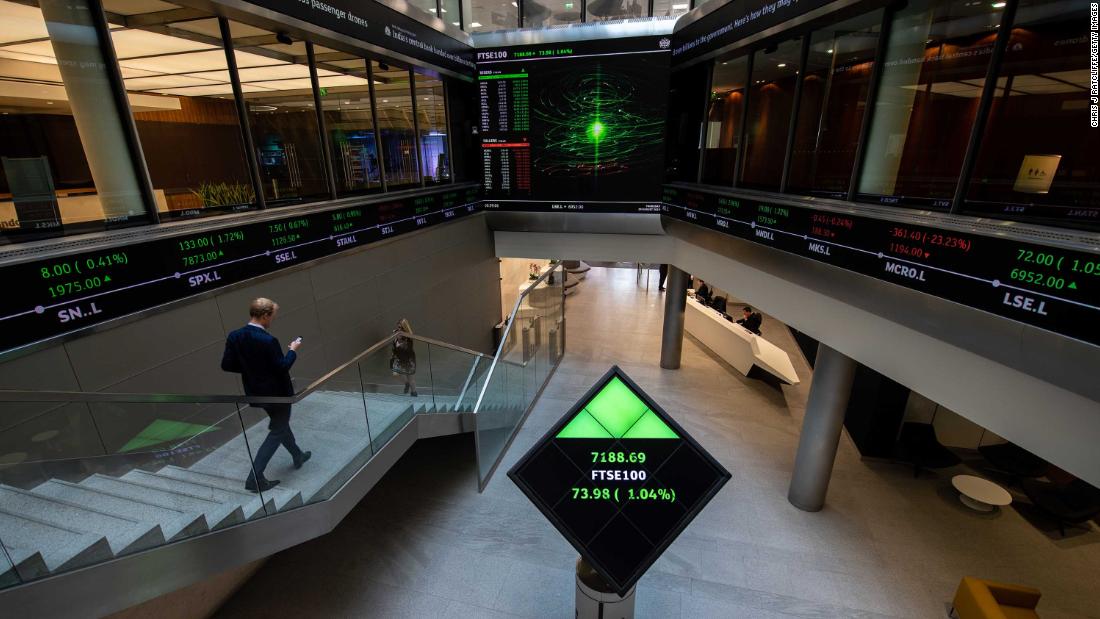
Hong Kong makes $37 billion bid for the London Stock Exchange - CNN

Hong Kong Exchanges and Clearing (HKXCF) (HKEX) said Wednesday it had made a proposal to the board of the LSE (LNSTY) to "combine the two companies" in a cash and share deal worth £29.6 billion, or £31.6 billion ($39 billion) including debt.
The deal would "redefine global capital markets for decades to come," HKEX CEO Charles Li said in a statement.
It would reinforce Hong Kong's position as the key connection between mainland China, Asia and the rest of the world, HKEX said.
The announcement comes hot on the heels of the LSE's £22 billion ($27 billion) deal to acquire financial data company Refinitiv. That deal is aimed at transforming the LSE into a global markets and information juggernaut to rival Michael Bloomberg's financial data empire.
Shares in the LSE spiked as much as 11% on the news of Hong Kong's offer, before trimming those gains slightly.
In a statement, the LSE described the offer as "unsolicited, preliminary and highly conditional."
"The board ... will consider this proposal and will make a further announcement in due course," it said, adding that it remained committed to its proposed acquisition of Refinitiv and expected to write to shareholders seeking their approval for that deal in November.
Hong Kong's offer comes at a sensitive time. Brexit uncertainty is casting a shadow over London's role as a global financial center. At the same time, Hong Kong — Asia's premier financial hub — has been rocked by months of pro-democracy protests.
HKEX said it would seek a secondary listing of its shares on the LSE after the transaction was completed to reflect its commitment to the United Kingdom.

Let's block ads! (Why?)


https://www.cnn.com/2019/09/11/investing/hong-kong-london-stock-exchange/index.html

2019-09-11 10:28:00Z
CAIiEEKA6qnFlwetAfWHk0SsCz4qGQgEKhAIACoHCAowocv1CjCSptoCMPrTpgU