TORONTO - An infant formula is being recalled across Canada over concerns of rancidity and an off-colour.
The Canadian Food Inspection Agency is warning that Abbott Laboratories brand Calcilo XD Powder, a low-calcium infant formula, is being recalled by the manufacturer.
According to the agency, there have been illnesses reported in connection with consumption of the recalled product.
The CFIA warns that the formula should not be consumed, as it may result in symptoms such as nausea, vomiting, or diarrhea. Instead, the formula should be returned to the place of purchase, or thrown out.
The recall includes the 375 g size of the product, with the Universal Product Code (UPC) 0 70074 53329 2, which was sold in Alberta, British Columbia, Manitoba, Newfoundland and Labrador, Nova Scotia, Ontario, Quebec and Saskatchewan.
The recall has prompted a food safety investigation, which the CFIA says may lead to the recall of further products.
from Business - Latest - Google News https://ift.tt/2ZWAFil
via IFTTT
September 14, 2019 at 07:32PM
The Associated Press Published Friday, September 13, 2019 6:33PM EDT Last Updated Friday, September 13, 2019 6:34PM EDT
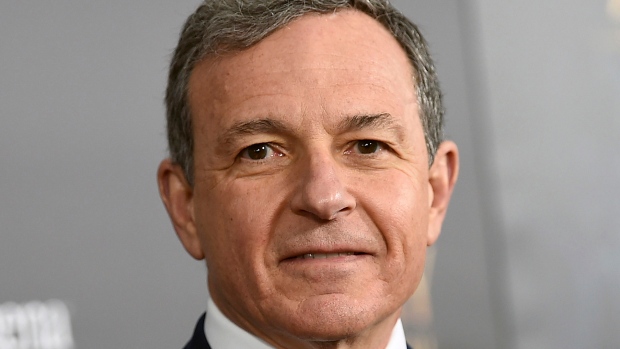
SAN FRANCISCO - Walt Disney Co. CEO Robert Iger has stepped down from Apple's board of directors as the two companies prepare to launch their own video streaming services to compete against market leader Netflix.
Apple disclosed Iger's departure in a regulatory filing Friday, but his resignation became effective Tuesday. That's the same day that Apple announced its long-awaited video streaming service will debut Nov. 1 and cost only $5 per month, less than half the price of Netflix's most popular plan.
Disney is gearing up to launch a video streaming service for $7 per month later in November.
The dueling services raised potential conflicts of interest that apparently prompted Iger to step down after spending nearly eight years on Apple's board.
Apple praised Iger an “exemplary” board member in a statement.
from Business - Latest - Google News https://ift.tt/2NWQuOS
via IFTTT
September 14, 2019 at 05:33AM
Disney CEO Bob Iger stepping down from the Apple board is a big deal not just because it shows the degree to which Apple is getting into Disney’s business of original content, (making Iger too conflicted to be on an incipient rival’s board), but also because it signals how the content and distribution facets of the media business are converging.
The media biz has always been about frenemies and evolving alliances which makes for tricky navigation even in quiescent times. But the current environment has been particularly marked by turmoil and the appearance of rocky reefs and shifting shoals. Never mind Disney (DIS), just ask the folks at AT&T (T). Even Jack Sparrow would find these waters challenging.
In the case of Disney, the trouble here comes from Apple (AAPL) of course, while with AT&T, a Wall Street firebrand and an old-fashioned carriage skirmish are to blame.
Let’s start with Disney though, and their slow-burn, fall-out with bestie, Apple.
I was noodling on that relationship as my Apple Watch kept defaulting to a Toy Story motif. Annoying but sensical since Toy Story is a Pixar property (a unit of Disney), and Disney and Apple have been practically related since Steve Jobs sold Pixar to Disney for $7.4 billion in 2006. The all-stock deal made Jobs Disney’s largest shareholder and the black-turtlenecked-one took a seat on Disney’s board.
And thus began a cozy relationship between the two companies that extended up to and beyond Steve Jobs’ death in October of 2011 and Iger joining Apple’s board one month later. How cozy? Disney was the first studio to sell TV shows and movies on the iTunes store for instance. Disney revamped its stores to make them look more like Apple’s. And Jobs, Iger and Tim Cook have lavished praise on each other.
Now not so much.
With the announcement of Apple TV+ this week, a streaming subscription service with Apple-produced original movies and TV shows, Apple has planted its flag squarely in Disney’s turf. Producing original programming is not the business of a hardware company, or a software company, or a platform. It’s the business of a media company, a la Disney. But actually it’s even more pointed than that. Debuting on Nov. 1 at $4.99 a month, (and, in an aggressive leveraging of its ecosystem, free for a year if you buy an Apple device) Apple TV+ comes out before and undercuts Disney’s streaming service offering which arrives on Nov. 12 at $6.99.
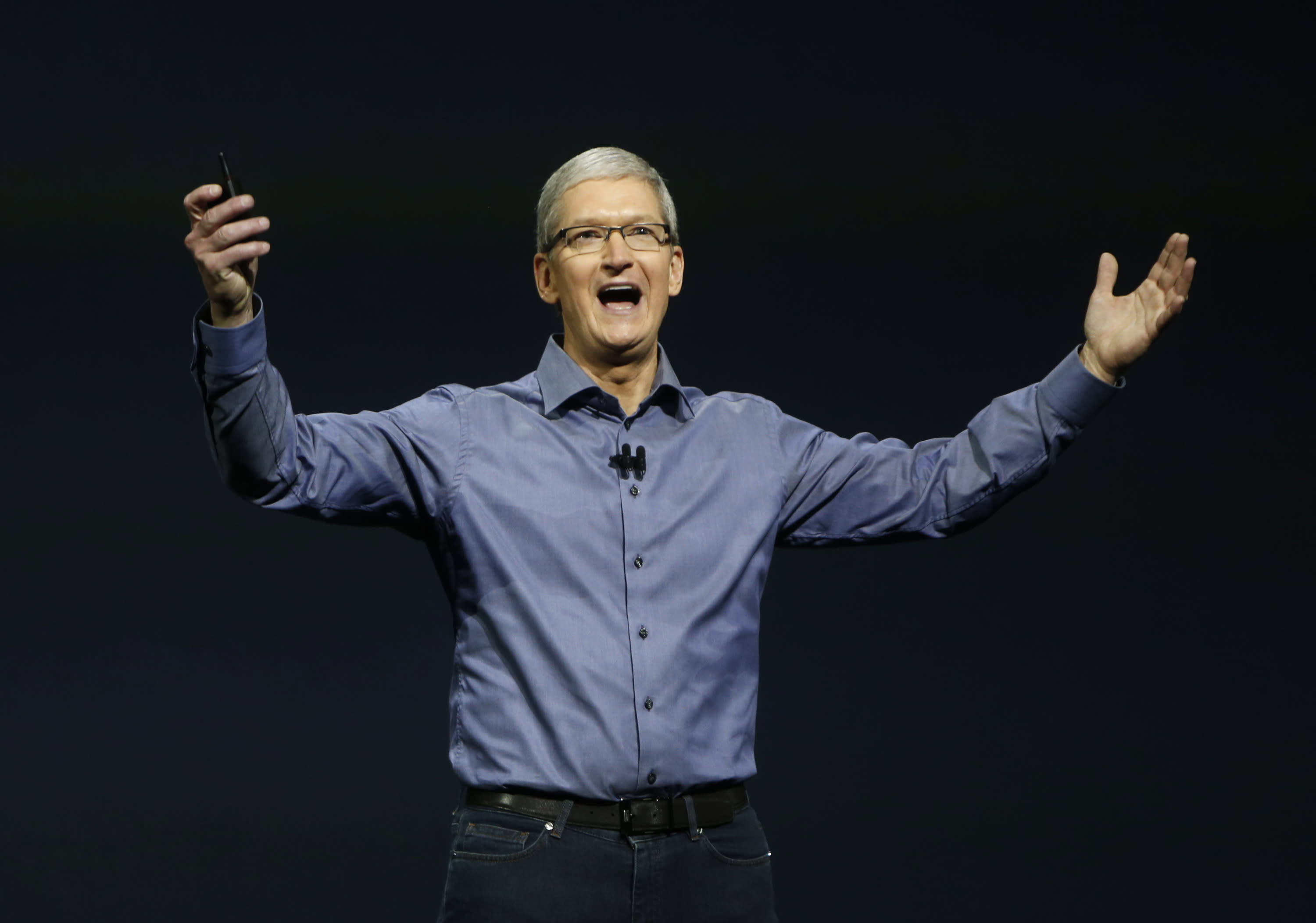
CUPERTINO, CA - OCTOBER 27: Apple CEO Tim Cook speaks on stage during a product launch event on October 27, 2016 in Cupertino, California. Apple Inc. unveiled the latest iterations of its MacBook Pro line of laptops and TV app. (Photo by Stephen Lam/Getty Images)
Apple could buy Disney in a heartbeat
Iger acknowledged this discomfort, but had characterized streaming conflicts mostly as a potential problem since it “has not been discussed all that much” by the Apple directors. But that changed. In this flywheel era, and as service becomes more and more important to Apple, one part of the business is increasingly connected to another, it became untenable for Iger to simply recuse himself from specific discussions.
(This is reminiscent of what occurred in 2009 when then Google (GOOG, GOOGL) chairman Eric Schmidt, resigned from the Apple board as the iPhone and Google’s Android became massive competitors. Jobs was explicit about Schmidt: “Unfortunately, as Google enters more of Apple’s core businesses, with Android...Eric’s effectiveness as an Apple Board member will be significantly diminished, since he will have to recuse himself from even larger portions of our meetings due to potential conflicts of interest. Therefore, we have mutually decided that now is the right time for Eric to resign his position on Apple’s Board.”)
Let’s not forget—and not to suggest anything here—but with a trillion dollar market cap, Apple could buy Disney, (worth only $247 billion) in a heartbeat. “We think a big acquisition is on the horizon,” Wedbush analyst Dan Ives says about Apple. A Disney deal would be a big lift. More likely is the winding down of what had been an unusually close, business buddy act.
Not that Apple and Disney will completely disconnect. In the media world, it’s bad business not to do business with everyone.
Speaking of connected, let’s turn to AT&T’s conundrum.
To borrow from that 1990s (Verizon predecessor) NYNEX commercial, and per usual on Planet TMT (telco, media, tech if you must know), ‘we’re all connected.” But if we’re referring to vintage slogans, maybe ‘reach out and touch someone’—that kinda creepy AT&T jingle from the 1980s—would be more apt.
After all, it’s T not VZ that’s being poked sharply in the ribs, in this case via a 23-page missive from the Argentine Agitator itself, Elliott Management, a most-feared activist hedge fund run by billionaire Paul Singer, who’s enamored of conservative politics, LGBT rights and business battles to the death, particularly in the case of the aforementioned South American country which was forced into submission after a decade long fight.
Even before this, it hasn’t been a happy time for AT&T CEO Randall Stephenson, who after acquiring DirecTV and Time Warner for a combined $176 billion and leveraging his balance sheet to the point where it now has the dubious distinction of being the nation’s most levered company outside of the banking sector, has, not-so-shockingly, watched his stock lag not only arch rival (and Yahoo parent company) Verizon (VZ), but also the market writ large by more than a hundred percentage points over the past decade. (Stephenson became CEO in 2007.) Which is why of course Elliott came knocking.
Graphic by David Foster
Taking the ‘fr’ out of frenemy
To make matters even more high-profile, the Tweeter-in-chief immediately blasted out his support of Elliott’s campaign (remember POTUS hates AT&T property CNN and tried to block the TWX/T merger), though the president showed restraint by not suggesting that Stephenson should be replaced, by say, John Bolton.
But what might sting Stephenson more than Trump’s tweet, is this little nugget on page five of Elliot’s letter. To wit: “Jeff Bewkes, the CEO who sold Time Warner to AT&T, recently referred to the vertical integration of content and distribution as a “fairly suspect premise.” In other words, Bewkes offloaded his company to Stephenson based on a premise, he is now calling ‘fairly suspect.’
Ouch. That’s taking the ‘fr’ out of frenemy.
The end game in this little drama? Elliott says that if AT&T moves off the dime it “can achieve $60+ per share of value by the end of 2021.” How? It’s pretty clear to me that Elliott wants T to shed itself of DirecTV and Warner, which has jump-started another round of the endless media parlor guessing game. Who buys Warner (which owns the movie studio, HBO and the Turner networks including CNN, TNT, TBS the Cartoon Network.) Netflix? Apple? Softbank (SFTBY)? And then which direction does Direct go? T-Mobile (TMUS)/Sprint (S)?
All this means no rest for the weary, or should I say the investment bankers, who must be licking their chops, particularly the boys and girls over at Morgan Stanley (MS), who made honk-you money first by building TimeWarner into the biggest media company on the planet, then taking it all apart, then selling it to AT&T, and now perhaps (please, please!) selling it off again.
Watch this space as Elliott ramps up the pressure. And bet that this one won’t take 10 years.
"Star Wars" film franchise creator George Lucas, left, shakes hands with Walt Disney Co. Chairman and CEO Bob Iger during a dedication ceremony for the new Star Wars: Galaxy's Edge attraction at Disneyland Park, Wednesday, May 29, 2019, in Anaheim, Calif. (Photo by Chris Pizzello/Invision/AP)
Disney is playing offense
And to fully circle the square, and somewhat lost with all the other sturm and drang, Disney is playing offense, (not defense as in the Apple situation) and warned AT&T and DirecTV subscribers—on Monday Night Football of all places—that they may lose access to Disney’s networks including ESPN, ABC and the Disney Channel in a good old fashioned carriage dispute. Not much to know here other than it’s all about the money. But Disney going public like that apparently hurt AT&T’s feelings: "We’re disappointed to see The Walt Disney Co. put their viewers into the middle of negotiations.”
So to sum up: Apple’s rattling Disney’s cage, while Disney is banging on AT&T, which is taking it on the chin from Singer, who’s being cheered on by Trump. Imagine being AT&T and having Singer, Trump and Iger come after you all in the same week.
The damage was minimal though. Netflix stock was up (on a bullish note from Piper Jaffray), so too was AT&T, which makes sense with Elliot pushing and pushing. As for Disney which traded down, betting against Iger has never been a winning strategy.
Longer term, Disney and Apple will go their separate ways. Both of their streaming services may click, (I would bet on Disney), but the market won’t likely support all the offerings from Netflix, Apple, Disney, Hulu, Comcast (CMCSA), Warner, etc. At some point peak content really is a thing. Look for consolidation or shutdowns. As for AT&T, at some point it will likely be broken up.
Bottom line, despite the treacherous market, these are pretty good businesses—AT&T’s debt notwithstanding. I wouldn’t worry about sinking ships.
Andy Serwer is editor-in-chief of Yahoo Finance. Follow him on Twitter: @serwer.
This article was featured in a special Saturday edition of the Morning Brief on September 14, 2019. Get the Morning Brief sent directly to your inbox every Monday to Friday by 6:30 a.m. ET. Subscribe
TORONTO - Canada's main stock index hit a new record high, fuelled by gains in the financial sector and fresh signs of easing trade tensions between the U.S. and China, but U.S. major stock indexes ended the day mixed.
The TSX surged for the second day in a row as China announced that it would lift punitive tariffs imposed on U.S. soybeans, pork and some other farm goods, the latest olive branch extended between the two major economic powers.
Much talk about recession fears in recent weeks has now given way to renewed optimism about the U.S.-China trade relationship, and room still remains for stocks to go even higher, said Allan Small, senior investment adviser at HollisWealth.
“As long as the trade talks progress, we can go higher.... A lot of people thought we were in the ninth inning and the game is almost over,” he said. “I don't think so. I think we can grind higher for the foreseeable future, based on favourable trade conditions with China.”
The S&P/TSX composite index closed up 39.14 points at 16,682.42, after trading as high as 16,756.11 earlier in the morning. That surpassed the intraday record of 16,696.40 and the previous best-ever close of 16,669.40.
The announcement by a Chinese state news agency that it “supports domestic companies in purchasing a certain amount of U.S. farm produce” comes after President Donald Trump decided Wednesday to postpone a tariff hike on Chinese imports from Oct. 1 to Oct. 15.
U.S. markets, however, were a mixed bag amid a slide in technology stocks.
In New York, the Dow Jones industrial average closed up 37.07 points at 27,219.52, helped by industrial stocks such as Boeing.
The S&P 500 index closed down 2.18 points at 3,007.39, while the Nasdaq composite closed down 17.75 points at 8,176.71.
Shares of Apple Inc. slipped by 1.94 per cent to $218.75 on the Nasdaq as the iPhone maker and other large technology companies were asked Friday for documents as part of a Congressional antitrust investigation.
Broadcom Inc.'s shares were also under pressure after the chipmaker signalled it expected weak demand ahead.
While U.S.-China sentiment is improving, the unclear outlook has weighed on the semiconductor industry.
“Their outlook for the future still is uncertain, because they do a lot of business in China... And that took down a lot of the semiconductor (stocks),” Small said.
Meanwhile, the Canadian dollar traded for 75.43 cents US, down compared with an average of 75.73 cents US on Thursday.
The October crude contract was down 24 cents at US$54.85 per barrel and the October natural gas contract was up four cents at US$2.61 per mmBTU.
The December gold contract was down US$7.90 at US$1,499.50 an ounce and the December copper contract was up 5.90 cents at US$2.70 a pound.
The TSX's fresh high was led by financial sector, which rose 0.78 per cent as mortgage lender Home Capital Group Inc. rose 1.73 per cent amid talk on the campaign trail of an expansion to the first-time homebuyers program.
Overall, markets were a “mixed bag” as technology headwinds offset solid gains in the financial sector and industrial stocks, said Small.
Still, there is room for the TSX to reach beyond the 17,000 mark for the first time, depending on how U.S.-China trade talks progress.
“The talk changes very quickly, and that just goes to show you how much the world, and investors, are paying attention to these trade negotiations.”
from Business - Latest - Google News https://ift.tt/2I5kRPa
via IFTTT
September 14, 2019 at 03:35AM
Household income grew slightly faster than debt in the second quarter as the amount Canadians owe relative to their income edged down for the third quarter in a row.
Statistics Canada said Friday that credit market debt as a proportion of household disposable income edged down to 177.1 per cent on a seasonally adjusted basis, compared with about 177.5 per cent in the first quarter.
In other words, Canadians owed roughly $1.77 in credit market debt, which includes consumer credit, mortgages and non-mortgage loans, for every dollar of household disposable income.
Story continues below advertisement
The Bank of Canada has repeatedly pointed to household debt as a key area of concern for the Canadian economy.
“Policy-makers no doubt will find something to like in these numbers. Yet, we’re still a long distance from writing off household debt from the list of top vulnerabilities for Canada’s economy,” said Robert Hogue, a senior economist at Royal Bank.
On a seasonally adjusted basis, total credit market borrowing increased to $23.5-billion, including $14.8 billion in mortgage borrowing in the quarter. That compared with a total of $18.9-billion in the first three months of the year when mortgage borrowing accounted for $13.1-billion.
The household debt service ratio, measured as total obligated payments of principal and interest on credit market debt as a proportion of household disposable income, edged up to a record 14.93 per cent of household disposable income in the second quarter compared with 14.87 per cent in the first quarter.
TD Bank senior economist Brian DePratto said the recent strength in the real estate market was reflected in the data, noting the growth in mortgage debt.
“While falling borrowing costs likely helped demand for housing, they haven’t translated fully into servicing costs, which rose just a bit higher in the second quarter to break through the record last set in late 2007,” Mr. DePratto said.
“However, this uptrend is unlikely to persist much longer given five year bond yields and mortgage rates that are back at or below five-year-ago levels.”
Story continues below advertisement
Story continues below advertisement
Total credit market debt amounted to $2.25-trillion in the second quarter, including nearly $1.47-trillion in mortgage debt and $782.9-billion in consumer credit and non-mortgage loans.
from Business - Latest - Google News https://ift.tt/30iOOl8
via IFTTT
September 13, 2019 at 08:32PM
The TMX Group logo, home of the TSX, is shown in Toronto.
Canada's main stock index hit a record high Thursday thanks to broad-based gains including the heavyweight financial sector.
The S&P/TSX composite index was up 64.23 points at 16,675.37 in early afternoon trading on the Toronto Stock Exchange. The index hit an intraday mark of 16,676.37 that beat the all-time high set in April.
In New York, the Dow Jones industrial average was up 125.60 points at 27,262.64. The S&P 500 index was up 15.37 points at 3,016.30, while the Nasdaq composite was up 46.93 points at 8,216.61.
Stock markets rose after the United States delayed increasing tariffs on US$250 billion worth of Chinese imports by two weeks as "a gesture of good will."
In Beijing, China's Commerce Ministry said Thursday that Chinese importers are asking U.S. suppliers for prices of soybeans, pork and other farm goods. It's a sign they might step up purchases of American agricultural products, a possible goodwill gesture ahead of talks next month aimed at ending the tariff war.
The European Central Bank also launched a stimulus drive to help the euro zone economy ahead of the U.S. Federal Reserve's meeting next week when it is expected to lower interest rates.
In a wide-ranging package of measures that will ensure outgoing president Mario Draghi leaves his mark on ECB policies long after he departs next month, the bank cut one key interest rate further below zero. It trimmed the rate on deposits it takes from banks to minus 0.5 per cent from minus 0.4 per cent, a penalty that pushes banks to lend their excess cash.
The ECB, which sets policy for the 19 countries that use the shared euro currency, also said it would restart its bond-buying stimulus program, which pumps newly created money into the financial system to lower borrowing costs and help the economy. It will buy 20 billion euros (C$29.2 billion) a month in government and corporate bonds for as long as needed.
The Canadian dollar traded for 75.79 cents US compared with an average of 75.87 cents US on Wednesday.
The October crude contract was down 62 cents at US$55.13 per barrel and the October natural gas contract was up 1.1 cent at US$2.56 per mmBTU.
The December gold contract was up US$4.80 at US$1,508.00 an ounce and the December copper contract was up 3.25 cents at US$2.65 a pound.
from Business - Latest - Google News https://ift.tt/2I7nJLE
via IFTTT
September 13, 2019 at 01:44AM


/arc-anglerfish-tgam-prod-tgam.s3.amazonaws.com/public/CA2QGRS3KVFRDNN7GD24VFF45Y.jpg)
