Minggu, 15 September 2019

Vapers seek relief from nicotine addiction in — wait for it — cigarettes - NBC News

Lucas McClain started smoking cigarettes in high school but switched to vaping after he heard e-cigarettes were a safer alternative.

His vape of choice became the Juul, the king of electronic cigarettes — which comes with a king-size nicotine hit.

Now 21, McClain wants to quit so badly that he’s turning back to the problem he fled in the first place: good old-fashioned cigarettes.

“Juul made my nicotine addiction a lot worse,” the Arlington, Va., resident said. “When I didn’t have it for more than two hours, I’d get very anxious.”

Even though McClain knows the dangers of cigarettes — lung cancer runs in his family — he thinks it might be easier to kick cigarettes than his Juul. Plus, his mom keeps warning him about the mysterious vaping-related illnesses that have sickened hundreds across the country.

So last month, McClain bought his first pack of cigarettes in years. Then he tweeted about it.

“Bought a juul to quit smoking cigarettes,” he wrote, “now I’m smoking cigarettes to quit the juul.” He ended with this hashtag: #circleoflife.

One Juul pod, which provides about 200 puffs, contains as much nicotine as a pack of cigarettes. On stressful days, McClain could finish a pod in three hours — and as he and others figure out just how potent these and other e-cigarettes are, many want out.

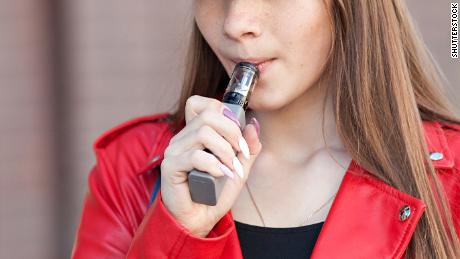
Some are turning back to combustible cigarettes — or taking them up for the first time — in a dangerous bid to lower their nicotine intake and ultimately get off their vapes.

“Isn’t it ironic that to quit juul I bought cigarettes,” says one Twitter user. Another points out that it’s “strange” that she used the device to quit smoking cigarettes but is now “far more addicted to my Juul than I ever was to cigs.”

“It sucks,” she said.

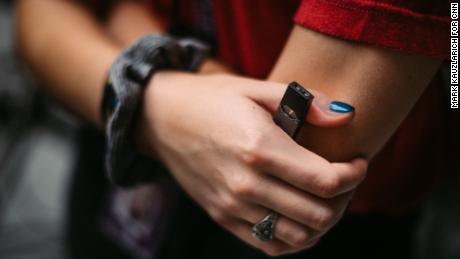
Lucas McClain holds a pack of cigarettes and his Juul at his home in Arlington, Va. McClain is back to smoking cigarettes in the hope of quitting the Juul.Lynne Shallcross/KHN

It isn’t a complete surprise that some young people are “going back to the product they were trying to quit in the first place,” said Pamela Ling, a professor of medicine at the University of California-San Francisco who studies tobacco and its marketing.

But it is worrisome because cigarettes contain toxins and chemicals that are dangerous to their health, she said.

Vaping may not be safe either.

The Centers for Disease Control and Prevention is investigating at least 380 cases of lung disease in 36 states — mostly among young people — possibly linked to vaping nicotine and marijuana. Six people have died. California is investigating at least 60 cases.

The back-to-smoke trend flies in the face of the e-cig industry’s most insistent PR pitch: Vaping helps people quit smoking cigarettes. In fact, San Francisco-based Juul Labs, which commands 75 percent of the e-cig market, says in its mission statement that the company aims to eliminate cigarettes by giving adult smokers “the tools to reduce or eliminate their consumption entirely.”

In an emailed statement, Juul didn’t directly address the decision by some of its users to revert to cigarettes, but again clung to the refrain that its products are “designed to help adult smokers switch from combustible cigarettes to an alternative nicotine delivery system.”

Ted Kwong, a Juul spokesman, said Juul is not designed to get people off nicotine or to treat nicotine dependence.

For those who criticize Juul’s high nicotine content, Kwong noted that pods come in two strengths — 5 percent and 3 percent nicotine concentrations — letting users customize their “switching journey.”

Monday, the Food and Drug Administration reprimanded Juul for promoting its products as being safer than cigarettes without FDA permission. It gave Juul 15 business days to respond.

Vaping has become big business, with the global market projected to hit $48 billion by 2023.

Smoke or vapor, cigarette makers win either way. Altria, which sells Marlboro and other tobacco brands in the U.S., invested nearly $13 billion in Juul for a 35 percent stake last year. Altria has proposed reuniting with Philip Morris International, a unit it sold off in 2008.

One Juul pod provides about 200 puffs and can contain as much nicotine as a pack of cigarettes. As young adults realize how potent the Juul and other e-cigarettes can be, some are turning back to combustible cigarettes.Ana B. Ibarra/KHN

Even though the industry says vaping is intended for adults, Juul and other vaping pens took off among young people about two years ago when teens began taking the devices to school and teachers mistook them for flash drives. Students took hits in campus bathrooms and halls, and even in class when teachers weren’t looking.

The e-liquids inhaled from the devices contain nicotine and come in thousands of fruity flavors that appeal to kids.

Michigan last week became the first state to ban sales of flavored e-cigarettes in an attempt to end teen vaping. In June, the San Francisco Board of Supervisors banned the sale of all e-cigarettes, beginning in early 2020. Juul is fighting back with a November ballot measure, Proposition C, backed by millions of its own dollars.

Many former smokers attest that vaping was the only thing that helped them quit cigarettes, but the science is mixed. Some studies have shown that many vapers continue to smoke cigarettes.

The FDA has approved seven treatments for smoking cessation, including patches, gums and lozenges. Vapes are not among them, said Dr. Elisa Tong, an associate professor of medicine at the University of California-Davis.

Tong said vapers may be using more nicotine than they realize. She understands why some choose to go back to cigarettes, but she doesn’t recommend it.

“What they’re doing is trying to taper down super high levels of nicotine,” she said. “Unfortunately, manufacturers don’t have a manual on how to quit their devices.”

Dr. Amanda Graham, senior vice president of innovations at the Truth Initiative, an anti-tobacco advocacy group, said she is seeing “desperation and misguided approaches” from teens and young adults trying to free themselves from nicotine.

“Young people are fumbling in the dark with what seems logical,” Graham said. “But there is no safe level of cigarette smoking.”

Early this year, Graham’s group launched a digital program to help teens and young adults quit their vaping devices. Since then, 41,000 people between 13 and 24 have enrolled in “This is Quitting,” which sends them tips and support via text messages.

Chris Gatus of Whittier, Calif., switched from traditional cigarettes to Juul because he thought the device would help him quit smoking, he said.

But because his Juul is always glued to his palm, he found himself using it everywhere and all the time.

“I’ve sort of forgotten what it’s like not to be on nicotine,” said Gatus, 21.

He switched back to cigarettes this year after noticing his growing addiction, but that only resulted in his using both. Now he’s trying different vaping pens, looking for something less harsh than the Juul or cigarettes, he said.

Last week, Ryan Hasson of New York City threw out his Juul after experiencing strong chest pains and labored breathing when exercising — and after hearing about the growing number of vape-related illnesses. He had never felt such strong symptoms when he smoked old-fashioned cigarettes, he said.

“I don’t plan on ever smoking again, but if I had to choose, I would much rather buy cigarettes over a Juul,” said Hasson, 25.

The same is true of his friends, he said.

“I think a lot of people are quitting completely or going back to cigarettes,” he said. “They’re waking up to the reality that maybe this isn’t as safe as we once thought.”

This KHN story first published on California Healthline, a service of the California Health Care Foundation.

Follow NBC HEALTH on Twitter & Facebook.

Let's block ads! (Why?)


https://www.nbcnews.com/health/vaping/vapers-seek-relief-nicotine-addiction-wait-it-cigarettes-n1054131

2019-09-15 09:00:00Z
52780383182811

'I was non-stop Juuling up a storm': 10 college students on their vaping addictions - CNN

But what do actual vapers think?
CNN went to New York City's Washington Square Park to speak with young people who had or currently have a vaping habit in order to understand their experiences, thoughts and reactions to the recent health warnings.
The conversations -- all with college students between 18 and 21 -- give a look into how the nicotine-addicted are dealing with two intertwined public health crises: an epidemic of youth vaping and the outbreak of serious lung illnesses.
Here are their stories.

'I was non-stop Juuling up a storm'

Sydney Kinsey said she quit vaping a week ago because of health concerns.
Sydney Kinsey, a 21-year-old NYU student, started smoking cigarettes while abroad in London, and her habit intensified on a semester abroad in Buenos Aires, Argentina. So to quench her nicotine addiction, she got a Juul in June. A Juul is an e-cigarette device, slightly smaller than a pen, that uses pods filled with nicotine in liquid form.
She initially liked that it was convenient and kept her from smelling like cigarette smoke. But she started feeling worse about her use recently.
A sixth person died from vaping-related lung disease. Here's what you need to know
"I could tell that it was making me feel worse body-wise, head-wise. I was getting a lot more anxious, but then also my joints and my lungs hurt more," she said. "I was using it way more than I ever used (cigarettes). Like instead of going out and smoking like a cigarette a day, I was like non-stop Juuling up a storm, which is not fun."
Juuling was expensive, she said, and she started seeing news about deaths from vape-related illness and reading about Juul's questionable marketing practices.
So she quit about a week ago, tossing her Juul in a city trash can so she wouldn't change her mind. She said she misses it.
"It's like my phone. It's the same addictive quality as my phone, as like I just expect to have it in my pocket, and I miss having it in a pocket to do something with," she said.

'You can feel that it's hurting your lungs'

Laura Kesnig knew the THC cartridges she vaped were bad for her.
Investigators aren't exactly sure what's causing these vaping-related lung illnesses. But the US Centers for Disease Control and Prevention has said all the cases reported using e-cigarettes and some have reported a history of vaping THC, the psychoactive compound in marijuana.
That's not much of a surprise to Laura Kesnig, 21.
Seeking relief from nicotine addiction, some e-cigarette users turn to smoking
She began vaping black market THC cartridges while attending The New School in New York, and she knew those weren't good for her.
"You're buying them illegally, so who knows what's being put in them," she said. "It's funny because when you hit it, you can feel that it's hurting your lungs. It doesn't feel like hitting a joint or hitting anything. It hurts you.
"But we just told ourselves for so long that it's fine, it'll be fine, it's weed, it can't hurt you. And then this stuff comes out and it's like, we knew this all along."
Kesnig said she started smoking marijuana at about 15 but moved to vaping THC because of its ease.
"Those were just so easy," she said. "You don't have to do anything. You just buy it and then you just hit it, and it's so easy."
The ease of vaping, compared to lighting up a joint, made it more addicting for her, and she could feel her concentration going down from using it so often. She finished her last THC cartridge last week and has gone back to smoking "good, old, regular weed," she said.
"(I feel) actually better, honestly better," she said.

'I know it's bad'

Brooklyn Johnson said she has thought to herself that she should probably quit using her Juul.
Brooklyn Johnson's whole family smokes cigarettes, but tobacco has never had much appeal for her.
Instead, the 20-year-old NYU student bought a Juul this summer on a whim and now vapes about a pod a week.
"I just had the idea in the back of my head for like two years, and then this summer I was like, whatever man, I'm just gonna do it," she said. "It wasn't really like a big deal, I guess. I was just like, I know it's bad, I probably shouldn't, and then I just gave in."
She was nonchalant about vaping, saying it was just something to do.
"(It's) something to have in my hand and to be doing. There's a head rush but it's more of like an activity than like a way it makes me feel," she said. "If I'm watching TV, I'll be Juuling."
After reading news about the vaping-related lung illnesses, she said she has thought to herself that she should probably quit.
"I still haven't. I don't know," she said. "This sounds morbid, but I think there are more likely ways for me to die than by Juuling."

'I got pretty into it'

Ethan Uno said a friend's brother was hospitalized with a vaping-related lung issue.
Juul Labs says its product "has always only been intended to be a viable alternative for the one billion current adult smokers in the world."
Still, Ethan Uno first tried a friend's Juul at a party when he was 17, and he got hooked after just one night.
"By the end of the night, I loved it, how it felt, the nicotine high," he said. "I got one the next day and I got pretty into it."
Uno, a 20-year-old from San Diego, California, knew it wasn't good for him. But it was so accessible.
"You could literally do it at any point in the day, like while you're doing homework. So it was so easy in that sense," he said.
He vaped consistently for about six months, but then only sporadically after that. He hasn't touched nicotine in over a year, he said, a decision he made partly out of concern that it would hurt his health.
"I kind of figured that would come up, just the fact that it's un-experimented. And that's kind of what subconsciously pushed me away from it," he said.
The medical cases of vaping-related lung illness have been personal for him. He said a friend's little brother was hospitalized with a lung issue that was most likely caused by vaping.

'Like eating a cookie'

Olive said her mom, an emergency care doctor, didn't know about her vaping habit.
With a purple NYU lanyard around her neck -- the telltale sign of a college freshman in her first weeks of class -- Olive was walking around the university with a Juul in her grip.
"I just like it," the 18-year-old said of vaping. "It's the same kind of like where you like eating a cookie. I just enjoy it."
She said she picked up the habit from friends back in Washington state and has been vaping for a couple months now. But she's been reading the news about its health risks, so she said she is planning to quit "soon." It's a loose plan, she admitted.
"It just freaks me out that we don't know the long-term effects of vaping like we do with cigarettes, but I don't know. It's just kind of scary," she said.
Olive declined to give her last name, saying that her mom, an emergency care doctor, would not be happy with her. That was another reason she wanted to quit.
"So I also feel really guilty. I feel bad," she said. "If my mom knew, she'd be pissed."

'It seems like fear-mongering'

Stephen Cambor took to vaping for its nicotine head buzz.
Stephen Cambor, 20, first started vaping when he was about 14, in eighth or ninth grade, and he remembered his first time well because it "put me on my ass," he said.
"I was like, 'Oh I can get super f***** up for like 10 seconds and then go back to class," he said. "Like a really strong head buzz to the point where, like, all your blood feels like it's buzzing."
More deaths reported among rising number of lung disease cases that could be due to vaping
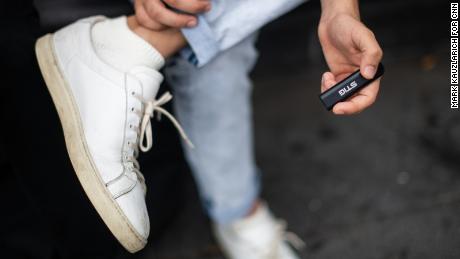
Now a 20-year-old NYU student, he uses a little less than one Stig, a disposable e-cigarette, per day.
He said he's "thinking about" stopping because he's noticed that vaping makes it really hard to get over illnesses, like a cold. But he's not convinced that regular e-cigarette use is causing this outbreak of serious lung illnesses.
"That's why I'm 'thinking about' quitting instead of saying I'm quitting, because a lot of it seems like fear-mongering," he said. "Simply because none of the news articles are really getting any specifics on how these kids died, and what was different about their cases from the millions of other people who knew what they were doing."

'I'm not gonna be buying cigarettes for like $18'

Andrea DeLeon started smoking cigarettes in Puerto Rico and then moved to e-cigarettes.
Andrea DeLeon, 20, picked up her vaping habit on the streets of New York City.
"I literally found a Juul on the street," she said. "I picked it up and took it home, cleaned the tip, and I was like, alright this is gonna be cheaper because I got this for free and I'm not gonna be buying cigarettes for like $18."
She had been a casual cigarette smoker before coming to New York. Originally from San Juan, Puerto Rico, DeLeon grew up in a place where cigarettes were everywhere, and she started smoking them in social situations when she was 18.
Untangling the myths and mysteries of the vaping phenomenon
"Like any bar you go to, people are going to be smoking outside," she said. "It's just part of the culture."
The habit became more frequent when she came to college in New York, in a high-stress environment and surrounded by people who smoke. After finding the Juul on the ground, she vaped for about a year, smoking about a pod every few days, she said.
But she says she started reading concerning stories about Juul's health effects, and she became addicted to the nicotine. She knew she needed to quit, so she gave the Juul to her friend.
Instead, she began rolling her own tobacco cigarettes to quench her nicotine dependence, and she recently quit that, too. She's now on her third week without any nicotine.
"It feels good to get to that point where I can say no to someone, and not just be like, 'All right, I'm just gonna smoke.' It's good," DeLeon said. "I don't need a cigarette to talk to my friend. I can just tell my friend let's go outside so I can hear you better."

'It's sort of short-sighted'

Zane Kerr said he cycles between periods of vaping and tobacco use.
Zane Kerr, 21, started smoking cigarettes in high school in Raleigh, North Carolina, but he got into vaping his sophomore year at NYU. It was convenient.
"When I was using the e-vape it was so much easier that I could bring it around with me," he said. "I would do it all the time. I would do it in bathrooms here, in between class, whatever, like all the time."
In general, he'll switch back and forth between vaping and smoking. But he hasn't used his vape since about June; he's been more interested in rolling his own cigarettes with loose tobacco.
"I still have a nicotine addiction, so I'm gonna get it one way or another. It's mostly what's economical for me," he said.
Kerr said he knows smoking has long-term effects -- his grandfather died young after years of smoking cigarettes.
"To just be honest with you, I don't know how much I really care about my health right now. It's sort of short-sighted, but it is what it is. I'm just young. I get to not care, which is nice."

'Gummy bear or something'

Kayla Nelson prefers to vape Juul's mint flavor.
Kayla Nelson now vapes the mint-flavored Juul, but she got started on a decidedly different taste.
"Like gummy bear or something," she said. "(It was) pretty good."
The 20-year-old from Tampa, Florida, smoked cigarettes in high school, but she knew that wasn't sustainable and she didn't like the smell or taste. So in college at NYU she got a Suorin vape, and she later got a Juul. She now vapes about one or two pods a week.
She said she "probably" wouldn't have started vaping if it wasn't for that gummy bear flavor, and said the Trump administration's move to ban flavored e-cigarettes makes sense.
"I wish they didn't, but I understand why they did, because underage kids shouldn't be smoking so early," she said.

'It sounds awful, telling myself all this'

"Sam," who declined to give his real name, sat in Washington Square Park with a friend and a "lush ice"-flavored e-cigarette.
"Sam," an NYU student who declined to give his real name, began smoking cigarettes when he was in the military in Singapore, and he started vaping to cut back on his cigarette use.
"(It's) pretty identical to me as cigarettes, except it doesn't come with the smell or the stigma," he said. "Now obviously that has changed to the point where there is now a stigma against it, too."
He said he is off cigarettes now. He knows vaping isn't ideal but he can't quite quit it; he tried to do so cold turkey last year, but the nicotine withdrawal gave him headaches and made him irritable.
"You definitely feel it in your throat. You feel the physiological craving of it, in my opinion," he said.
He now uses a "lush ice"-flavored Stig, a disposable e-cigarette. As he skillfully played with the Stig in his fingers, Sam listed off a series of reasons he continues to vape.
College is stressful. This is the lesser of two evils. He's at a transient time in his life. It's more affordable.
Then he stopped talking as he listened to his own words.
"It sounds awful, telling myself all this, right, like, actually vocalizing it," he said.

Let's block ads! (Why?)


https://www.cnn.com/2019/09/15/health/vaping-ecigarette-students-portraits/index.html

2019-09-15 08:23:00Z
52780383182811

Sabtu, 14 September 2019

A who's who of Ottawa turned out for ceremonial launch of LRT - Ottawa Citizen

Baby formula recalled across Canada, including N.S. - HalifaxToday.ca

The Canadian Food Inspection Agency says a brand of baby formula has been recalled due to rancid product.

The federal food safety watchdog says that the formula is Calcilo XD powder, made by Abbott Laboratories.

According to the Canadian Press, the formula was sold in Nova Scotia, Newfoundland and Labrador, Alberta, B.C., Manitoba, Ontario, Quebec and Saskatchewan.

The CFIA says in a release that there have been reported illnesses, but did not clarify how many.

The agency says the rancid formula also appears off-colour, and has an "unusual odor," and could cause illness including nausea, vomiting and diarrhea.

The CFIA is currently conducting a food safety investigation, and other products could be recalled in the coming days.

The 375g containers of formula have code 79696K80.

For more information, visit the CFIA website.

With files from the Canadian Press.


from Business - Latest - Google News https://ift.tt/2I9dXbX
via IFTTT
September 14, 2019 at 08:09PM

Goldman slashes Apple price target — and it's not the only one on Wall Street worried - Financial Post

Goldman Sachs is growing concerned about Apple Inc., and it is not alone.

While shares of the iPhone maker have been stronger of late, the advance comes in contrast to a darker view toward the stock from analysts. Goldman is merely the latest example of growing caution as it cut its price target to one of the lowest on the Street.

The consensus rating for Apple — a proxy for its ratio of buy, hold and sell ratings — stands at 3.76 out of 5. According to Bloomberg data, that matches the lowest since the first half of 2004.

Shares of Apple fell as much as 2.1 per cent on Friday, though the stock has risen more than 13 per cent off an August low and is less than 6 per cent below its record close. While it slipped back under the threshold with Friday’s decline, its valuation returned above US$1 trillion for this first in 2019 this week.

Goldman analyst Rod Hall cut his target to US$165 from US$187, warning of a “material negative impact” to the company’s earnings per share as a result of a plan to offer a trial period for its Apple TV+ service.

The new target is 26 per cent below Apple’s Thursday close, and while Hall has a neutral rating on the stock, there are only a couple of firms with a target below Goldman’s, according to data compiled by Bloomberg. The average target is about US$219, matching the current share price.

In addition to Goldman, recent cautious calls have included New Street Research cutting its own price target earlier this week — it warned of a “multi-year decline” for iPhone demand — and Rosenblatt downgrading shares in July, resulting in the highest number of sell ratings since at least 1997, according to historical data compiled by Bloomberg.

All five of the sell ratings on the stock have come in this year, and in January, the number of firms with buy ratings dropped below 50 per cent for the first time since 2004.

Bloomberg.com


from Business - Latest - Google News https://ift.tt/30h3p0q
via IFTTT
September 14, 2019 at 01:50AM

Infant formula recalled over rancidity after illnesses reported: CFIA - CTV News

TORONTO - An infant formula is being recalled across Canada over concerns of rancidity and an off-colour.

The Canadian Food Inspection Agency is warning that Abbott Laboratories brand Calcilo XD Powder, a low-calcium infant formula, is being recalled by the manufacturer.

According to the agency, there have been illnesses reported in connection with consumption of the recalled product.

The CFIA warns that the formula should not be consumed, as it may result in symptoms such as nausea, vomiting, or diarrhea. Instead, the formula should be returned to the place of purchase, or thrown out.

The recall includes the 375 g size of the product, with the Universal Product Code (UPC) 0 70074 53329 2, which was sold in Alberta, British Columbia, Manitoba, Newfoundland and Labrador, Nova Scotia, Ontario, Quebec and Saskatchewan.

The recall has prompted a food safety investigation, which the CFIA says may lead to the recall of further products.


from Business - Latest - Google News https://ift.tt/2ZWAFil
via IFTTT
September 14, 2019 at 07:32PM

European banks continue to rally after ECB cut - MarketWatch