Rabu, 09 Oktober 2019

Johnson & Johnson ordered to pay man $8 BILLION over drug causing him to grow breasts - RT

A Philadelphia jury on Tuesday said that Johnson & Johnson (J&J) must pay $8 billion in punitive damages to a man over his claims that a drug manufactured by the US firm caused him to grow breasts.

The verdict in favor of Nicholas Murray, 26, came first in one of thousands of Risperdal cases pending in Pennsylvania.

Murray, like other male plaintiffs in the mass tort litigation over Risperdal, alleges that he developed breasts after being prescribed the medicine and taking it from 2003 to 2008. A psychologist prescribed the drug after diagnosing him with autism spectrum disorder. In late 1993, the drug was approved by the Food and Drug Administration for treating schizophrenia and episodes of bipolar mania in adults.

Also on rt.com Johnson & Johnson gets $572mn slap on wrist for causing opioid crisis in Oklahoma

Four years ago, a jury awarded Murray $1.75 million after finding that J&J was negligent in failing to warn consumers of the risks. A state appeals court upheld the verdict last year, but reduced it to $680,000.

“This jury, as have other juries in other litigations, once again imposed punitive damages on a corporation that valued profits over safety and profits over patients,” Murray’s lawyers, Tom Kline and Jason Itkin, said. “Johnson & Johnson and [subsidiary] Janssen chose billions over children,” they said.

J&J said the award was “grossly disproportionate with the initial compensatory award in this case, and the company is confident it will be overturned.” It added that the jury in the case had not been allowed to hear evidence of Risperdal’s benefits.

Plaintiffs claim that Johnson & Johnson failed to warn of the risk of gynecomastia (the development of enlarged breasts in males) associated with Risperdal, which they say J&J marketed for unapproved use with children.

Also on rt.com Companies people love to hate: World’s most despised corporations

Plaintiffs in the mass tort litigation had been barred from seeking punitive damages since 2014, when a state court judge ruled that the law of New Jersey (which prohibits punitive damages and is J&J’s home state) should be applied globally to the cases.

In 2018, a Pennsylvania Superior Court ruling cleared the way for punitive damages awards, holding that the law of each plaintiff’s state should instead apply.

For more stories on economy & finance visit RT's business section

Let's block ads! (Why?)


https://www.rt.com/business/470502-billions-payment-male-breast-growth/

2019-10-09 08:24:00Z
52780404671673

Johnson & Johnson ordered to pay man $8bn over breast growth - BBC News

US drug firm Johnson & Johnson has been told to pay $8bn (£6.6bn) in punitive damages to a man over claims he was not warned that an antipsychotic drug could lead to breast growth.

A Philadelphia jury made the award to Nicholas Murray, 26, whose case was one of thousands pending in the state.

His lawyers argued that J&J subsidiary Janssen put "profits over patients" in marketing the drug Risperdal.

J&J will appeal the ruling, which it said was "grossly disproportionate".

The US giant is also facing court challenges over vaginal mesh implants and baby powder allegedly tainted with asbestos. That's in addition to an ongoing legal battle over its role in the US opioid addiction crisis.

Earlier this year, the company was ordered to pay $572m for its part in fuelling Oklahoma's opioid addiction crisis. It recently agreed to a $20.4m settlement with two counties in the US state of Ohio over claims it fuelled the crisis there.

The company's mounting legal bills have caused concern among some investors, but its earnings have remained strong.

In Risperdal lawsuit said Mr Murray developed breasts after his doctors began prescribing him the drug in 2003. A psychologist prescribed the drug after diagnosing him with autism spectrum disorder.

Risperdal is approved for the treatment of schizophrenia and bipolar disorder, but doctors can legally prescribe medicine for any condition they see fit.

The company said it is confident the ruling will be overturned, and said the court prevented their legal team from presenting "key evidence" on the drug's labelling.

J&J is facing a series of complaints in state courts for failing to properly warn of Risperdal's side effects, including in Pennsylvania, California and Missouri.

A jury in 2015 awarded Mr Murray $1.75m after finding the company was negligent in failing to warn consumers of the risks.

A state appeals court upheld the verdict in last year, but reduced it to $680,000.

Let's block ads! (Why?)


https://www.bbc.com/news/business-49982237

2019-10-09 06:33:31Z
52780404671673

US futures point to slightly higher open - CNBC

U.S. stock index futures were slightly higher Wednesday morning.

At around 02:20 a.m. ET, Dow futures rose 43 points, indicating a positive open of more than 61 points. Futures on the S&P and Nasdaq were both marginally higher.

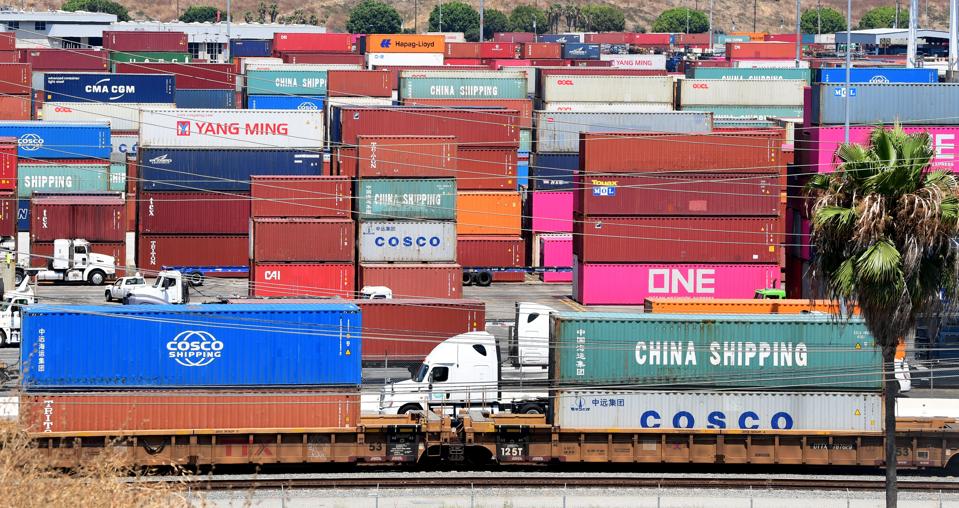
Market focus is largely attuned to global trade developments, with high-level negotiators from the U.S. and China poised to meet for a fresh round of talks in Washington, D.C., on Thursday.

The long-running dispute has slowly expanded beyond trade policy, exacerbating fears about further damage to a fragile global economy.

To be sure, U.S. visa restrictions on Chinese officials and the addition of more Chinese companies to a U.S. trade blacklist this week has dampened already slim hopes of a trade truce.

President Donald Trump has said tariffs on Chinese imports will increase on October 15 if no progress is made in bilateral trade negotiations.

The world's two largest economies have imposed tariffs on billions of dollars' worth of one another's goods since the start of 2018, battering financial markets and souring business and consumer sentiment.

On the data front, wholesale trade figures for August and Job Openings and Labor Turnover Survey (JOLTS) data for August will both be released at around 10:00 a.m. ET.

Let's block ads! (Why?)


https://www.cnbc.com/2019/10/09/stock-market-wall-street-looks-ahead-to-us-china-trade-talks.html

2019-10-09 06:27:43Z
52780404540953

Settlement allows QuadrigaCX founder's widow to keep $90K in cash, wedding ring, Jeep - CBC.ca

Jennifer Robertson, the widow of QuadrigaCX founder Gerald (Gerry) Cotten, will be allowed to keep more than $90,000 cash and a Jeep Cherokee in a settlement agreement with the company's bankruptcy trustee.

That's after surrendering assets of approximately $12 million her late husband drained from Quadriga's accounts.

The online Canadian cryptocurrency exchange collapsed in January after Cotten died suddenly from complications of Crohn's disease on his honeymoon trip to India.

A total of 76,319 unsecured creditors — virtually all of them QuadrigaCX clients — have come forward to claim they are owed $214.6 million.

Cotten died with sole knowledge of passwords used to encrypt "cold wallets" — offline storage devices — of various cryptocurrencies.

These properties that were owned by Jennifer Robertson are located on McQuillan Lane in Bedford, N.S. (Steve Lawrence/CBC)

A forensic investigation revealed those wallets were empty, and that Cotten used aliases to transfer clients' funds into his own accounts.

Robertson said she had no knowledge of Cotten's illicit activities.

The settlement details come from court documents posted on the website of Ernst & Young, the bankruptcy trustee for Quadriga. 

Robertson has agreed to surrender everything she inherited from Cotten's estate, plus money and assets he transferred to her while he was alive.

'The companies were controlled by Gerry'

"Gerry and I did not act as arm's-length parties with the companies while they were operating, and the companies were controlled by Gerry prior to his death," Robertson said in an affidavit attached to the agreement.

Robertson said all asset transfers from Quadriga to her or her companies happened in the five years before the company collapsed.

"I met Gerry in November 2014 and at that time I understood that Quadriga was a relatively small company and Gerry did not have a significant amount of assets at that time," she said.

By surrendering her assets and inheritance from Cotten, Robertson will lose control of $7.5 million of properties purchased in Nova Scotia since 2016.

Total value of assets, estate is $12M

A trustee's report submitted to the court on Monday estimates the total value of Robertson's assets plus Cotten's estate at $12 million.

According to the settlement agreement, Robertson will be allowed to keep: 

  • $90,000 cash, plus her $20,000 RRSP and up to $10,000 from a bank account.
  • A 2015 Jeep Cherokee with an estimated value of $19,000.
  • A wedding band, memory pendant and gold ring with a pink stone. The items have an estimated value of $8,700.
  • Furniture and other personal belongings in her home up to a value of $15,000.
  • Shares in Quadriga Fintech, unless she's ordered to surrender them in the future by the bankruptcy trustee.

In a personal statement released Monday by her lawyer, Robertson said she was shocked to discover her late husband's financial wrongdoing. 

"I was upset and disappointed with Gerry's activities as uncovered by the investigation when I first learned of them, and continue to be as we conclude this settlement," Robertson said.

MORE TOP STORIES


from Business - Latest - Google News https://ift.tt/2VoZePi
via IFTTT
October 09, 2019 at 05:00AM

Trade War Spins Out Of Control - Forbes

The US-China trade war is spinning out of control, spreading into new areas.

 At least that’s the impression one gets, following a couple of moves by Washington on Tuesday, upping the trade war game with Beijing. Like blacklisting several technology facial-recognition and artificial intelligence (AI) technology companies, including Hikvision, Megvii Technology, iFlytek Co and SenseTime. 

This means that these companies cannot buy US technology, and they cannot sell their products to US markets either. 

Then there’s U.S. State Department’s decision to impose visa restrictions on some Chinese officials for committing acts that Washington considers unacceptable. 

Ted Bauman, senior analyst and economist at Banyan Hill Publishing, sees Washington’s new moves as an effort to apply maximum pressure on Beijing, as trade talks are about to resume. 

“The latest blacklist announcement is consistent with the Trump administration's strategy of seeking new sources of leverage in the ongoing trade negotiation,” he says. “I don't think it's a coincidence that this announcement came hard on the heels of leaked reports that they are considering limiting U.S. investor capital flows to Chinese companies. It's as if the administration has realized that the Chinese are not going to back down in the face of increased U.S. tariffs, so they are casting around for other ways to threaten the Chinese.” 

And that seems to be the case on the Chinese side. “A US decision to blacklist 28 Chinese entities, which was announced shortly before high-level Chinese and American officials meet in Washington for a new round of trade talks, is typical of the Trump administration's trade talk tactics and showed the US was seeking to benefit by further pressuring China, Chinese experts warned on Tuesday,” say Huang Ge and Song Lin in a Globaltimes editorial.

Bauman thinks that the blacklist is actually a “good idea.” But he’s concerned with the timing. “The problem is that the two countries’ economies are heavily intertwined. Concerns about these issues should have been raised long ago when the Chinese had less leverage,” he says. “As many people are beginning to realize, by ignoring these things for so long, the U.S. has helped to create the Chinese “monster” and it may be too late to do anything about it.”

Meanwhile, Bauman thinks that Washington’s strategy may not work. “The problem is that this is all starting to appear a little desperate, and the Chinese have picked up on that,” he says. “The most recent news from the Chinese side is that they’re are no longer interested in a grand bargain on trade, and will only focus on short-term issues.”

What does it mean for the future of trade talks? “That means the Chinese either want to get this current round of discussions over with so they can wait for a new U.S. administration to talk to, or they are openly mocking the Trump administration by saying, ‘go ahead and do your worst, we don't care,'" he concludes.

In either case, Washington is making it less likely that any deal will be reached between the two sides any time soon. It’s just a matter of time before Beijing comes up with its own blacklist of US firms, and imposes its own restrictions on American officials.

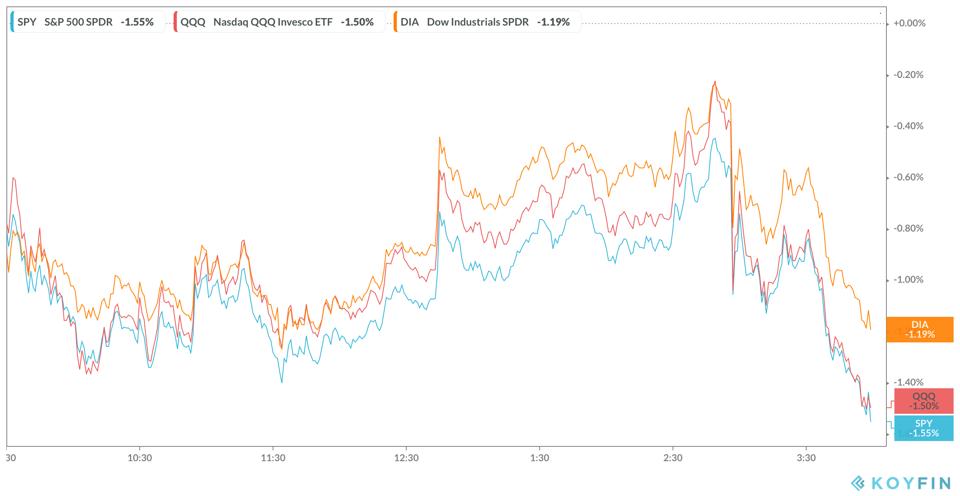
Wall Street is beginning to sense this prospect, selling off after Washington announced its new moves, closing sharply lower for the day.


from Business - Latest - Google News https://ift.tt/30ZSjgE
via IFTTT
October 09, 2019 at 07:07AM

2 Montrealers charged in connection with Bell Canada cyber attack - Global News

The RCMP say charges have been laid against two Quebecers for their alleged involvement in a cyber attack of Bell Canada customer accounts.

Nana Koranteng and Jesiah Russell-Francis of Montreal are to appear on charges including unauthorized use of a computer, fraud over $5000, conspiracy to commit fraud, laundering proceeds of crime, identity theft, and identity fraud.

READ MORE: Bell Canada alerts customers impacted by new data breach

The Mounties began the investigation, dubbed Project Abalone, in 2018 after it was notified that some Bell accounts were breached and personal information was stolen.

The RCMP say the suspects were identified after a number of stolen accounts were used to fraudulently purchase goods online.

100,000 Bell customers affected by hack

Story continues below advertisement

© 2019 The Canadian Press

A fresh new look for Global News is here, tell us what you think

Take a Survey


from Business - Latest - Google News https://ift.tt/2IyTEEY
via IFTTT
October 09, 2019 at 06:50AM

Powell says Fed to resume portfolio growth but it's not QE - BNNBloomberg.ca

Federal Reserve Chairman Jerome Powell said the central bank will resume purchases of Treasury securities in an effort to avoid a repeat of recent turmoil in money markets, while leaving his options open on interest rates weeks ahead of policy makers’ next meeting.

“My colleagues and I will soon announce measures to add to the supply of reserves over time,” he said in the text of a speech to be delivered Tuesday to the National Association of Business Economics in Denver.

He suggested that the purchases would be made up of Treasury bills and stressed the buying should not be seen as a return of the crisis-era quantitative easing programs that the Fed engaged in a decade ago to boost the economy. Three-month bill yields fell on the comments, while U.S. stocks pared losses and the dollar was higher.

“I want to emphasize that growth of our balance sheet for reserve management purposes should in no way be confused with the large-scale asset purchase programs that we deployed after the financial crisis,” he said. “Neither the recent technical issues nor the purchases of Treasury bills we are contemplating to resolve them should materially affect the stance of monetary policy.”

The Fed has cut interest rates twice this year to shelter the U.S. economy from weak global growth and trade-policy uncertainty. Traders in federal funds futures are betting that the Federal Open Market Committee will reduce rates again at its Oct. 29-30 meeting from the current target range of 1.75 per cent to 2 per cent. Futures were little changed following the release of Powell’s comments.

No Preset Path

Powell was non-committal on what the Fed’s next move would be.

“Looking ahead, policy is not on a preset course,” he said. “The next FOMC meeting is several weeks away, and we will be carefully monitoring incoming information.”

He said the actions that the Fed has already taken “are providing support for the outlook,” which remains favorable but faces risks, principally from global developments such as trade and Brexit.

But he added, “we will act as appropriate to support continued growth, a strong job market, and inflation moving back to our symmetric 2 per cent objective.”

The economy has recently shown signs of slowing as weakness overseas has spread to the U.S. and moved from domestic manufacturing industries to services.

The job market has also downshifted, even as unemployment has fallen to a half-century low of 3.5 per cent. Nonfarm payrolls grew by an average of 157,000 per month in the third quarter, compared with gains above 200,000 earlier in the expansion.

Powell said that work done by the Fed mining private-sector data suggested the most recent job gains may ultimately be revised lower, but that the pace would still be above the level needed to hold unemployment steady.

Money markets were roiled last month as a combination of corporate tax payments and the settlement of Treasury debt purchases temporarily sent short-term interest rates skyrocketing.

The Fed announced last week that it will extend through October the ad hoc liquidity lifeline that it’s been offering to U.S. funding markets since then.

“We will not hesitate to conduct temporary operations if needed to foster trading in the federal funds market at rates within the target range,” Powell said.

“As we indicated in our March statement on balance sheet normalization, at some point, we will begin increasing our securities holdings to maintain an appropriate level of reserves,” he added. “That time is now upon us.”


from Business - Latest - Google News https://ift.tt/2ntxigH
via IFTTT
October 09, 2019 at 03:09AM