Selasa, 19 November 2019

California won't buy from automakers who side with Trump on emissions - Axios

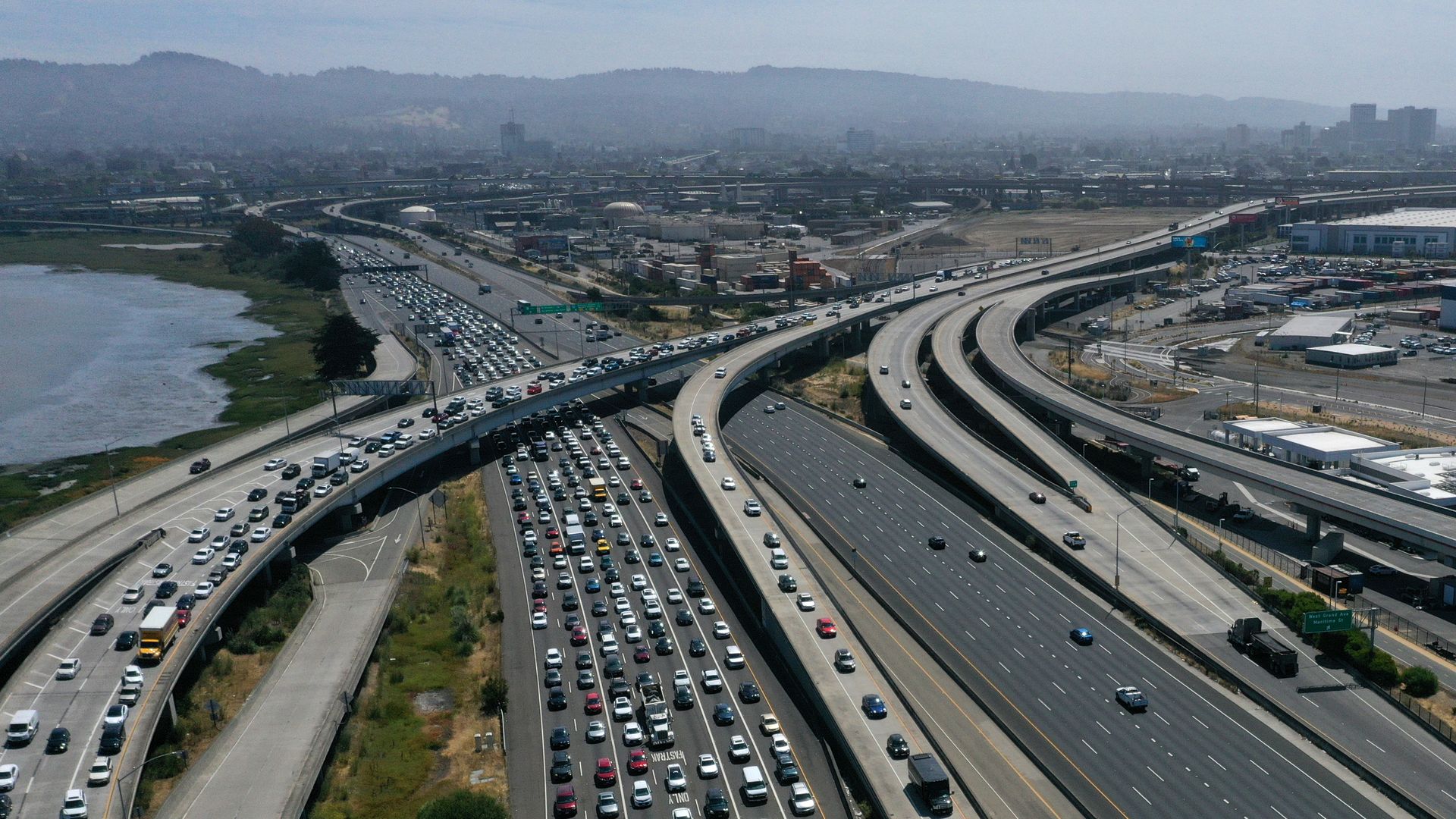
Traffic backs up at the San Francisco-Oakland Bay Bridge toll plaza along Interstate 80 on July 25
Traffic backs up at the San Francisco-Oakland Bay Bridge toll plaza along Interstate 80 in July. Photo: Justin Sullivan/Getty Images)

California confirmed Monday that it won't buy new government vehicles from automakers who backed President Trump in his carbon emissions war with the state, the New York Times reports. GM, Fiat Chrysler and Toyota are among those set to be affected by the move.

Driving the news: The three big automakers and others announced in October that they were joining the Trump administration's side in litigation over its move to stop California from imposing emissions rules and, by proxy, mileage requirements that are tougher than federal standards, per Axios' Ben Geman.

The big picture: The California Department of General Services sad in a statement published late Friday that, effective immediately, it would "prohibit purchasing by state agencies of any sedans solely powered by an internal combustion engine, with exemptions for certain public safety vehicles" — it would only buy electric or hybrid vehicles.

  • Just below that policy announcement was another stating that from Jan. 1 next year, it would "recognize the California Air Resources Board (CARB)’s authority to set greenhouse gas and zero emission vehicle standards, and which have committed to continuing stringent emissions reduction goals for their fleets."

Between the lines: While the announcement doesn't name the big three automakers that sided with Trump, "the new policy amounts to ban on state purchases of vehicles made by those companies and a handful of others, represented by the lobbying group Global Automakers, a spokesman for Mr. Newsom confirmed" to the NYT.

What they're saying: "Carmakers that have chosen to be on the wrong side of history will be on the losing end of California’s buying power," Gov. Gavin Newsom said in a statement first released to Calmatters.

  • While the White House, Toyota and Fiat Chrysler have yet to comment on California's move, GM spokeswoman Jeannine Ginivan issued a statement to the Times:
"Removing vehicles like the Chevy Bolt and prohibiting G.M. and other manufacturers from consideration will reduce California’s choices for affordable, American-made electric vehicles and limit its ability to reach its goal of minimizing the state government’s carbon footprint, a goal that G.M. shares."
— Ginivan's statement to the NYT

Go deeper:

Let's block ads! (Why?)


https://www.axios.com/california-ban-on-automakers-who-backed-trump-86d2cbd7-8824-401e-9ad1-81d5b5f45ff6.html

2019-11-19 05:00:00Z
CAIiEHpHEZ5Fuyiobui7lCRo1w4qGQgEKhAIACoHCAowysWECzCkqIEDMN-pgwY

Senin, 18 November 2019

B.C. proposes law to force oil and gas companies to reveal how gas prices are set - Global News

The B.C. government has introduced legislation to force oil and gas companies to reveal to consumers how gas prices are set.

The Fuel Price Transparency Act, if passed, will allow the B.C. Utilities Commission (BCUC) to collect information from oil and gas companies on the market conditions involved in setting gasoline prices. The information will be made available to the public.

“It’s incredibly frustrating to watch the price of gas shoot up for no reason, and British Columbians are tired of feeling ripped off whenever they fill up their vehicles,” Jobs, Trade and Technology Minister Bruce Ralston said.

“This legislation sends a message to oil and gas companies: the days of setting your prices in total secrecy have come to an end.”

READ MORE: Gas price inquiry questions whether B.C. is a ‘functioning competitive market’

The BCUC investigated the province’s high gas prices and found southern British Columbians were paying an estimated $490 million per year in extra fuel costs due to an unexplained 13 cent differential between costs to oil and gas companies and the price at the pumps.

Story continues below advertisement

The province says the legislation was produced in response to the investigation that found a lack of competition and substantial markups, in the province’s gasoline market.

WATCH (aired November 12, 2019): New report still can’t explain higher B.C. gas prices

New report still can’t explain higher B.C. gas prices

Fuel companies submitted that problems with the BCUC’s methodology, transportation costs and boutique B.C. and Canadian fuel standards were among the factors behind the differential. The BCUC did not agree with the response from the oil and gas companies.

The legislation requires companies to share data on refined fuel imports and exports, fuel volumes at refineries and terminals, as well as wholesale and retail prices.

The province has also included “safeguards” to ensure that the information provided by the companies is complete, accurate and reported regularly.

“By pulling back the curtain, these companies will be publicly accountable for unfair markups and cost increases that cannot be explained,” Ralston said.

“It will also produce a common set of facts moving forward, allowing us to properly evaluate other policy measures to bring fairness to the price at the pump.”

WATCH: Gas prices drop as government proposes new ‘transparency’ laws

Gas prices drop as government proposes new ‘transparency’ laws

Companies will have to report their data and could face fines or administrative penalties if they fail to do so.

Story continues below advertisement

The legislation also sets rules for audits and inspections to ensure that the data being reported is complete and accurate.

–with files from Simon Little

© 2019 Global News, a division of Corus Entertainment Inc.


from Business - Latest - Google News https://ift.tt/2NXyumY
via IFTTT
November 19, 2019 at 05:18AM

TransLink warns of over 100 bus cancellations to come today - Vancouver Is Awesome

transit strike
Photo: Downtown Vancouver, British Columbia, Canada – December 31, 2018: Bus driving on Granville Street. / Shutterstock

As the transit strike continues in Metro Vancouver, many bus passengers were left waiting a bit longer than usual during their Monday morning commute.

TransLink, the area’s transit operator, lists hundreds of service alerts on dozens of routes across the Lower Mainland as Unifor bus drivers, SeaBus operators and mechanics enter Day 18 of a labour dispute with Coast Mountain Bus Company.

Currently, the transit operator has listed a whopping 427 advisory alerts under its ‘bus’ section. Of course, some of these are scheduled detours, and a few are due to traffic, but the vast majority are cancelled as a result of the transit strike.

For example, the #3 bus, which saw a few cancellations this morning, has a number of advisories listed for this afternoon and evening:

  • 3 Main-Marine Drive Station trip leaving Eastbound W Cordova St @ Seymour St at 4:55 pm
  • 3 Main-Marine Drive Station trip leaving Eastbound W Cordova St @ Seymour St at 4:55 pm
  • 3 Main-Marine Drive Station trip leaving Eastbound W Cordova St @ Seymour St at 3:03 pm
  • 3 Downtown trip leaving Marine Drive Station @ Bay 1 at 2:13 pm
  • 3 Main-Marine Drive Station trip leaving Eastbound W Cordova St @ Seymour St at 5:24 pm
  • 3 Downtown trip leaving Marine Drive Station @ Bay 1 at 4:31 pm
  • 3 Main-Marine Drive Station trip leaving Eastbound W Cordova St @ Seymour St at 3:30 pm
  • 3 Main-Marine Drive Station trip leaving Eastbound W Cordova St @ Seymour St at 3:30 pm
  • 3 Main-Marine Drive Station trip leaving Eastbound W Cordova St @ Seymour St at 1:35 pm
  • 3 Downtown trip leaving Marine Drive Station @ Bay 1 at 12:45 pm

As of 11 a.m. on Nov. 18, approximately 114 bus routes in Metro Vancouver have advisory alerts. Some hard-hit routes include the busy line along Broadway and buses to Simon Fraser University, the University of B.C., the B.C. Institute of Technology and Capilano University.

“We’re expecting 5 to 10 per cent of service to be impacted today due to union job action,” Ben Murphy, TransLink spokesperson, told Vancouver Is Awesome in an email.

“This morning 4 SeaBus sailings also had to be cancelled.  Customers should sign-up for transit alerts and check the TransLink website or Twitter account for the most up-to-date information and impacts being caused by union job action.”

Murphy underscores that the view from Coast Mountain Bus Company is still that the union needs to be more realistic about their wage demands, and that its offer is in excess of other public sector settlements in British Columbia.

“Coast Mountain Bus Company has offered wage increases of more than $6,000 for transit operators and around $10,000 for skilled tradespeople.  This would bring transit operator salaries to just under $70,000, and skilled tradespeople salaries to around $88,000.”

Unifor lead negotiator Gavin McGarrigle and other Unifor representatives held a news conference in New Westminster earlier last week.

McGarrigle mentioned how, “TransLink CEO Kevin Desmond could see his pay soar by 25% to nearly $500,000 a year, while the head of the Toronto Transit Commission earns $150,000 less each year.”

“CMBC President Michael McDaniel has been on the job for about a year and a half and could see his salary soar by 18% to about $372,000,” he said.

McGarrigle added that, “both of these transit executives make more than the Prime Minister.”

“Translink simply doesn’t treat its workers fairly. They divide their workers into separate companies and tell skilled trades not to compare their wages with each other. In the employer’s mind, a comparison to Toronto’s transit system is fine for executive wages, but it’s somehow offside for transit operators,” said Gavin McGarrigle.

With files from the Canadian Press. 


from Business - Latest - Google News https://ift.tt/2OojY6X
via IFTTT
November 19, 2019 at 02:42AM

Canadian ministers meet with CN Rail, union in effort to avert strike - CBC.ca

Canada's Liberal government sent two ministers on Monday to meet with representatives of Canadian National Railway and its largest union, as already hard-hit shippers pleaded for government intervention to avert a strike planned for early on Tuesday.

The threatened strike by 3,000 workers with Teamsters Canada comes after CN, the country's largest railroad operator, said on Friday it would cut management and union jobs, as it grapples with softer economic conditions.

Labour Minister Patty Hajdu and Transportation Minister Marc Garneau were to meet with representatives from CN and the union in Montreal, Hajdu's press secretary Veronique Simard said, following a stalemate in contract talks.

CN said it believes a strike can be averted "with the assistance of federal mediators," after Teamsters declined to submit to binding interest arbitration.

"We expect talks to continue up to Nov. 19," CN said.

Teamsters and CN reached a last-minute deal in 2017 that averted a planned strike. Canada, one of the world's biggest exporters of farm products, relies on its two main railways to move canola and wheat over the vast distances from western farms to ports. Crude oil shippers in Alberta have also used trains in the past two years to reach U.S. refineries as an alternative to congested pipelines.

Urging Ottawa to intervene

Alberta wheat and barley commissions, representing farmers, urged Ottawa to intervene, as they are already facing difficult harvest conditions because of weather. "There are a lot of farmers who already have a significant amount of their income trapped under snow," said Gary Stanford, Alberta Wheat Commission chair. "Now adding insult to injury, we're looking at possible CN rail strike action too."

CN was expecting slightly lower fourth-quarter crude shipments from the third quarter, officials said on an Oct. 22 conference call.

"The minute they start shutting down trains you start backing up the grain elevators and you start backing up stuff on the farm," Ward Toma, General Manager for Alberta Canola, said. "You start backing all that stuff up that not only affects farmers — but canola crushers send oil via rail, and canola meal via rail to the United States — you lose that ability, you start backing things up."

Toma says according to Alberta's last agriculture report, 20 per cent of the canola crop is still out in the fields. And he says this is the time of the year farmers look to sell and pay their bills by the end of the year.

"They're busy, they still haven't got the crop off and they are trying to move product." 

Slumping commodity prices, congested oil pipelines and a dispute with China that has hampered Canadian agriculture exports have pressured the economies of resource-rich western provinces.

Teamsters Canada spokesman Christopher Monette said the planned strike by its conductors, train personnel and yard workers comes because workers are "hitting a wall on issues related to health and safety."

"While we continue to negotiate in good faith and in hopes of avoiding a labour dispute, we have every intention of striking at 12:01 a.m. ET tonight unless an agreement can be reached before then," Monette said by email.

CN shares were trading down 0.5 per cent in early afternoon Toronto trading.


from Business - Latest - Google News https://ift.tt/2QvdOEH
via IFTTT
November 19, 2019 at 02:58AM

Talks break down with striking workers at Western Forest Products - Business News - Castanet.net

Western Forest Products Inc. says negotiations with the United Steelworkers union representing workers in a long-running coastal B.C. strike ended without resolution on the weekend.

The company says no active negotiations are occurring and no future mediation dates have been scheduled after 14 hours of bargaining occurred on Saturday and Sunday supervised by two independent mediators.

CEO Don Demens says the mediators informed the company talks were over after it presented a contract offer.

The strike which began July 1 affects about 3,000 coastal forest workers employed in Western Forest Products' sawmills and timberlands operations.

Demens says the company offered a five-year agreement with a $2,000 signing bonus and wage increases of two per cent per year for the first four years and 2.5 per cent in the fifth year.

He says the company also agreed to drop proposals to modernize agreements, as well as pension plan alternatives opposed by the union, but didn't go along with Steelworker demands for a shorter-term agreement, bigger wage hikes and less shift flexibility.

United Steelworkers Local 1-1937 president Brian Butler says the union would release its position on the matter later Monday.

The company's shares lost five cents or 3.9 per cent at $1.22 in afternoon trading on the Toronto Stock Exchange.


from Business - Latest - Google News https://ift.tt/2CTiwnt
via IFTTT
November 19, 2019 at 03:07AM

Barrick Gold sells half of Kalgoorlie Consolidated Gold Mines for $750 million - MINING.com

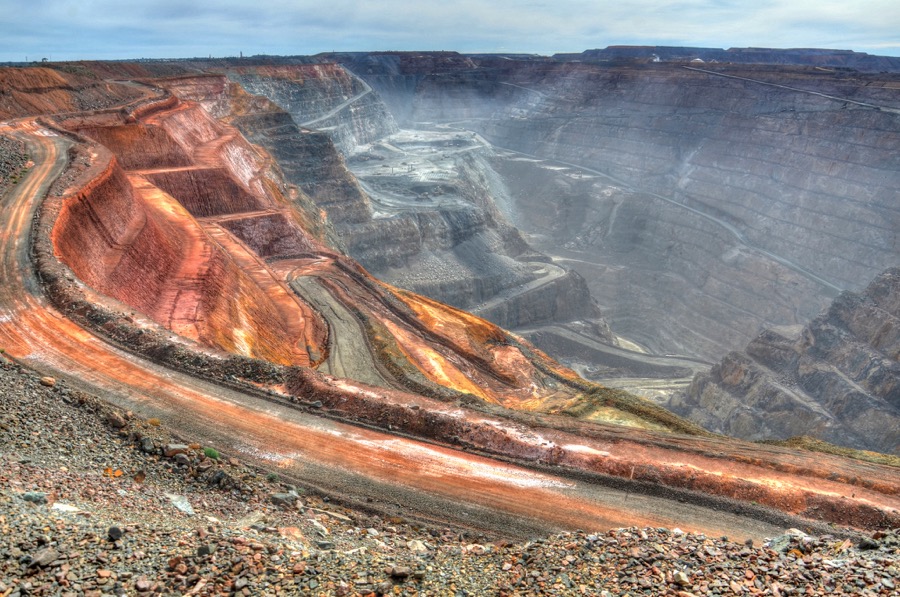
KCGM’s Super Pit, which is expected to run out of ore by 2029, unless underground mining continues after that. (Image: Chris Fithall | Flickr Commons)

Canada’s Barrick Gold (TSX:ABX)(NYSE:GOLD), the world’s second largest producer of the yellow metal, reached an agreement to sell its 50% interest in Kalgoorlie Consolidated Gold Mines in Western Australia to Saracen Mineral Holdings (ASX:SAR).

Saracen already holds two gold operations in the Kalgoorlie region, namely, the Carosue Dam and the Thunderbox mine sites.

In a media statement, Barrick said the KCGM transaction involved the payment of $750 million in cash and that such funds will be used to further strengthen the company’s balance sheet, invest in future projects and deliver returns to its shareholders.

“The sale of our non-operating interest in KCGM represents the first step in our plan to realize in excess of $1.5 billion from the disposal of non-core assets by the end of next year. While this iconic gold mine has been a valuable contributor to Barrick over the years, the asset does not fit with our strategy of operating mines that we own,” Mark Bristow, Barrick’s president and CEO, said in the press brief. “The sale allows us to further focus our portfolio on core operations.” 

Bristow said Barrick was pleased to have achieved a successful outcome following a competitive sale process and was confident that Saracen would be an excellent partner for Newmont Goldcorp at KCGM going forward. 

The KCGM Operations include the Fimiston open pit, also known as the Super Pit, the Mt Charlotte underground mine and the Fimiston and Gidji processing plants, all located adjacent to the City of Kalgoorlie-Boulder approximately 600 kilometres east of Perth. KCGM produces around 700,000 ounces of gold each year and has a gold reserve of 6.9 million ounces.


from Business - Latest - Google News https://ift.tt/2pspL2I
via IFTTT
November 18, 2019 at 06:48AM

Ford's new Mustang is not only an SUV, it's all-electric too - CTV News

DEARBORN, Mich. -- Ford is unveiling its first all-electric SUV, marking the start of an avalanche of battery-powered vehicles coming from mainstream and luxury automakers during the next two years that industry analysts say will boost electric vehicle sales.

The "Mustang Mach E," which will go 230 miles to more 300 miles per charge depending on how it's equipped, was unveiled Sunday night ahead of the Los Angeles Auto Show press days.

There are 18 now for sale in the U.S., and IHS Markit expects that to grow to 80 in 2022, including pickup trucks and SUVs that are in the heart of the American market. Yet last year, pure electric vehicles made up only 1.5% of new vehicle sales worldwide, and the consulting firm LMC Automotive predicts that will rise to 2.2% this year. In the U.S., electric vehicles were only 1.2% of sales in 2018, and it's expected to be about the same this year.

But automakers see opportunity for growth, and with electric vehicles getting 250 miles or more on a single charge, worries about running out of juice on a daily commute are gone. Because of the added models and increased range, LMC predicts that they will make up 17% of global sales and 7% of U.S. sales in 2030.

First-generation electric vehicles, which mainly were retrofitted versions of existing models designed to meet government fuel economy standards, didn't sell well largely because they couldn't travel more than 100 miles between charges. But now, many can go beyond the distance people drive in one day with plenty of cushion.

"Seeing 250 miles as a real thing has been kind of a game changer in the electric car market," said Jake Fisher, director of auto testing for Consumer Reports. "There haven't been a lot of choices for a vehicle that really could take the place of a mainstream vehicle. It's a whole different animal now."

Stephanie Brinley, principal auto analyst for IHS Markit, said electric vehicle choices may expand before consumer demand does, but eventually people will buy them.

"The increased number of models with an electric drivetrain will contribute to an increase in sales in the U.S.," she said. "However, there is likely to be a period where the number of options will increase faster than demand and sales for each will be relatively low," she said.

While many electrics coming in the next few years are from luxury brands, mainstream brands like Ford, Chevrolet and Toyota also have them on the production schedule. Brands that have announced new models that will go on sale in the next few years include Mercedes-Benz, Audi, Cadillac, Byton, Rivian, Bollinger, Kia, Faraday Future, Volkswagen, Mazda, Tesla, Aston Martin, Polestar, and Volvo, according to the Edmunds.com auto pricing site. Edmunds provides content to The Associated Press.

Ford and General Motors have announced plans for all-electric pickups that will compete against gas and diesel trucks that are the top sellers in the U.S.

For Ford, executives realized in 2017 that they had to offer something more exciting for the first of a new generation of electric vehicles. The company last year it promised six battery electric vehicles by 2022. It also has partnerships with VW and startup Rivian to build more.

To sell them, Ford decided to go to the company's strengths: Pickup trucks, commercial vans and the high-performance Mustang.

"There are going to be plenty of BEV (battery electric) SUVs on the market. Some will have big batteries and double motors and be pretty fast. Some will look really good," said Jason Castriota, the company's brand director for electric vehicles. "No one can combine all those elements and create something that will cut right through the clutter," he said. "Mustang is power."

The five-passenger Mach E sort of resembles a Mustang, and Ford says it comes close to matching the car's performance. Engineers say the base model will have a range of about 230 miles (370 kilometres) per charge, with a long-range option of more than 300 miles (483 kilometres). The base version is expected to go from zero to 60 mph (96.6 kph) in a little over six seconds, Ford said, while the performance GT version will do it in about 3.5 seconds.

The base version is rear-wheel-drive, with all-wheel-drive options. It has the Mustang pony badge on the front and rear, a long hood and a fastback look at the rear. Yet designers preserved rear-seat headroom with a blacked-out glass roof. The Mustang team set up the Mach E's chassis tuning, which determines its handling. Designers also copied the Mustang's triple tail lights.

U.S. orders are being taken now, and the SUV will reach showrooms next fall. The base model will start just under $44,000, with the GT starting around $65,000. Ford buyers are still eligible for a $7,500 federal tax credit, which is being phased out at Tesla and General Motors.

Ford has deal with Electrify America and others for a national network that includes over 12,000 charging stations and 35,000 plugs, so EV owners can go on longer trips.

The company also will have 2,100 of its U.S. dealerships certified to service electric vehicles.


from Business - Latest - Google News https://ift.tt/2OlRMBu
via IFTTT
November 18, 2019 at 06:49PM